20 Brilliant Living Room Ideas for a Stylish Cozy Home
Your dream space starts with the right Living Room Ideas—and often, a few thoughtful changes make the biggest difference.
Whether your room feels outdated, empty, or simply lacks warmth, the right design choices can completely refresh how it looks and feels.
This collection brings together practical inspiration that blends comfort, style, and everyday functionality without making the process overwhelming.
From clever furniture layouts to cozy textures and timeless decor, every idea is designed to help you create a welcoming space you’ll genuinely enjoy spending time in.
In my experience, the most inviting rooms aren’t always the most expensive.
They’re the ones where every detail works together to make daily life more comfortable and beautiful.
I’ve noticed that simple updates like better lighting, layered textiles, or thoughtfully placed greenery often have a greater impact than a full renovation.
Whether you’re decorating a new home or giving your current space a fresh look, these ideas will help you create a room that’s easy to personalize, Pinterest-worthy, and practical enough for everyday living.
Also view: 22 Charming Cottage Bedroom Ideas for a Cozy Dream Retreat
1. Neutral Color Palette
- Creates a calm and welcoming atmosphere that feels larger.
- Makes seasonal decor easy to swap without clashing.
- Highlights natural textures and layered accessories.
- Keeps the space timeless instead of following short-lived trends.
- Works beautifully in both small and spacious homes.
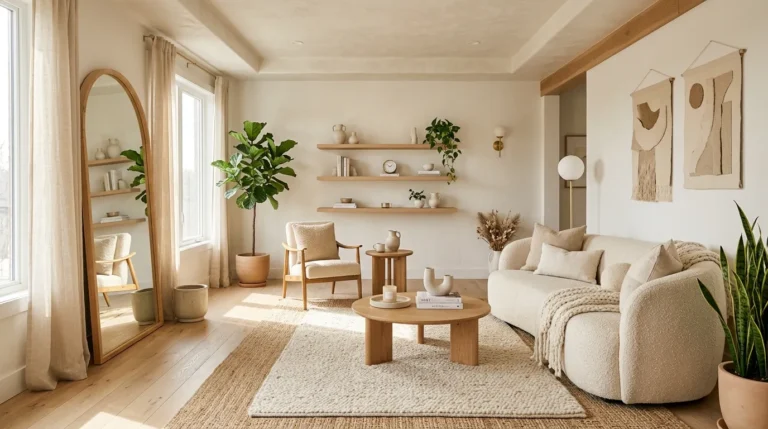
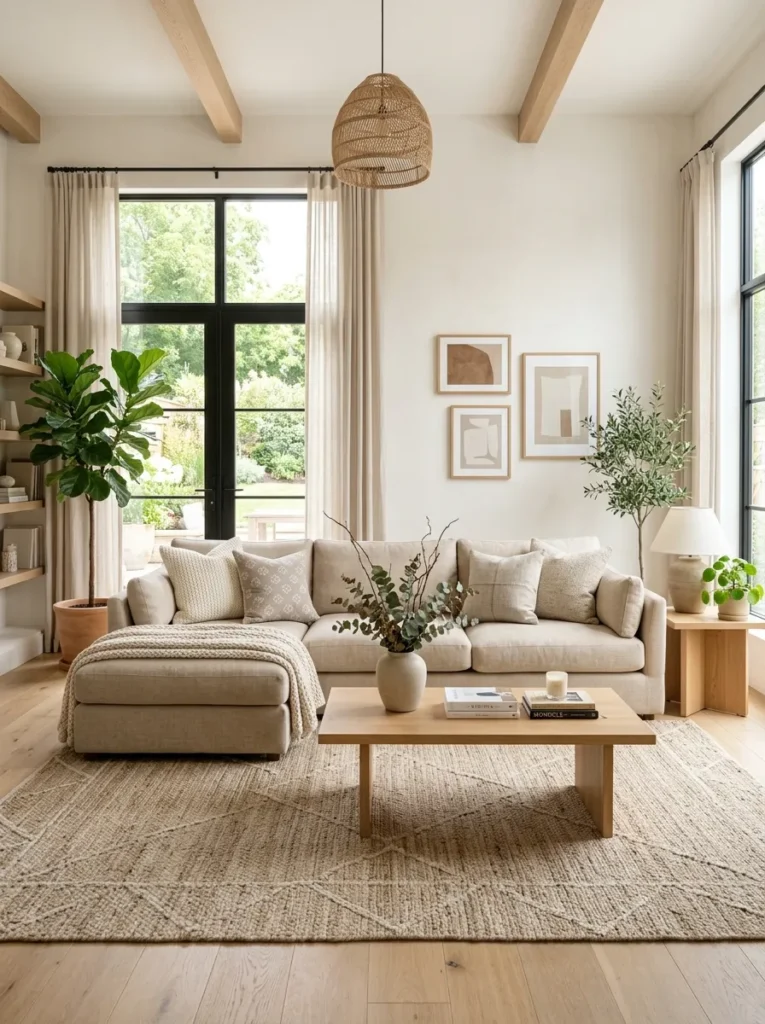
A soft neutral palette instantly creates a space that feels peaceful without looking plain.
Warm whites, creamy beiges, and gentle taupe shades blend together to make everyday furniture appear more polished and inviting.
Instead of competing for attention, each piece works together to build a balanced look that feels comfortable from morning until night.
This approach is one of the easiest Living Room Ideas to personalize because colorful pillows, artwork, or plants can refresh the entire space without requiring expensive furniture replacements or major decorating changes throughout the year.
Simple colors also make natural materials stand out in a beautiful way.
Linen fabrics, woven baskets, wooden tables, and textured rugs add warmth while preventing the room from feeling flat.
In my experience, neutral spaces stay visually relaxing even after adding family photos or seasonal decorations.
The result feels collected rather than cluttered, making everyday living more enjoyable.
Many homeowners also find that soft color schemes photograph beautifully, which explains why this style continues to perform well across Pinterest inspiration boards and modern interior design trends.
2. Layered Textures
- Adds warmth without overwhelming the room.
- Makes simple furniture feel richer and more inviting.
- Brings depth through fabric and natural materials.
- Creates a cozy atmosphere for everyday relaxation.
- Helps the room look thoughtfully designed with little effort.
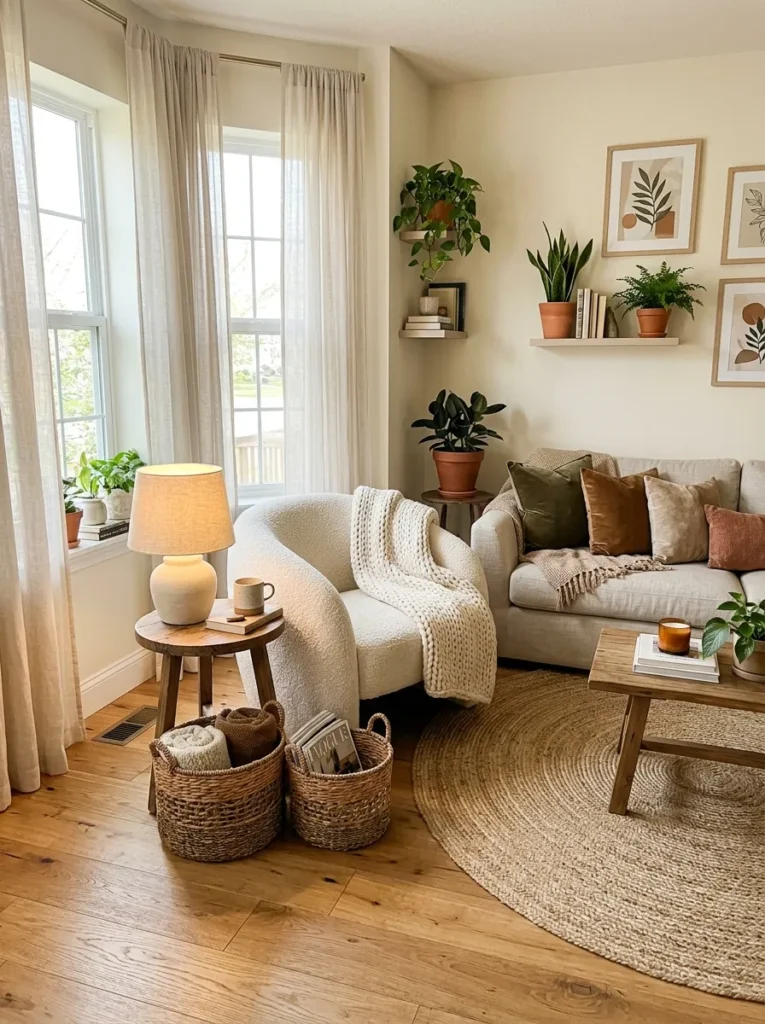
Nothing transforms a plain sitting area faster than mixing different textures throughout the space.
Soft blankets, woven baskets, boucle chairs, velvet cushions, and natural fiber rugs each contribute a unique layer that catches light differently.
Even when the color palette stays simple, these materials add visual depth that keeps the room interesting from every angle.
Instead of filling shelves with extra decorations, thoughtful texture creates richness while maintaining an uncluttered appearance that feels welcoming throughout every season.
Texture is especially valuable because it appeals to both comfort and style at the same time.
I’ve noticed that homes with varied fabrics often feel warmer even before anyone sits down.
Combining smooth wood, soft upholstery, woven fibers, and cozy textiles gives every corner more personality without making the space feel busy.
This layered approach also hides everyday wear better than relying on one material alone, making it practical for busy households where comfort matters just as much as beautiful design.
3. Statement Coffee Table
- Gives the seating area a natural focal point.
- Makes the room feel intentional and well-balanced.
- Provides practical space for everyday essentials.
- Encourages simple decorative styling without clutter.
- Connects surrounding furniture into one cohesive arrangement.
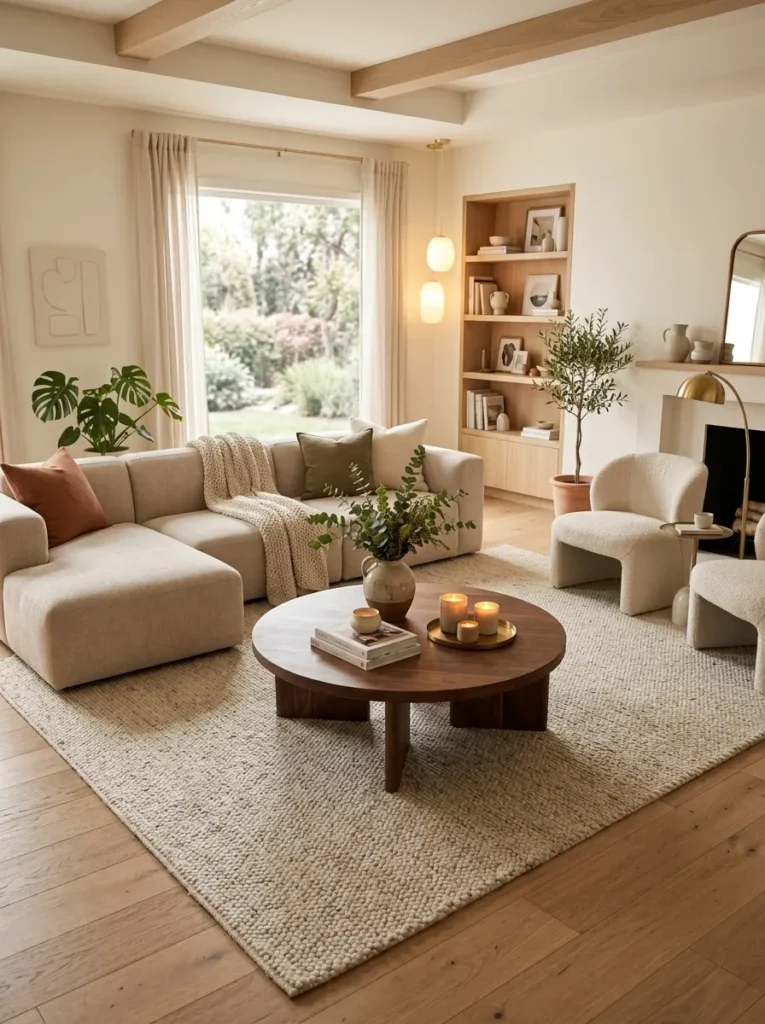
A distinctive coffee table naturally becomes the centerpiece that ties the seating arrangement together.
Whether crafted from warm wood, elegant stone, or curved modern materials, it anchors the furniture while adding personality without overwhelming the room.
Decorative books, candles, fresh flowers, or a handmade tray instantly create an inviting display that feels polished yet effortless.
Small styling changes throughout the year keep the centerpiece fresh, allowing the entire room to evolve without replacing larger furniture pieces or making costly updates.
Beyond appearance, the right table improves daily living in surprisingly practical ways.
That’s why many designers recommend choosing a size that leaves comfortable walking space while still keeping drinks, books, and decorative accents within easy reach.
I’ve seen this work well in many homes because a thoughtfully selected centerpiece encourages balance throughout the layout.
Guests naturally gather around it, conversations feel more relaxed, and the room instantly appears more organized without requiring complicated decorating techniques.
4. Gallery Wall Display
- Turns a blank wall into a personalized focal point.
- Mixes artwork and photos for a collected look.
- Adds personality without taking up floor space.
- Makes the room feel finished and thoughtfully decorated.
- Easily grows over time with new pieces and memories.
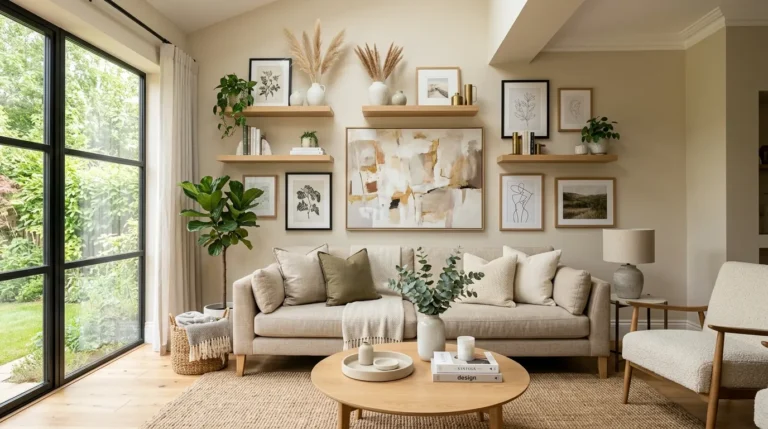
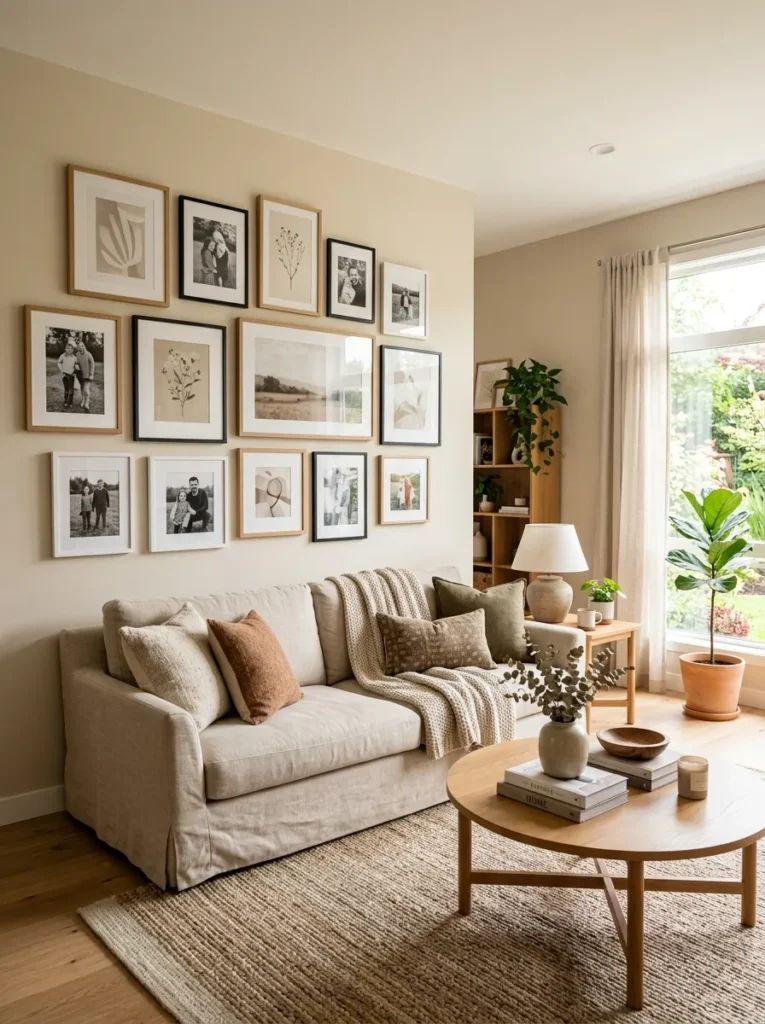
A thoughtfully arranged gallery wall brings character into a room while telling a story through artwork, photographs, and meaningful prints.
Mixing frame sizes instead of matching everything perfectly creates a relaxed, collected appearance that feels welcoming rather than formal.
Keeping a consistent color palette helps the display stay cohesive even when each piece is different.
This decorating approach adds visual interest to empty walls and encourages people to notice the details that make a home feel unique without requiring expensive renovations.
One practical tip is to lay every frame on the floor before hanging anything permanently.
I’ve noticed this simple step helps achieve better spacing and balance while preventing unnecessary holes in the wall.
Combining personal photos with abstract prints and textured artwork also creates more depth than relying on one style alone.
As your collection grows over time, adding new pieces becomes easy, allowing the display to evolve naturally while keeping the room fresh and visually engaging.
5. Built-In Shelving
- Maximizes storage while keeping the room organized.
- Displays decorative pieces without creating clutter.
- Frames architectural features beautifully.
- Blends function with stylish home decor.
- Keeps everyday essentials within easy reach.
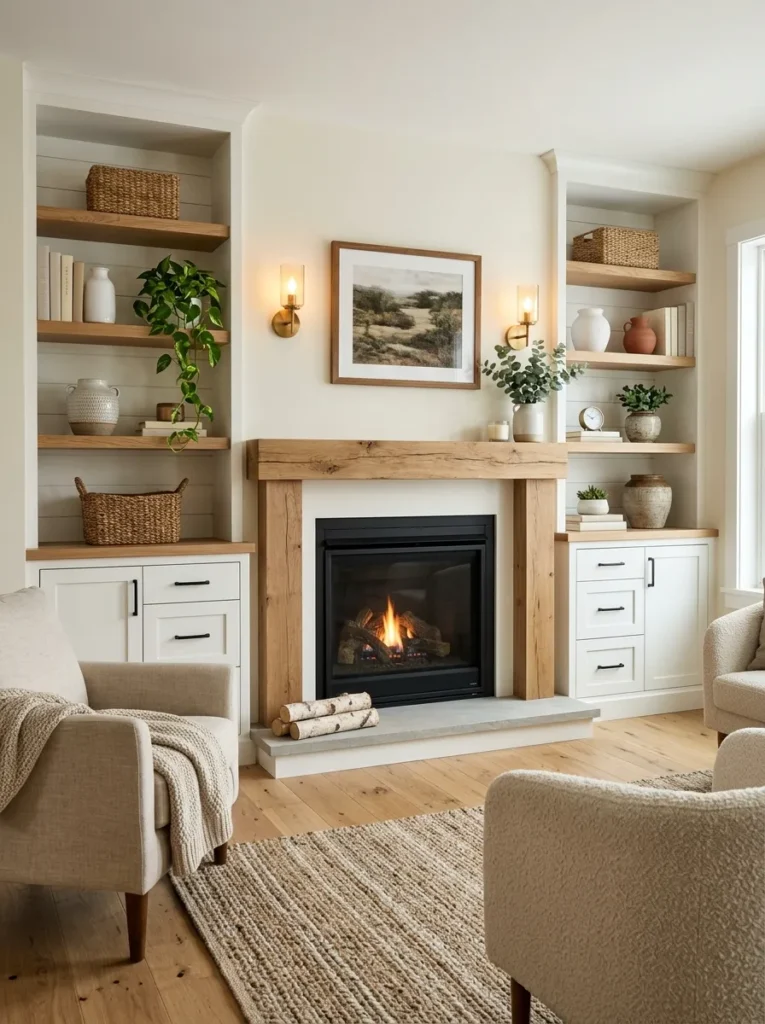
Built-in shelving offers the perfect balance between beauty and practicality by transforming unused wall space into attractive storage.
Open shelves display books, ceramics, plants, and decorative accents while lower cabinets hide items that don’t need to stay visible.
The combination keeps the space feeling tidy without sacrificing personality.
Instead of overcrowding tables with decorations, carefully styled shelving creates visual layers that naturally draw the eye and make the entire room appear more custom and thoughtfully designed.
Styling shelves works best when every section has breathing room instead of being completely filled.
In my experience, leaving a little empty space allows favorite decorative pieces to stand out while preventing the display from feeling overwhelming.
Mixing vertical books, woven baskets, greenery, and sculptural objects creates balance without looking repetitive.
This approach also makes seasonal decorating much easier because a few simple accessory swaps can refresh the shelves without redesigning the entire room.
6. Oversized Area Rug
- Defines the seating area with a polished look.
- Makes the room appear larger and more connected.
- Adds warmth underfoot for everyday comfort.
- Softens hard flooring with texture and color.
- Helps furniture feel intentionally arranged.
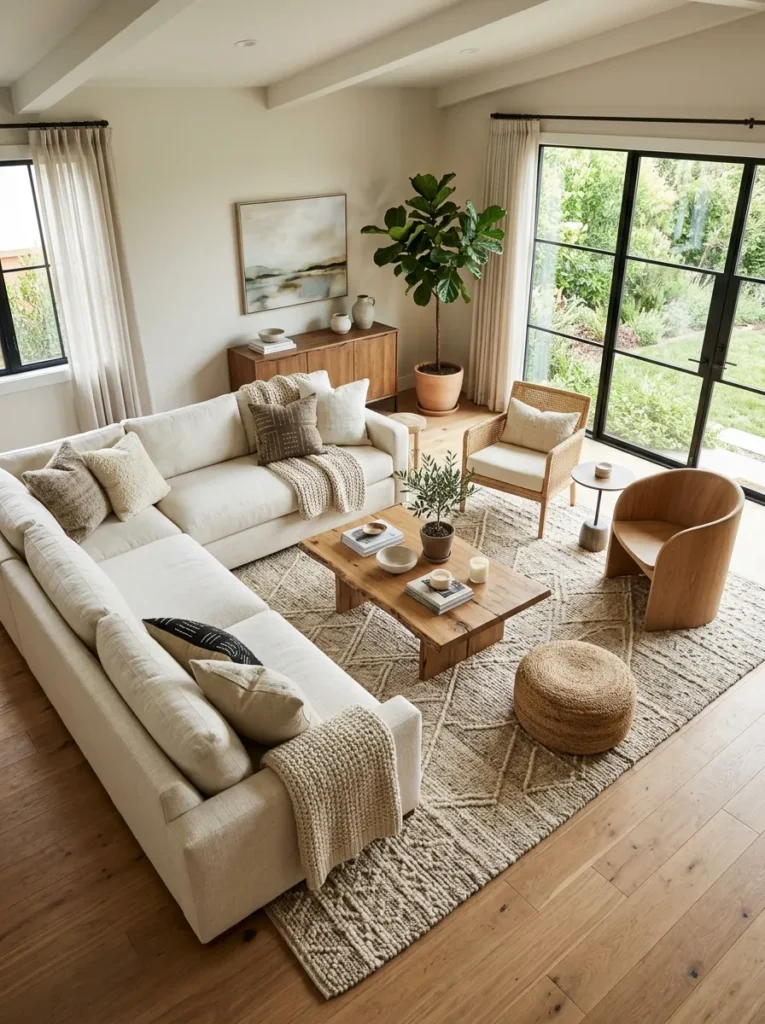
An oversized area rug instantly pulls every seating piece together, creating a layout that feels complete instead of scattered.
Allowing the front legs of sofas and chairs to rest on the rug connects the furniture visually while adding softness underfoot.
The larger size also makes the room appear more spacious because it defines one unified conversation area rather than several disconnected pieces.
Choosing subtle patterns or textured weaves keeps the foundation timeless while supporting many decorating styles.
Many homeowners underestimate how much the rug size influences the overall appearance of a room.
I’ve seen this work well in many homes where replacing a small rug with a larger one completely transformed the layout without changing any furniture.
A generously sized foundation creates better flow, reduces visual breaks across the floor, and makes everyday living feel more comfortable.
It also provides the perfect backdrop for layering coffee tables, accent chairs, and decorative accessories with confidence.
7. Floor-to-Ceiling Curtains
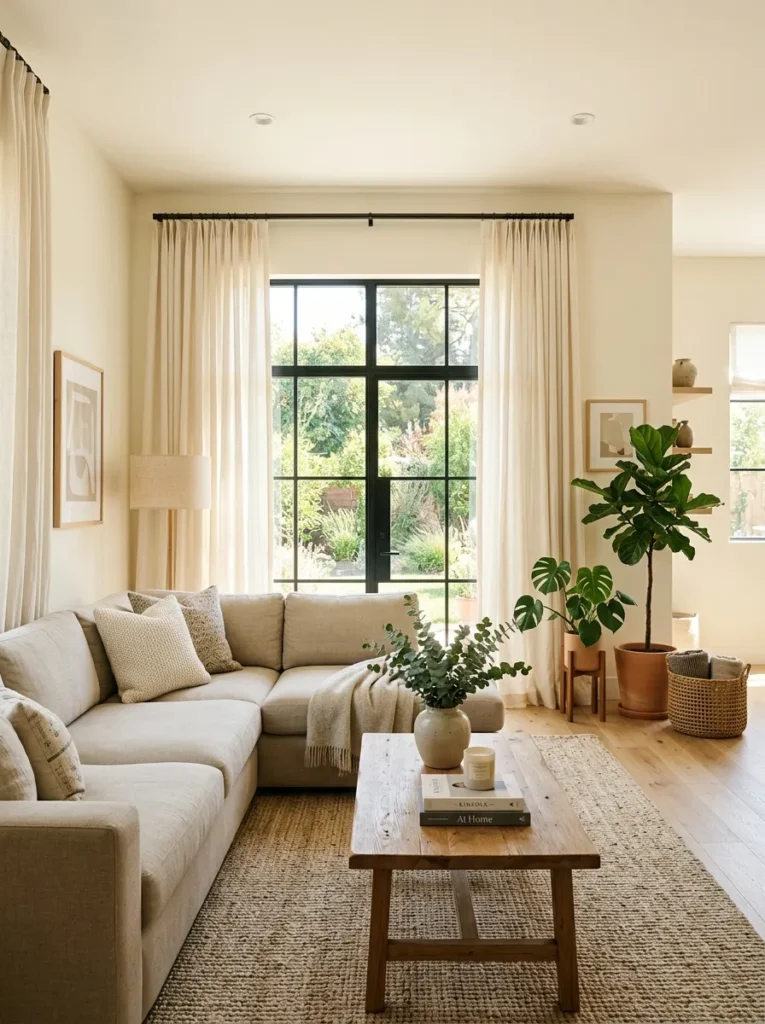
- Makes ceilings appear taller and the room more spacious.
- Softens natural light for a warm, inviting atmosphere.
- Adds elegant texture without overwhelming the space.
- Frames windows beautifully for a polished finish.
- Improves privacy while maintaining a bright interior.
Long curtains instantly elevate an ordinary room by drawing the eye upward and creating the illusion of higher ceilings.
Hanging the curtain rod closer to the ceiling instead of directly above the window gives the entire wall a grander appearance.
Light linen or cotton fabrics gently filter sunlight, filling the space with a soft glow that feels comfortable throughout the day.
This simple design choice creates a refined backdrop that complements almost every decorating style without requiring a major investment.
The right fabric also changes how the room feels from morning to evening.
I’ve noticed that lightweight materials brighten smaller spaces while still offering privacy when paired with simple blinds.
Neutral curtains blend effortlessly with changing furniture, seasonal accents, and wall colors, making them a lasting investment rather than a temporary trend.
Their clean vertical lines also help balance bulky furniture, creating a more open and harmonious layout that feels both stylish and practical.
8. Accent Chair Corner
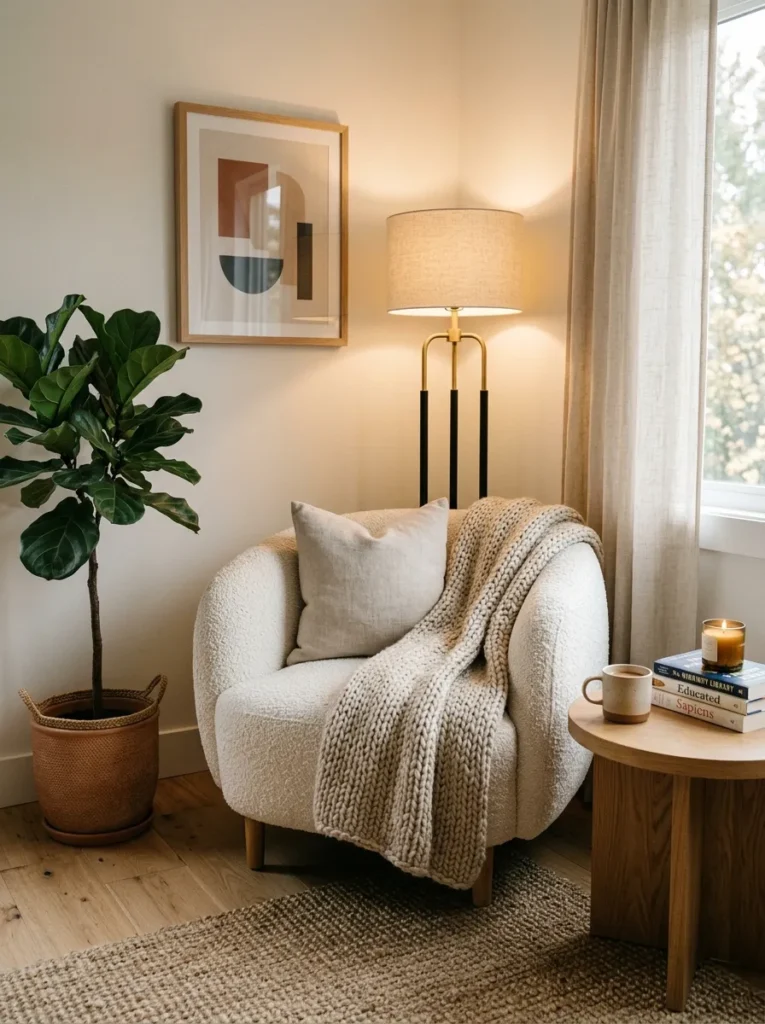
- Fills an empty corner with purpose and style.
- Creates a relaxing spot for reading or quiet moments.
- Adds extra seating without overcrowding the layout.
- Introduces a new texture or accent color.
- Makes the space feel balanced and complete.
An accent chair can completely transform an unused corner into one of the most inviting places in the home.
Pairing it with a small side table and a warm floor lamp creates a comfortable retreat for reading, relaxing, or enjoying a morning coffee.
Choosing a chair with an interesting texture or subtle color contrast adds personality while maintaining visual balance.
This simple arrangement makes the room feel more intentional and encourages better use of every available corner.
Comfort should always guide the final choice just as much as appearance.
That’s why many designers recommend selecting a chair that feels supportive enough for everyday use instead of focusing only on its shape.
In my experience, adding a soft throw and one decorative cushion instantly makes the area feel warmer and more welcoming.
Even compact homes benefit from this setup because it creates a dedicated relaxation zone without requiring major furniture rearrangements.
9. Natural Wood Accents
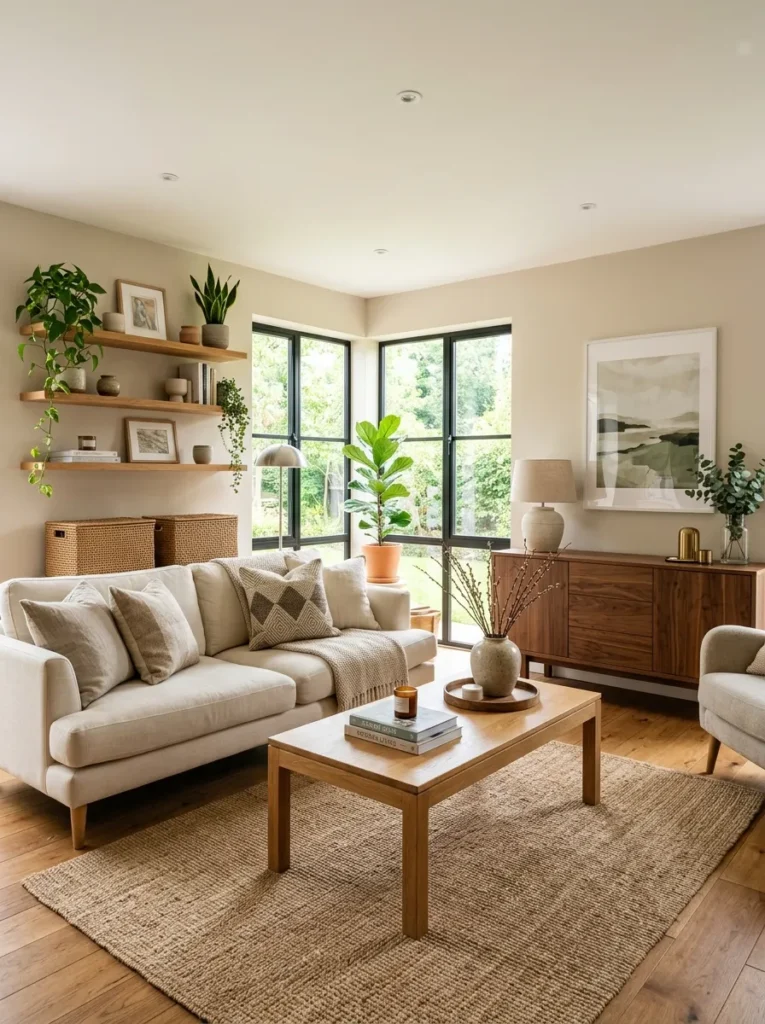
- Brings warmth and character to modern interiors.
- Balances painted surfaces with natural texture.
- Pairs beautifully with neutral or earthy color palettes.
- Creates a timeless look that ages gracefully.
- Adds depth without making the room feel busy.
Natural wood details add warmth that painted or glossy finishes simply cannot replicate.
Whether introduced through a coffee table, floating shelves, sideboard, or decorative accessories, wood creates an inviting atmosphere that feels grounded and timeless.
Light oak produces an airy appearance, while richer walnut tones add depth and sophistication.
Mixing these natural elements with soft fabrics and simple decor creates a balanced environment that feels comfortable for everyday life while remaining visually refined.
One advantage of wood is its ability to complement changing decorating styles over many years.
I’ve seen this work well in many homes because quality wooden furniture adapts easily as accessories, artwork, and color palettes evolve.
Small touches like wooden picture frames, trays, or stools can introduce the same welcoming effect without replacing larger furniture pieces.
The result is a space that feels authentic, layered, and effortlessly connected to nature.
10. Indoor Plant Styling
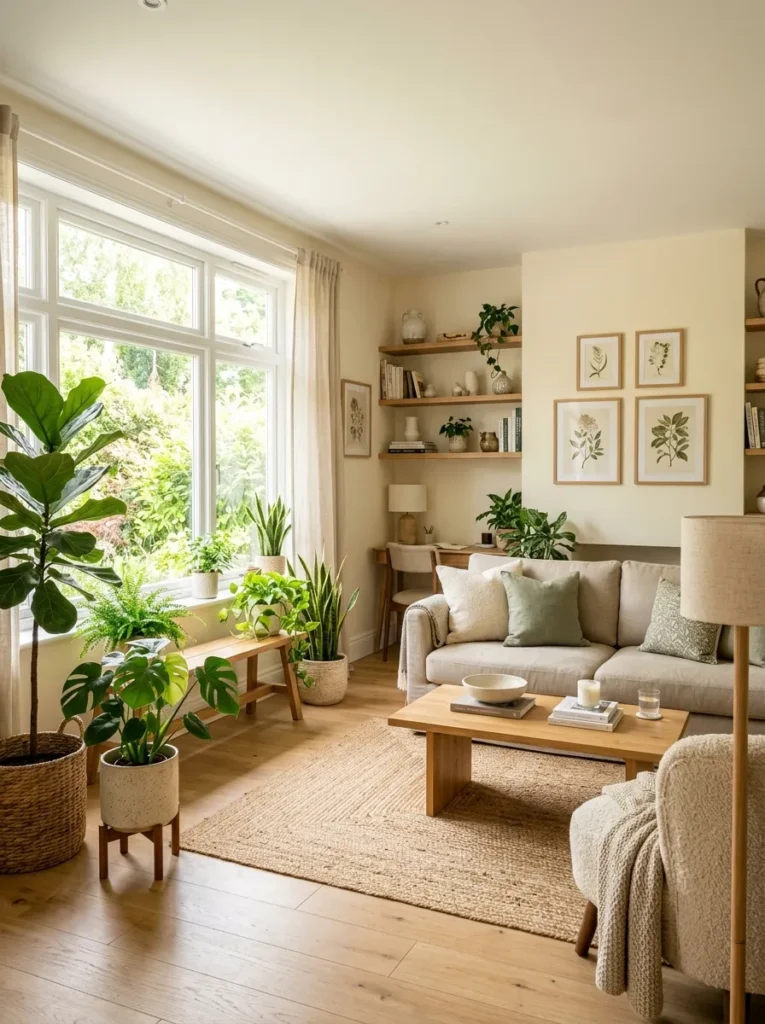
- Brings natural color into the space without overwhelming it.
- Softens hard furniture lines with organic shapes.
- Makes the room feel fresh and lived-in.
- Fills empty corners with effortless style.
- Pairs beautifully with almost every decorating theme.
Adding indoor plants is one of the simplest ways to make a room feel vibrant and welcoming.
A tall leafy plant beside the sofa, smaller potted greenery on shelves, or a trailing vine near a window introduces natural movement that softens the overall design.
These living accents create contrast against neutral furniture while adding texture and freshness
Even a few carefully placed plants can transform a quiet corner into an eye-catching feature that feels calm, balanced, and connected to nature.
You don’t need a large collection to create a noticeable difference.
In my experience, choosing two or three healthy plants with varied heights produces a cleaner and more intentional look than filling every surface.
Positioning them where they receive suitable light also helps them thrive with less maintenance.
As they grow, they naturally bring more character to the room, making the entire space feel more inviting without relying on extra decorative accessories.
11. Layered Lighting
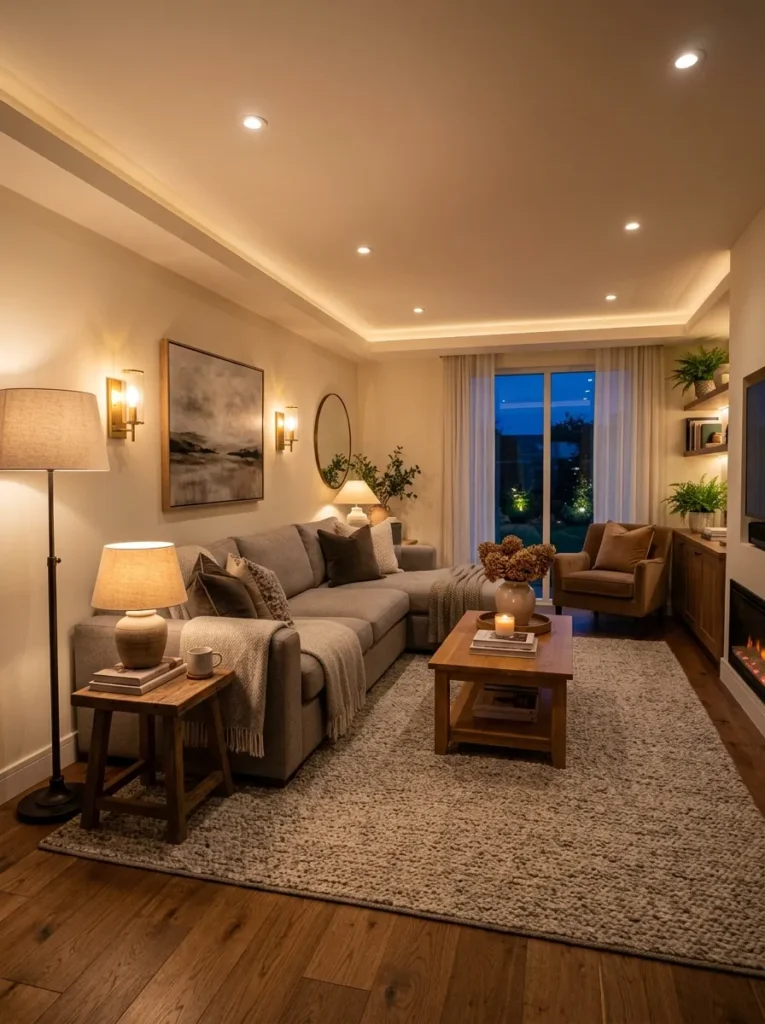
- Creates warmth and comfort throughout the day.
- Highlights decorative features without harsh brightness.
- Makes the room feel more flexible for different activities.
- Adds depth by combining multiple light sources.
- Improves both style and everyday functionality.
Great lighting goes beyond a single ceiling fixture by combining different layers that work together.
Recessed lights provide general brightness, table lamps create a warm evening atmosphere, and floor lamps brighten reading areas without overpowering the room.
This layered approach makes every corner feel intentional while allowing the mood to change throughout the day.
Soft lighting also enhances textures, artwork, and furniture details, giving the space a richer and more inviting appearance.
Many homeowners notice the biggest improvement after adding warm accent lighting instead of increasing brightness alone.
I’ve noticed that rooms feel more relaxing when light comes from several locations rather than one overhead source.
Using warm-toned bulbs creates a gentle glow that encourages conversation, reading, or quiet evenings at home.
The result is a balanced environment that feels stylish, comfortable, and practical for both daily routines and entertaining guests.
12. Minimalist Decor Balance
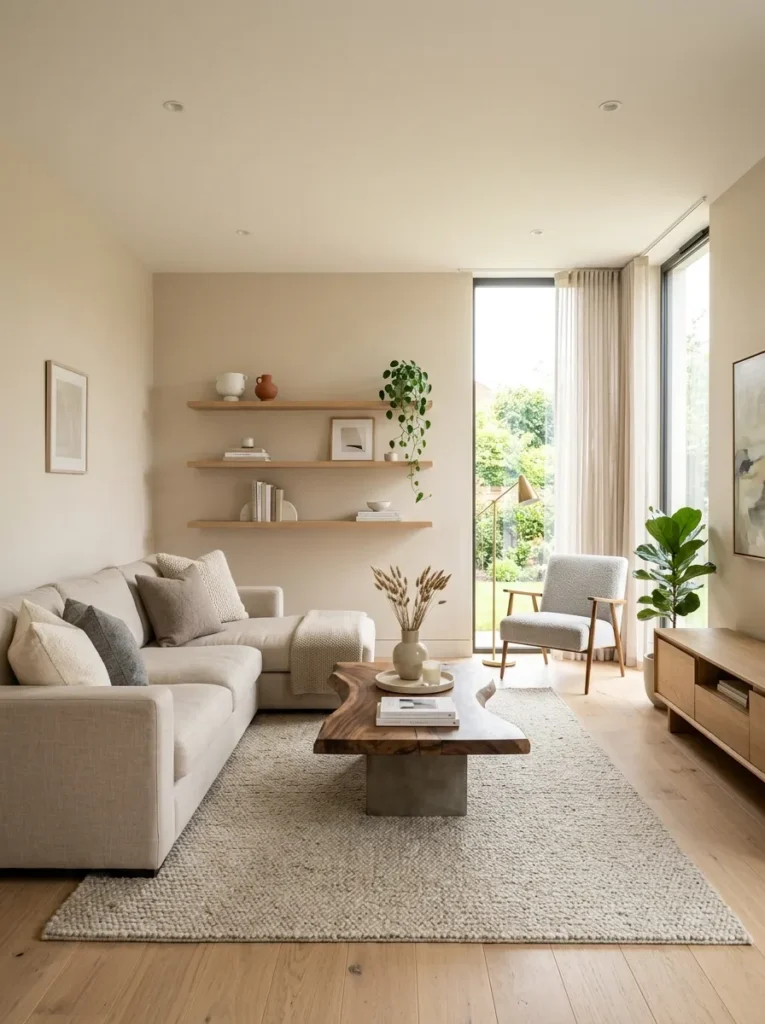
- Keeps the room open and visually calming.
- Lets quality furniture become the main focus.
- Reduces clutter while maintaining personality.
- Makes everyday cleaning quicker and easier.
- Creates a timeless look that rarely feels outdated.
A balanced minimalist approach focuses on keeping only pieces that are both useful and visually meaningful.
Instead of filling every shelf or tabletop, carefully chosen accessories allow furniture, textures, and architectural details to stand out naturally.
Open surfaces create breathing room, making even modest spaces feel brighter and more spacious.
This decorating style proves that thoughtful restraint often has a greater impact than adding more items to every available corner.
Minimalism doesn’t mean removing warmth or personality from a home.
That’s why many designers recommend mixing simple layouts with cozy fabrics, natural materials, and meaningful decorative accents.
I’ve seen this work well in many homes because the space remains functional while still feeling welcoming and lived in.
A few well-chosen books, ceramics, or framed artwork often create more visual impact than dozens of smaller decorations competing for attention.
13. Curved Furniture Shapes
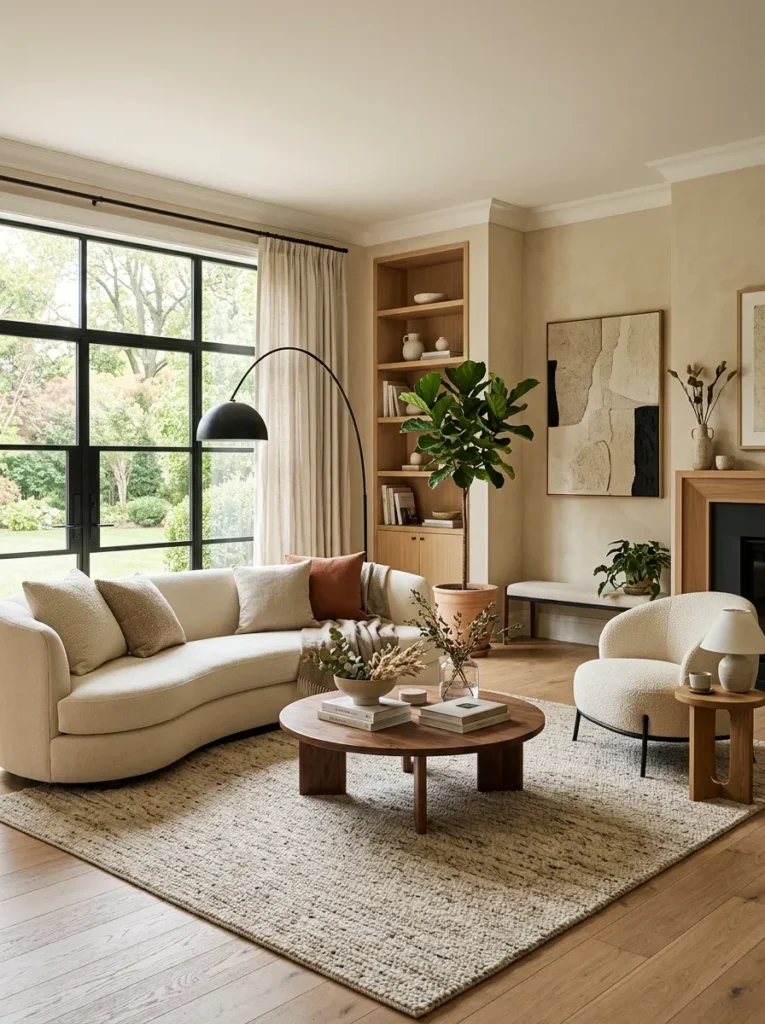
- Softens the look of straight walls and sharp corners.
- Creates a smooth, welcoming flow throughout the room.
- Adds a modern touch without feeling overly trendy.
- Makes conversation areas feel more inviting.
- Balances clean lines with gentle organic forms.
Curved furniture introduces a softer rhythm that instantly makes a room feel more welcoming.
A rounded sofa, circular coffee table, or arched floor lamp breaks up the straight lines found in walls, windows, and cabinetry.
This gentle contrast creates visual movement without making the layout feel busy.
The result is a space that feels comfortable and contemporary while maintaining an elegant balance.
Even adding one curved piece can completely change the overall character of the room.
Many people are surprised by how naturally rounded shapes improve the flow of a seating arrangement.
In my experience, curved pieces encourage easier movement around the room because there are fewer sharp edges interrupting the layout.
Pairing these forms with textured fabrics and warm wood finishes creates an inviting atmosphere that feels relaxed rather than formal.
This subtle design choice works beautifully in both compact apartments and spacious family homes.
14. Mixed Wood Tones
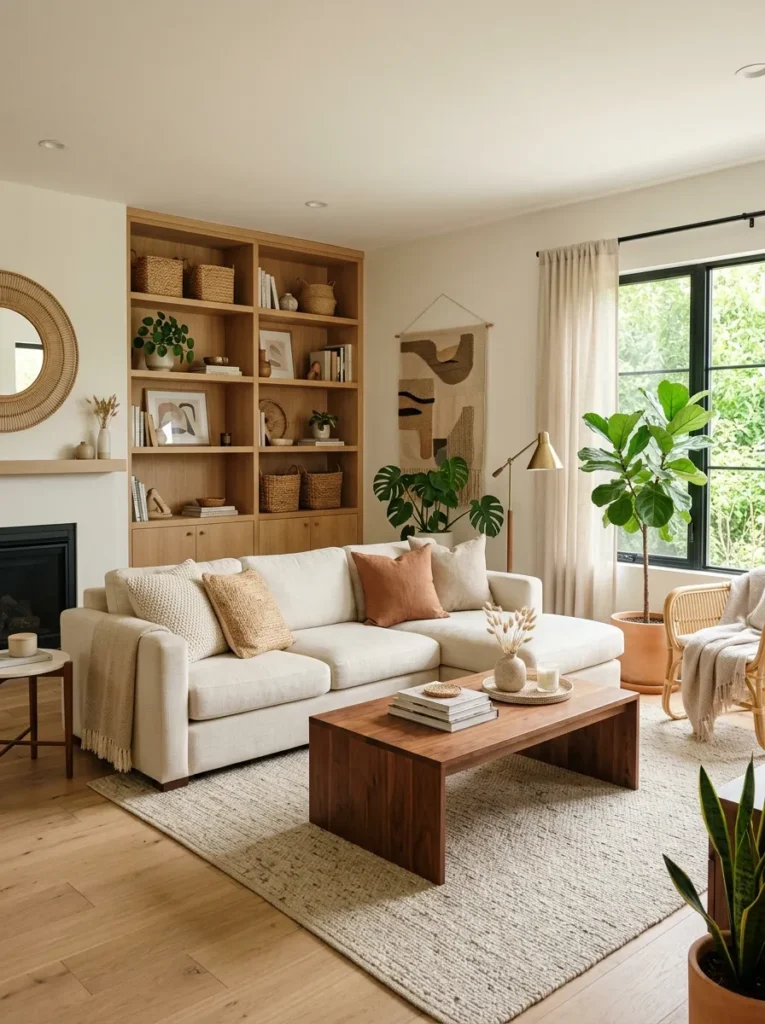
- Prevents the room from looking flat or overly matched.
- Adds natural depth through contrasting wood finishes.
- Creates a collected and designer-inspired appearance.
- Pairs beautifully with neutral textiles and greenery.
- Gives older and newer furniture a cohesive look.
Combining different wood finishes creates a richer and more layered interior than relying on a single tone everywhere.
Light oak floors paired with walnut tables or medium-toned shelving add subtle contrast while maintaining harmony.
Keeping similar undertones helps everything feel connected instead of random.
This thoughtful mix gives the room a curated appearance, making both vintage and modern pieces work together without sacrificing balance or visual comfort.
A simple way to make mixed woods feel intentional is to repeat each finish in more than one place.
I’ve noticed that matching a walnut table with picture frames or decorative bowls creates quiet consistency throughout the room.
Natural textures like woven baskets and linen fabrics also help bridge different wood colors.
The finished space feels collected over time rather than purchased all at once, adding warmth and authentic character to everyday living.
15. Cozy Reading Nook
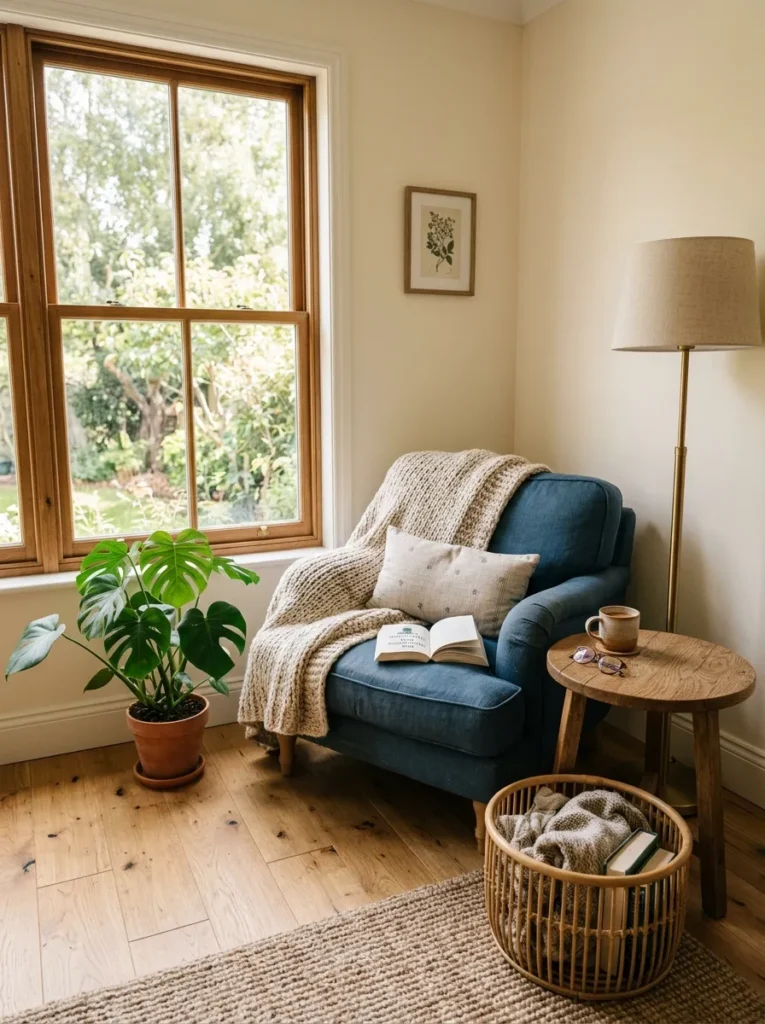
- Creates a dedicated space to relax every day.
- Makes an unused corner both functional and inviting.
- Adds warmth without changing the entire layout.
- Encourages quiet moments away from distractions.
- Completes the room with a purposeful feature.
A quiet reading nook transforms an overlooked corner into a comfortable retreat for daily relaxation.
Placing a supportive chair near a window, adding a soft throw, and including a small table for books or drinks creates a practical space that feels intentionally designed.
Warm lighting makes the area equally inviting during the evening, while nearby greenery introduces a refreshing natural touch.
These simple additions make the room feel more complete without requiring major furniture changes.
The most successful reading corners prioritize comfort over decoration alone.
That’s why many designers recommend selecting seating you genuinely enjoy using instead of focusing only on appearance.
I’ve seen this work well in many homes because people naturally spend more time in spaces designed around everyday habits.
Whether reading, journaling, or enjoying a quiet cup of tea, this dedicated corner adds lasting value while making the overall layout feel warmer and more personal.
16. Floating Media Console
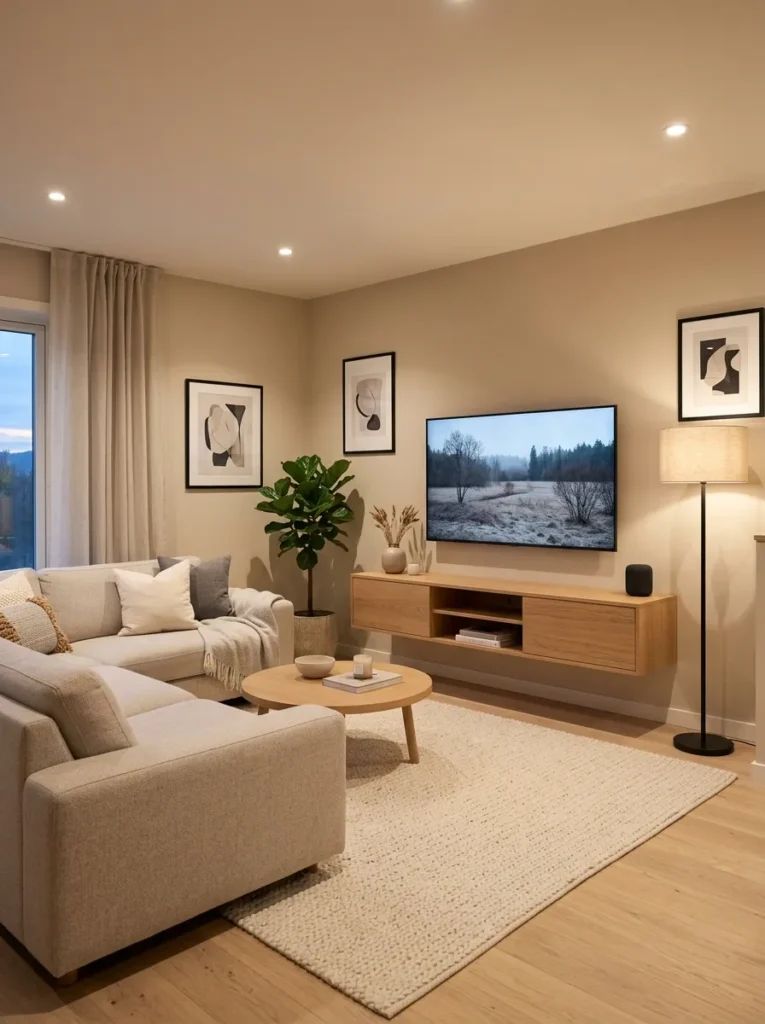
- Frees up floor space for a cleaner appearance.
- Creates a sleek and modern entertainment area.
- Keeps cables and electronics neatly organized.
- Makes cleaning underneath quick and effortless.
- Blends storage with a light, open design.
A floating media console instantly gives the entertainment wall a lighter and more streamlined appearance.
Mounting the cabinet above the floor creates visual openness while offering practical storage for electronics, remotes, and everyday accessories.
Concealed cable management keeps everything looking tidy, allowing decorative pieces to become the focus instead of tangled wires.
This setup works especially well in smaller homes because the uninterrupted floor area makes the entire room appear larger and less crowded.
Choosing a console that complements nearby furniture helps the space feel cohesive without looking overly matched.
In my experience, simple wood finishes paired with clean hardware remain stylish long after decorating trends change.
Leaving a little empty space around decorative objects also prevents the console from feeling cluttered.
The result is a balanced entertainment area that supports everyday living while maintaining an organized and polished appearance.
17. Large Statement Mirror
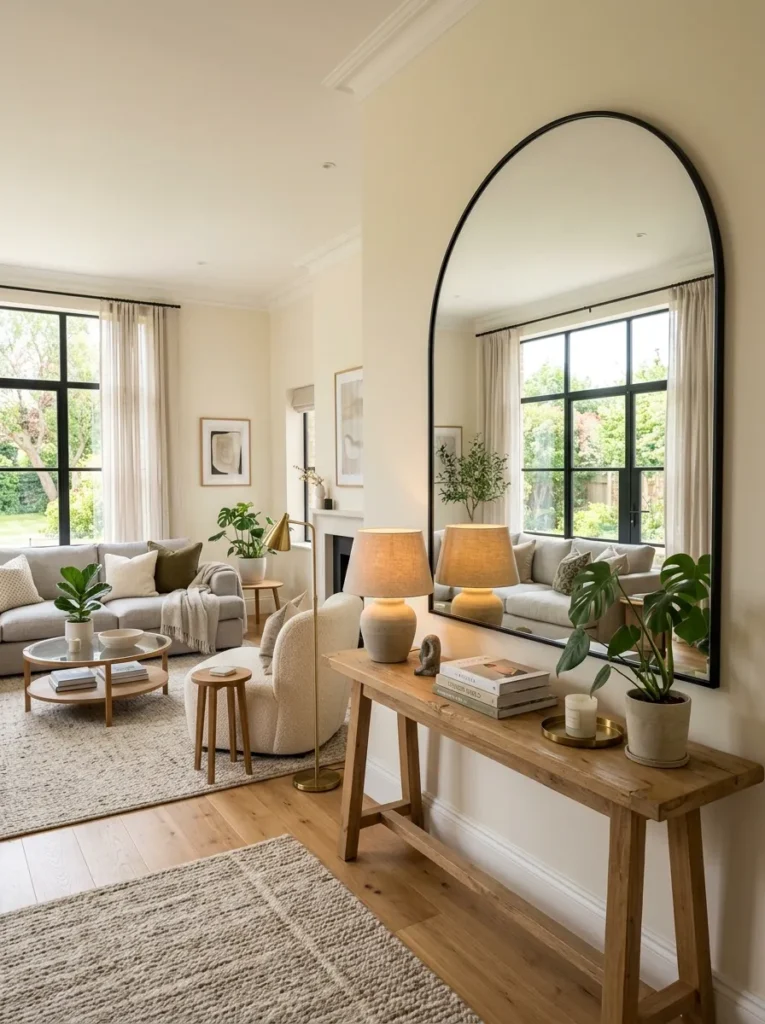
- Reflects light to brighten darker areas.
- Makes the room feel noticeably more spacious.
- Adds an elegant focal point to empty walls.
- Enhances existing decor without adding clutter.
- Complements both modern and classic interiors.
A large mirror has the ability to transform a room by reflecting light and expanding the sense of space.
Positioning it opposite a window captures natural daylight and spreads brightness throughout the area, making even compact layouts feel more open.
An oversized arched or rectangular frame also creates a strong visual focal point that adds sophistication without overwhelming surrounding decor.
This timeless feature blends effortlessly with a wide range of interior styles.
Placement matters just as much as the mirror itself.
I’ve noticed that reflecting attractive features such as artwork, greenery, or beautiful lighting doubles their visual impact while making the room feel more dynamic.C
hoosing a frame that echoes nearby wood tones or metal finishes ties everything together naturally.
This simple addition delivers one of the highest visual returns with minimal effort, making it a favorite design strategy for refreshing everyday spaces.
18. Open Shelf Styling
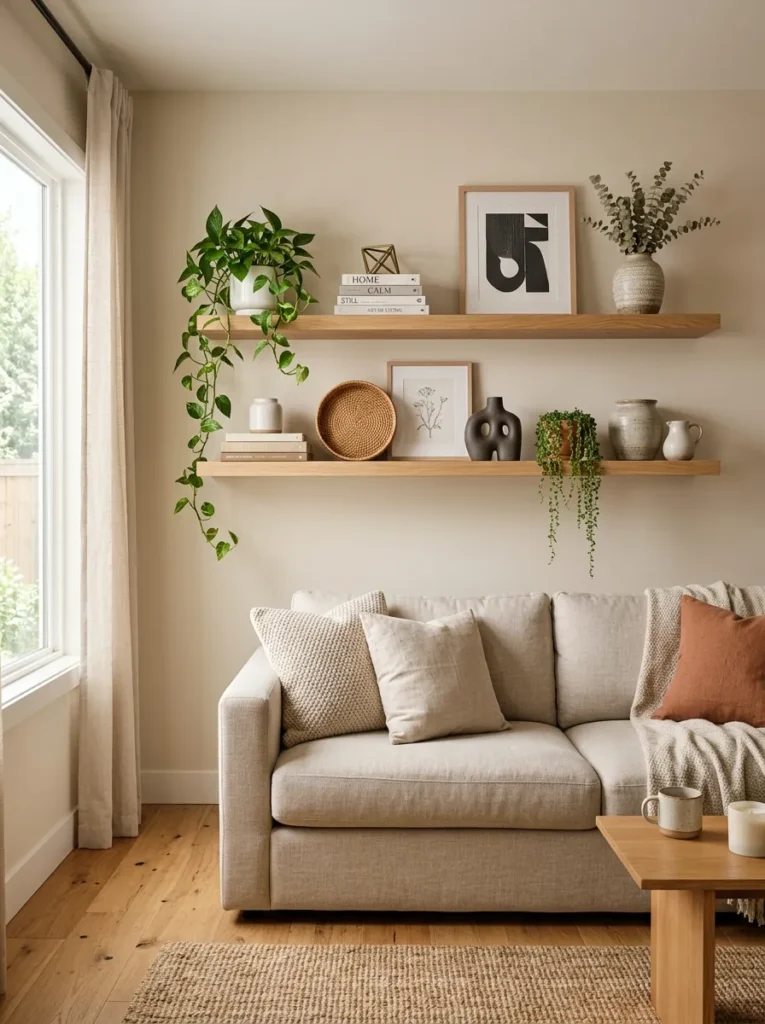
- Displays favorite decor without overwhelming the room.
- Adds height and personality to blank walls.
- Keeps decorative collections organized and intentional.
- Makes seasonal styling quick and simple.
- Creates depth through layered accessories.
Open shelving offers the perfect opportunity to showcase meaningful pieces while keeping the room visually organized.
Mixing books, ceramics, framed artwork, greenery, and woven accents creates layered displays that feel collected rather than crowded.
Varying object heights and leaving open space between groupings prevents shelves from appearing heavy.
This thoughtful styling approach introduces personality while maintaining a clean aesthetic that complements both modern and traditional interiors.
Instead of filling every shelf completely, focus on displaying only items that bring beauty or purpose.
That’s why many designers recommend grouping objects in odd numbers and combining different textures for added interest.
I’ve seen this work well in many homes because carefully edited displays remain visually calming while still feeling personal.
Refreshing a few decorative pieces throughout the seasons also keeps the shelves looking current without requiring a complete redesign.
19. Soft Earthy Accents
- Introduces warmth without overpowering the room.
- Complements neutral furniture with subtle color.
- Creates a cozy atmosphere throughout every season.
- Adds depth using nature-inspired tones.
- Refreshes the space with simple decorative updates.
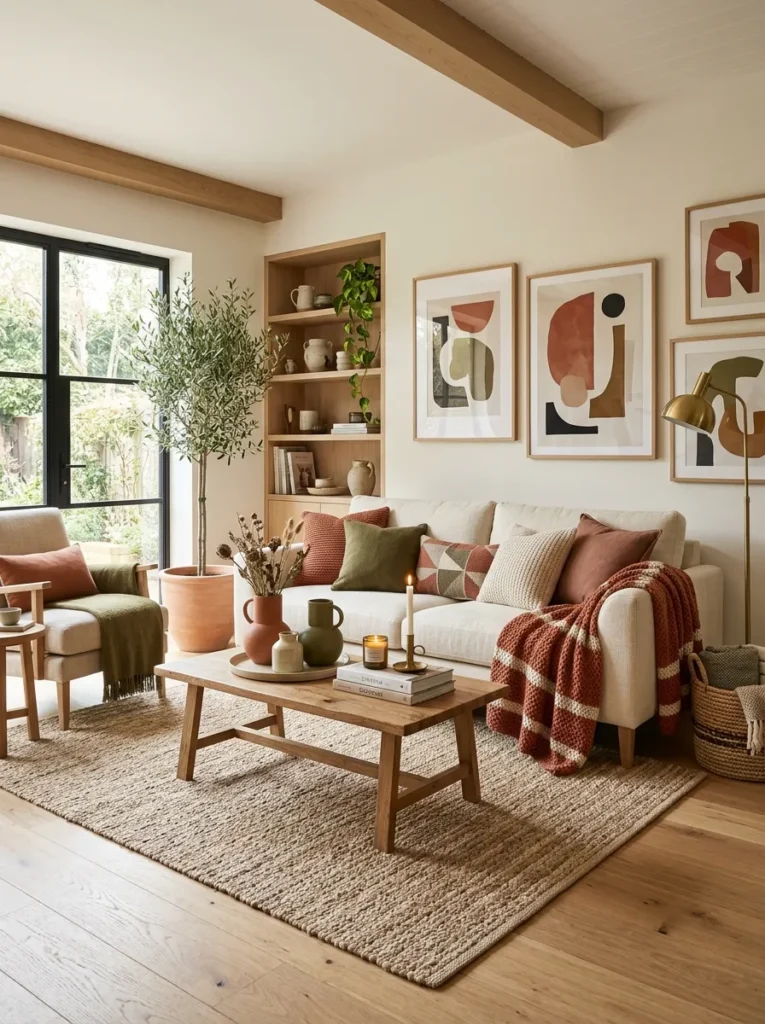
Earthy accent colors instantly make a room feel warmer while maintaining a calm and timeless appearance.
Shades like terracotta, olive green, muted rust, and sandy brown blend beautifully with neutral furniture, adding depth without dominating the design.
Swapping in colorful cushions, cozy throws, ceramic vases, or artwork is an affordable way to refresh the space throughout the year.
These natural tones create a welcoming environment that feels comfortable for everyday living while remaining versatile enough to adapt as decorating styles evolve.
The beauty of earthy colors is their flexibility across different materials and seasons.
In my experience, even a few thoughtfully chosen accessories can completely change the mood without requiring new furniture or major renovations.
Pairing these shades with wood finishes, woven textures, and indoor plants creates a balanced setting inspired by nature.
The finished room feels layered, relaxing, and effortlessly stylish, making it easier to enjoy every corner while keeping the overall design cohesive.
20. Personal Decor Touches
- Makes the space feel unique and meaningful.
- Adds personality beyond store-bought decorations.
- Sparks conversation with memorable display pieces.
- Creates a welcoming atmosphere for family and guests.
- Helps the room reflect everyday life and personal style.
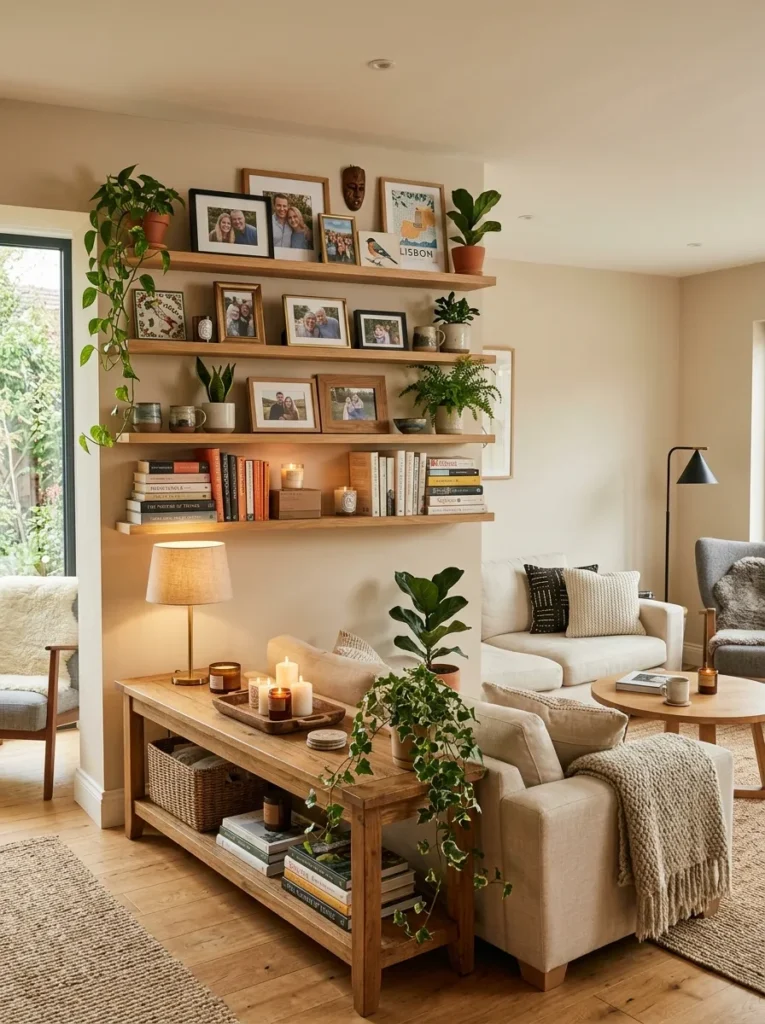
The most memorable interiors always include personal details that tell a story.
Family photographs, travel keepsakes, favorite books, handmade pottery, or treasured artwork give the room warmth that cannot be recreated with mass-produced accessories alone.
Thoughtfully displaying meaningful objects among simple decorative pieces creates a balanced look that feels authentic instead of overly styled.
These personal touches bring character into the space while making visitors feel immediately welcomed and connected to the home.
Rather than decorating every surface, choose a few meaningful items that truly represent your lifestyle and experiences.
I’ve noticed that carefully edited displays feel more impactful because each object has room to stand out.
Rotating seasonal pieces or newly collected treasures keeps the room feeling fresh without creating clutter.
Small changes over time allow the space to grow naturally, resulting in a home that feels comfortable, inviting, and genuinely reflective of the people who live there.
Conclusion
Creating a beautiful home doesn’t require a complete makeover—small, intentional changes can make an incredible difference.
These Living Room Ideas show how thoughtful furniture choices, warm textures, balanced lighting, and personal touches can transform an ordinary space into one that feels cozy, stylish, and truly welcoming.
I’ve seen how simple updates like these can completely change the atmosphere of a room without stretching the budget.
Save this guide on Pinterest for future inspiration, try your favorite ideas one step at a time, and share it with friends or family who are ready to refresh their homes too.