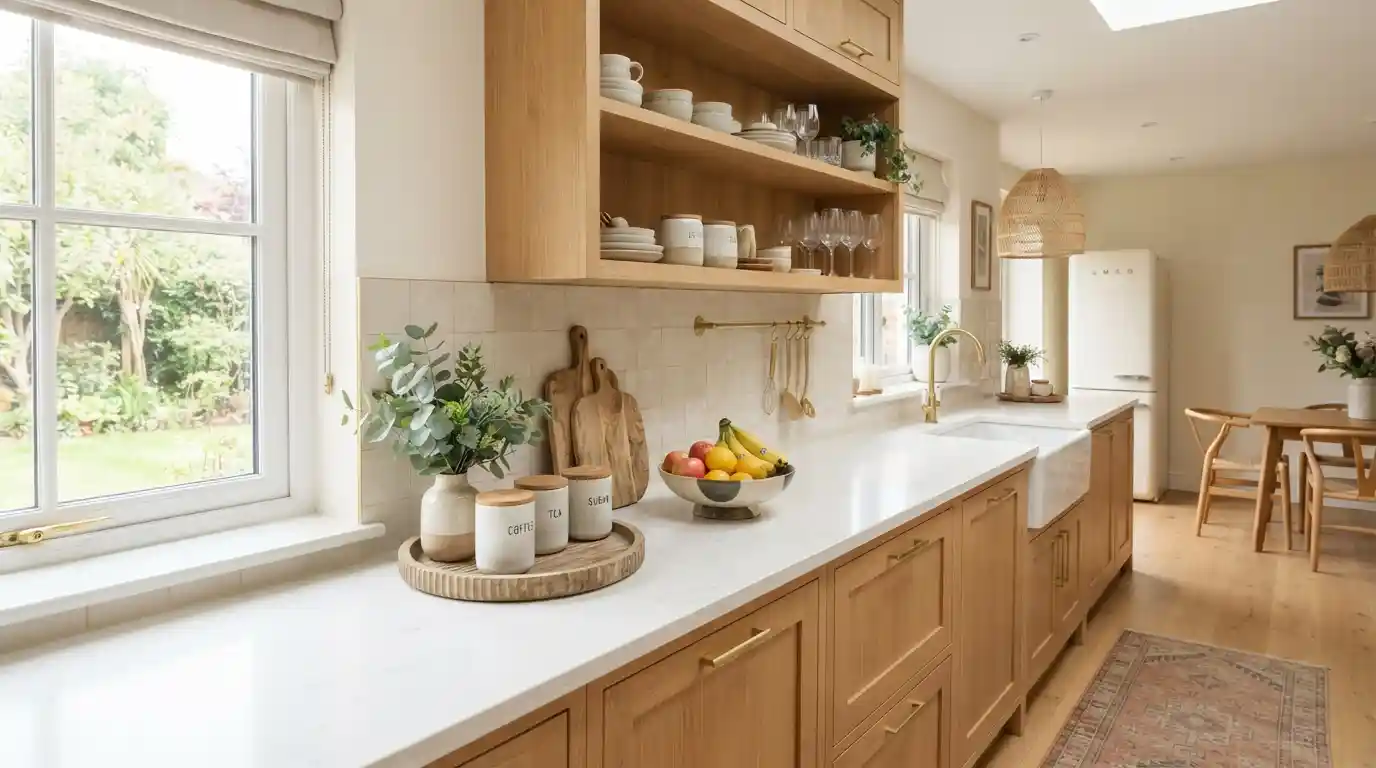
25 Beautiful Kitchen Countertop Decor Ideas for a Neat Space
Your kitchen counter can look polished without looking overdecorated.
A few thoughtful changes can make even a busy countertop feel calm, useful, and beautiful.
These Kitchen Countertop Decor Ideas are designed to help you create a space that feels organized while still reflecting your personal style.
From warm wooden trays and fresh greenery to practical canisters and attractive cutting boards, each idea combines function with visual appeal.
The goal is not to fill every empty spot, but to choose pieces that make everyday life easier and the kitchen more inviting.
In my experience, simply grouping frequently used items or clearing one crowded corner can make a noticeable difference.
As you explore these ideas, you’ll find simple ways to create a countertop that feels intentional, spacious, and easy to maintain.
Also read: 15 Best Under Bathroom Sink Organization Ideas for a Tidy Space
1. Wooden Tray Arrangement
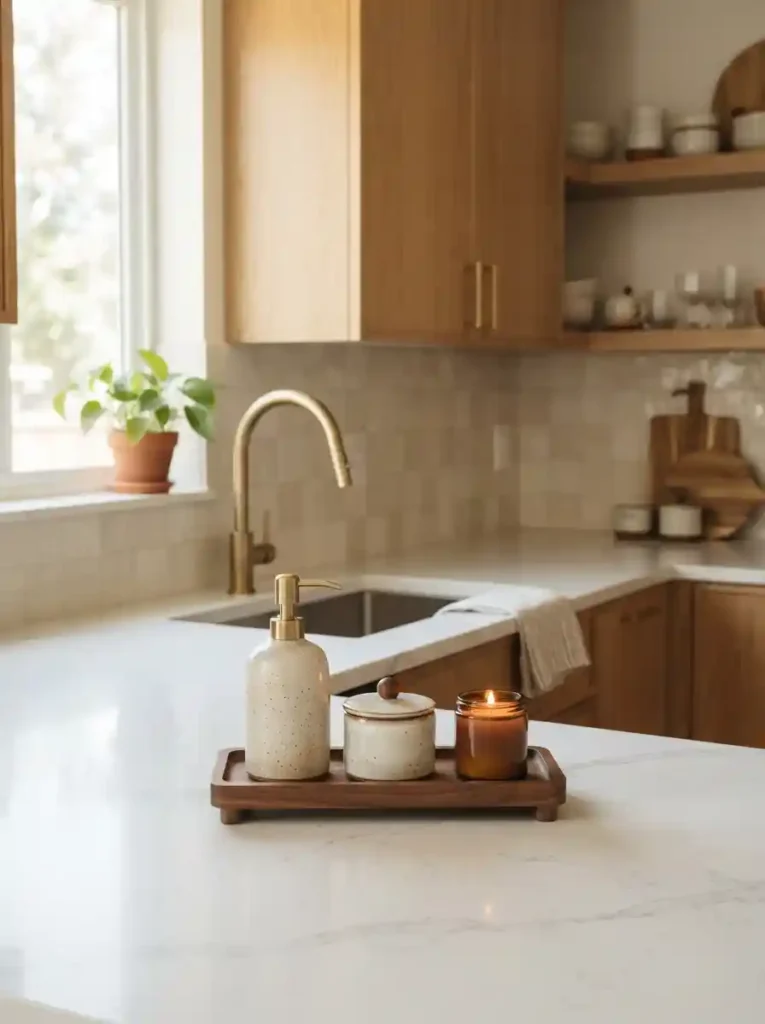
- Groups everyday countertop items into one intentional zone.
- Adds warmth and texture without taking over the surface.
- Makes small essentials easier to move when you need workspace.
- A low-profile tray keeps the arrangement looking neat and contained.
A clear countertop can make the whole kitchen feel instantly calmer, and a small wooden tray is one of the easiest ways to create that effect. Choose a low-profile tray in oak, bamboo, or warm walnut, then group only a few useful pieces inside it. A soap dispenser, small jar, and candle can look intentional instead of scattered. In my experience, trays work especially well in busy kitchens because they create a visual boundary for everyday items. When you need extra workspace, you can lift the entire arrangement and move it aside in seconds.
Keep the tray close to one side of the sink or along the back edge of the counter, leaving the main prep area open. Pair natural wood with white, cream, or soft gray accessories for a clean look, or use matte black accents for a modern contrast. This simple arrangement adds warmth without making the surface feel crowded. It also gives small objects a designated home, which makes daily tidying easier. For smaller kitchens, choose a narrow rectangular tray rather than a wide one. The result is polished, practical, and easy to maintain every day.
2. Ceramic Fruit Bowl
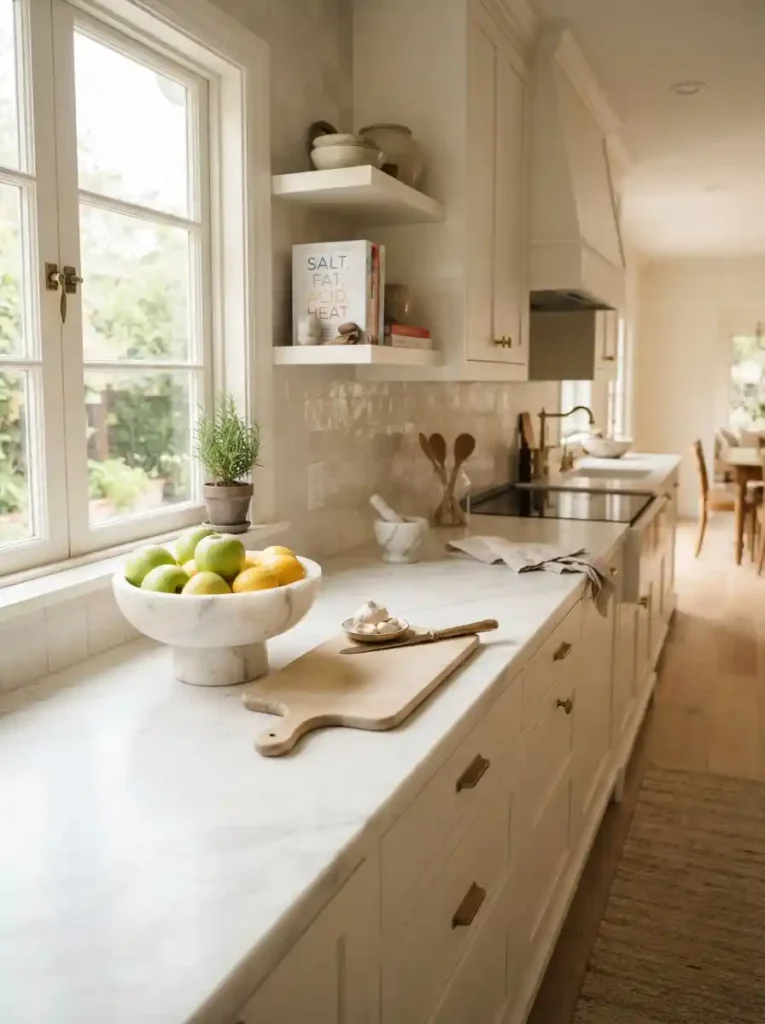
- Turns everyday produce into an easy decorative feature.
- Adds fresh color and natural texture to neutral countertops.
- Keeps frequently used fruit visible and within reach.
- A shallow bowl prevents the display from looking bulky.
Fresh fruit can become part of the decor when it is displayed in a beautiful bowl instead of left in its packaging. A shallow ceramic, stoneware, or woven bowl adds an inviting focal point while keeping healthy snacks within easy reach. Choose two or three colors that complement the kitchen, such as green apples with yellow lemons against a neutral counter. I’ve noticed this works particularly well in kitchens that already have simple finishes because the fruit adds natural color without introducing visual clutter. Keep the bowl moderately filled so the arrangement looks fresh rather than overly styled.
Place the bowl where it is easy to reach but away from the main chopping zone, such as a corner near the dining area or beside the coffee station. For a modern kitchen, choose a smooth white or matte black bowl; for a warmer space, try terracotta, rattan, or natural stone. This small change can soften hard countertop surfaces and make the room feel more lived-in. Rotate seasonal produce to keep the display interesting throughout the year. Because the bowl serves a practical purpose, it adds personality without sacrificing useful workspace or creating unnecessary maintenance.
3. Greenery In A Vase
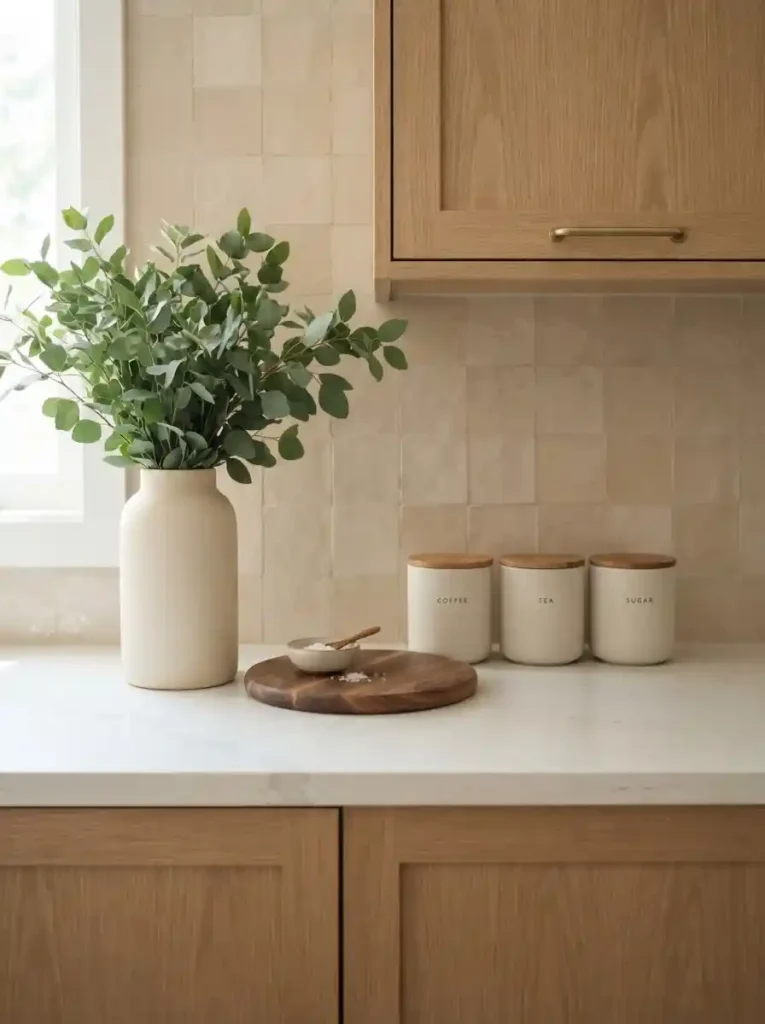
- Introduces natural softness to hard countertop surfaces.
- Adds height without requiring much counter space.
- Works beautifully with neutral and minimalist kitchen schemes.
- Loose branches create a relaxed look without excessive styling.
A single leafy branch can bring a surprising amount of life to an otherwise plain counter, especially when the rest of the kitchen is neutral. Choose a tall ceramic vase in white, beige, or soft gray and fill it with eucalyptus, olive branches, or another airy stem arrangement. Keep the foliage loose rather than dense so it does not overwhelm the workspace. That’s why many designers use vertical greenery as a simple styling trick: it draws the eye upward while taking very little counter space. The natural texture also balances glossy stone, metal fixtures, and smooth cabinetry beautifully.
Position the vase toward the back corner of the countertop, where it can add height without interfering with food preparation. A narrow vessel is ideal for compact kitchens because it creates vertical interest while preserving valuable surface area. Pair it with one small cutting board or a couple of neutral canisters if the counter needs a little more function. Avoid filling every available spot; the open space around the vase is part of the design. This approach works especially well for minimalist, modern, and Scandinavian kitchens because the greenery adds softness while keeping the overall arrangement clean and intentional.
4. Coffee Station Corner
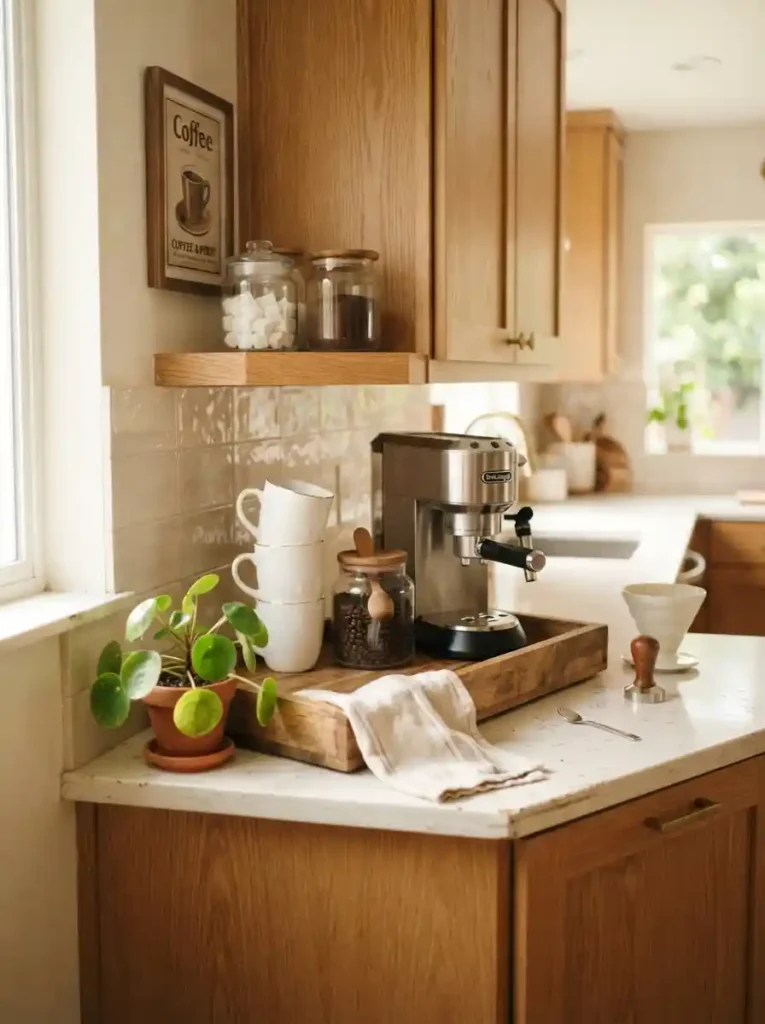
- Creates a dedicated spot for morning coffee essentials.
- Keeps mugs, beans, and accessories grouped together.
- Makes an unused countertop corner feel purposeful.
- A small tray helps contain everyday items neatly.
Turn an unused kitchen corner into a coffee station that feels both practical and polished. Start with a compact coffee maker or espresso machine, then add a small tray for mugs, coffee beans, and a spoon jar. Keeping everything together prevents scattered supplies from taking over the countertop. In my experience, this setup works especially well for busy households because the most-used morning items stay within easy reach. Choose accessories that repeat your kitchen’s colors, such as cream ceramics with warm wood or black details with darker cabinetry. The result feels intentional without requiring a large renovation or extra furniture.
Leave enough clearance around the machine for comfortable use, especially if you regularly refill water or remove the coffee basket. A narrow shelf or wall-mounted mug rack can provide additional storage without consuming valuable counter space. For a softer look, add a small plant or framed print behind the station. If your kitchen is compact, keep the arrangement limited to essentials rather than displaying every coffee accessory. This approach gives the countertop a clear purpose while maintaining an organized appearance. It also makes mornings smoother because everything needed for a quick cup has a consistent place.
5. Marble Cutting Board
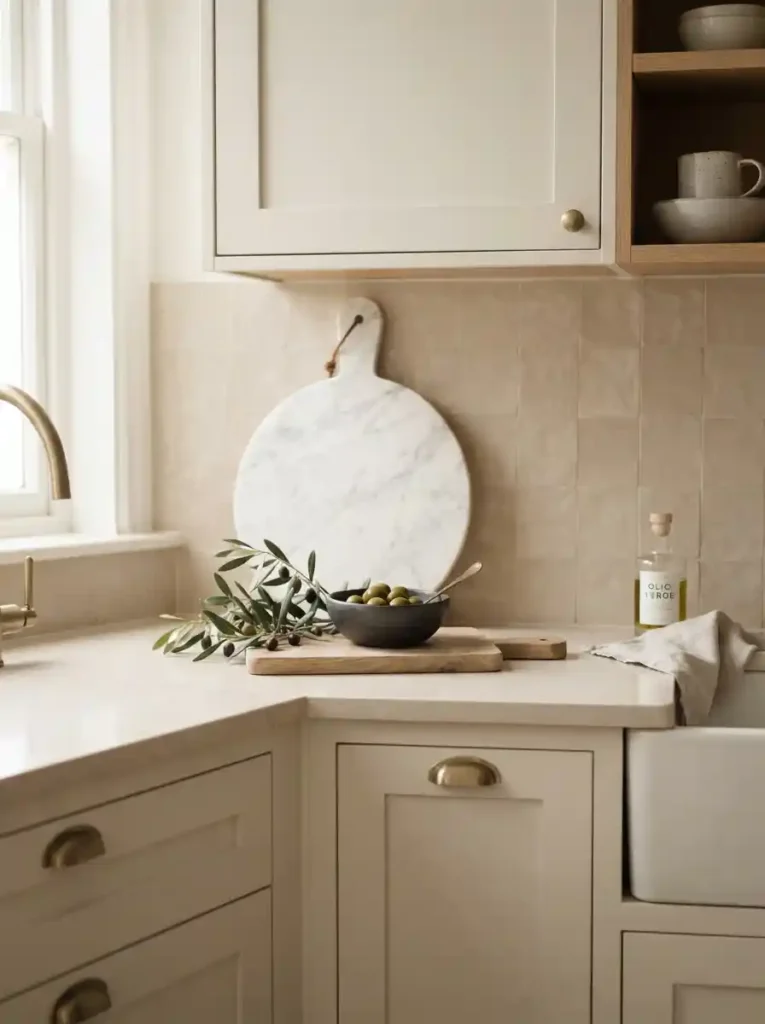
- Adds a refined decorative layer while remaining genuinely useful.
- Creates a beautiful contrast against wood or quartz counters.
- Provides an easy surface for serving bread, fruit, or cheese.
- Leaning one board against the backsplash adds subtle height.
A beautiful cutting board can do more than prepare food; it can become one of the most useful decorative accents on your counter. Lean a thick marble board against the backsplash and pair it with a smaller wooden board for layered texture. The contrast between cool stone and warm wood creates visual depth without adding unnecessary objects. This is especially effective when the surrounding finishes are simple and neutral. I’ve seen this work well in real kitchens because the boards remain accessible for serving or prep while giving the countertop a finished appearance. Choose pieces with attractive edges or natural veining for extra character.
Place the largest board at the back, then angle a smaller board slightly in front so both remain visible. Keep the arrangement close to the wall rather than near the sink or stove, where splashes and heat can make maintenance harder. Marble is excellent for presentation, but porous stone should be cleaned appropriately and protected from staining. If marble feels too formal, try quartz, acacia wood, or another durable material. The key is choosing boards that are attractive enough to display and useful enough to justify their countertop space. That balance keeps the styling practical rather than purely decorative.
6. Layered Neutral Canisters
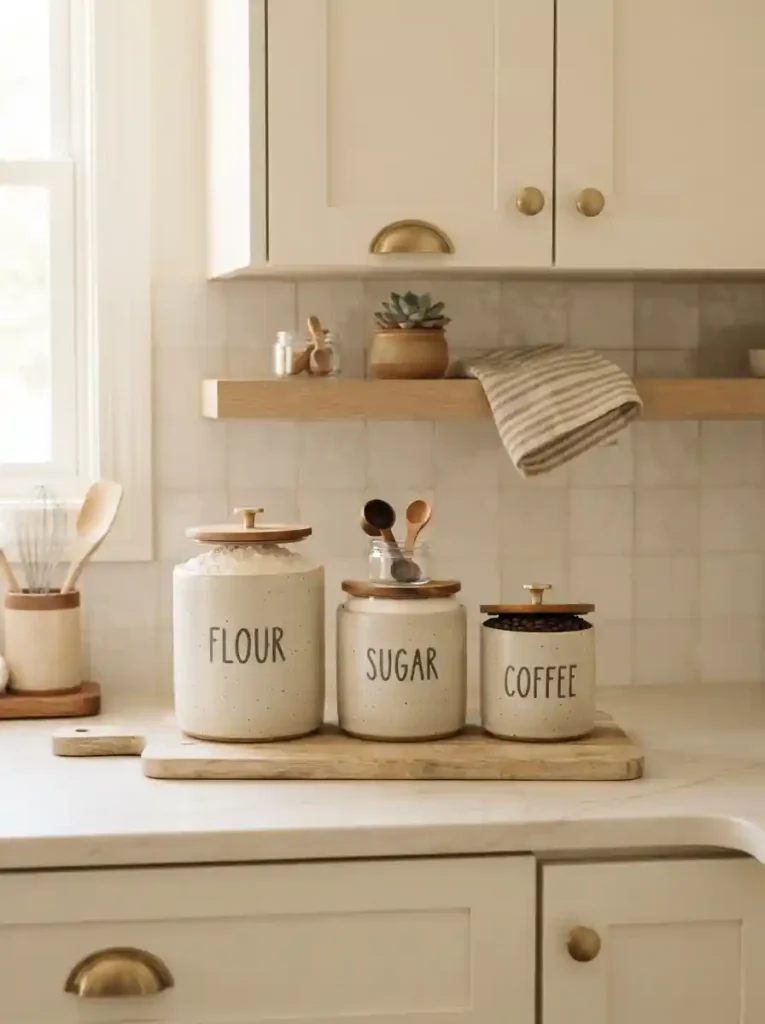
- Keeps dry ingredients close while reducing visual clutter.
- Creates a cohesive look through repeated shapes and colors.
- Adds useful storage without filling the entire countertop.
- Labels can make frequently used ingredients easier to find.
When countertop storage is necessary, make it part of the decor with a coordinated set of neutral canisters. Choose three or four containers in cream, white, beige, or soft gray, then vary their heights to create a simple layered arrangement. Use them for flour, sugar, coffee, tea, or other ingredients you reach for often. This keeps original packaging out of sight and gives the kitchen a calmer appearance. For a cohesive result, repeat one material or finish across the set. Smooth ceramic works beautifully in modern kitchens, while textured stoneware can bring warmth to farmhouse or cottage-inspired spaces.
Arrange the tallest canister toward the back and place shorter containers in front, creating an easy visual progression. Keep the group near the prep area or pantry entrance so it remains convenient rather than decorative clutter. Clear labels are useful if several ingredients look similar, especially in busy family kitchens. Avoid filling every inch around the containers; a little breathing room makes the display look more deliberate. These small countertop details can make everyday cooking feel easier while adding texture and structure. The finished arrangement looks tidy because storage and styling serve the same purpose.
7. Tiered Produce Stand
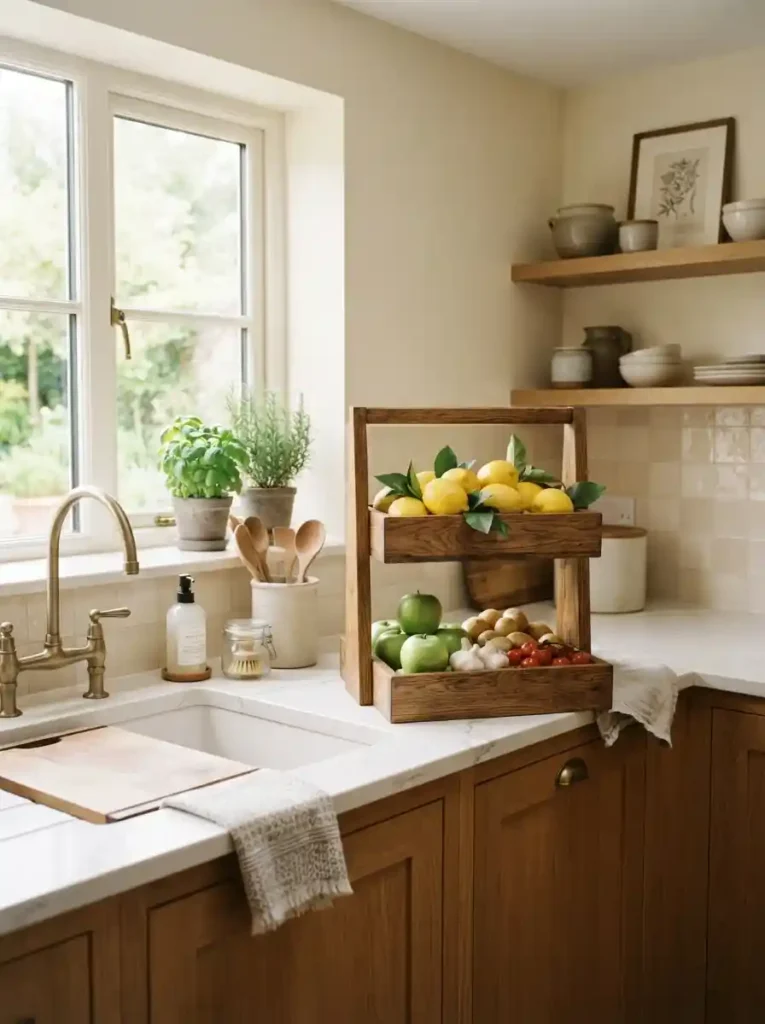
- Uses vertical space instead of spreading items across the counter.
- Keeps fruits and vegetables visible and easy to reach.
- Adds height and dimension to a flat countertop.
- Works especially well in kitchens with limited surface area.
A tiered produce stand is a smart way to display fresh ingredients without allowing them to spread across the countertop. Choose a compact wooden or metal stand with two levels, placing larger fruits on the bottom and smaller items above. The vertical design creates height while preserving valuable prep space underneath. In my experience, this works particularly well in smaller kitchens where every inch of counter matters. It also makes produce easier to see, which can encourage you to use what you already have instead of letting ingredients disappear into a crowded bowl or cabinet.
Place the stand near a corner, pantry entrance, or breakfast area where it stays accessible but does not interrupt cooking. Natural wood looks warm against white quartz, while black metal creates a sharper modern contrast. Avoid overfilling both tiers because crowded produce can quickly make the counter appear messy. Leave some open space between items so the arrangement feels airy and intentional. You can also use the lower tier for bread, onions, or kitchen towels when fruit is limited. This flexible setup combines storage and decoration, making it a practical choice for everyday countertop styling.
8. Glass Storage Jars
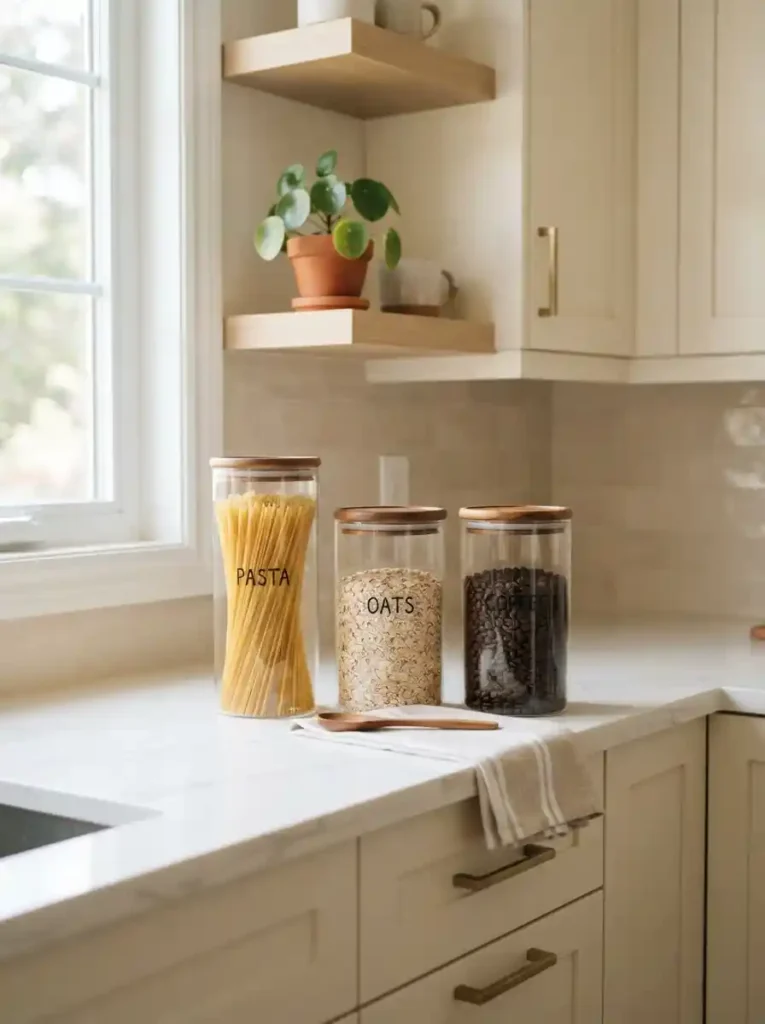
- Keeps frequently used ingredients visible and organized.
- Adds a clean, airy look to open countertop areas.
- Creates consistency when mismatched food packaging is distracting.
- Clear containers make it easier to monitor supplies.
Clear glass jars can make everyday ingredients look surprisingly decorative while keeping them easy to identify. Fill matching jars with pasta, oats, coffee beans, rice, or other dry staples you use regularly. The transparent sides create visual consistency without hiding the natural colors and textures of the food. Wooden or bamboo lids add warmth, while simple glass keeps the overall look light. I’ve noticed that this approach is especially helpful when original packaging creates too many competing colors on a countertop. Grouping several jars together instantly gives that area a more organized and intentional appearance.
Choose jars in similar shapes but slightly different heights for a relaxed layered effect. Position them along the backsplash where they remain accessible without taking over the main preparation area. If you use several ingredients that look alike, add small labels to the front for quick identification. Keep the containers tightly sealed, particularly for ingredients affected by humidity. A small wooden tray underneath can visually connect the jars and make cleaning easier. This combination gives the kitchen a tidy appearance while keeping useful ingredients within reach, proving that practical storage can also contribute to beautiful countertop styling.
9. Decorative Salt Cellar
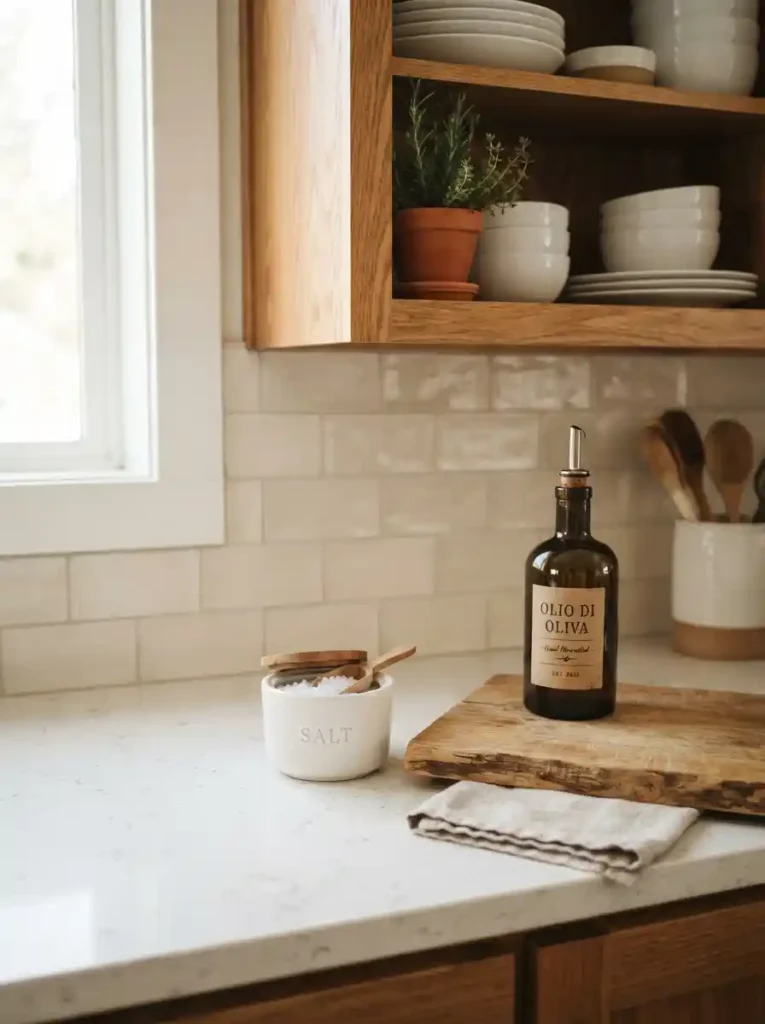
- Keeps a frequently used seasoning within easy reach.
- Adds a small handcrafted detail beside the cooking area.
- Works as a functional accent without occupying much space.
- Ceramic, wood, or stone options suit different kitchen styles.
Sometimes the smallest countertop details create the most polished effect, and a decorative salt cellar is a perfect example. Choose a compact ceramic, marble, or wooden container and place it near the stove or main preparation area for easy access. Instead of leaving a large salt package exposed, you get a useful accessory that looks intentional. A simple white ceramic cellar suits classic kitchens, while dark stone or natural wood adds contrast. This small upgrade is particularly useful when you cook often because the container earns its space through everyday function while quietly improving the overall appearance.
Position the cellar beside a cutting board, oil bottle, or small utensil holder so it becomes part of a practical cooking zone. Avoid placing it directly beside the sink, where water can splash into the seasoning. If your kitchen has open shelving or visible accessories, choose a finish that repeats somewhere else in the room for visual continuity. A tiny spoon can make measuring easier and add another functional detail. Because the container is compact, it works even when counter space is limited. The result is subtle, useful, and polished without making the kitchen feel overly decorated.
10. Wooden Utensil Crock
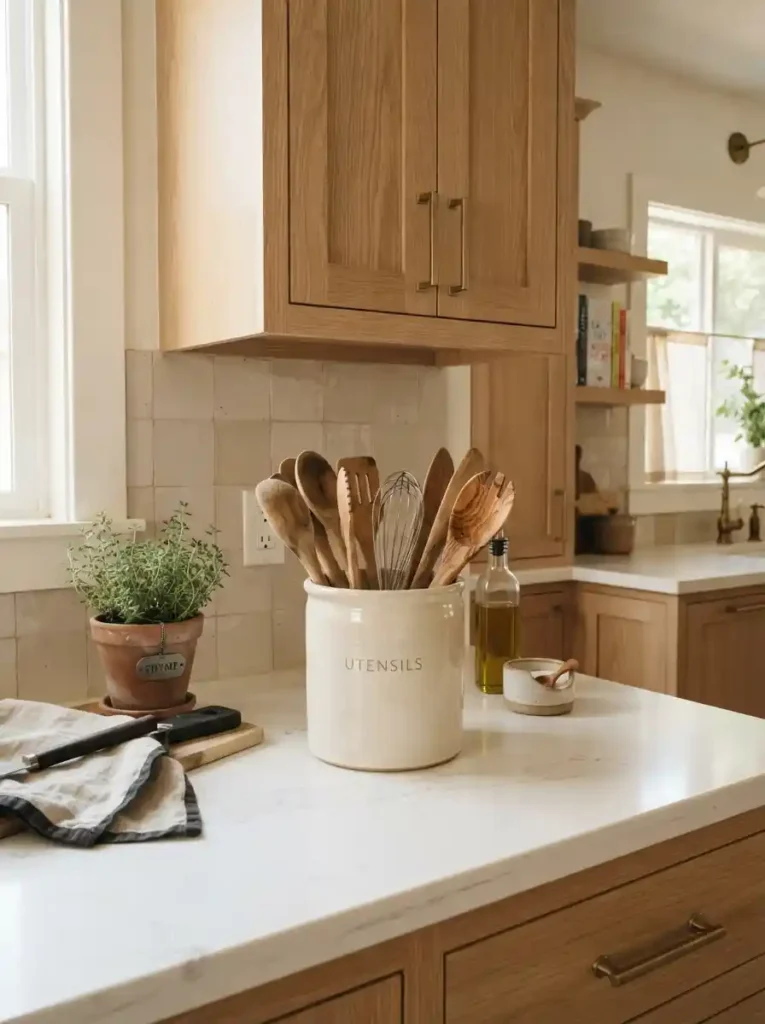
- Keeps everyday cooking tools together beside the prep area.
- Adds warm natural texture to hard countertop surfaces.
- Makes frequently used utensils quick to grab.
- A simple crock prevents loose tools from looking scattered.
A beautiful utensil crock can turn everyday cooking tools into an intentional countertop display. Choose a ceramic, stoneware, or wooden container that complements the kitchen, then fill it with only the utensils you use regularly. Wooden spoons and neutral spatulas create a warm, natural look against white quartz or light cabinetry. I’ve noticed this arrangement works especially well beside the stove because it saves time while cooking and keeps drawers from becoming overcrowded. The key is restraint: too many utensils can make the crock look messy, while a smaller collection feels purposeful and visually balanced.
Place the crock close enough to the cooking zone that you can reach it without crossing the workspace. A heavier container is preferable because it stays stable when you remove a spoon or spatula. If your kitchen has dark cabinets, try a light ceramic crock for contrast; with pale cabinetry, walnut or terracotta can add depth. Keep the surrounding counter relatively open so the utensil display remains the main feature. This simple setup combines storage with decoration, making it one of the most practical kitchen countertop decor ideas for busy homes where function needs to look good too.
11. Olive Oil Display
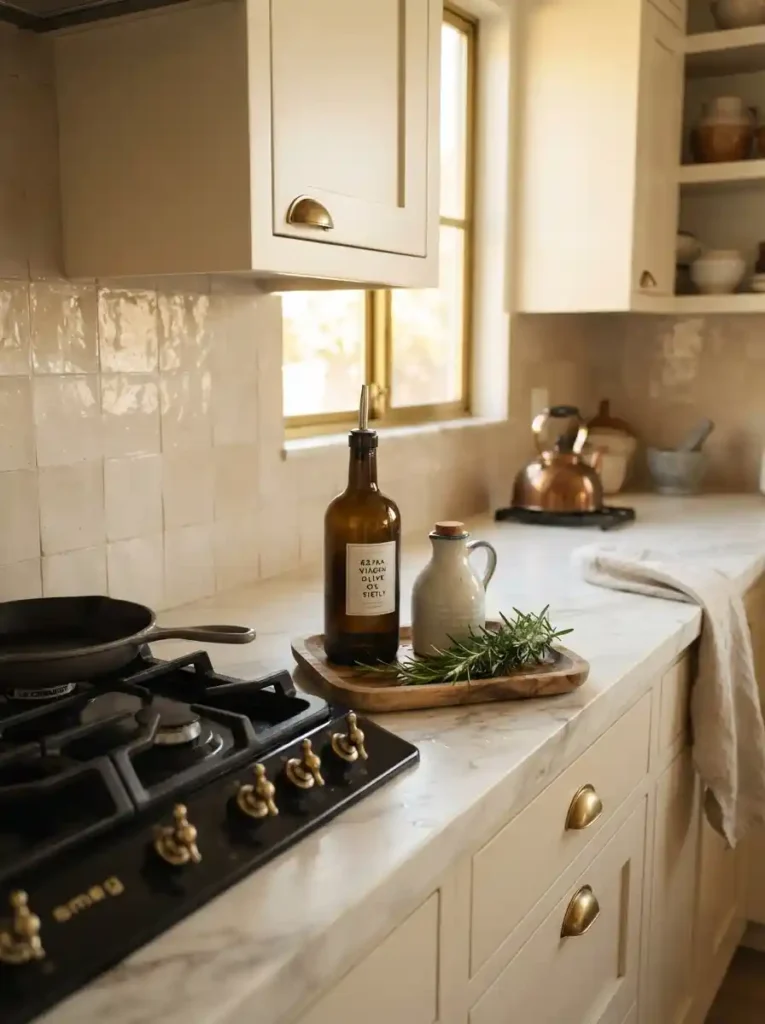
- Turns a daily cooking essential into a refined visual accent.
- Adds warmth through glass, ceramic, or dark metal bottles.
- Keeps frequently used oils close to the cooking zone.
- A small tray helps protect the countertop from drips.
Olive oil can look surprisingly elegant when it is displayed intentionally instead of left in its original bottle. Transfer your everyday oil into a simple ceramic or dark glass dispenser, then place it on a small tray beside the stove. Add one small herb pot or wooden utensil for texture, but keep the arrangement compact. This creates a useful cooking station while removing bright packaging from view. In my experience, repeating warm materials such as wood, brass, and amber glass makes this setup feel especially cohesive. It also gives the cooking area a finished appearance without adding unnecessary decorative objects.
Choose a dispenser with a secure pour spout and keep it away from direct heat to protect both the oil and nearby surfaces. A shallow tray underneath catches small drips and makes cleanup easier. For a modern kitchen, pair black glass with simple white ceramics; for a Mediterranean or farmhouse look, try terracotta and natural wood. Leave enough space around the bottle to use it comfortably while cooking. This small arrangement gives a practical ingredient a decorative role, proving that useful items can contribute to a polished countertop when their colors, materials, and placement are carefully considered.
12. Minimal Appliance Grouping
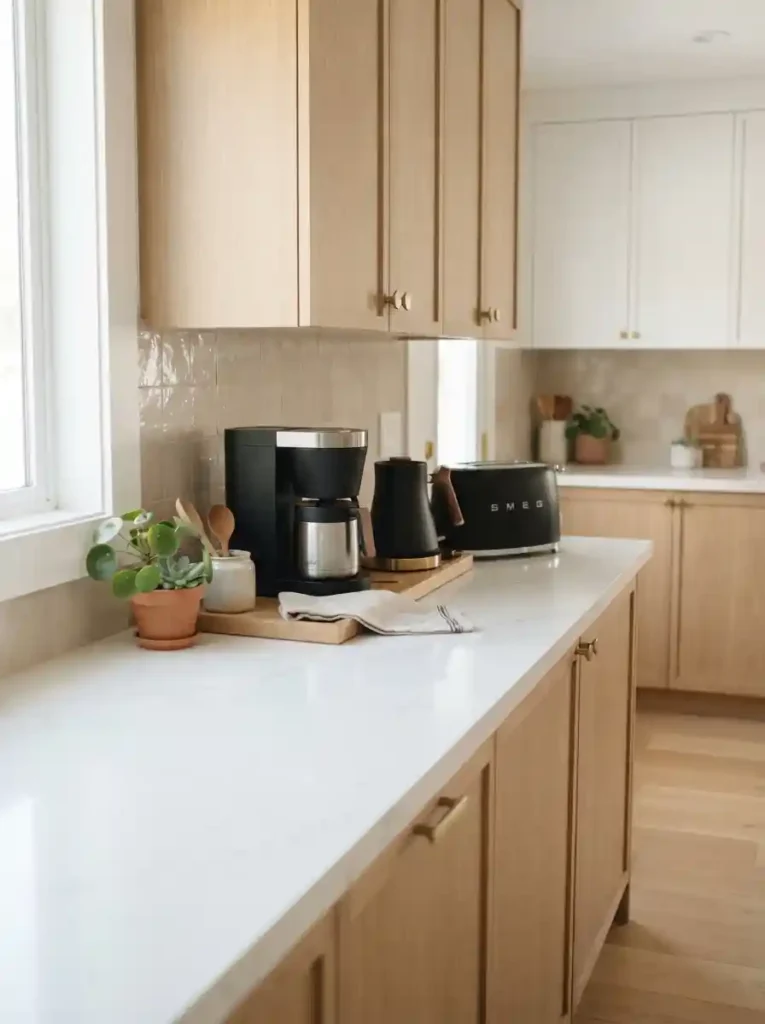
- Keeps essential appliances together instead of scattering them.
- Creates a cleaner visual zone on busy countertops.
- Makes daily routines faster by keeping appliances accessible.
- Leaving breathing room prevents the grouping from feeling crowded.
Large appliances can quickly make a kitchen counter feel crowded, but grouping them thoughtfully creates a much cleaner appearance. Place frequently used appliances such as a coffee maker, toaster, or kettle together along one section of the backsplash instead of spreading them across the entire counter. This creates a dedicated functional zone and leaves the remaining surface open for preparation. That’s why many designers recommend grouping similar functions together. The arrangement feels calmer because your eyes read the appliances as one purposeful area rather than several unrelated objects competing for attention throughout the room.
Start by deciding which appliances genuinely deserve permanent countertop space. Position the tallest appliance toward the back or end of the group, then arrange shorter pieces beside it for a balanced profile. Hide cords behind appliances whenever possible, but keep ventilation and manufacturer clearance requirements in mind. If several appliances have different finishes, place a small wooden tray or neutral accessory nearby to visually connect them. Avoid filling every gap between machines. A little negative space makes the arrangement feel deliberate and keeps everyday tasks comfortable. This approach is especially useful for compact kitchens where counter space needs careful planning.
13. Cookbook Display
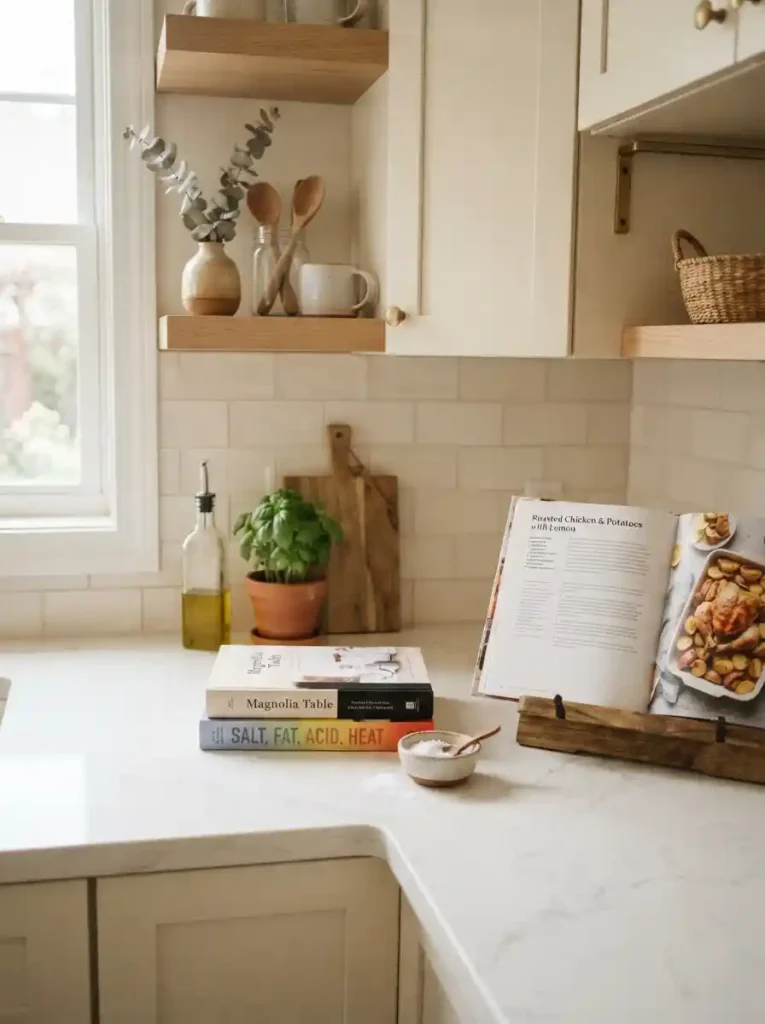
- Adds personality without taking up much countertop space.
- Introduces subtle color through attractive book covers.
- Keeps favorite recipes easy to reach while cooking.
- A slim stand creates height without making the counter feel crowded.
A styled cookbook display can make a kitchen counter feel personal without adding much visual weight. Choose two or three cookbooks with covers that complement your kitchen colors, then lean them against the backsplash or place them in a small stand. Add one simple object, such as a ceramic bowl or wooden spoon, to keep the arrangement grounded. I’ve seen this work especially well in kitchens where the counters are mostly neutral because the book covers introduce subtle color and personality. Keep the stack useful, choosing recipes you actually cook, so the display earns its space rather than becoming clutter.
Keep the books away from the sink and stove to protect them from splashes, steam, and grease. A slim stand makes pages easier to access and creates a stronger vertical line, while a horizontal stack gives the counter a softer, layered look. For a modern kitchen, choose books with minimal covers; for a farmhouse space, natural linen or warm vintage tones work beautifully. Leave open space around the display so it does not compete with appliances or prep areas. This simple styling choice adds character, encourages everyday cooking, and makes the countertop feel more lived-in without sacrificing its practical purpose.
14. Fresh Herb Pots
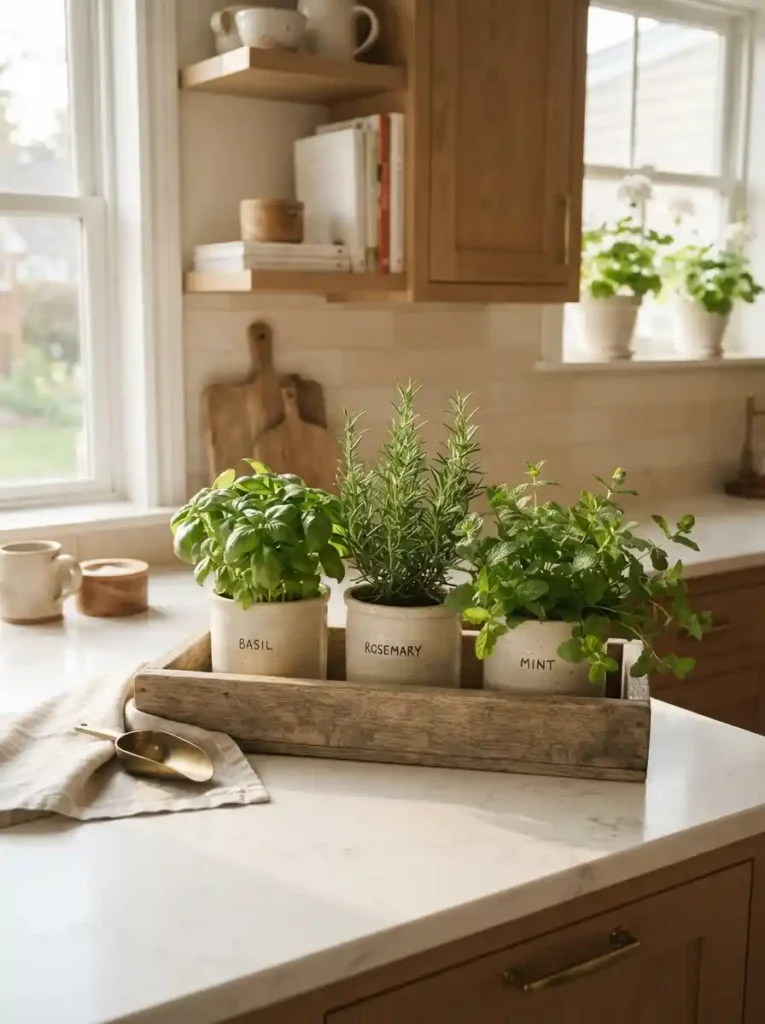
- Brings living greenery and fresh color into the kitchen.
- Keeps useful herbs within easy reach while cooking.
- Adds natural texture against stone, tile, and cabinetry.
- Matching pots create a more cohesive countertop arrangement.
A small herb garden brings fresh color and useful greenery to the countertop while making everyday cooking more convenient. Arrange three or four compact pots of basil, mint, rosemary, or thyme in a shallow tray near a sunny window. Choose matching ceramic pots for a polished look, or mix terracotta containers for a relaxed farmhouse feel. In my experience, living herbs make a kitchen feel instantly fresher because their texture changes naturally as they grow. Keep the arrangement compact and choose varieties suited to the available light so the display stays healthy instead of becoming another maintenance task.
Place the herb pots where they receive appropriate light without blocking the window or crowding the sink. A tray underneath helps contain water and makes the entire group easier to move when cleaning. Use plants with similar watering needs so caring for them remains simple. If natural light is limited, consider a small indoor grow light rather than placing herbs in a dark corner simply for decoration. The greenery adds a lively contrast against stone, tile, and cabinetry, while the herbs remain genuinely useful. This combination makes the countertop feel fresh, functional, and connected to everyday cooking routines.
15. Woven Storage Basket
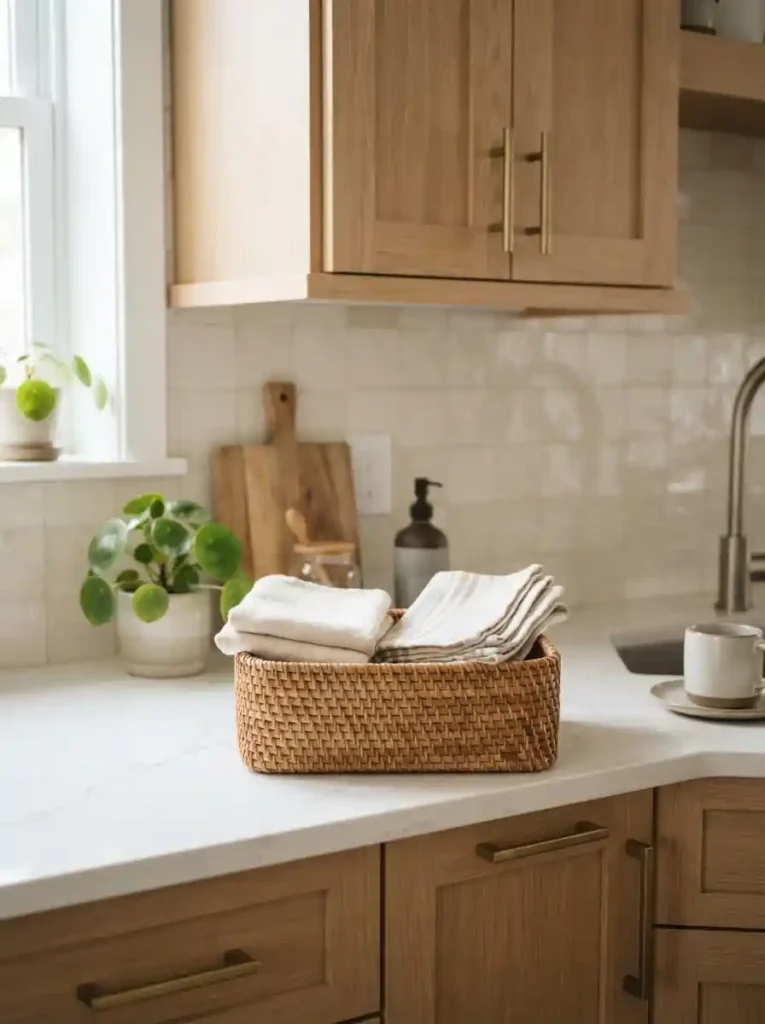
- Hides small everyday items without adding visual clutter.
- Introduces warm natural texture to sleek countertops.
- Makes quick tidying easier in busy family kitchens.
- A compact basket keeps useful accessories grouped together.
When a countertop needs storage but you want it to look calm, a small basket can hide the visual clutter of everyday essentials. Choose a woven basket with a firm shape and use it for napkins, dish towels, bread, or small kitchen accessories. Natural rattan and seagrass add warmth to sleek stone surfaces, while a fabric-lined basket can soften a cottage-inspired kitchen. I’ve noticed baskets are especially helpful in busy homes because they make quick tidying easier. Instead of organizing several loose items individually, you can gather them into one attractive container and instantly create a cleaner-looking surface.
Choose a basket size that fits the items you actually need to store, rather than using a large container because there is room. Place it toward the back corner or beneath open shelving, leaving the main preparation area clear. A low rectangular basket works well for towels, while a deeper round basket can hold bread or produce. Keep the contents loosely organized so the basket remains easy to use. This approach adds texture and practical storage without making the counter feel overloaded. It is a simple way to balance function and decoration, especially in kitchens where visible storage is unavoidable.
16. Statement Pendant Lighting
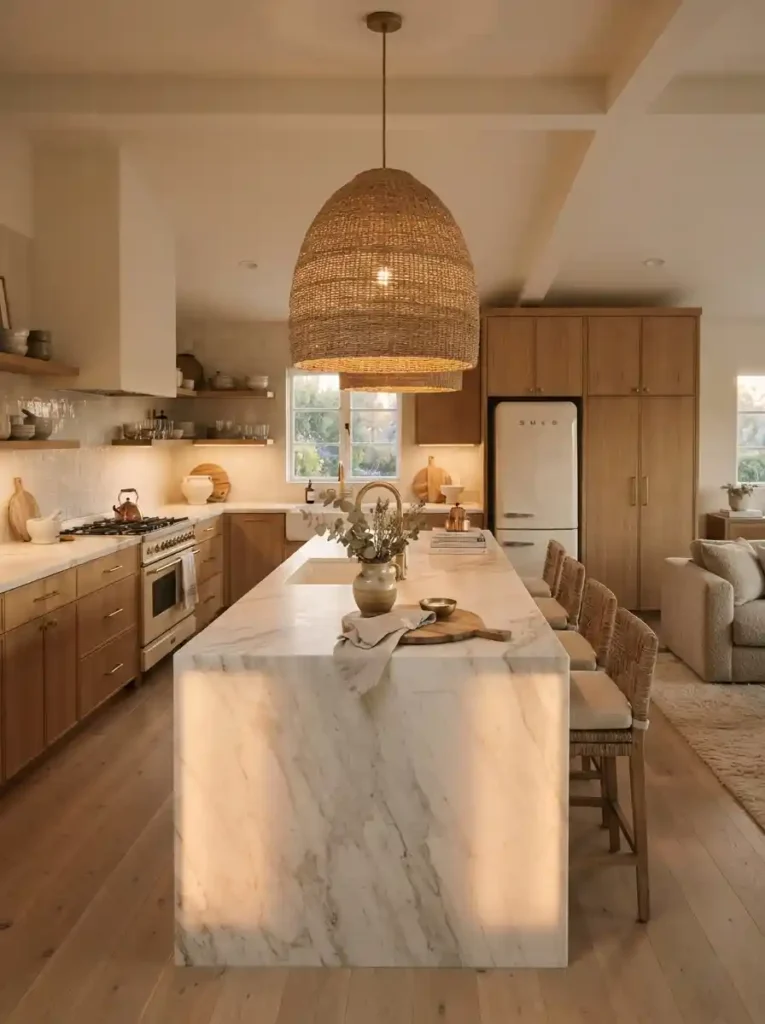
- Draws attention upward and keeps the countertop visually open.
- Adds personality without using valuable surface space.
- Warm lighting can make evening kitchen styling feel inviting.
- A simple fixture works especially well above an island.
A statement pendant can transform the way a countertop looks without placing another object on its surface. Hang one sculptural fixture above a kitchen island or peninsula to create a strong focal point while keeping the counter visually open. Woven rattan, aged brass, or matte black finishes can each create a different mood. The trick is choosing a fixture with enough presence to balance the island without overwhelming the room. In my experience, lighting becomes especially valuable when countertop decor is intentionally minimal because it adds character from above while preserving useful workspace below.
Choose a pendant size that relates to the island rather than simply selecting the largest fixture available. The bottom of the light should also be positioned carefully so it provides useful illumination without obstructing conversation or sightlines across the kitchen. Warm bulbs create a softer atmosphere in the evening, while brighter neutral light can support food preparation. Keep the counter beneath the pendant relatively simple so the fixture remains the visual anchor. A small vase, wooden board, or bowl is often enough. This approach creates a polished kitchen with strong vertical interest and plenty of breathing room.
17. Backsplash Shelf Styling
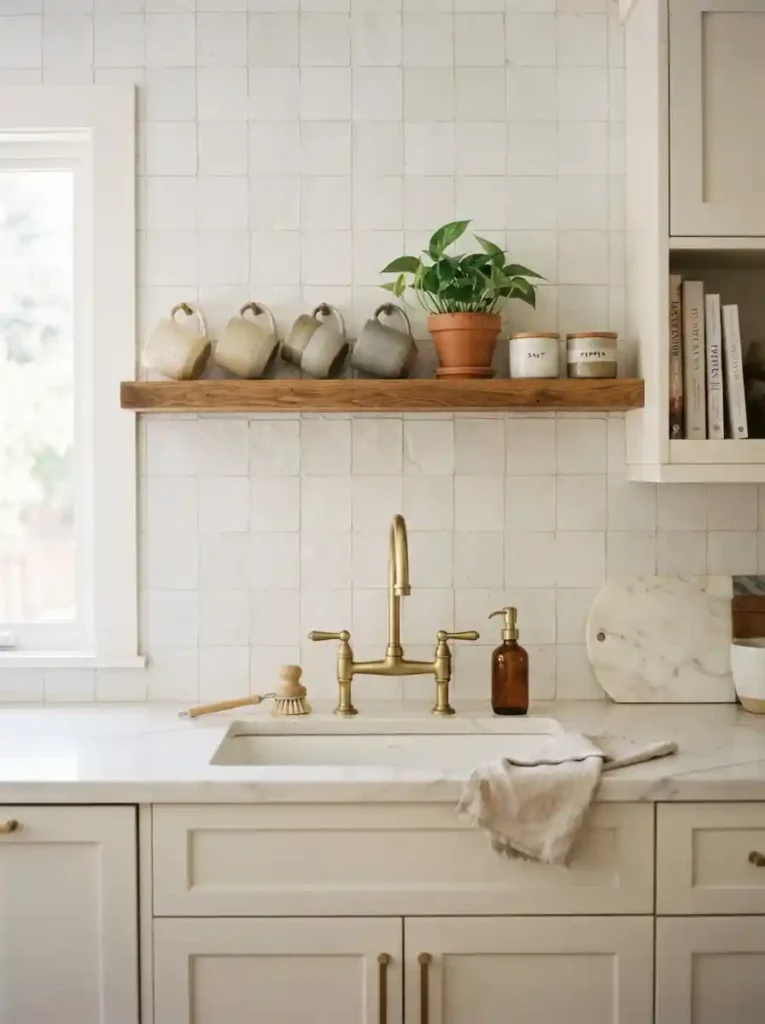
- Uses vertical wall space instead of filling the countertop.
- Creates a display area for small useful kitchen pieces.
- Adds height and depth behind the main work surface.
- Open shelving makes everyday accessories easy to reach.
A narrow shelf above the backsplash can add personality while keeping the countertop remarkably clear. Install or use an existing floating shelf to display a few useful pieces such as ceramic mugs, small jars, framed art, or a trailing plant. Because the storage moves upward, the counter below remains open for cooking and everyday tasks. This is particularly useful in smaller kitchens where horizontal space is limited. I’ve noticed that a shelf looks best when it holds fewer items than expected. Leaving generous gaps between pieces creates an airy appearance and prevents the display from becoming another crowded storage zone.
Choose shelf materials that complement the kitchen, such as light oak for warmth or painted wood for a softer traditional look. Keep heavier objects secure and avoid placing anything that could fall into a busy preparation area. Arrange items in varied heights, with one taller piece balanced by several shorter accessories. A small plant can soften hard backsplash materials, while neutral ceramics keep the display cohesive. If the shelf is near the stove, avoid placing grease-sensitive objects directly above active cooking zones. Used thoughtfully, vertical shelving adds storage, texture, and personality while allowing your countertop to stay functional and visually calm.
18. Marble Utensil Holder
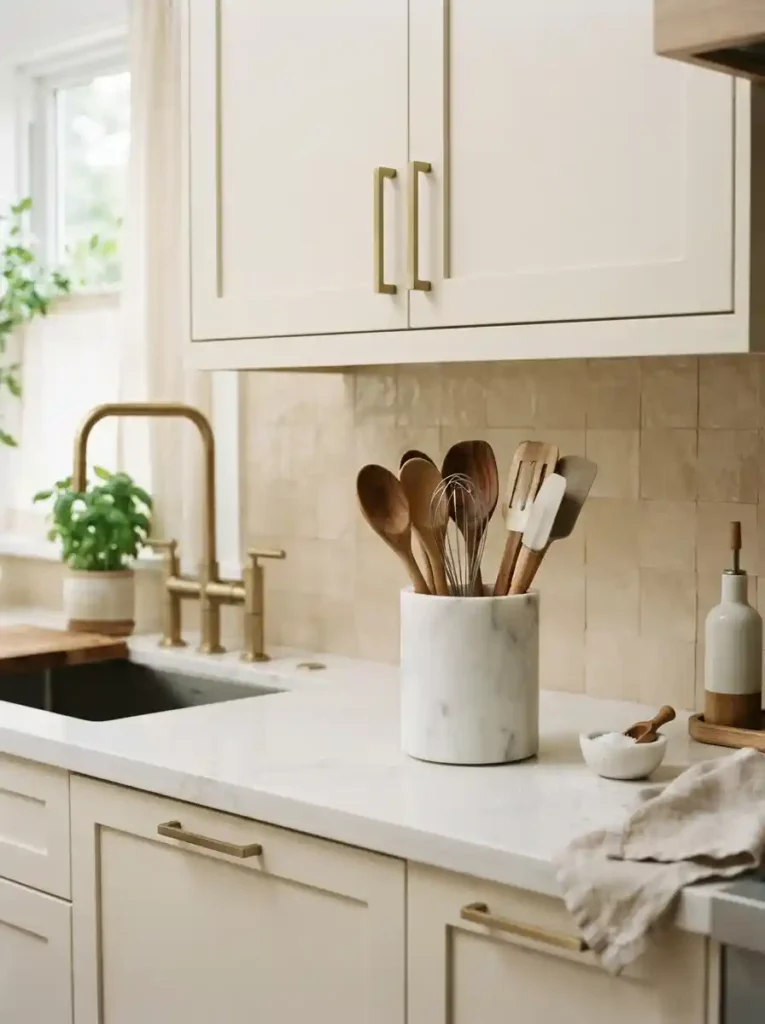
- Adds refined texture to a practical cooking station.
- Gives loose utensils one attractive, accessible home.
- Works beautifully with brass, wood, and neutral cabinetry.
- A heavier stone base stays stable during everyday use.
A marble utensil holder gives a hardworking kitchen essential a more refined presence. Place a substantial stone or marble container near the stove and fill it with a small selection of wooden spoons, spatulas, whisks, and other tools you use often. The weight and natural veining of marble add visual interest without requiring bright colors or elaborate decoration. This works particularly well with white, cream, or warm wood kitchens where subtle texture matters. A simple holder can make a busy cooking area feel more organized because every utensil has a clear place rather than being scattered across drawers and counters.
Keep the holder close to the cooking zone but far enough from direct heat to protect the utensils and surrounding materials. Choose a container with a wide opening so tools are easy to remove and return. If the marble feels too formal, consider concrete, soapstone, or textured ceramic for a similar substantial effect. Limit the collection to your most-used tools because an overflowing holder can quickly look untidy. Pairing stone with warm wood creates an especially balanced combination. The result is practical countertop organization that also contributes to a polished, timeless kitchen aesthetic.
19. Decorative Cake Stand
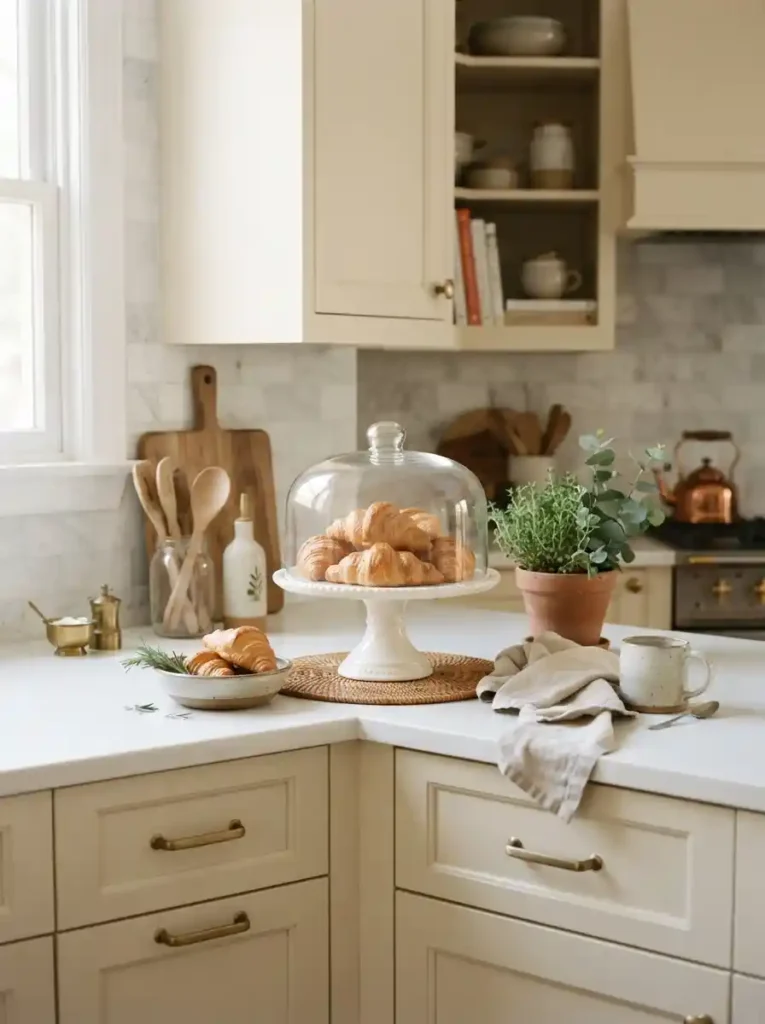
- Adds height without requiring a large decorative footprint.
- Creates an elegant display for pastries, fruit, or bread.
- Works as a centerpiece on an otherwise simple counter.
- A covered stand can help keep baked goods fresh.
A decorative cake stand can give a quiet countertop a beautiful focal point while remaining genuinely useful. Choose a ceramic, wood, or marble stand and use it to display pastries, muffins, bread, or seasonal fruit. Its raised shape introduces height, which helps break up a long, flat counter without adding bulky storage. In my experience, this works best when the stand is placed on an otherwise simple section of the kitchen. The elevated display becomes intentional rather than competing with appliances, jars, and other everyday essentials. A glass dome can also add a classic touch while protecting baked goods.
Position the stand toward the back of an island or on a wide counter section where it will not interfere with food preparation. If you rarely keep baked goods around, use the stand for lemons, apples, or decorative seasonal pieces instead. Choose a finish that repeats another material in the room, such as white ceramic with a marble backsplash or warm wood beside oak cabinetry. Avoid making the display too full because the stand itself provides enough visual interest. This simple accessory adds dimension, function, and a touch of personality while keeping the surrounding countertop open.
20. Layered Cutting Boards
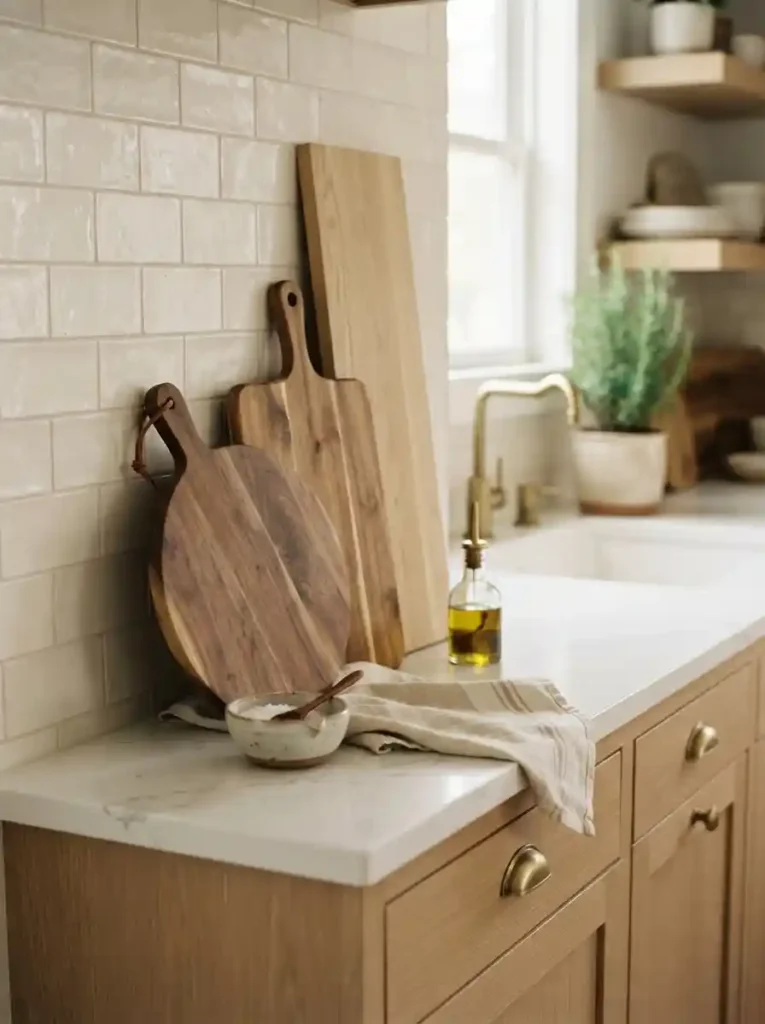
- Creates texture through contrasting wood grains and shapes.
- Gives useful serving boards a decorative role.
- Adds warmth to cool stone countertops.
- Leaning boards against the backsplash saves surface space.
Layering several cutting boards creates an effortless countertop arrangement with warmth, texture, and useful function. Start with one large board leaning against the backsplash, then place a smaller round or uniquely shaped board in front. Mixing walnut, acacia, and pale oak introduces natural variation without needing bold decorative pieces. This is one of the easiest ways to add character to a neutral kitchen because wood softens the harder surfaces of quartz, marble, and tile. I’ve noticed that three boards usually provide enough visual depth; adding too many can make the arrangement look crowded instead of thoughtfully styled.
Place the largest board at the back and angle the others slightly so each shape remains visible. Keep the display away from the sink if the boards are made from materials that require careful drying, and avoid leaning them where they could slide into a work area. Choose boards that are attractive enough for serving as well as styling. A small ceramic bowl or utensil crock can anchor the grouping without competing with it. The final effect is warm and practical, giving your kitchen a collected appearance while ensuring every decorative piece has a real purpose.
21. Neutral Ceramic Collection
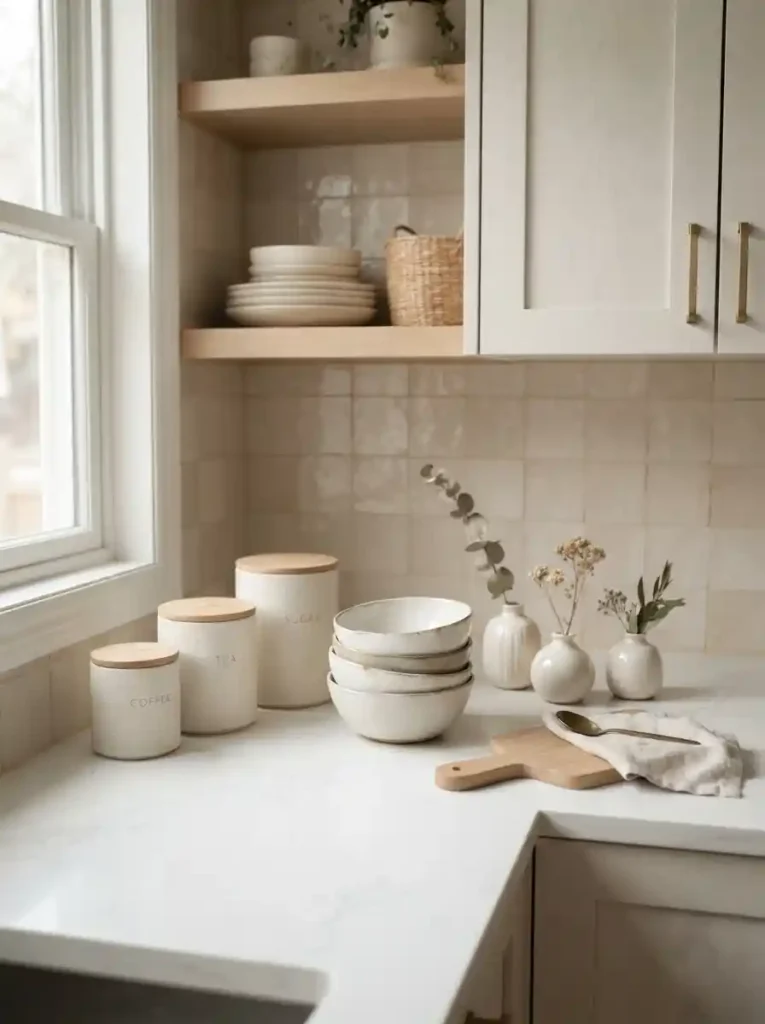
- Creates cohesion through repeated colors and materials.
- Softens busy countertops without making them feel empty.
- Lets shape and texture provide visual interest.
- Works across modern, farmhouse, and minimalist kitchens.
A small collection of neutral ceramics can make a kitchen feel collected without introducing visual clutter. Choose a few pieces in cream, ivory, beige, or soft gray, then vary their shapes and textures to keep the display interesting. A ribbed vase beside a smooth bowl or matte canister creates subtle contrast even when the colors remain nearly identical. This approach is especially effective in kitchens with bold countertops or patterned backsplashes because the restrained palette gives the eye a place to rest. In my experience, repeating one neutral family makes mismatched pieces look intentional rather than randomly collected.
Group the ceramics in one defined area instead of distributing them across the entire counter. Place taller pieces toward the back and shorter bowls or containers in front to create gentle layering. Leave visible countertop around the collection so the display feels airy and deliberate. If the pieces are decorative only, keep the group small enough that cleaning remains easy. You can also choose functional ceramics, such as utensil holders or serving bowls, to make the arrangement more practical. The result is understated but polished, adding texture and personality while preserving the clean feeling of an organized kitchen.
22. Vintage Bread Box
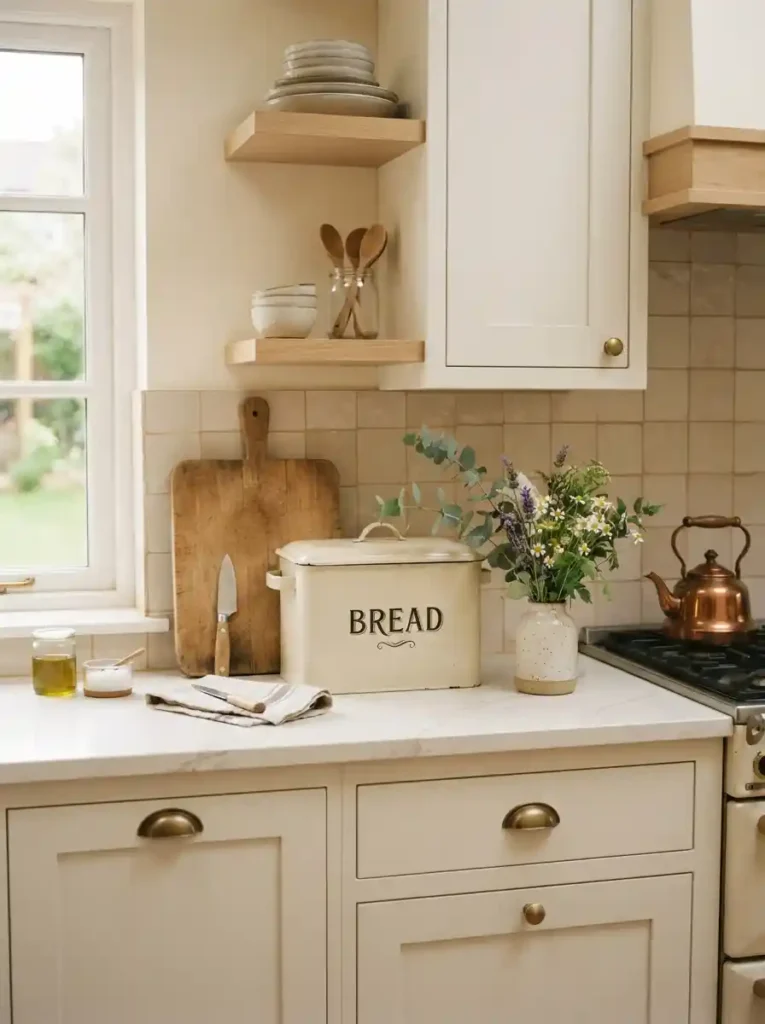
- Hides bread packaging while keeping loaves easy to access.
- Adds nostalgic character to a modern countertop.
- Creates a defined storage zone for baked goods.
- Metal, wood, and ceramic styles suit different kitchen aesthetics.
A vintage bread box can solve an everyday storage problem while giving your countertop a charming decorative focal point. Instead of leaving colorful bread packaging exposed, use a compact metal, wood, or ceramic box to keep loaves neatly contained. Choose a finish that complements your kitchen, such as cream enamel for a farmhouse space or warm wood for a more organic look. The box adds a slightly nostalgic detail without feeling outdated when paired with simple accessories. I’ve noticed this works particularly well on long counters because its solid shape helps visually anchor an otherwise open section.
Place the bread box toward the back of the countertop, preferably near a breakfast area where it remains convenient to reach. Avoid positioning it directly beside the sink or stove, where moisture and heat can affect both the container and its contents. Keep the surrounding decor minimal, perhaps adding one cutting board or a small vase nearby. If the box has a strong vintage finish, let it be the main accent rather than competing with several other decorative pieces. This setup keeps bread accessible, hides packaging, and gives the kitchen a warm personality without sacrificing valuable workspace.
23. Small Art Frame
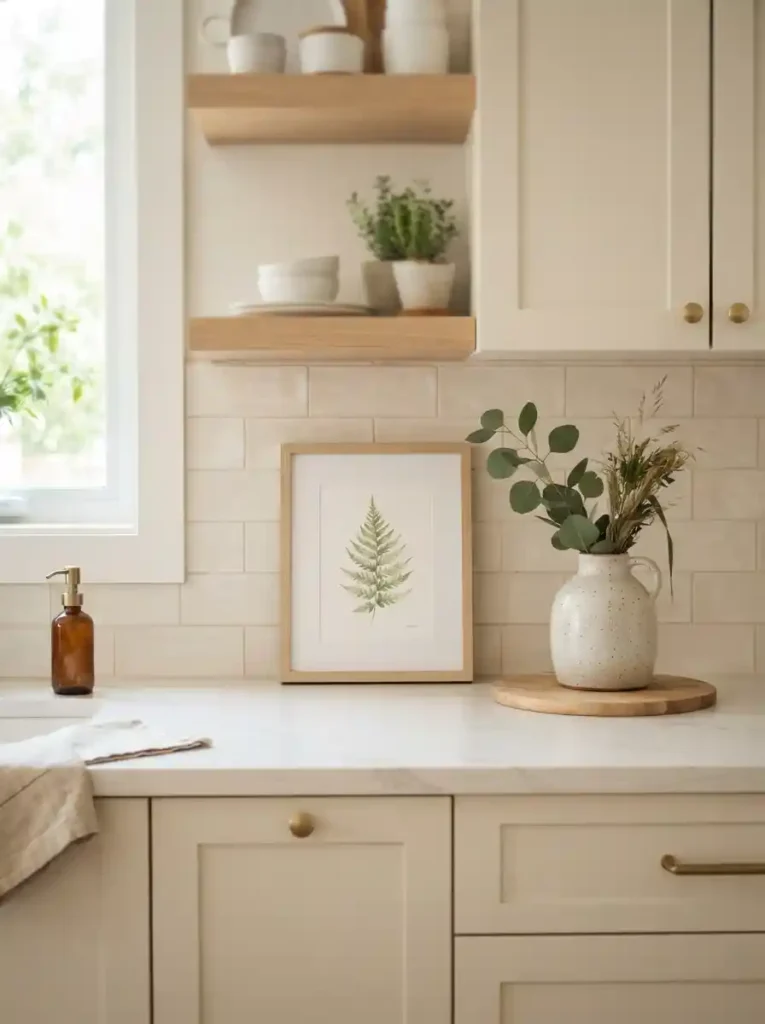
- Brings personality to an overlooked countertop corner.
- Adds color without requiring large decorative objects.
- Helps connect kitchen styling with the rest of the home.
- A leaning frame works without permanent wall installation.
A small framed artwork can make a countertop feel more personal without taking up much space. Choose a botanical print, simple line drawing, vintage food illustration, or abstract piece that echoes colors already present in the kitchen. Lean the frame against the backsplash instead of mounting it to create an effortless layered look. This works especially well in an empty corner that feels unfinished but does not need more storage. In my experience, artwork adds warmth where purely functional accessories can sometimes make a kitchen feel too utilitarian. One thoughtfully chosen frame can give the entire counter a more lived-in character.
Keep the frame away from areas exposed to frequent splashes, steam, or grease, especially if it contains paper artwork. A smaller size is usually more effective than an oversized print because kitchen counters already contain practical objects. Layer the frame behind a small vase or cutting board for depth, but leave enough of the artwork visible to make its design clear. Choose a frame finish that repeats nearby materials, such as light wood beside oak cabinets or black beside dark hardware. This simple addition creates a subtle focal point while keeping the overall arrangement clean, useful, and visually balanced.
24. Sculptural Fruit Bowl
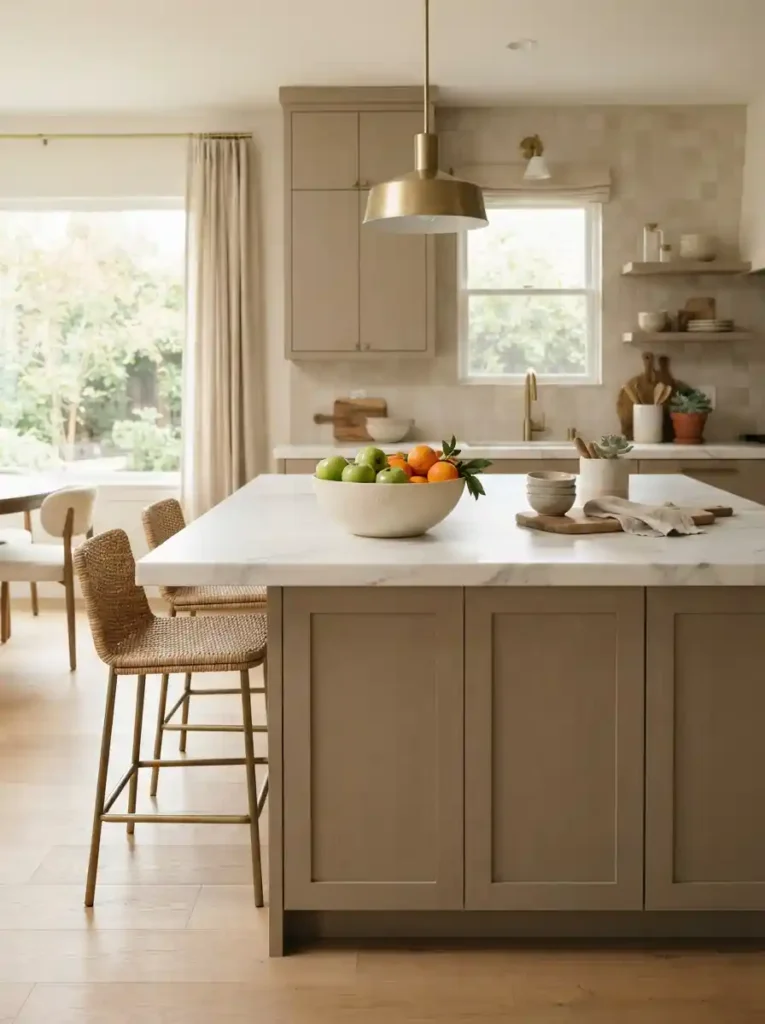
- Adds an artistic focal point while remaining functional.
- Creates visual interest through an unusual shape or finish.
- Keeps fresh produce attractive and accessible.
- Works beautifully on a kitchen island or wide counter.
A sculptural fruit bowl can turn an everyday kitchen essential into a piece of functional art. Look for an unusual silhouette, softly curved edges, ribbed texture, or handmade finish that gives the bowl personality even when it is empty. Fill it with a simple mix of apples, oranges, or lemons to add natural color. This approach works particularly well on a kitchen island because the bowl becomes a central focal point without needing several smaller accessories. The key is choosing one strong shape rather than surrounding it with too many competing decorative pieces.
Place the bowl where everyone can reach it easily, but keep it away from the busiest chopping and cooking zones. A matte ceramic bowl suits modern and organic kitchens, while stone, wood, or woven designs can create a warmer atmosphere. Choose fruit colors that complement the room rather than introducing too many contrasting shades. Leave plenty of open counter around the bowl so its silhouette remains visible from across the kitchen. This simple arrangement combines beauty with everyday usefulness, making it an effective way to add personality while keeping the countertop neat and purposeful.
25. Open Counter Space
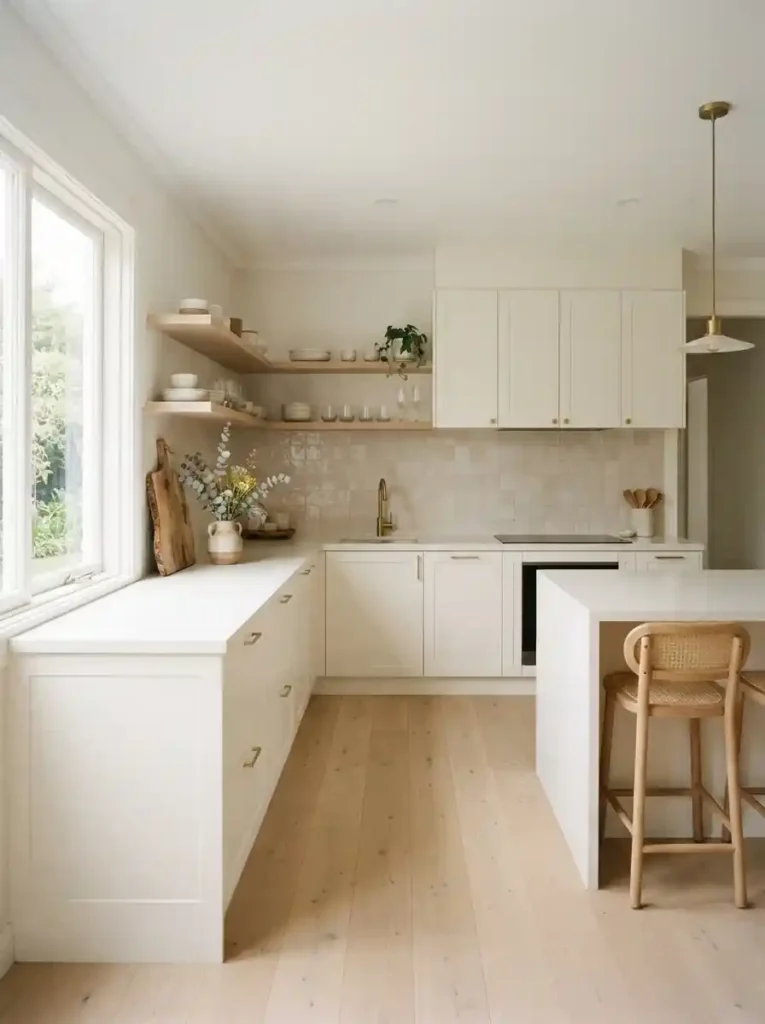
- Lets the countertop itself become part of the design.
- Creates breathing room around decorative and functional pieces.
- Makes a small kitchen appear more spacious.
- Simplifying the surface can have a bigger impact than adding accessories.
Sometimes the most beautiful countertop is the one you intentionally leave open, especially when the kitchen already has strong finishes or limited space. Instead of filling every corner with accessories, choose only a few pieces that genuinely serve a purpose and let the surrounding surface breathe. This creates a cleaner visual rhythm and makes the room feel larger. For anyone searching for Kitchen Countertop Decor Ideas, this approach is an important reminder that styling is not about adding more. In my experience, removing two or three unnecessary objects can make the remaining decor look more intentional and expensive.
Start by clearing the entire countertop, then return only the items you use frequently or genuinely enjoy seeing. Keep one main decorative feature, such as a vase, bowl, or cutting board, and leave generous space around it. Group necessary appliances together so other areas remain open for preparation. This simple reset can make cleaning faster and improve the flow of everyday cooking. It also gives architectural details, beautiful cabinetry, and backsplash materials room to stand out. A thoughtfully edited surface feels calm, functional, and polished, proving that restraint can be one of the strongest decorating choices.
Conclusion
A beautiful kitchen counter does not require expensive upgrades or complicated styling. The right combination of useful pieces, natural textures, greenery, and open space can create a kitchen that feels instantly more organized and welcoming. These Kitchen Countertop Decor Ideas offer plenty of inspiration, whether you love modern minimalism, cozy farmhouse details, or warm natural finishes. I’ve seen how small changes like grouping accessories or removing unnecessary clutter can completely transform a space. Save this post on Pinterest so you can revisit your favorite ideas, try one in your own kitchen, and share it with someone who could use a little countertop inspiration.