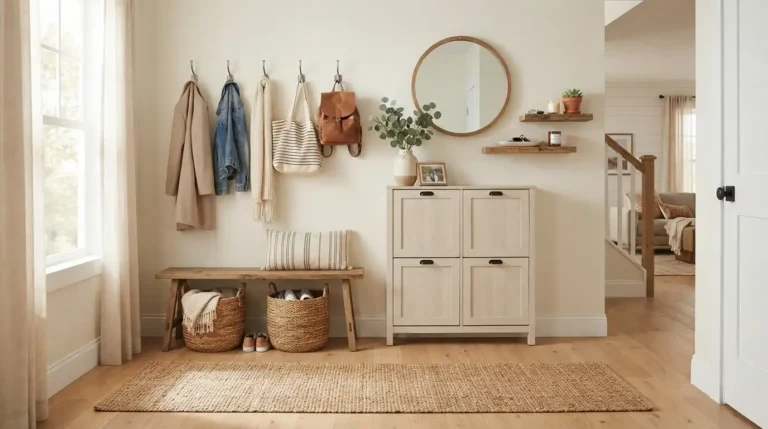
25 Gorgeous Hallway Decor Ideas For A Warm Welcome Home
The hallway is the first little glimpse of home—and it deserves to feel beautiful.
A few thoughtful changes can turn a plain passage into a warm welcome.
These Hallway Decor Ideas are designed to help you create an entryway that feels inviting, organized, and full of personality without making the space feel crowded. From warm wood consoles and textured runners to mirrors, greenery, soft lighting, and clever storage, you’ll find practical ways to make even a narrow hallway feel more polished. In my experience, the biggest transformations often come from small details that improve both appearance and everyday function. Whether your hallway feels dark, empty, cluttered, or simply unfinished, these ideas can help you create a space you’ll enjoy seeing every time you walk through the door.
1. Warm Wood Console
- A slim console adds useful storage without blocking the walkway.
- A round mirror makes the hallway feel wider and brighter.
- Warm wood brings softness to otherwise plain walls.
- Keep the styling minimal so the entrance stays practical.
Image Description: Warm oak console table against a cream hallway wall, large round mirror above, small ceramic bowl, warm table lamp, single leafy branch, beige runner, light wood flooring, soft natural daylight, neutral textures, uncluttered styling, cozy modern aesthetic, eye-level camera perspective.
A narrow hallway can feel instantly inviting when a slim console and oversized mirror work together. Choose a warm wood console with simple drawers, then hang a round or softly arched mirror above it to reflect light and create depth. Add a small lamp, ceramic bowl, and one leafy stem for an unfussy finish. This setup works especially well near the front door because it gives keys and small essentials a home without crowding the walkway. In my experience, keeping the surface lightly styled makes even a compact entry feel calmer, brighter, and much more intentional.
Start with the mirror at comfortable eye level, leaving enough space beneath it for the console to feel visually connected rather than floating. Keep the furniture shallow so doors can open easily and people can pass without bumping corners. A natural oak, walnut, or warm painted finish pairs beautifully with cream walls and neutral flooring. If the hallway lacks windows, use a lamp with a soft warm bulb to mimic evening glow. The result is one of those simple hallway decor ideas that makes coming home feel organized, welcoming, and polished without requiring a major renovation.
2. Soft Wall Sconces
- Matching sconces create balanced light along a long hallway.
- Warm bulbs make plain walls feel softer and more inviting.
- Pale finishes help bounce available daylight around the space.
- Rechargeable sconces can work when hardwiring is impractical.
Image Description: Long narrow hallway with evenly spaced brass wall sconces, warm glowing bulbs, soft ivory walls, framed neutral artwork, cream runner, light oak flooring, subtle beige textures, gentle evening illumination, elegant modern decor, balanced wall arrangement, straight-on architectural camera view.
Few changes make a dark corridor feel brighter than thoughtfully placed wall sconces and reflective finishes. Install matching sconces along one wall, spacing them evenly to create rhythm and gentle illumination. Pair them with a pale paint color, subtle framed artwork, or a narrow runner in cream and beige tones. The layered light softens hard corners while the lighter surfaces bounce brightness through the passage. This approach is especially useful in hallways that receive little natural daylight. I’ve noticed that warm, evenly distributed lighting also makes evening arrivals feel more comfortable than one harsh ceiling fixture.
For the best effect, choose sconces with simple shades or frosted glass that spread light instead of creating sharp glare. Mount them at a consistent height and keep artwork slightly smaller than the fixture zone so the wall does not feel overloaded. A slim runner can reinforce the visual flow, especially when its pattern echoes the hallway’s neutral palette. If wiring is difficult, consider rechargeable wall lights with a clean silhouette. The finished space feels softer and more finished, while the repeated fixtures add architectural character without taking valuable floor space in a narrow corridor.
3. Textured Runner
- A runner instantly adds warmth and softness underfoot.
- Low-pile fabrics are easier to maintain in busy entryways.
- Warm neutral colors connect the hallway with nearby rooms.
- A subtle pattern can make a long corridor feel intentional.
Image Description: Narrow welcoming hallway featuring a textured beige runner with subtle geometric pattern, cream walls, warm white trim, light oak flooring, minimal console, woven basket, soft natural daylight, neutral earthy palette, cozy contemporary styling, visible walking clearance, eye-level Pinterest interior photography.
A hallway runner can turn a plain passage into a polished pathway while adding comfort underfoot. Look for a low-pile design in warm neutrals, muted terracotta, soft taupe, or gentle geometric patterns that connect with nearby rooms. Leave a little flooring visible along each side so the runner feels intentionally placed rather than wall-to-wall. A washable option is especially practical near a busy entrance where shoes bring in dirt. In my experience, a well-sized runner does more than decorate; it visually lengthens the hallway, softens hard flooring, and gives the entire entry zone a finished appearance.
Measure the walking path before buying, making sure the runner leaves doors, trim, and furniture clear. For a long corridor, a repeating pattern can guide the eye forward, while a solid woven texture creates a quieter look. Add a slim console or small basket only if there is enough clearance to keep the route comfortable. Non-slip backing or a quality rug pad helps prevent shifting on smooth floors. When colors are coordinated with nearby walls and doors, the floor covering becomes part of the overall design rather than an isolated accent, making the space feel connected from room to room.
4. Arched Mirror
- An arched mirror softens the straight lines of a narrow hallway.
- Its reflective surface helps distribute natural light.
- A slim frame keeps the look elegant without feeling heavy.
- Position it opposite a doorway to create extra visual depth.
Image Description: Narrow hallway with a large arched mirror in a slim brass frame, warm white walls, light oak flooring, small wooden bench, cream runner, soft daylight from nearby doorway, subtle greenery, neutral palette, refined modern style, eye-level interior photography.
An arched mirror can give a narrow hallway an instant sense of softness and space. Its curved silhouette breaks up straight walls, doors, and flooring lines while reflecting light throughout the passage. Choose a generously sized mirror with a slim brass, black, or natural wood frame, depending on the surrounding finishes. Position it where it can reflect a window, doorway, or attractive artwork rather than a cluttered storage area. I’ve noticed that larger mirrors usually create a more convincing feeling of openness than several tiny ones, especially when the hallway is short on natural light.
Keep the area around the mirror relatively simple so its shape remains the main visual feature. A narrow bench underneath can add seating without overwhelming the wall, while a small plant or woven basket introduces natural texture. If the hallway connects directly to the living room, choose a frame finish that repeats an existing material for a smoother transition. Avoid placing the mirror where it creates confusing reflections of open doors or busy storage. Done thoughtfully, this simple focal point can make the entrance feel brighter, taller, and more considered without changing the floor plan.
5. Gallery Frame Wall
- A curated frame arrangement gives blank walls personality.
- Matching frame finishes create a more polished composition.
- Family photos can make the entrance feel personal and lived-in.
- Keep artwork visually balanced without filling every inch.
Image Description: Cozy hallway gallery wall with six coordinated black and natural wood frames, neutral family photography and botanical prints, warm white walls, beige runner, light oak flooring, soft daylight, simple console nearby, balanced spacing, modern organic aesthetic, straight-on Pinterest interior view.
A blank hallway wall becomes much more memorable when a carefully arranged gallery brings it to life. Combine family photographs, botanical prints, line drawings, or neutral artwork in a simple grid or relaxed salon arrangement. The key is choosing pieces that share at least one visual connection, such as similar colors, frame materials, or subject matter. This keeps the display cohesive instead of chaotic. Personal photographs work particularly well near the entrance because they make the space feel lived-in and welcoming. That personal layer is one of the easiest ways to make a hallway feel connected to the people who live there.
Before hanging anything, arrange the frames on the floor and adjust the spacing until the composition feels balanced. Keep the center of the display around eye level, while allowing enough breathing room around doors, trim, and light switches. For a calmer look, use mostly neutral artwork with one or two personal photographs. If the hallway is narrow, avoid projecting shelves or bulky frames that interfere with movement. A thoughtful arrangement can transform an overlooked wall into a visual journey through your home while keeping the overall entrance practical, organized, and easy to enjoy every day.
6. Slim Entry Bench
- A narrow bench provides a useful place for putting on shoes.
- Open space underneath can hold baskets or everyday footwear.
- Upholstered cushions add softness without requiring much furniture.
- Choose rounded edges when the walkway is especially tight.
Image Description: Slim upholstered bench along a narrow hallway wall, oatmeal cushion, natural oak legs, two woven baskets underneath, cream walls, light wood flooring, soft beige runner, small framed artwork above, warm daylight, cozy Scandinavian style, uncluttered layout, eye-level camera angle.
A slim bench can make an entry hallway feel both more comfortable and more useful without sacrificing valuable walking space. Choose a shallow design that fits neatly against the wall, leaving enough clearance for doors and everyday traffic. An upholstered seat in oatmeal, beige, or soft gray adds warmth, while natural wood legs keep the furniture visually light. The space underneath can hold two woven baskets for shoes, scarves, or bags. In my experience, a small bench becomes surprisingly useful because it creates a dedicated spot for quick tasks that otherwise happen awkwardly near the doorway.
Measure the hallway carefully before choosing the bench, especially if several doors open into the same passage. A rounded or backless style can make tight spaces easier to navigate and visually less crowded. Keep the top mostly clear, perhaps adding one cushion or folded throw for texture rather than several decorative objects. If storage is needed, baskets beneath the seat can hide everyday clutter while keeping frequently used items accessible. Pair the bench with a mirror or simple artwork above it to create a purposeful furniture moment. The result is practical, welcoming, and polished without making the hallway feel furnished beyond its size.
7. Floating Wood Shelf
- A slim floating shelf adds display space without bulky furniture.
- Natural wood introduces warmth against plain hallway walls.
- Small baskets can hide keys and everyday essentials.
- Keep decorative pieces limited for an airy appearance.
Image Description: Narrow hallway with a single floating natural oak shelf on a warm white wall, small ceramic vase, framed botanical print, woven catchall basket, beige runner, light oak floor, soft daylight, neutral earthy palette, modern organic style, clean eye-level interior photography.
A floating wood shelf is a smart solution when a hallway feels too narrow for a console table. Mounted at a comfortable height, it creates a small landing zone for keys, mail, and decorative accents without taking up floor space. Choose warm oak, walnut, or reclaimed wood to introduce natural character against a pale wall. A tiny ceramic vase, framed print, and shallow catchall tray are enough to make the arrangement feel finished. This approach works especially well in apartments and compact homes where every inch matters and bulky furniture can quickly make the passage uncomfortable.
Mount the shelf securely and keep its depth modest so people can walk past without brushing against it. For everyday use, place a small tray near the door to contain keys and other loose items, then reserve the remaining space for one or two decorative pieces. Avoid stacking too many objects because visual clutter becomes noticeable quickly in a narrow hallway. If the nearby rooms feature wood furniture, repeat the same tone on the shelf for continuity. With thoughtful styling, this small surface can provide useful function while keeping the overall passage open, bright, and visually calm.
8. Woven Storage Baskets
- Woven baskets hide everyday hallway clutter beautifully.
- Natural fibers add texture without making the space feel busy.
- Labeled baskets can simplify routines for busy households.
- Choose matching shapes for a cleaner visual rhythm.
Image Description: Welcoming hallway with two large woven baskets beneath a slim natural wood bench, soft cream walls, beige runner, light oak flooring, folded throws and shoes neatly stored, warm daylight, organic textures, neutral palette, relaxed Scandinavian farmhouse aesthetic, eye-level camera perspective.
Woven baskets can quietly solve the everyday clutter that tends to collect near a busy entrance. Place one or two beneath a bench, beside a console, or inside an open cubby to contain shoes, bags, scarves, and seasonal accessories. Natural rattan, seagrass, or water hyacinth brings texture that softens hard surfaces such as painted walls and wood flooring. Choose baskets with sturdy handles if you need to move them frequently. I’ve seen this work well in family homes because everyone can quickly drop items into a designated container instead of leaving them scattered across the hallway.
For a polished look, choose baskets that share a similar material or color even if their sizes differ. Use larger containers for bulky footwear and smaller ones for hats, gloves, or reusable shopping bags. If children use the space, place frequently needed baskets low enough for them to reach independently. Avoid overfilling them because overflowing storage simply shifts clutter from the floor to the basket. A simple label can also help maintain the system. When storage looks attractive enough to remain visible, it becomes easier to keep the entry organized without relying on complicated routines.
9. Statement Pendant Light
- A sculptural pendant can become the hallway’s main focal point.
- Warm illumination makes the entrance feel welcoming after dark.
- Glass, woven, or metal shades suit different decorating styles.
- Keep the fixture proportionate to the hallway ceiling height.
Image Description: Narrow elegant hallway with a sculptural woven pendant light centered above a beige runner, warm white walls, natural oak doors, small console, brass accents, soft glowing illumination, subtle wall artwork, neutral cream and tan palette, modern organic decor, upward angled interior camera view.
A statement pendant can completely change the character of a hallway by drawing attention upward and adding a strong decorative focal point. Choose a fixture with a shape that complements the architecture, such as a woven globe, ribbed glass shade, sculptural metal design, or simple oversized lantern. Warm light works beautifully in entry spaces because it creates a soft glow instead of the harsh feeling often produced by cool bulbs. If your hallway has a high ceiling, a larger pendant can emphasize the vertical space and make the entrance feel more thoughtfully designed.
Before choosing a fixture, check the ceiling height and make sure the pendant will not interfere with doors, tall furniture, or everyday movement. In a low hallway, select a semi-flush or compact pendant instead of a long-hanging design. Repeat the fixture’s material through small accents, such as brass hardware or a wood console, to make the lighting feel connected to the rest of the decor. A statement light does not need competing decorations. Let its silhouette and warm glow provide the visual interest while the surrounding finishes remain simple and uncluttered.
10. Built-In Coat Hooks
- A row of hooks keeps everyday outerwear off the floor.
- Built-in placement makes practical storage feel intentional.
- Wooden pegs add warmth against painted walls.
- Leave enough space between hooks for easy access.
Image Description: Narrow hallway with a built-in white wall panel featuring evenly spaced natural oak coat hooks, beige bench below, woven baskets, cream runner, light oak flooring, soft daylight, warm neutral palette, modern farmhouse style, organized entryway, straight-on Pinterest interior view.
Built-in coat hooks can turn an unused hallway wall into a hardworking drop zone without adding bulky cabinetry. Mount a simple row of wooden pegs or sturdy metal hooks at a practical height for coats, hats, bags, and light jackets. A painted backing panel can make the arrangement feel more intentional while protecting the wall from everyday scuffs. This setup is particularly helpful for families because frequently used items stay visible and easy to grab. In my experience, open hooks encourage better habits because there is no cabinet door or drawer to open before putting something away.
Keep enough space between each hook so coats do not overlap into one large, messy cluster. If several people share the hallway, assign a hook or two to each person to make the system easier to maintain. Add a slim bench underneath if the width allows, giving everyone a comfortable place to sit while putting on shoes. For a softer look, combine painted wood with natural baskets and a washable runner. The finished setup provides practical entry storage while maintaining a clean visual line, making the hallway feel organized rather than crowded.
11. Two-Tone Walls
- A two-color wall treatment adds architectural interest without furniture.
- Darker lower sections can visually ground busy hallways.
- Pale upper walls keep the ceiling feeling open.
- Paint or paneling can create the look at different budgets.
Image Description: Stylish hallway with two-tone walls, warm ivory upper section and muted sage green lower section with simple panel molding, light oak flooring, beige runner, brass wall light, natural wood console, soft daylight, cozy transitional aesthetic, eye-level interior photography.
Two-tone walls can give an ordinary hallway more dimension without taking away valuable floor space. Paint the lower portion in a deeper shade such as muted sage, warm taupe, dusty blue, or soft clay, then keep the upper section lighter to maintain an open feeling. Simple molding or paneling can strengthen the separation and add architectural character. This technique is especially useful when the hallway feels visually flat or lacks interesting features. A carefully chosen lower color can also disguise everyday marks near the floor, which is helpful in high-traffic entrances.
Use the existing architecture as a guide when deciding where the color change should sit. A traditional chair rail can create a natural break, while modern homes can use a clean horizontal line for a simpler effect. Keep flooring and furniture relatively neutral so the wall treatment remains the main feature. If the corridor is very narrow, avoid extremely dark colors across every surface because they may make the space feel enclosed. Balanced contrast, warm lighting, and simple accessories can make this finish feel polished while adding personality to an otherwise overlooked passage.
12. Layered Picture Ledge
- A picture ledge makes artwork easy to rearrange seasonally.
- Layered frames add depth without creating a bulky display.
- Small objects can personalize the hallway without cluttering surfaces.
- Neutral artwork keeps the arrangement calm and cohesive.
Image Description: Narrow hallway with a slim natural oak picture ledge, layered neutral artwork, botanical print, small ceramic vase, framed family photo, cream walls, beige runner, light wood flooring, soft natural daylight, warm minimalist styling, subtle textures, straight-on Pinterest photography.
A slim picture ledge creates a flexible way to decorate a hallway wall without committing to dozens of nail holes. Layer a few framed prints at different heights, mixing botanical artwork, abstract sketches, family photographs, or simple typography. Rest the frames against the wall rather than hanging every piece separately, then add one small ceramic object or tiny vase for dimension. This arrangement feels collected but relaxed, making it especially appealing when you enjoy changing decor throughout the year. A neutral palette helps multiple pieces work together without making the narrow passage feel visually crowded.
Keep the ledge shallow and mount it securely at a height that keeps artwork visible without interfering with doors or passing traffic. Larger frames can sit toward the back, while smaller pieces lean in front to create depth. Resist the temptation to fill every available inch; leaving small gaps helps each item remain readable. If you enjoy seasonal decorating, swap a few prints for autumn botanicals, winter landscapes, or spring artwork rather than replacing everything. This flexible display can evolve with your home while keeping the hallway fresh, personal, and visually connected to nearby rooms.
13. Narrow Console Table
- A slim console gives an empty hallway a clear purpose.
- Drawers provide discreet storage for keys and small essentials.
- Warm wood finishes add natural character and softness.
- Keep the surface lightly styled to preserve walking space.
Image Description: Narrow hallway with a slim walnut console table against a warm cream wall, small brass lamp, ceramic tray, leafy branch, round mirror, beige runner, light oak flooring, soft natural daylight, warm neutral palette, modern organic style, uncluttered eye-level Pinterest photography.
A small console can make a wide hallway feel purposeful instead of empty. Choose a narrow table with clean lines, then style it with a lamp, shallow tray, and one natural accent such as a branch or small plant. This creates a welcoming landing spot without turning the passage into a storage area. Look for drawers if you need hidden space for keys and mail. In my experience, the best console arrangements leave plenty of breathing room around the furniture, so the hallway still feels easy to walk through and the decorative pieces never compete with the architecture.
Scale matters more than decoration when choosing a console for a hallway. Measure the available depth, account for door swings, and leave a comfortable walking path before bringing furniture home. A wood finish can warm a cool space, while painted furniture blends more quietly into the wall. Add a mirror above the table if you want extra reflection, or choose artwork for a softer focal point. Keep daily essentials contained in one tray or drawer, and use the remaining surface for just a few accents. The result feels useful, balanced, and naturally welcoming.
14. Upholstered Bench Seat
- A soft bench cushion makes the entrance more comfortable.
- Durable fabrics are practical for everyday use.
- Neutral upholstery adds warmth without overwhelming the hallway.
- One small pillow can provide texture without creating clutter.
Image Description: Narrow hallway with a slim upholstered bench, oatmeal cushion, natural oak frame, single lumbar pillow, woven basket underneath, cream walls, beige runner, light wood flooring, soft daylight, cozy Scandinavian aesthetic, warm neutral colors, uncluttered eye-level interior photography.
A soft bench cushion can make a practical hallway feel instantly more comfortable and inviting. Choose an upholstered seat in oatmeal, cream, muted green, or warm gray, then pair it with a simple wood or painted base. The texture adds softness against hard flooring and walls while giving you a convenient place to sit when removing shoes. This arrangement works especially well near an entrance because it combines comfort with everyday function. I’ve noticed that a small upholstered element can also make a narrow corridor feel less stark, particularly when the rest of the decor stays restrained.
Choose a cushion fabric that can handle regular use, especially if the bench sits near the main entrance. Performance linen, durable cotton blends, or washable covers are practical choices for busy households. Keep the shape tailored rather than overly bulky so the seat does not visually shrink the walkway. Add one small lumbar pillow if you want extra softness, but avoid piling on cushions that make the bench difficult to use. Pairing the upholstery with a woven basket underneath and a simple mirror above creates a complete entry moment that feels comfortable, organized, and polished.
15. Tall Vertical Mirror
- A tall mirror draws the eye upward in a narrow corridor.
- Reflective glass helps distribute light through darker spaces.
- Slim frames keep the wall treatment visually lightweight.
- Position it to reflect a window or attractive doorway.
Image Description: Narrow hallway featuring a tall arched mirror with a slim black frame, warm ivory walls, light oak flooring, beige runner, small wooden bench, subtle greenery, natural daylight reflected across the corridor, soft neutral palette, modern minimalist aesthetic, vertical eye-level Pinterest interior view.
A narrow vertical mirror can make a hallway feel taller while using very little wall space. Choose a tall rectangular, arched, or gently rounded design and position it where it can reflect light from a nearby doorway or window. The upward shape naturally emphasizes ceiling height, making the passage feel more open. This is particularly useful when horizontal wall space is limited by doors, switches, or artwork. A slim black, brass, or wood frame can reinforce the room’s style without adding visual weight. The mirror also provides a convenient last look before leaving home.
Before mounting the mirror, check what will appear in its reflection because this can dramatically affect the finished look. Reflecting greenery, artwork, or natural light creates depth, while reflecting clutter can have the opposite effect. Leave enough clearance around the frame so the mirror feels intentional rather than squeezed between architectural features. For a particularly narrow passage, a full-length design can provide both practical function and visual expansion. Pair it with warm lighting and restrained accessories to keep attention on the reflective surface. The result is a brighter, taller-looking entrance that feels refined without requiring structural changes.
16. Soft Neutral Palette
- Warm neutrals make a hallway feel calm and connected.
- Cream, beige, and taupe reflect light beautifully.
- Layered textures prevent a neutral space from feeling flat.
- Repeat nearby room colors for a seamless transition.
Image Description: Warm neutral hallway with creamy white walls, beige runner, light oak flooring, taupe console, woven basket, linen artwork, soft brass accents, natural daylight, layered neutral textures, subtle shadows, cozy contemporary aesthetic, uncluttered arrangement, eye-level Pinterest interior photography.
A soft neutral palette can make a hallway feel brighter, calmer, and more connected to the rooms around it. Instead of relying on one flat shade, layer creamy white, warm beige, soft taupe, and light wood through the walls, flooring, furniture, and accessories. This creates subtle contrast while keeping the narrow space visually open. Neutral colors also make it easier to change seasonal accents without redesigning the entire area. I’ve noticed that warm undertones generally feel more welcoming in entrances than stark whites, especially when the hallway receives limited daylight or connects directly to warmer-toned living spaces.
Texture becomes especially important when using several neutral shades together. Add a woven runner, linen artwork, natural wood furniture, ceramic accessories, or a subtly textured wall finish to create visual interest without introducing strong color. Keep the largest surfaces light so the corridor maintains an airy feeling, then use darker accents sparingly for definition. If nearby rooms already have established colors, pull one or two soft tones from them rather than creating a completely separate palette. This simple coordination helps the entrance feel like a natural extension of your home instead of an isolated decorating zone.
17. Black Accent Door
- A dark door creates an instant architectural focal point.
- Matte black adds contrast without requiring extensive decoration.
- Light walls keep the overall hallway feeling balanced.
- Repeat black through small hardware or picture frames.
Image Description: Elegant hallway with a matte black interior door surrounded by warm white walls, natural oak flooring, beige runner, slim console, brass wall sconce, simple black-framed artwork, soft daylight, warm neutral palette, modern transitional style, straight-on architectural photography.
A black interior door can give a plain hallway a surprisingly strong focal point. Against warm white, cream, or light beige walls, the deep finish creates crisp contrast that highlights the architecture without adding extra furniture. Choose a matte or satin black paint for a sophisticated appearance, especially on a door with simple panels or traditional molding. This treatment works particularly well when the corridor needs personality but has little room for decorative objects. A dark door can also visually anchor the entrance, giving the surrounding lighter surfaces more definition and making the entire passage feel intentional.
Balance the dark door by repeating small amounts of black elsewhere in the hallway, such as picture frames, hardware, or a simple light fixture. Keep these accents limited so the door remains the main feature. If the hallway is naturally dark, use warm lighting and pale flooring to prevent the contrast from feeling too heavy. Test the paint color under both daytime and evening lighting before committing because black can appear noticeably different throughout the day. When paired with warm wood and neutral textiles, a dark door creates a polished, welcoming transition between spaces.
18. Natural Greenery
- Greenery brings a fresh organic touch to plain hallways.
- Small plants can soften hard architectural lines.
- Low-maintenance varieties suit spaces with limited daylight.
- Woven planters add another layer of natural texture.
Image Description: Bright hallway styled with a tall leafy plant in a woven planter, small potted plant on a natural wood console, cream walls, beige runner, light oak flooring, soft filtered daylight, warm neutral palette, organic modern aesthetic, subtle ceramic accents, eye-level Pinterest interior photography.
Natural greenery can make a hallway feel fresher and more connected to the outdoors without requiring a major decorating change. Place a tall leafy plant in an empty corner, or add a small potted variety to a console or floating shelf. The organic shapes soften straight walls, doors, and furniture while introducing a gentle touch of color. Choose plants according to the actual light conditions rather than appearance alone. For darker corridors, low-light-tolerant options or realistic faux greenery can provide the same visual softness without creating an impractical maintenance routine.
Use planters made from ceramic, woven fibers, terracotta, or natural wood to complement the hallway’s existing materials. A single large plant often looks more intentional than several tiny pots scattered along the passage. Keep leaves away from door swings and walking paths, particularly in narrow areas. If using real plants, check their watering needs and avoid placing them where moisture could damage wood flooring. In my experience, greenery works best when treated as a simple architectural accent rather than a collection. One well-positioned plant can add freshness, texture, and life while keeping the entrance beautifully uncluttered.
19. Decorative Wall Paneling
- Wall paneling adds character to plain hallway surfaces.
- Vertical panels can emphasize ceiling height.
- Painted molding gives inexpensive walls a custom appearance.
- Keep the finish simple for a timeless result.
Image Description: Elegant hallway with warm white vertical wall paneling, slim natural oak console, round brass mirror, beige runner, light oak flooring, soft natural daylight, subtle brass accents, cream and taupe palette, refined transitional style, clean architectural lines, eye-level Pinterest interior photography.
Decorative wall paneling can give a plain hallway the architectural detail it may be missing. Simple vertical battens, square molding, or narrow picture-frame panels add dimension without taking up floor space. Painted in warm white, soft beige, or muted sage, the treatment creates subtle shadows that make the walls feel more substantial. Vertical designs can also draw the eye upward, which is helpful in narrow corridors with standard-height ceilings. This approach works particularly well when furniture options are limited because the wall itself becomes the main decorative feature while the walkway remains completely open.
Plan the panel spacing carefully before attaching anything so the pattern works around doors, switches, and corners. Keep the design consistent throughout the visible wall rather than stopping randomly around obstacles. If you prefer a lower-cost update, paint and simple trim can create a convincing built-in effect without replacing the entire wall. Use a satin or washable finish in high-traffic areas where fingerprints and scuffs are more likely. Pair the paneling with simple lighting and understated furniture so the architectural detail remains visible. The result feels customized, polished, and timeless without overwhelming the entrance.
20. Vintage Runner Rug
- A vintage-inspired runner brings personality to neutral hallways.
- Muted patterns help hide everyday marks and foot traffic.
- Soft faded colors create a collected, lived-in appearance.
- Choose a washable design for easier maintenance.
Image Description: Charming hallway featuring a faded vintage-style runner in muted rust, beige, blue, and cream, warm ivory walls, antique wood console, brass mirror, woven basket, light oak flooring, soft natural daylight, cozy European-inspired aesthetic, layered textures, eye-level Pinterest interior photography.
A vintage-inspired runner can bring instant personality to a hallway while making the hard flooring feel warmer and more comfortable. Look for faded patterns in muted rust, dusty blue, beige, olive, and cream rather than highly saturated colors. The softly worn appearance adds character and helps everyday marks blend naturally into the design. This makes patterned runners particularly practical for busy entrances where perfectly spotless floors are unrealistic. Pair the rug with simple wood furniture and warm metal accents so the pattern becomes a charming foundation instead of competing with every other decorative element.
Choose a runner with a low profile and secure backing or a quality rug pad to reduce slipping in a busy passage. Measure carefully so the rug does not interfere with doors or extend awkwardly into adjacent rooms. If you love traditional style, pair the pattern with antique-inspired frames or aged brass details. For a more modern look, use the vintage rug alongside streamlined furniture and clean walls. I’ve noticed that slightly imperfect patterns often feel more relaxed than pristine geometric designs, especially in homes where the hallway needs to look beautiful while still handling everyday family traffic.
21. Layered Entry Lighting
- Combining ceiling, wall, and accent lighting creates flexibility.
- Warm bulbs make the hallway feel softer at night.
- Multiple light sources reduce harsh shadows and dark corners.
- Dimmers allow the mood to change throughout the day.
Image Description: Welcoming hallway with warm recessed ceiling lights, brass wall sconces, small console lamp, cream walls, beige runner, natural oak flooring, subtle framed artwork, soft layered illumination, neutral palette, modern transitional decor, balanced lighting zones, eye-level interior photography.
Layered lighting can make a hallway feel dramatically more comfortable because it prevents the space from depending on one harsh overhead fixture. Combine a ceiling light with wall sconces or a small console lamp to create several gentle sources of illumination. Warm bulbs help soften neutral walls, wood finishes, and textured fabrics, especially after sunset. This setup also gives you control over different moments: brighter lighting for cleaning and organizing, softer illumination for evenings, and subtle accent light when guests arrive. A well-lit entrance feels more intentional because every surface and architectural feature is easier to appreciate.
Think about lighting in zones rather than simply adding more fixtures. Use ceiling illumination for general visibility, wall lights to brighten vertical surfaces, and a small lamp for a decorative glow if there is room. Install dimmers where possible so brightness can change throughout the day. Avoid mixing dramatically different bulb temperatures because the hallway may look patchy or inconsistent. If the corridor has artwork or paneling, angle light toward those features to emphasize texture. These small lighting decisions can improve both function and atmosphere, helping the entrance feel warm, balanced, and welcoming at every hour.
22. Farmhouse Entry Styling
- Natural wood and woven textures create a relaxed farmhouse feel.
- A simple bench provides useful seating near the door.
- Black hardware adds definition against light walls.
- Keep accessories practical so the space still feels lived-in.
Image Description: Cozy farmhouse hallway with a distressed natural wood bench, black metal hooks, woven baskets, cream shiplap walls, beige runner, vintage framed botanical prints, warm oak flooring, soft daylight, neutral tan and ivory palette, rustic textures, welcoming eye-level Pinterest interior photography.
Farmhouse styling works beautifully in a hallway because it combines warmth, texture, and practical storage without feeling overly formal. Start with light walls, natural wood, woven baskets, and simple black hardware to create that familiar relaxed character. A wooden bench near the entrance gives you a place to sit, while hooks keep coats and bags within easy reach. Add a faded runner or vintage-inspired artwork for extra personality. The goal is not to fill the hallway with rustic accessories, but to create a comfortable arrangement where useful pieces also contribute to the overall visual style.
Choose materials that can handle everyday traffic rather than relying entirely on delicate decorative finishes. Reclaimed or distressed wood can hide minor marks, while washable runners make maintenance easier near exterior doors. Keep the color palette restrained with cream, tan, soft black, and natural wood so the hallway does not become visually heavy. A few vintage details, such as an old-style frame or galvanized container, can add character without turning the space into a theme. When every item has a purpose, farmhouse decor feels authentic and welcoming rather than overly staged or cluttered.
23. Minimalist Entry Nook
- A small nook can combine storage and decoration efficiently.
- One strong focal piece keeps the arrangement visually calm.
- Closed storage hides everyday items from view.
- Light colors help compact spaces feel more open.
Image Description: Minimalist hallway nook with a slim floating cabinet, round frameless mirror, small ceramic vase, cream walls, pale oak flooring, neutral runner, concealed storage, soft natural daylight, warm white and beige palette, clean modern lines, uncluttered Scandinavian aesthetic, eye-level Pinterest interior view.
A minimalist entry nook proves that a small hallway does not need lots of furniture to feel complete. Use one slim cabinet, floating shelf, or compact bench to establish a useful landing zone, then add one strong focal piece such as a round mirror or oversized artwork. Keep the palette light and warm with cream, pale oak, beige, and soft gray. This approach is especially helpful in apartments and narrow homes where too many accessories quickly become obstacles. The finished space feels calm because every item has a clear role, while the open floor area keeps movement easy.
Choose closed storage when you want the hallway to look especially tidy, particularly if the entrance collects mail, shoes, and daily accessories. A floating cabinet can provide hidden capacity while preserving visible floor beneath it, making the corridor feel lighter. Add only a few decorative pieces, such as a ceramic bowl or small branch, rather than filling every surface. In my experience, minimalist entrances are easier to maintain when storage is designed around real routines instead of appearance alone. A simple, well-planned nook can make the first few steps inside your home feel organized and peaceful.
24. Seasonal Entry Accents
- Small seasonal touches keep the hallway feeling fresh throughout the year.
- Swapping artwork is easier than changing permanent decor.
- Natural branches and textiles add seasonal texture.
- Keep the base palette neutral for easy decorating changes.
Image Description: Elegant hallway with neutral cream walls, natural wood console, round mirror, beige runner, seasonal eucalyptus branches in a ceramic vase, woven basket, soft linen accents, warm daylight, earthy palette, simple transitional decor, uncluttered arrangement, eye-level Pinterest interior photography.
Seasonal accents can keep a hallway feeling fresh without requiring a complete decorating makeover every few months. Start with a neutral foundation of warm walls, natural wood, simple artwork, and a versatile runner. Then change small details such as branches, flowers, framed prints, or a seasonal textile. In spring, use fresh greenery and soft botanical artwork; during autumn, introduce dried stems and muted rust tones. Winter can bring evergreen branches and warm textures, while summer works beautifully with lighter fabrics. The key is making small, deliberate changes rather than replacing everything in the space.
Keep seasonal decorations compact because hallways already have limited walking space. A single vase, wreath, small artwork swap, or textured runner can create enough visual change without adding clutter. Store rotating pieces together in a labeled container so switching them becomes quick and manageable. Avoid overly themed decorations if you want the hallway to remain timeless. Instead, choose natural colors and materials that complement your permanent furnishings. This flexible approach allows the entrance to reflect the season while maintaining a consistent design foundation, making the space feel cared for and welcoming throughout the year.
25. Welcoming Layered Decor
- Layering mirrors, lighting, textiles, and greenery creates visual depth.
- Repeated natural materials help connect different decor pieces.
- A few functional accents keep the entrance beautiful and practical.
- Balanced styling makes the hallway feel finished without overcrowding.
Image Description: Beautiful welcoming hallway with layered decor, warm oak console, oversized arched mirror, brass sconces, beige runner, woven basket, leafy plant, cream walls, light wood flooring, soft golden lighting, natural textures, warm neutral palette, elegant modern organic style, eye-level Pinterest interior photography.
The most inviting hallways often combine several simple details instead of relying on one dramatic decoration. Start with a warm neutral wall, then layer a mirror, slim console, textured runner, soft lighting, and a touch of greenery. Each element contributes something different, creating depth without overwhelming the narrow space. These Hallway Decor Ideas work especially well when colors and materials repeat naturally throughout the arrangement. For example, warm wood can appear on the console and frame, while woven texture returns in a basket. The result feels coordinated, comfortable, and genuinely lived-in from the moment you walk through the door.
Think about how the hallway works during real daily routines before adding more accessories. Keep walking paths clear, place frequently used items where they are easy to reach, and choose durable finishes for areas that receive constant traffic. A mirror can brighten the space, a runner can soften footsteps, and a small tray can contain keys without creating visible clutter. I’ve noticed that the most successful entrances balance beauty with convenience rather than trying to display everything at once. When each layer has a purpose, the hallway feels warm, polished, practical, and ready to welcome everyone home.
Conclusion
A beautiful hallway doesn’t require a large budget or a complete makeover. The right mix of lighting, texture, storage, mirrors, color, and personal touches can make the space feel warmer and more useful every day. These Hallway Decor Ideas offer plenty of inspiration for creating an entrance that feels organized, welcoming, and connected to the rest of your home. I’ve seen how small changes can completely transform an overlooked passage. Choose one idea that fits your space, give it your own personality, and enjoy the difference. Save this post on Pinterest, try your favorite ideas, and share it with someone who needs hallway inspiration.
Featured Image Prompt
A gorgeous warm hallway entrance with cream walls, natural oak console, oversized arched mirror, beige textured runner, woven basket, leafy green plant, brass sconces, soft golden lighting, light wood flooring, cozy modern organic decor, inviting uncluttered styling, Pinterest-worthy interior photography, eye-level wide-angle view.