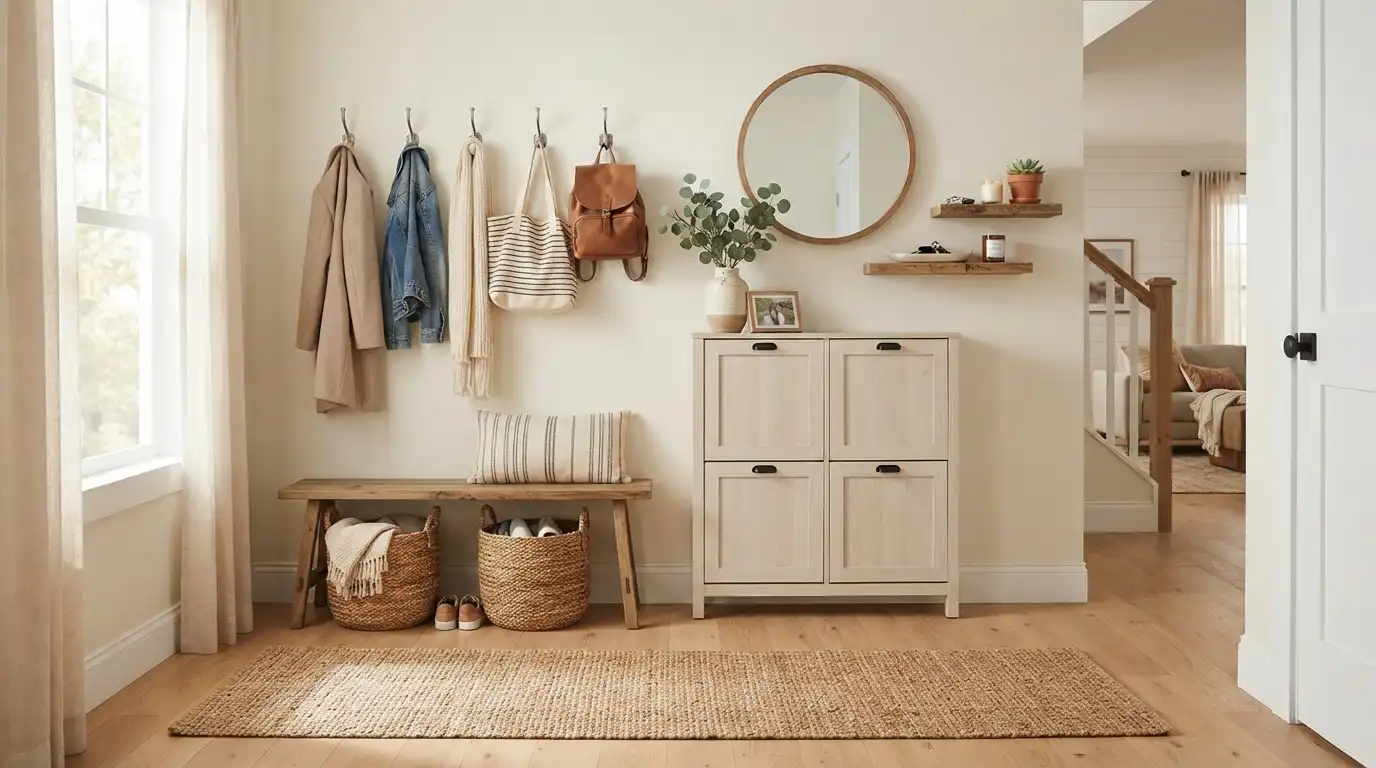
20 Smart Drop Zone Ideas To Make Entryways More Organized
Is your entryway the first place clutter seems to appear—and the last place you want to tackle? A few smart Drop Zone Ideas can turn that daily mess into a welcoming, organized space.
From overflowing shoes and bags to keys, mail, coats, and everyday essentials, entryways often have to handle more than we realize. The good news is that you don’t need a huge mudroom or expensive renovation to make yours work better. Simple solutions like built-in benches, wall hooks, storage baskets, slim cabinets, and labeled organizers can make a noticeable difference. In my experience, the best entryways combine easy access with simple systems that everyone can actually maintain. These ideas will help you create a space that feels calmer, looks beautiful, and makes leaving home easier.
1. Built-In Bench Storage
- Creates a comfortable spot for putting on and removing shoes.
- Keeps everyday footwear contained instead of scattered across the floor.
- Adds useful seating without requiring a large piece of furniture.
- Baskets underneath make seasonal items easier to sort and reach.
Image Description: Warm modern entryway with a light oak built-in bench, woven storage baskets underneath, soft beige cushion, white walls, natural wood flooring, matte black hooks above, neutral textiles, bright natural window light, clean Scandinavian style, eye-level wide-angle perspective, inviting organized atmosphere.
A slim bench with hidden storage can instantly turn a messy entry into a calmer landing spot. This setup gives you a comfortable place to sit while putting on shoes and a practical compartment for pairs that usually pile up by the door. Choose a bench with lift-up seating, drawers, or woven baskets underneath, depending on your storage needs. In my experience, keeping everyday footwear within arm’s reach makes morning routines noticeably easier. Pair the bench with a simple wall hook arrangement above it so coats, bags, and hats stay off the floor and the whole zone looks intentionally designed.
For a polished look, keep the bench proportional to the entryway and leave enough walking space around it. Light oak, painted wood, or upholstered seating can soften a narrow hallway while adding useful texture. Place two or three matching baskets underneath for seasonal accessories, pet supplies, or frequently worn shoes, then reserve one basket for items that need to leave the house. A washable cushion adds comfort without making the area feel bulky. The result is a compact drop zone that handles daily clutter while creating a welcoming visual anchor near the entrance.
2. Wall Hook Station
- Uses vertical wall space while keeping the floor open.
- Makes coats, bags, hats, and everyday items easy to grab.
- Works especially well in narrow hallways and compact entrances.
- Matching hardware can give the wall a cleaner, finished appearance.
Image Description: Bright compact entryway featuring a vertical wall hook station with five matte black hooks, a slim natural wood shelf above, woven baskets, cream walls, light oak flooring, neutral decor, soft daylight, modern farmhouse styling, uncluttered layout, straight-on Pinterest interior photography.
An organized wall can make a small entry feel surprisingly spacious. Install a row of sturdy hooks at a comfortable height, then add a narrow shelf above them for lighter items such as hats, keys, or small baskets. This vertical arrangement uses empty wall space instead of consuming valuable floor area. I’ve noticed that open hooks are especially helpful for busy households because frequently used belongings remain visible and easy to grab. Keep the hook spacing generous so coats do not overlap, and choose a finish that complements nearby door hardware for a cohesive, intentional appearance.
To keep the arrangement visually calm, limit the shelf to a few useful pieces rather than filling every inch. A small tray can corral keys, while one basket handles gloves, scarves, or other loose accessories. If the entry is narrow, use slim hooks and a shallow shelf so the walkway stays clear. Neutral finishes such as white, warm wood, or matte black work well with many interiors, but a subtle color accent can make the wall more personal. This simple vertical station creates an efficient landing place without making the entrance feel crowded or overly furnished.
3. Floating Entry Shelf
- Adds a useful landing surface without taking up floor space.
- Provides a dedicated place for keys, sunglasses, and small essentials.
- Creates an opportunity to layer simple decorative accents.
- A shallow design keeps narrow walkways feeling open.
Image Description: Stylish narrow entryway with a floating natural oak shelf mounted on a soft white wall, small ceramic tray for keys, round mirror, tiny potted plant, woven basket, light wood flooring, warm natural daylight, minimalist decor, eye-level camera angle.
A floating shelf can turn an unused patch of wall into a hardworking landing spot. Its slim profile provides room for keys, sunglasses, mail, and other small essentials without adding bulky furniture to the entryway. Choose a shelf with enough depth for a tray but keep it shallow if the hallway is tight. For a cohesive look, combine practical pieces with one or two decorative accents, such as a small plant or framed print. This balance helps the space feel styled rather than purely functional, while keeping the items you reach for most within easy view.
The best floating shelf arrangements stay intentionally edited. Use a small catchall tray to prevent keys from spreading across the surface, then leave breathing room around it for a cleaner appearance. If your household generates lots of mail, add a slim wall-mounted file holder nearby rather than allowing papers to collect on the shelf. A round mirror above the setup can also make a compact entrance feel brighter and more spacious. These small adjustments create a practical landing area that supports everyday routines while giving the doorway a polished, Pinterest-friendly focal point.
4. Slim Console Table
- Creates a dedicated surface for everyday essentials.
- Works well in narrow entryways where floor space is limited.
- Drawers can hide small clutter while keeping essentials nearby.
- A mirror above the table can make the area feel brighter.
A narrow console table can give an entryway a dedicated surface for everyday essentials without overwhelming the room. Look for a slim profile that leaves generous clearance for walking, especially when the door opens inward. A lower drawer can hide keys, chargers, and small personal items, while the tabletop stays reserved for one tray and a little decor. In my experience, the biggest improvement comes from assigning every frequently used item a home before styling the surface. That simple habit prevents the console from becoming another clutter magnet and keeps the entrance looking tidy throughout busy mornings.
Choose a console in a finish that connects with the surrounding space, such as warm oak, painted white, or natural cane. A mirror above it can reflect daylight and visually widen the entry, while a small lamp adds a welcoming layer of light after sunset. Keep baskets or a shoe rack underneath only if they do not restrict the walkway. A restrained arrangement of a tray, vase, and framed piece can make the setup feel finished without sacrificing function. The result is a compact drop zone that combines hidden storage, useful surface space, and an attractive focal point.
Image Description: Warm modern entryway with a slim natural oak console table, single drawer, ceramic catchall tray, small vase, round mirror, woven basket underneath, cream walls, light wood flooring, soft daylight, minimalist decor, uncluttered walkway, eye-level Pinterest interior photography.
5. Flexible Pegboard Wall
- Turns unused vertical space into adaptable storage.
- Pegs can be rearranged as household needs change.
- Shelves and baskets add extra organization without bulky furniture.
- Lower hooks make everyday items easier for children to reach.
A slim pegboard turns an overlooked wall into a flexible command center for the entrance. Unlike fixed hooks, its pegs can be moved as your household’s needs change, making it useful for coats, tote bags, hats, umbrellas, and small baskets. Choose a wood or painted pegboard that complements your existing trim and flooring. I’ve seen this work well in homes where storage needs change often because the layout can be adjusted without replacing the whole system. Keep the most-used items around shoulder height and reserve higher sections for less frequently needed accessories.
For a polished arrangement, combine different peg accessories rather than filling every opening. Add a narrow shelf for keys or sunglasses, a few sturdy pegs for bags, and one small basket for loose essentials. Leave some open space so the wall does not look visually crowded. A light wood board suits Scandinavian and modern interiors, while a painted version can blend seamlessly with the wall. If you have children, place a lower row of pegs within easy reach. This creates an adaptable storage wall that makes daily departures quicker and keeps frequently dropped belongings off nearby furniture.
Image Description: Organized entryway featuring a light oak pegboard wall with adjustable wooden pegs, small shelves, woven basket, tote bags, hats, and keys, warm white walls, natural wood floor, soft morning light, Scandinavian style, clean vertical composition, eye-level camera angle.
6. Closed Shoe Cabinet
- Keeps scattered footwear hidden behind a streamlined facade.
- Shallow cabinets preserve valuable walking space.
- Easy-access compartments make everyday shoes simple to grab.
- A nearby washable mat helps contain dirt and debris.
A dedicated shoe cabinet can make the biggest difference when footwear is the main source of entryway clutter. Instead of leaving pairs scattered near the door, use a closed cabinet with tilt-out or adjustable compartments to keep them contained. Choose a shallow model when floor space is limited, and measure carefully around doors and baseboards before installing it. The top can double as a small landing surface for a tray or seasonal accent. In my experience, closed storage creates an immediate visual reset because even a busy collection of shoes disappears behind one clean, consistent facade.
For everyday convenience, keep the shoes you wear most often in the easiest-to-reach compartments and move seasonal pairs higher or farther back. Ventilated doors or slatted fronts can help airflow, especially in households where shoes are worn daily. Add a washable mat nearby to catch dirt before it reaches the rest of the floor. If the cabinet is tall, secure it properly to the wall for stability. A simple mirror or artwork above it can complete the arrangement without adding more furniture. The result is a cleaner entry that feels calmer while still supporting practical daily routines.
Image Description: Modern entryway with a slim closed shoe cabinet featuring light oak doors, neatly concealed footwear, small ceramic tray on top, round wall mirror, washable neutral mat, cream walls, warm wood flooring, soft natural daylight, minimalist style, straight-on camera view.
7. Built-In Cubby Storage
- Gives each household member a clearly defined storage space.
- Open cubbies make frequently used belongings easy to find.
- Upper compartments can handle less frequently used items.
- Matching baskets create a cleaner, more coordinated appearance.
Built-in cubbies can turn a busy entry into a highly organized storage wall without relying on several separate furniture pieces. Give each person a dedicated compartment for shoes, bags, jackets, or daily accessories, then add baskets where smaller items tend to collect. This approach works particularly well for families because everyone has a clear place to return belongings. I’ve noticed that assigned storage is easier to maintain than one large shared compartment, especially during rushed mornings. Keep everyday essentials at reachable heights and use upper cubbies for seasonal items that do not need constant access.
For a finished look, paint the cubbies to match the surrounding walls or trim so the storage feels integrated rather than added on. Add hooks above lower compartments for coats and backpacks, then reserve the bench area for comfortable seating. Woven baskets can soften open shelving and hide visual clutter while still keeping categories accessible. If you are planning custom cabinetry, measure the largest items you expect to store before finalizing each compartment. The result is a streamlined entry system that combines seating, concealed organization, and personalized storage in one cohesive footprint.
Image Description: Custom entryway wall with built-in white cubbies, individual woven baskets, lower bench seat, matte black coat hooks, folded scarves, shoes neatly stored, warm oak flooring, soft beige walls, natural window light, modern farmhouse aesthetic, wide eye-level Pinterest photography.
8. Hidden Drawer Station
- Conceals small items that quickly make an entry look messy.
- Keeps keys, wallets, chargers, and sunglasses in designated places.
- Creates a cleaner surface without sacrificing accessibility.
- Labeling drawers can make shared storage easier to maintain.
A compact drawer station gives small everyday belongings a discreet home while keeping the entryway surface visually clean. Use shallow drawers for keys, wallets, sunglasses, charging cables, and other items that often get dropped near the door. Dividers can separate categories so everything stays easy to locate. This approach is especially useful when several people share the same entrance and small objects tend to become mixed together. Rather than searching through one crowded drawer, each category gets a defined space, making the daily routine faster and reducing the temptation to leave essentials on nearby counters.
Choose a drawer unit that fits comfortably against the wall without narrowing the walking path. If the furniture has several drawers, assign each one a simple category such as keys, accessories, mail, or technology. A small label inside each drawer can help children and guests follow the system without making the furniture look overly utilitarian. Keep the top surface intentionally minimal with one tray, a small lamp, or a decorative object. This creates a polished entry while giving clutter-prone essentials somewhere convenient to disappear at the end of each day.
Image Description: Refined entryway with a compact light oak drawer cabinet, several shallow organized drawers, ceramic key tray, small table lamp, round mirror, cream walls, natural wood flooring, neutral woven runner, warm ambient lighting, minimalist interior, front-facing camera perspective.
9. Family Command Center
- Combines schedules, messages, keys, and bags in one location.
- Helps busy households coordinate departures more efficiently.
- A calendar provides an easy visual reminder for everyone.
- Small baskets can separate personal belongings without crowding the wall.
A family command center brings several daily routines together in one organized entryway zone. Combine a wall calendar, small message board, hooks, and a narrow shelf so schedules and essentials stay visible in one place. This setup can be especially helpful for households juggling school bags, appointments, work items, and errands. Instead of scattering reminders across the kitchen and hallway, create one predictable location near the door. In my experience, visibility matters as much as storage here because seeing tomorrow’s schedule while leaving can prevent forgotten bags, paperwork, or appointments.
Keep the arrangement simple enough that it remains useful rather than becoming another information-heavy wall. Mount the calendar at eye level, place hooks underneath for bags, and use a small shelf or tray for keys and other tiny essentials. A corkboard or magnetic panel can hold temporary notes without permanently filling the space. Choose matching frames and hardware to create visual consistency, then leave some wall area open around each element. The finished station feels practical but polished, helping the entryway support both organization and the quick decisions that happen when everyone is heading out.
Image Description: Bright family entryway command center with framed monthly calendar, small corkboard, natural wood shelf, black hooks holding backpacks, woven baskets, key tray, white walls, light oak flooring, soft daylight, modern farmhouse style, organized vertical wall, eye-level Pinterest composition.
10. Baskets Under Bench
- Makes unused space beneath seating work harder.
- Keeps shoes, scarves, gloves, and bags grouped by category.
- Matching baskets create a more cohesive visual effect.
- Pull-out handles make frequently used items easier to access.
Open space beneath an entry bench is too useful to leave empty, especially in a compact home. Sliding baskets underneath creates an easy storage solution for shoes, scarves, hats, and seasonal accessories without adding another bulky cabinet. Choose baskets that fit the full width of the bench while leaving enough clearance for comfortable movement. I’ve noticed that larger baskets work best when each one has a simple purpose, such as shoes, winter accessories, or reusable bags. This keeps the storage system intuitive and prevents miscellaneous items from becoming one oversized pile.
For a polished appearance, select baskets in similar materials or tones so the lower section feels intentional rather than visually busy. Natural seagrass, woven rattan, canvas, or fabric baskets can add warmth beneath a painted or wooden bench. Keep heavier items toward the bottom and everyday belongings in the easiest-to-reach baskets. If the entry receives muddy shoes, choose washable or easy-to-clean containers and place a durable mat nearby. This small upgrade transforms overlooked floor space into practical storage while maintaining the open, welcoming feel that makes a drop zone comfortable to use.
Image Description: Cozy entryway with a built-in natural oak bench, three large woven baskets neatly positioned underneath, folded scarves and shoes visible, cream walls, light wood flooring, neutral runner, soft morning sunlight, warm Scandinavian style, uncluttered composition, low eye-level camera angle.
11. Vertical Locker Units
- Creates dedicated compartments for coats, bags, and footwear.
- Uses height efficiently in narrow entryways.
- Individual sections make shared storage easier to maintain.
- Doors can conceal clutter for a cleaner overall appearance.
Tall locker-style units make excellent use of vertical space when an entryway needs serious storage without spreading furniture across the floor. Each narrow compartment can hold a coat, backpack, shoes, and smaller accessories, giving every household member a defined area. This arrangement is particularly useful in homes where several people enter and leave through the same doorway. Keep the most frequently used belongings between waist and shoulder height, while upper shelves handle seasonal items. The result feels more controlled because every category has a visible boundary instead of competing for the same hooks or shelf.
For a softer residential look, choose cabinetry in warm white, muted sage, light oak, or another finish that complements the surrounding interior. Add simple hooks inside each compartment and a small shelf or basket above them for hats and accessories. A bench across the lower section can provide convenient seating without interrupting the storage pattern. If the units are tall or freestanding, secure them properly to the wall. With thoughtful proportions and consistent finishes, locker storage can feel like custom millwork while delivering the everyday practicality of a dedicated mudroom.
Image Description: Elegant narrow entryway with tall built-in locker units in warm white, individual coat hooks, upper shelves, woven baskets, lower shoe compartments, central bench, pale oak floor, soft beige walls, natural daylight, modern farmhouse style, symmetrical front-facing perspective.
12. Corner Catchall Cabinet
- Turns an awkward entry corner into useful storage.
- Keeps small essentials contained behind doors or drawers.
- Works well where a full console would feel too large.
- A decorative top surface adds personality without clutter.
An unused corner can become one of the most practical parts of an entryway with a compact catchall cabinet. Choose a narrow corner-friendly piece with drawers or doors for keys, wallets, sunglasses, mail, and other small belongings that tend to collect near the entrance. Because the furniture occupies vertical rather than broad floor space, it can solve storage problems without making the hallway feel crowded. This setup is especially useful when a conventional console cannot fit comfortably. A small cabinet also creates a defined destination for everyday objects, helping the rest of the entry stay visually calmer.
Keep the cabinet surface lightly styled with one practical tray and a small decorative accent rather than turning it into another storage pile. If the corner is dark, choose a light finish or position a mirror nearby to reflect available daylight. Rounded edges can work particularly well in tight passages because they soften the visual footprint and reduce sharp corners. Add a small basket inside for reusable bags or seasonal accessories. With the right proportions, an overlooked corner becomes a compact storage station that feels intentional, useful, and beautifully integrated.
Image Description: Small entryway corner featuring a compact light oak catchall cabinet with drawers, ceramic tray, small vase, round mirror, woven basket beside it, warm white walls, pale wood flooring, soft natural window light, minimalist style, corner-focused eye-level photography.
13. Open Shelf Baskets
- Keeps everyday accessories visible without creating a messy appearance.
- Baskets make open shelving easier to organize by category.
- Works well for hats, scarves, gloves, and reusable bags.
- Different basket sizes can accommodate items with different storage needs.
Open shelving becomes much more practical when paired with baskets that give every small category a defined home. Use one basket for hats, another for scarves, and another for reusable shopping bags or seasonal accessories. This arrangement keeps belongings accessible while preventing an open shelf from looking chaotic. Choose baskets with low enough sides that you can quickly see what is inside. In my experience, open storage works best when the categories are simple and the containers are consistent. That balance makes it easy to put things away while keeping the entry visually calm.
For a cohesive look, select baskets made from the same material or coordinate their colors with the surrounding furniture. Woven rattan adds warmth, canvas creates a softer casual feel, and wire baskets suit more industrial interiors. Place frequently used containers at waist or eye level, while less-used items can occupy higher shelves. Avoid packing every basket completely full because overstuffed containers quickly become difficult to use. A few decorative pieces can fill remaining shelf space, but practical storage should remain the priority. This setup turns ordinary shelving into an organized, flexible landing zone.
Image Description: Bright entryway with three open natural oak shelves holding matching woven baskets, neatly organized scarves, hats, gloves, and reusable bags, cream plaster walls, light oak flooring, neutral runner, soft natural daylight, modern Scandinavian style, clean eye-level Pinterest photography.
14. Mail Sorting Shelf
- Prevents incoming papers from spreading across counters.
- Creates a dedicated place for letters and important documents.
- Separate compartments make sorting faster and easier.
- A small tray can handle outgoing mail and keys.
A dedicated mail shelf can stop paper clutter before it spreads through the rest of the home. Install a narrow wall shelf with two or three compartments for incoming letters, bills, school papers, and documents that need attention. Keeping the station near the entrance makes it easy to sort mail immediately instead of dropping everything on a kitchen counter. Choose compartments that are deep enough to hold envelopes but shallow enough to keep papers visible. A small tray beside the sections can also collect keys or outgoing items that need to leave with you.
The most effective setup uses clear categories rather than too many divisions. One section can hold unopened mail, another can store documents requiring action, and a final compartment can be reserved for outgoing items. Empty the station regularly so papers do not become an overwhelming stack. A slim wooden shelf looks especially attractive against a light wall, while labeled baskets can make the system even easier for families to follow. This simple addition gives paperwork a predictable destination and helps the entryway stay tidy without requiring a large piece of furniture.
Image Description: Organized entryway wall with a slim floating oak mail shelf, three labeled compartments containing envelopes, small ceramic key tray, framed artwork, round mirror, warm white walls, pale wood flooring, natural daylight, minimalist modern farmhouse aesthetic, straight-on camera angle.
15. Mirrored Storage Cabinet
- Combines everyday storage with a useful reflective surface.
- Helps small entryways feel brighter and more spacious.
- Conceals clutter behind clean cabinet doors.
- Provides a convenient last-look spot before leaving home.
A mirrored storage cabinet can solve two entryway needs at once: concealed organization and a convenient place to check your appearance before heading out. The reflective front bounces available light around a narrow hallway, making the space feel more open while hiding everyday clutter behind closed doors. Choose a slim cabinet with adjustable shelves so you can store accessories, bags, or small personal items according to your household’s needs. This is one of the most efficient options for compact spaces because the vertical footprint provides useful storage without requiring a separate mirror.
Keep the cabinet visually streamlined by choosing simple hardware and a finish that works with the surrounding walls and flooring. Inside, use small bins or shelf dividers to prevent loose accessories from becoming mixed together. Avoid storing heavy objects on high shelves where they may be difficult to reach safely. If the mirror faces a window or light source, it can brighten the entire entrance through reflection. The finished arrangement feels polished and practical, giving you a discreet place to organize daily necessities while adding depth and brightness to the room.
Image Description: Elegant narrow entryway with a tall mirrored storage cabinet, concealed shelves, slim black handles, neutral woven runner, cream walls, pale oak flooring, small plant, soft natural window light reflected in mirror, contemporary minimalist style, eye-level wide-angle perspective.
16. Peg Rail Organizer
- Provides flexible hanging space without bulky cabinetry.
- Keeps coats, bags, hats, and scarves easy to reach.
- A narrow shelf above adds room for lightweight accessories.
- Wooden pegs bring warmth and texture to plain walls.
A simple peg rail can create an efficient hanging station while taking up very little wall space. Mount a row of sturdy wooden or metal pegs at a comfortable height, then use them for coats, handbags, hats, umbrellas, or lightweight accessories. Unlike a freestanding coat rack, the wall-mounted design keeps the floor completely open, which can make a narrow entrance feel noticeably larger. I’ve noticed that peg rails are particularly useful when you want storage that looks intentional rather than overly built-in. Choose enough pegs for daily use, but avoid overcrowding them with too many belongings.
For additional function, install a slim shelf directly above the rail for baskets, framed artwork, or seasonal accessories. Keep heavier coats on the strongest pegs and reserve smaller hooks for keys or lighter bags. A natural wood rail works beautifully with Scandinavian, farmhouse, and relaxed modern interiors, while painted versions can blend into the wall for a quieter appearance. Leave a little space between hanging items so the wall still feels airy. This compact arrangement creates an approachable landing area that keeps frequently used belongings accessible and the floor free from clutter.
Image Description: Warm minimalist entryway with a natural oak peg rail mounted on a cream wall, wooden pegs holding coats, tote bags, hats, and scarf, slim shelf above with small basket, pale oak flooring, soft daylight, Scandinavian style, straight-on Pinterest interior photography.
17. Narrow Storage Tower
- Uses vertical space when the entry has limited floor width.
- Provides separate areas for shoes, accessories, and bags.
- Closed sections keep visual clutter hidden.
- A compact footprint works well beside doors or stairs.
A narrow storage tower can make a surprisingly big difference in a tight entryway. Its tall, slim profile uses vertical space instead of spreading across the floor, creating room for shoes, bags, accessories, and seasonal items in one compact footprint. Look for a design with a mix of shelves, drawers, and closed compartments so different belongings can be stored according to how often they are used. Place daily essentials between waist and shoulder height, while reserve upper shelves for less frequently needed items. This approach keeps the most useful storage accessible without sacrificing valuable walking clearance.
Before choosing a tower, measure the available wall width, door swing, and ceiling height carefully. A cabinet that is too deep can make an entrance feel cramped even if it offers excellent storage capacity. Light-colored finishes can visually recede into small spaces, while natural wood adds warmth and character. Use small bins inside open compartments to group loose accessories and keep the overall appearance controlled. With thoughtful proportions, a storage tower can function as a complete landing station while leaving enough open floor for comfortable movement through the doorway.
Image Description: Compact entryway with a tall slim storage tower in light oak, closed doors, open shelves with woven baskets, neatly stored shoes and bags, cream walls, light wood flooring, neutral runner, bright natural daylight, modern minimalist design, vertical eye-level composition.
18. Under-Stair Drop Zone
- Turns overlooked space beneath stairs into useful storage.
- Keeps entryway belongings close without crowding the main walkway.
- Drawers and cabinets can hide clutter effectively.
- Built-in lighting makes deeper compartments easier to use.
The space beneath a staircase can become an incredibly useful landing zone when ordinary entry furniture will not fit. Built-in drawers, cabinets, or open cubbies can transform this awkward area into dedicated storage for shoes, coats, bags, and seasonal accessories. Because the storage follows the natural shape of the staircase, it can use space that would otherwise remain difficult to furnish. I’ve seen this approach work especially well in open-plan homes where the entrance shares space with a living or dining area. Keeping belongings contained beneath the stairs helps the entire nearby room feel more orderly.
For the most practical result, combine closed cabinets with a small open section for items used every day. Drawers can handle shoes and accessories, while hooks or cubbies provide quick access to bags and coats. Add discreet lighting inside deeper compartments so nothing gets lost in dark corners. Use cabinetry that matches nearby trim or flooring to make the installation feel architectural rather than separate. If the staircase is narrow, keep handles and hardware streamlined. This customized solution maximizes difficult square footage while creating a dedicated storage area that blends naturally into the home’s structure.
Image Description: Stylish entryway beneath a staircase transformed into built-in storage, warm white cabinets following stair angle, drawers, open cubbies, woven baskets, coat hooks, concealed LED lighting, light oak flooring, beige walls, natural daylight, modern farmhouse style, wide-angle perspective.
19. Entryway Drawer Bench
- Combines comfortable seating with concealed everyday storage.
- Drawers keep shoes and accessories protected from visual clutter.
- A cushioned top makes changing footwear more comfortable.
- Works especially well in compact family entryways.
A drawer bench gives your entryway a hardworking piece of furniture that handles both seating and storage. Unlike open baskets, drawers can keep shoes, gloves, pet accessories, and other small belongings completely out of sight. This makes it particularly useful when you want your Drop Zone Ideas to look streamlined even during busy weeks. Choose deep drawers for footwear and shallower ones for smaller accessories. In my experience, drawers are easiest to maintain when each one has a clear category, because everyone knows exactly where an item belongs instead of creating one catchall compartment.
For comfort, add a durable cushion in a neutral fabric that complements the surrounding decor. If the bench sits near the door, choose a material that can handle regular use and is easy to clean. Keep the drawer contents limited to items that belong in the entry so the storage does not become an overflow area for the rest of the home. A few wall hooks above the bench can handle coats and bags, creating a complete landing station. Together, the seating, concealed storage, and hanging space make daily arrivals and departures noticeably smoother.
Image Description: Inviting modern entryway with a built-in light oak drawer bench, three spacious drawers, cream upholstered cushion, matte black wall hooks above, neutral woven runner, beige walls, pale wood flooring, soft natural daylight, Scandinavian farmhouse style, eye-level Pinterest photography.
20. Labeled Basket Wall
- Makes shared storage easier to understand and maintain.
- Gives every family member a designated place for belongings.
- Labels reduce confusion when several baskets look similar.
- Matching containers create a neat and cohesive visual finish.
A labeled basket wall can bring order to the small belongings that usually have nowhere specific to go. Mount sturdy shelves or cubbies at different heights, then give each basket a simple category or household member label. This makes the Drop Zone Ideas throughout your entryway more intentional because everyone can immediately identify where bags, accessories, paperwork, or seasonal items belong. Use large baskets for bulky belongings and smaller containers for keys or personal accessories. Clear labels are especially helpful for children because the organization system becomes easy to understand without repeated reminders.
Keep the visual design simple by choosing baskets in one coordinated material, such as woven seagrass, canvas, or felt. Labels can be printed, handwritten, or made from small wooden tags depending on your style. Leave enough space between baskets so the wall does not feel overloaded, and position the most frequently used containers within easy reach. If the entry is narrow, keep the shelving shallow to preserve a comfortable walkway. The finished wall provides flexible storage, clear organization, and a polished appearance while making it easier for everyone to return belongings to their proper place.
Image Description: Organized entryway basket wall with six matching woven baskets on light oak shelves, simple labeled tags, handbags, scarves, shoes, and accessories neatly contained, warm white walls, pale wood flooring, soft natural daylight, modern farmhouse aesthetic, straight-on Pinterest camera angle.
Conclusion
A well-organized entryway can make everyday routines feel surprisingly easier. The right storage setup gives shoes, bags, keys, coats, and small essentials a clear home while keeping the space welcoming and uncluttered. These Drop Zone Ideas show that even a narrow hallway or compact entrance can become both functional and beautiful with thoughtful changes. I’ve seen how small upgrades can completely transform a busy space without requiring a major renovation. Save this post on Pinterest so you can revisit your favorite ideas, try one that fits your home, and share it with someone who could use a more organized entryway. Start small, and enjoy the difference!