20 Cozy Living Room Ideas For Small Spaces That Feel Inviting
Dreaming of a home that feels warm the moment you walk in?
Cozy Living Room Ideas For Small Spaces can completely transform even the tiniest room into a welcoming retreat.
You don’t need a major renovation or expensive furniture to create a space that feels comfortable, stylish, and full of personality.
This collection is packed with practical decorating ideas that make small living rooms feel brighter, softer, and more functional.
From layered textures and warm lighting to smart furniture choices and clever storage, each idea is designed to help you make the most of every square foot without sacrificing comfort or style.
Whether you’re decorating an apartment, a townhouse, or a cozy family home, you’ll find inspiration that’s easy to adapt to your own space.
In my experience, the biggest transformations often come from simple changes rather than complete makeovers.
I’ve noticed that thoughtful details like natural textures, soft lighting, and carefully chosen decor create a room that feels larger, calmer, and more inviting every day.
Explore these inspiring ideas, discover what fits your style, and create a living room you’ll love relaxing in and proudly sharing with family and friends.
Also view: 20 Creative Narrow Living Room Ideas for a Cozy Modern Home
1. Soft Neutral Palette
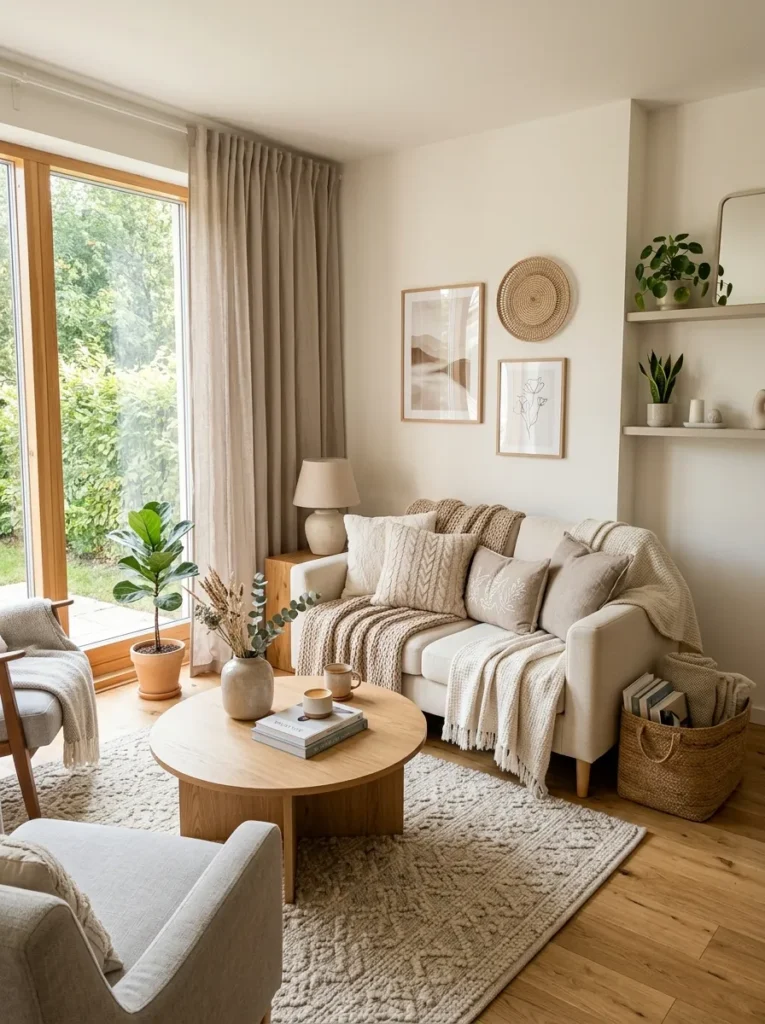
- Creates a brighter and more open feel without making the room look plain.
- Adds warmth through layered neutral textures instead of bold colors.
- Makes seasonal decorating easier because almost everything matches.
- Helps small spaces feel calm, balanced, and visually uncluttered.
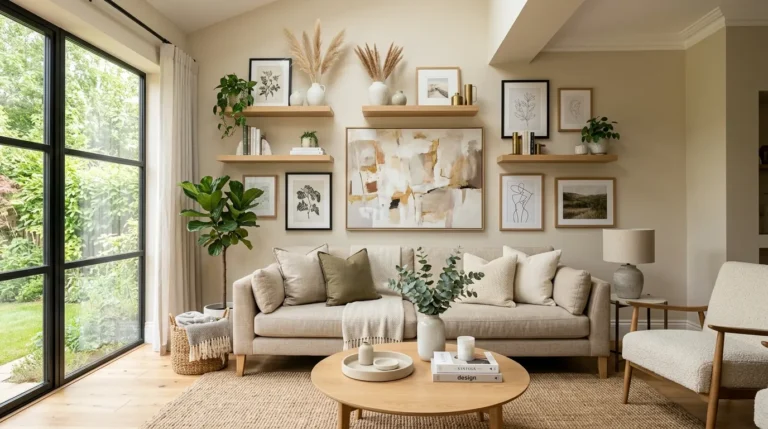
A soft neutral palette instantly makes a compact living room feel brighter, calmer, and far more welcoming. Warm whites, gentle beige, light greige, and natural wood tones reflect light beautifully, helping even the smallest layouts appear larger than they really are. Instead of relying on strong colors, focus on texture through knitted throws, linen cushions, woven baskets, and soft rugs. These simple layers create quiet visual interest while keeping the room feeling open, making the entire space more comfortable for relaxing every single day.
One of the easiest Cozy Living Room Ideas For Small Spaces is choosing warm neutrals that work together instead of competing for attention. I’ve noticed this approach also makes decorating much simpler because nearly every accent blends naturally with the room. A few black details or soft greenery add enough contrast without overwhelming the design. The finished space feels timeless, peaceful, and inviting, giving guests an immediate sense of comfort while making everyday living feel surprisingly relaxing despite the limited square footage.
2. Layered Cozy Textiles
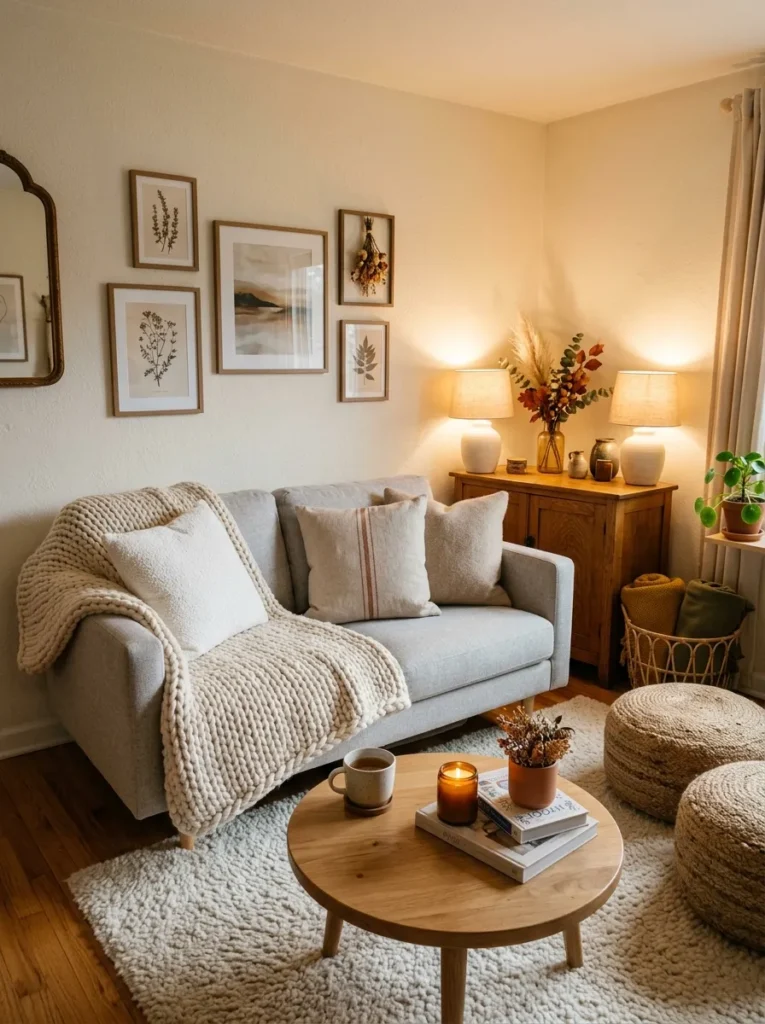
- Makes the seating area feel softer and more comfortable.
- Adds warmth without requiring extra furniture.
- Creates depth through different fabrics and textures.
- Gives the room an inviting Pinterest-inspired finish.
Nothing changes the atmosphere of a small living room faster than thoughtfully layered textiles. Soft throw blankets, textured pillows, plush rugs, and fabric ottomans instantly make the space feel warmer without adding clutter. Mixing materials like boucle, cotton, linen, and chunky knit creates visual depth while keeping the color palette balanced. Even a simple sofa feels much more luxurious when surrounded by comfortable layers that invite people to sit down, relax, and stay awhile after a busy day.
In my experience, adding texture is often more effective than buying larger furniture pieces. A well-chosen rug anchors the seating area, while oversized cushions soften clean lines and create a lived-in appearance. This combination works beautifully in apartments and compact homes where every decorative choice matters. The layered fabrics also improve comfort during every season, helping the room feel intentionally designed instead of simply furnished. Small details like these often create the biggest visual transformation with very little effort.
3. Warm Ambient Lighting
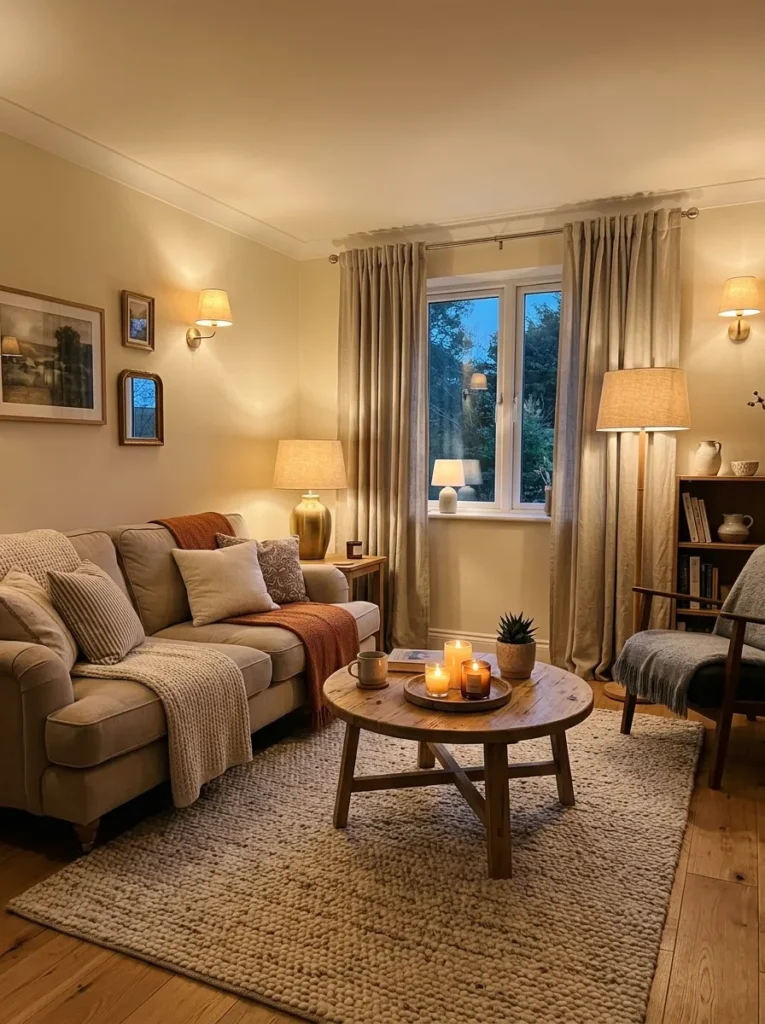
- Softens harsh shadows and creates a relaxing atmosphere.
- Makes the room feel cozy during evenings and cloudy days.
- Highlights decorative textures throughout the space.
- Adds comfort without changing the room layout.
Lighting can completely change how a living room feels, especially after sunset. Replacing harsh overhead fixtures with warm table lamps, floor lamps, and subtle wall sconces creates a softer glow that instantly feels more inviting. Gentle lighting highlights textures in pillows, blankets, and wood furniture while reducing the stark appearance that bright ceiling lights often create. The result is a comfortable environment where reading, relaxing, or spending time with family naturally feels more enjoyable every evening.
That’s why many designers recommend using several smaller light sources instead of depending on one central fixture. Warm bulbs around 2700K create a cozy atmosphere that flatters neutral colors and natural materials. Candles or battery-powered lanterns can add another gentle layer without overwhelming the room. Even in compact layouts, thoughtful lighting makes furniture arrangements appear more intentional and welcoming. This simple upgrade transforms everyday living while giving the entire space a peaceful, carefully curated character.
4. Floating Wall Shelves
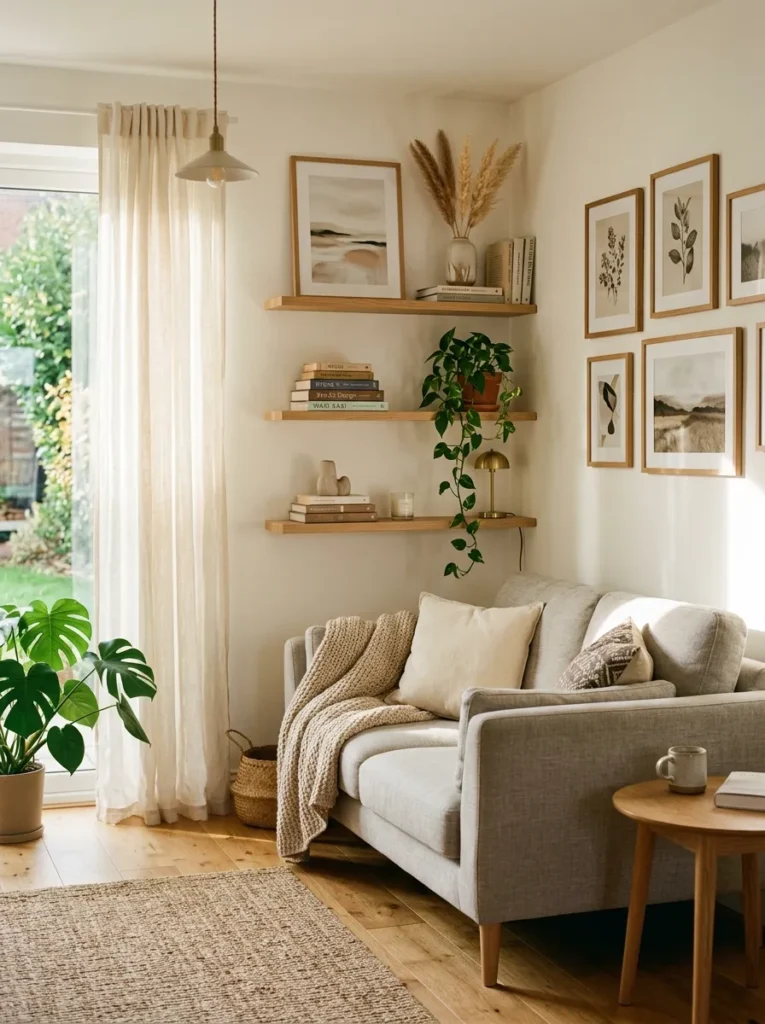
- Keeps the floor open while adding useful storage.
- Displays decor without making the room feel crowded.
- Draws the eye upward to create a taller appearance.
- Makes personal items part of the overall design.
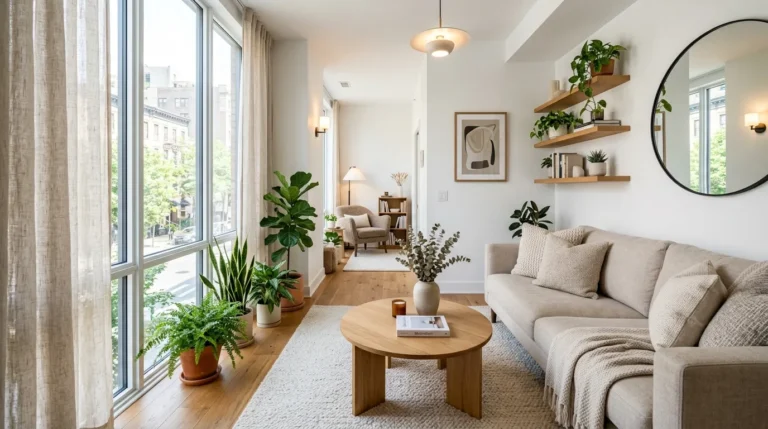
Empty walls are valuable space in a compact living room, and floating shelves help you use them beautifully. Instead of bulky bookcases, install slim wood shelves that hold books, framed photos, small plants, and decorative pottery without taking up precious floor area. Keeping the styling simple prevents visual clutter while giving the room more personality. The added height naturally draws the eye upward, making the ceiling appear taller and helping the space feel brighter, more balanced, and thoughtfully designed from every angle.
I’ve seen this work well in many homes where storage is limited but homeowners still want a stylish look. Group similar colors together, leave a little breathing room between objects, and avoid filling every shelf completely. That balance keeps the display feeling intentional instead of crowded. Floating shelves also make seasonal decorating incredibly easy since swapping a few accessories instantly refreshes the room. This practical solution combines storage and decoration without sacrificing the open feeling that small spaces need most.
5. Compact Reading Corner
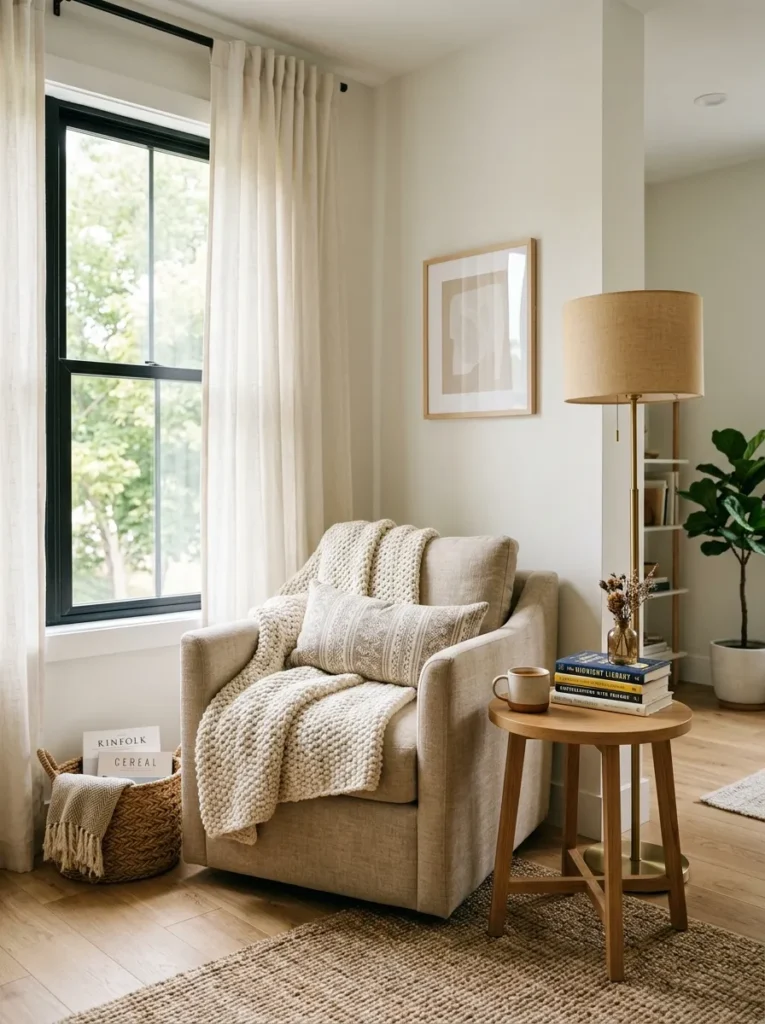
- Turns an unused corner into a relaxing retreat.
- Adds function without overwhelming the layout.
- Creates a quiet place for reading or unwinding.
- Brings extra personality to the room.
Even the smallest living room often has an overlooked corner that can become a favorite place to relax. A comfortable accent chair, a compact side table, and a warm floor lamp create a welcoming reading nook without requiring much space. Add a soft blanket and a woven basket for books to make the area feel complete. This thoughtful setup introduces another functional zone while keeping the overall layout open, organized, and visually balanced throughout the room.
One of my favorite decorating tricks is giving every corner a purpose instead of letting it sit empty. A reading corner encourages quiet moments, morning coffee, or evening relaxation while making the room feel more thoughtfully planned. Choose furniture with slim profiles to preserve walking space and keep accessories simple. These small adjustments create a comfortable atmosphere that feels personal rather than crowded. The finished result looks polished, inviting, and perfectly suited to everyday living in a compact home.
6. Round Coffee Table
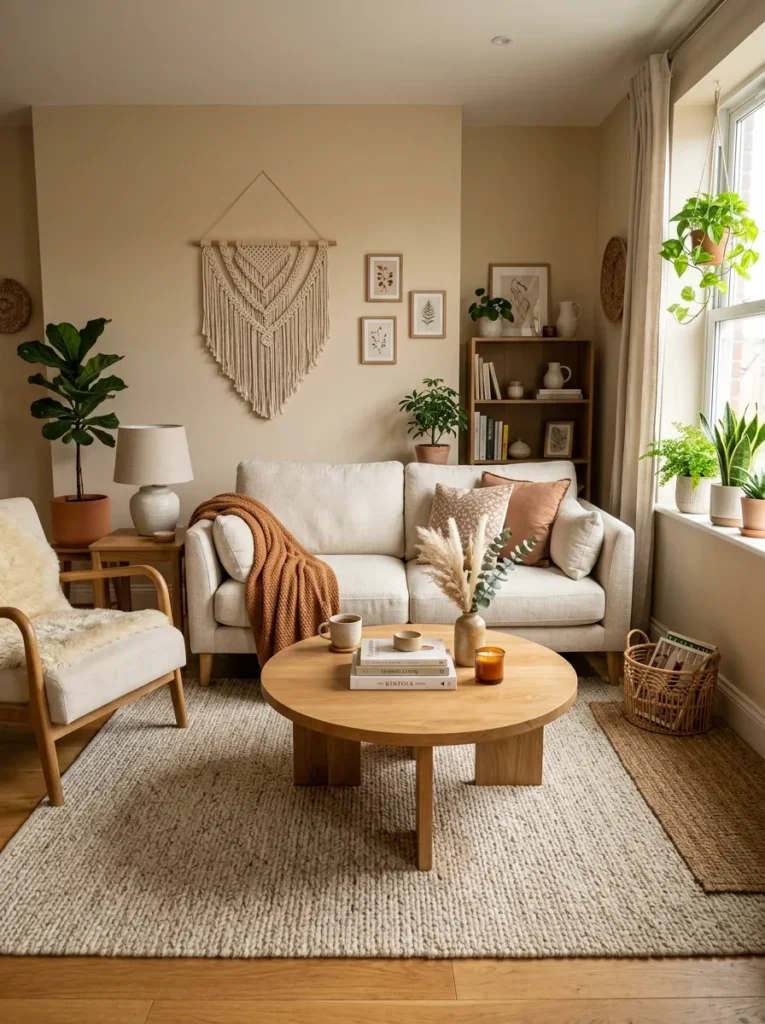
- Improves movement around the seating area.
- Softens sharp furniture lines for a welcoming look.
- Creates better flow in tight layouts.
- Offers a stylish centerpiece without feeling bulky.
A round coffee table is a smart choice when every inch matters. Its curved edges improve movement through the room, making the layout feel less cramped than square or rectangular alternatives. The softer shape also balances straight-lined sofas and shelving, creating a more relaxed visual flow. Whether made from natural wood, stone, or light-toned finishes, this centerpiece adds warmth while keeping the seating area open and comfortable for everyday use and casual gatherings.
For Cozy Living Room Ideas For Small Spaces, furniture that improves circulation is just as important as beautiful decor. I’ve noticed round tables naturally encourage conversation because everyone has easier access to the center without awkward corners getting in the way. Pair one with a textured tray, a candle, and a small vase of greenery for a simple yet polished look. This combination keeps the room functional, visually lighter, and effortlessly inviting throughout every season.
7. Natural Wood Accents
- Brings warmth without making the room feel heavy.
- Adds timeless texture that complements neutral colors.
- Creates a balanced mix of soft and organic materials.
- Makes the space feel welcoming throughout the year.
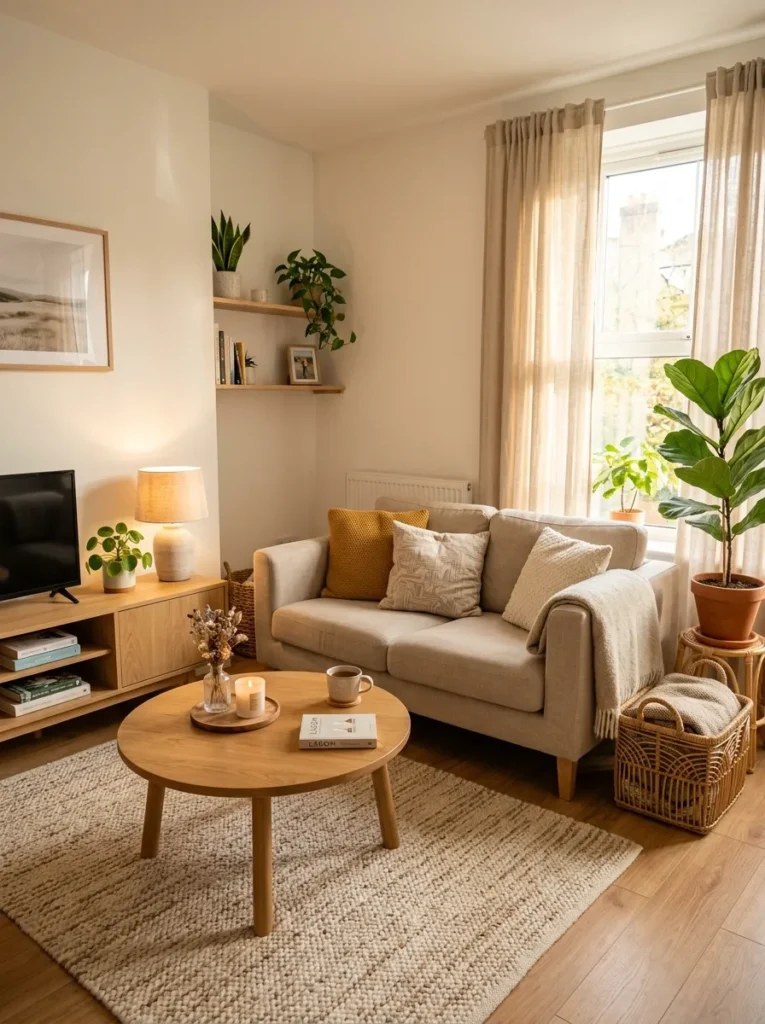
Natural wood instantly adds character and warmth to a small living room without overwhelming the space. Light oak, ash, or maple finishes work especially well because they reflect light while introducing gentle texture. A wooden coffee table, floating shelf, or media console creates visual balance against soft fabrics and painted walls. Rather than filling the room with large furniture, focus on a few carefully chosen wood elements that add depth while maintaining an open, airy atmosphere that feels comfortable every day.
I’ve noticed that mixing wood with linen, woven baskets, and soft upholstery creates a room that feels collected instead of perfectly matched. Slight variations in grain and tone add authenticity while preventing the design from looking flat. Keeping the wood finishes within a similar warmth also creates harmony without becoming repetitive. These thoughtful details help even a compact living room feel grounded, inviting, and naturally stylish while remaining practical for everyday family life and entertaining guests.
8. Oversized Area Rug
- Makes the room appear larger and more connected.
- Defines the seating area with a clean visual boundary.
- Adds softness underfoot for everyday comfort.
- Creates a polished, professionally styled appearance.
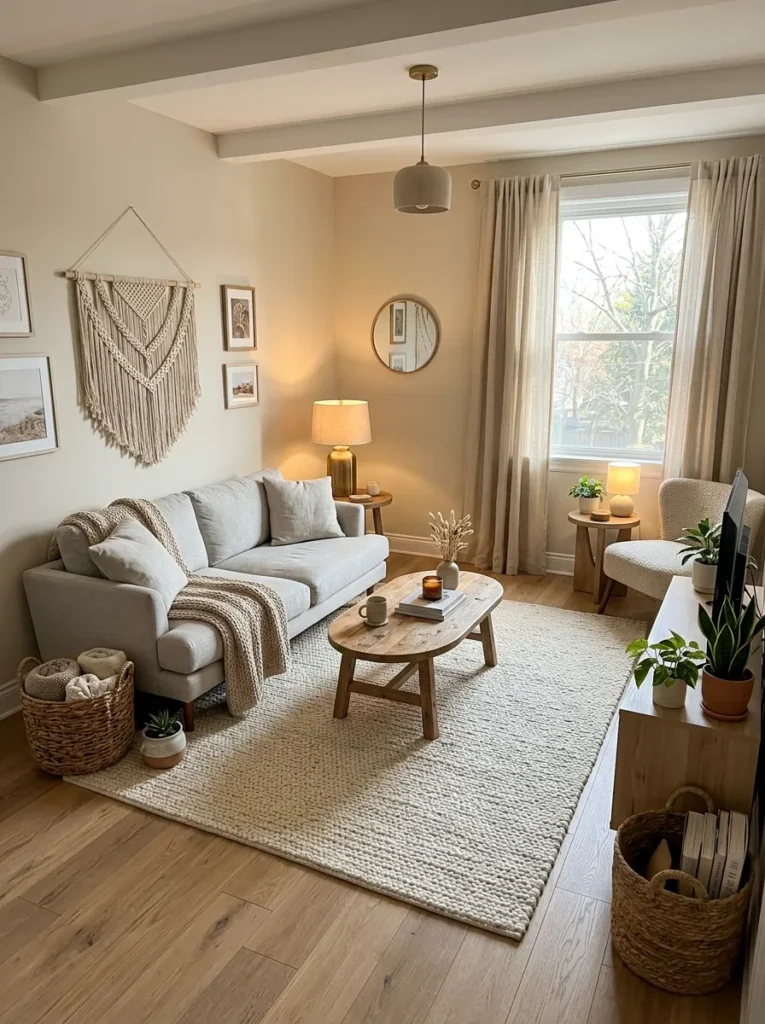
Choosing a rug that’s larger than expected can completely change how a small living room looks. Instead of a tiny rug floating beneath the coffee table, select one that allows at least the front legs of the seating to rest comfortably on it. This simple adjustment visually connects the furniture, making the layout feel intentional and much more spacious. Soft textures underfoot also increase comfort, giving the room a welcoming atmosphere that encourages people to relax and linger longer.
That’s why many designers recommend investing in the largest rug your layout comfortably allows. A generously sized rug creates continuity instead of breaking the room into smaller sections. Neutral patterns and subtle textures provide visual interest without making the floor feel busy. Pairing the rug with complementary cushions and warm lighting strengthens the overall design while preserving openness. The finished space feels balanced, elegant, and significantly larger than its actual square footage suggests.
9. Window-Length Curtains
- Makes ceilings appear noticeably taller.
- Allows more natural light to brighten the room.
- Softens windows with elegant texture.
- Creates a refined, finished look with minimal effort.
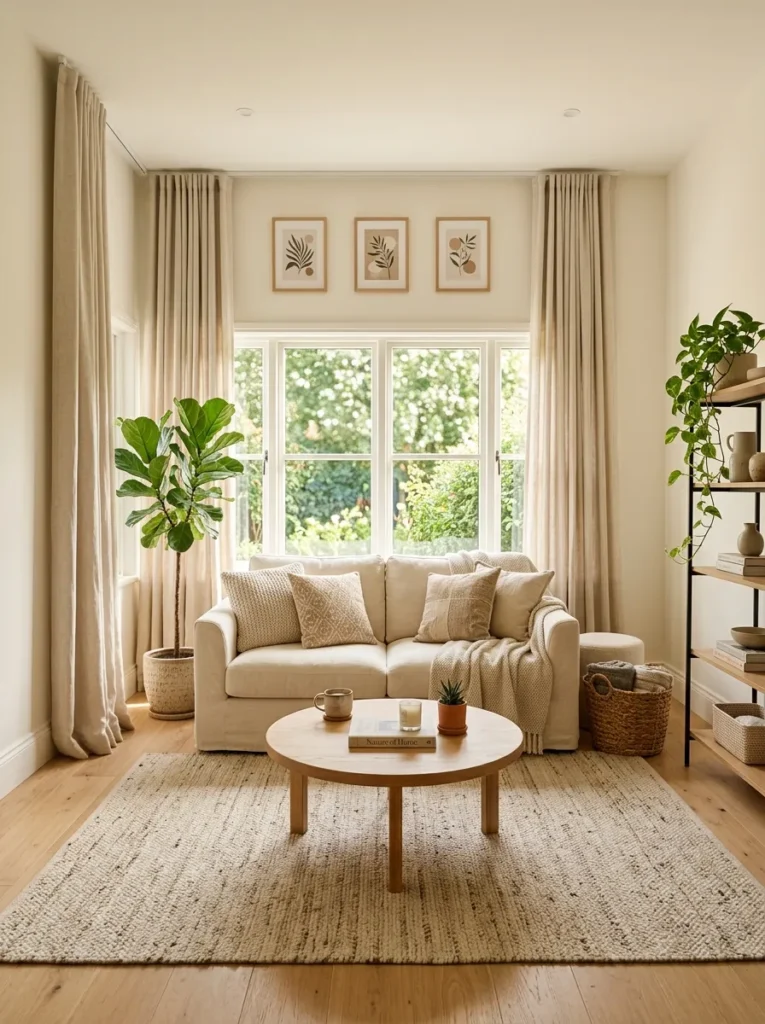
Floor-length curtains have a remarkable ability to make a compact living room feel taller and more elegant. Hanging the curtain rod close to the ceiling naturally draws the eye upward, creating the illusion of extra height. Light linen or soft cotton fabrics gently filter sunlight while maintaining brightness throughout the day. This simple design choice softens the room, frames the windows beautifully, and adds movement without introducing unnecessary visual weight or clutter.
In my experience, curtain placement matters just as much as the fabric itself. Extending the rod slightly beyond each side of the window allows more glass to remain visible when the curtains are open, bringing in additional natural light. This trick makes the entire room appear wider and more open. Combined with neutral colors and simple furnishings, full-length curtains create an effortlessly polished look that feels cozy, sophisticated, and perfectly suited for smaller living spaces.
10. Woven Storage Baskets
- Hides everyday clutter while keeping essentials within reach.
- Adds rich texture without introducing visual heaviness.
- Keeps blankets, magazines, and toys neatly organized.
- Blends storage seamlessly into the decor.
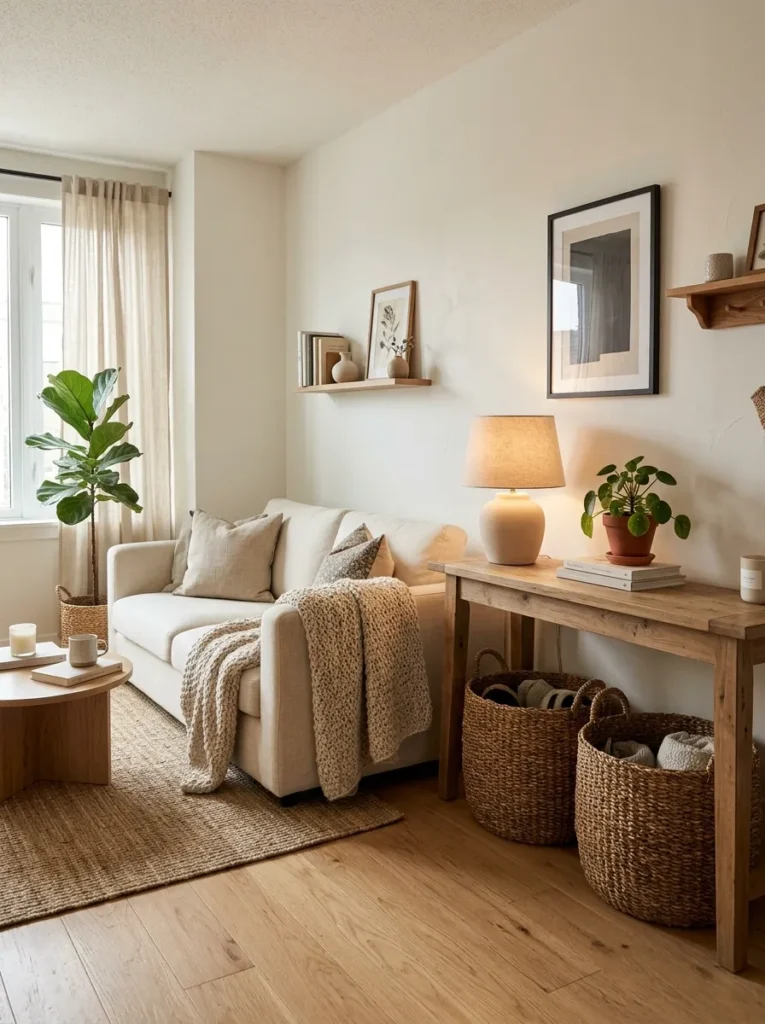
Stylish storage is essential in a compact living room, and woven baskets offer one of the easiest ways to stay organized without sacrificing charm. Natural fibers like seagrass, rattan, or wicker introduce warmth while providing a practical place for blankets, books, remote controls, or children’s toys. Instead of leaving everyday items in plain sight, tuck them neatly into matching baskets that complement the room’s color palette. This simple upgrade keeps the space tidy while adding texture that feels relaxed, welcoming, and beautifully layered.
I’ve seen this work especially well in homes where living rooms serve multiple purposes throughout the day. Keeping frequently used items hidden but easily accessible makes daily routines smoother and reduces visual clutter almost instantly. Choosing baskets in similar tones creates a cohesive appearance, while different sizes add subtle variation. These practical accents prove that organization can also become part of the decor, making the room feel calmer, more functional, and effortlessly inviting every single day.
11. Compact Modular Sofa
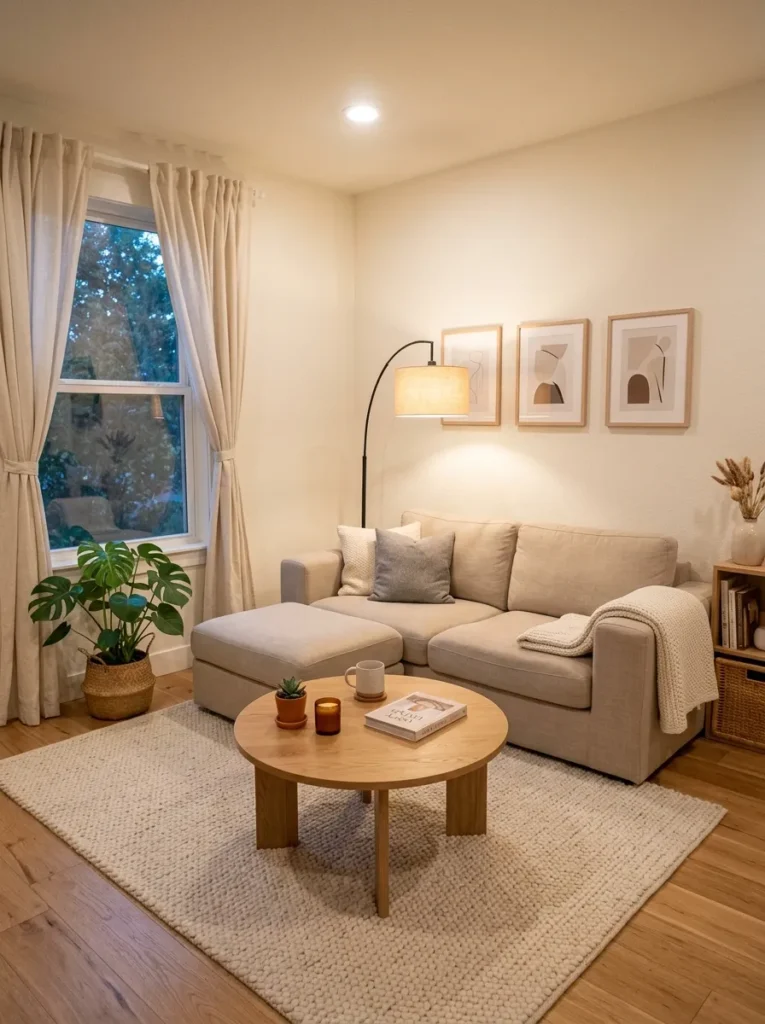
- Maximizes seating without overwhelming the room.
- Adapts easily as your needs or layout change.
- Keeps walkways open with a streamlined design.
- Creates a comfortable gathering space for family and friends.
A compact modular sofa gives you flexibility that traditional oversized seating often cannot. Smaller sections fit neatly into limited layouts while still providing generous seating for everyday living. Clean lines and raised legs help the room feel lighter, allowing more floor to remain visible. Choosing a neutral upholstery also makes it easier to refresh the space with seasonal pillows and throws instead of replacing major furniture. The result feels comfortable, practical, and perfectly scaled for smaller homes.
One of the smartest Cozy Living Room Ideas For Small Spaces is selecting furniture that serves multiple purposes without appearing bulky. That’s why many designers recommend modular seating for apartments and compact homes. Individual sections can be rearranged when entertaining guests or adapting to changing needs. This flexibility extends the life of your furniture while keeping the layout fresh and functional. Combined with soft textures and warm lighting, the sofa becomes the heart of a welcoming room that feels both spacious and inviting.
12. Indoor Greenery Display
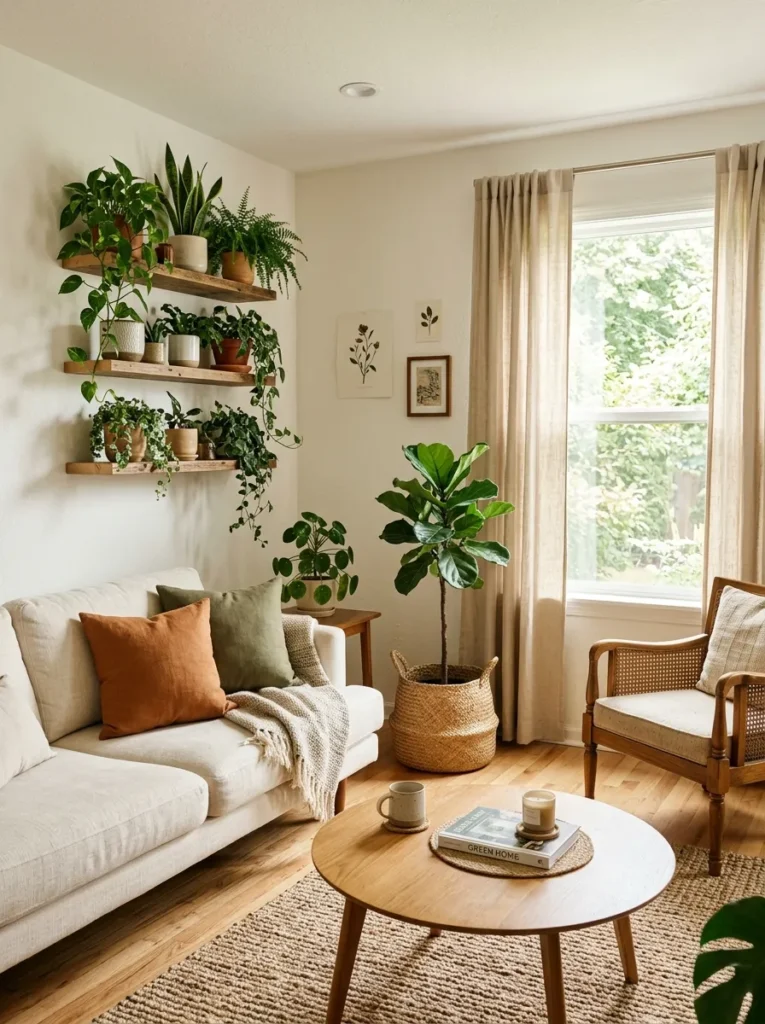
- Brings freshness and natural color into the room.
- Softens hard edges with organic shapes.
- Creates a calm, relaxing atmosphere.
- Adds visual interest without requiring major renovations.
Adding greenery is one of the simplest ways to breathe life into a small living room. A few carefully placed plants on floating shelves, side tables, or in woven baskets introduce natural texture and gentle color without overwhelming the design. Varieties like pothos, snake plants, or ZZ plants are easy to maintain and thrive indoors with minimal care. Their organic shapes soften straight furniture lines, making the room feel more balanced, lively, and connected to nature throughout every season.
In my experience, even one healthy plant can make a room feel noticeably more welcoming. Position taller plants near empty corners and smaller ones where they catch natural light without blocking windows. Using matching pots keeps the overall styling cohesive while allowing the greenery to become the focal point. These living accents create a peaceful atmosphere that complements neutral decor beautifully. The finished space feels refreshed, thoughtfully styled, and full of quiet warmth despite its modest size.
13. Cozy Fireplace Corner
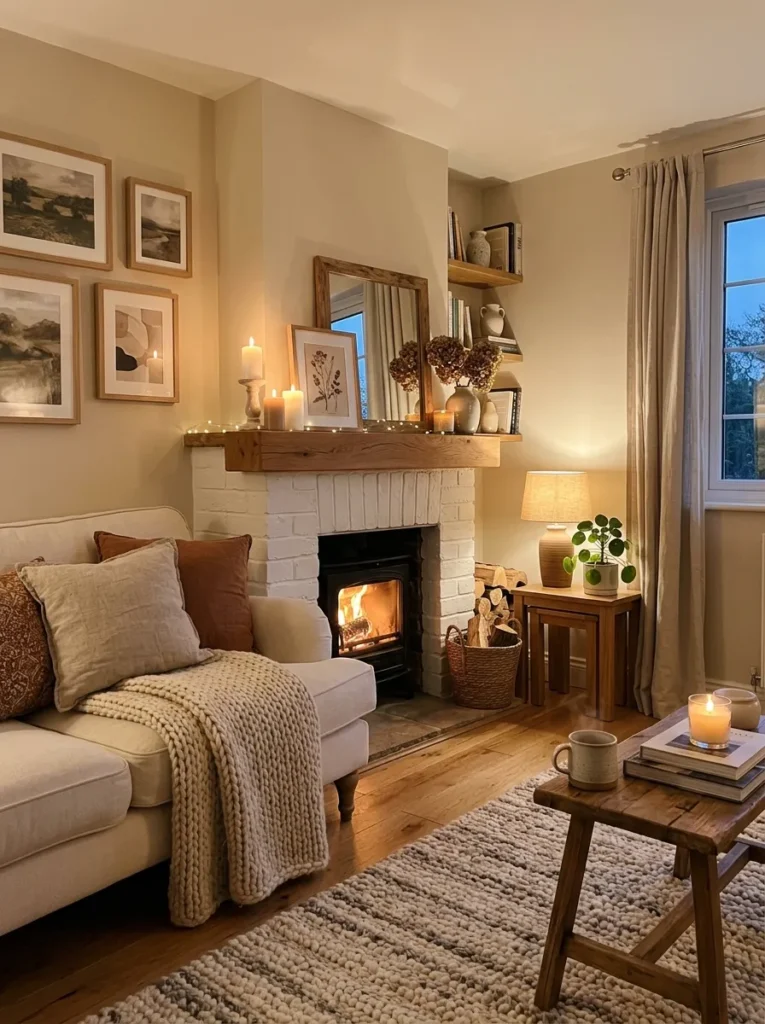
- Creates a natural focal point for the room.
- Adds warmth through layered decor and soft lighting.
- Makes the seating area feel more intimate.
- Brings timeless charm to compact spaces.
A fireplace instantly gives a small living room a welcoming focal point, whether it’s a traditional feature or a sleek electric version. Keep the mantel styling simple with framed artwork, ceramic vases, candles, and a touch of greenery to avoid visual clutter. A comfortable chair or sofa facing the fireplace naturally encourages conversation and relaxation. Even when the fire isn’t lit, this area adds warmth through thoughtful layering, making the room feel cozy, balanced, and beautifully lived in throughout the year.
I’ve noticed that decorating around the fireplace instead of filling every wall helps smaller layouts feel more intentional. A few carefully selected accessories often create a stronger impression than dozens of decorative pieces. Soft lighting and textured fabrics nearby enhance the inviting atmosphere without overwhelming the space. This approach works equally well in apartments and family homes, giving the room a timeless character that feels relaxing every day while remaining easy to refresh with seasonal accents.
14. Mixed Texture Decor
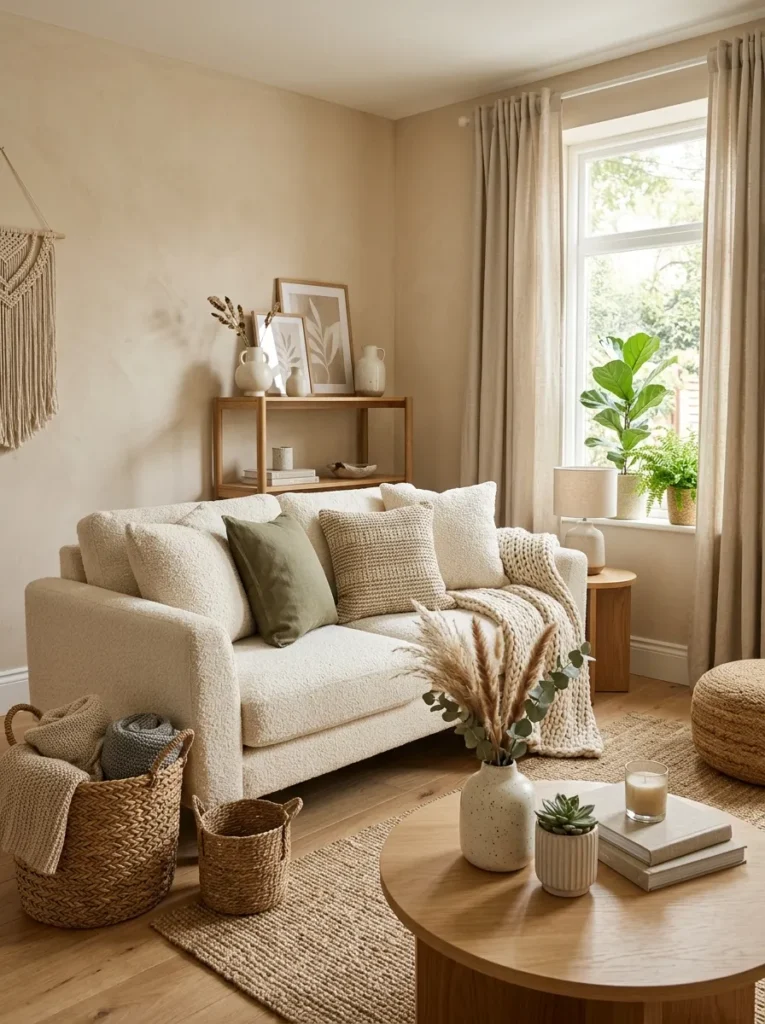
- Prevents neutral rooms from feeling flat.
- Adds depth without relying on bold colors.
- Creates a layered designer-inspired look.
- Makes the room feel warm and visually interesting.
A neutral living room becomes much more inviting when different textures work together. Boucle cushions, linen curtains, woven baskets, ceramic vases, and chunky knit blankets each contribute their own character while keeping the palette calm. Instead of adding more colors, focus on combining materials that create subtle contrast. This layered approach makes every corner feel thoughtfully designed, helping a compact room appear richer and more welcoming without sacrificing the clean, open feeling that smaller spaces benefit from.
That’s why many designers recommend layering textures before introducing additional decorative pieces. I’ve tried this approach in simple spaces, and the difference is immediate. Even a plain sofa feels more luxurious when paired with varied fabrics and natural materials. Mixing smooth, soft, and woven finishes creates visual balance that photographs beautifully and feels comfortable in everyday life. The result is a space with quiet elegance that never feels overcrowded or overly styled.
15. Minimal Wall Gallery
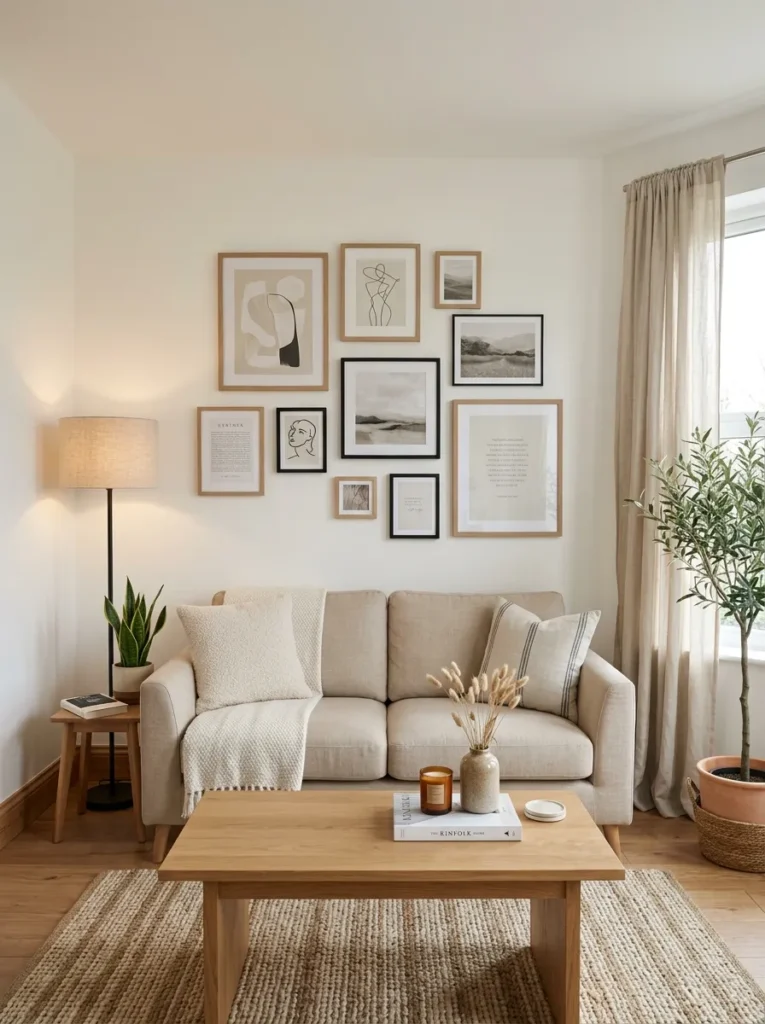
- Personalizes the room without adding clutter.
- Creates visual interest on empty walls.
- Draws attention upward to enhance the layout.
- Completes the space with a curated touch.
A carefully arranged gallery wall adds personality while keeping a compact living room feeling organized. Choose artwork with similar tones or matching frames so the collection looks cohesive rather than busy. Hanging the pieces with consistent spacing creates a polished appearance that enhances the room without dominating it. Family photos, abstract prints, or nature-inspired artwork all work beautifully when displayed with restraint. This simple feature transforms a blank wall into an attractive focal point that reflects your personal style.
In my experience, fewer larger frames often have a greater impact than many tiny ones scattered across the wall. Leaving some empty space around the artwork helps each piece stand out while maintaining an airy atmosphere. Pair the gallery with soft lighting and understated furniture so everything feels balanced. This thoughtful arrangement creates a welcoming environment that feels unique, stylish, and perfectly suited for everyday living, even in a room with limited square footage.
16. Slim Console Table
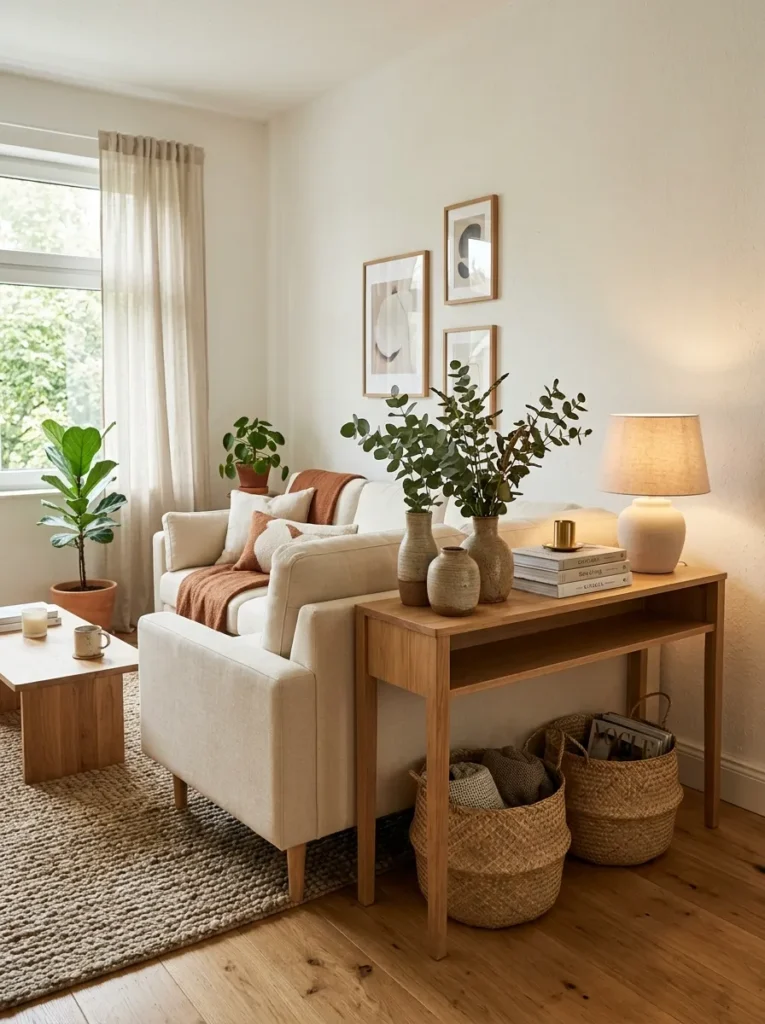
- Adds storage without taking up much floor space.
- Creates a styled surface for lighting and decor.
- Defines the seating area in an open layout.
- Keeps everyday essentials neatly organized.
A slim console table is a smart addition when a small living room needs extra function without feeling crowded. Placed behind a sofa or against a wall, it provides space for table lamps, decorative accents, books, or storage baskets while maintaining an open layout. Its narrow profile keeps walkways clear, making the room feel organized and spacious. Choosing a wood finish that matches nearby furniture creates visual continuity, helping the entire space look thoughtfully planned and comfortably inviting.
I’ve seen this solution work especially well in apartments where every piece of furniture needs a purpose. A console table can also act as a subtle divider in open-concept homes without blocking light or movement. Keep the styling simple with a lamp, greenery, and a few carefully selected accessories instead of filling every inch. This balance creates an elegant display while giving the room extra storage and a polished, designer-inspired appearance that remains practical for everyday life.
17. Oversized Floor Mirror
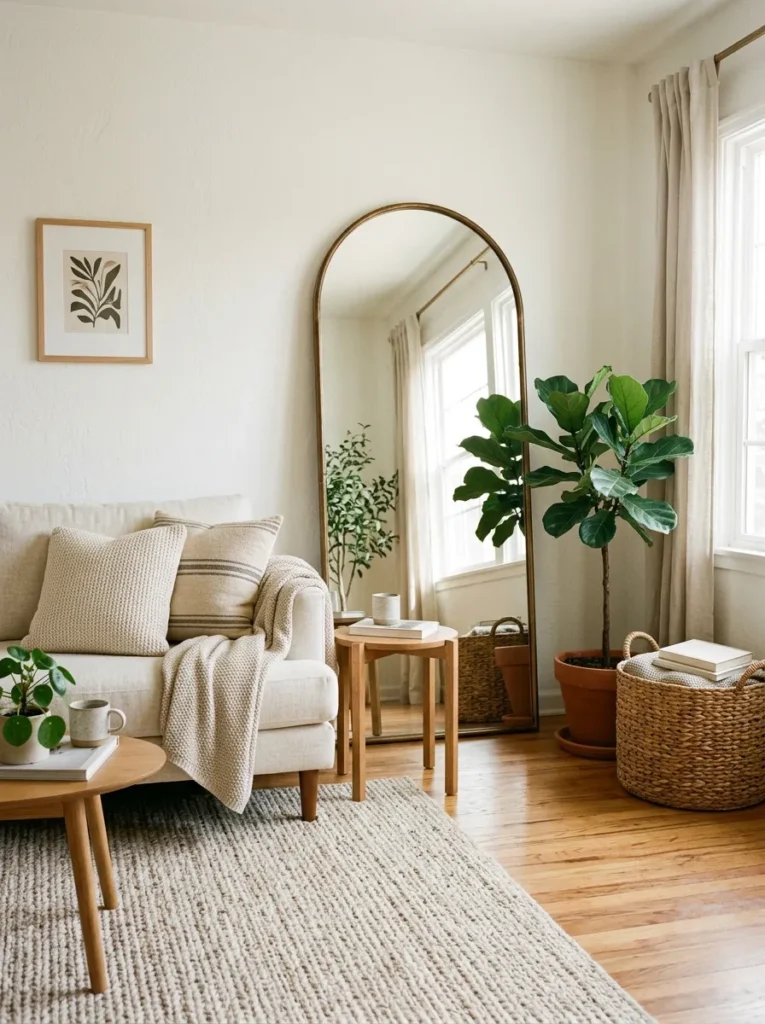
- Reflects light to brighten the entire room.
- Makes compact spaces appear noticeably larger.
- Adds height without requiring wall renovations.
- Enhances both modern and classic decor styles.
A large floor mirror is one of the simplest ways to visually expand a compact living room. Positioned opposite or beside a window, it reflects natural light throughout the space, making the room feel brighter and more open. An arched or slim-framed mirror also introduces vertical interest without adding visual weight. This effortless upgrade creates the illusion of extra depth while complementing almost every decorating style, from modern organic to cozy farmhouse interiors with very little effort.
That’s why many designers recommend oversized mirrors instead of several smaller decorative pieces. I’ve noticed that one well-placed mirror often has a greater impact than additional furniture or accessories. Leaning it against the wall creates a relaxed, contemporary look while avoiding unnecessary installation work. Pair the mirror with soft lighting and nearby greenery to enhance the reflection naturally. The finished room feels lighter, airier, and far more spacious than its actual dimensions suggest.
18. Cozy Window Bench
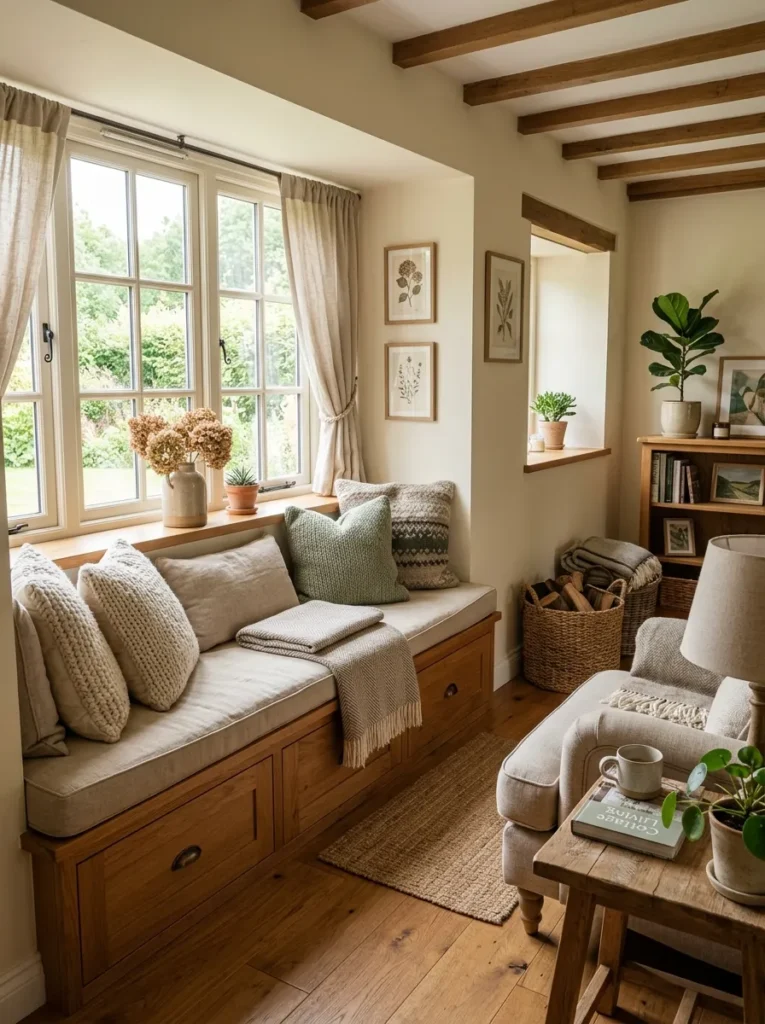
- Turns an unused window area into comfortable seating.
- Provides hidden storage for blankets and accessories.
- Maximizes space without adding bulky furniture.
- Creates a peaceful spot to relax during the day.
A window bench transforms an underused area into one of the most inviting features in a small living room. Soft cushions, textured pillows, and a cozy throw create a comfortable place to read, enjoy morning coffee, or simply relax in natural light. If the bench includes hidden storage underneath, it’s even more valuable for keeping blankets, books, or seasonal decor neatly tucked away. This multifunctional feature adds charm while making every square foot work harder without feeling crowded.
One of my favorite Cozy Living Room Ideas For Small Spaces is creating seating that serves more than one purpose. A window bench offers comfort, storage, and architectural character all in one compact solution. Keep the surrounding decor light and uncluttered so sunlight remains the highlight of the space. Adding a nearby plant or small side table completes the arrangement beautifully. The finished corner feels peaceful, practical, and naturally becomes a favorite place to unwind throughout the day.
19. Soft Accent Colors
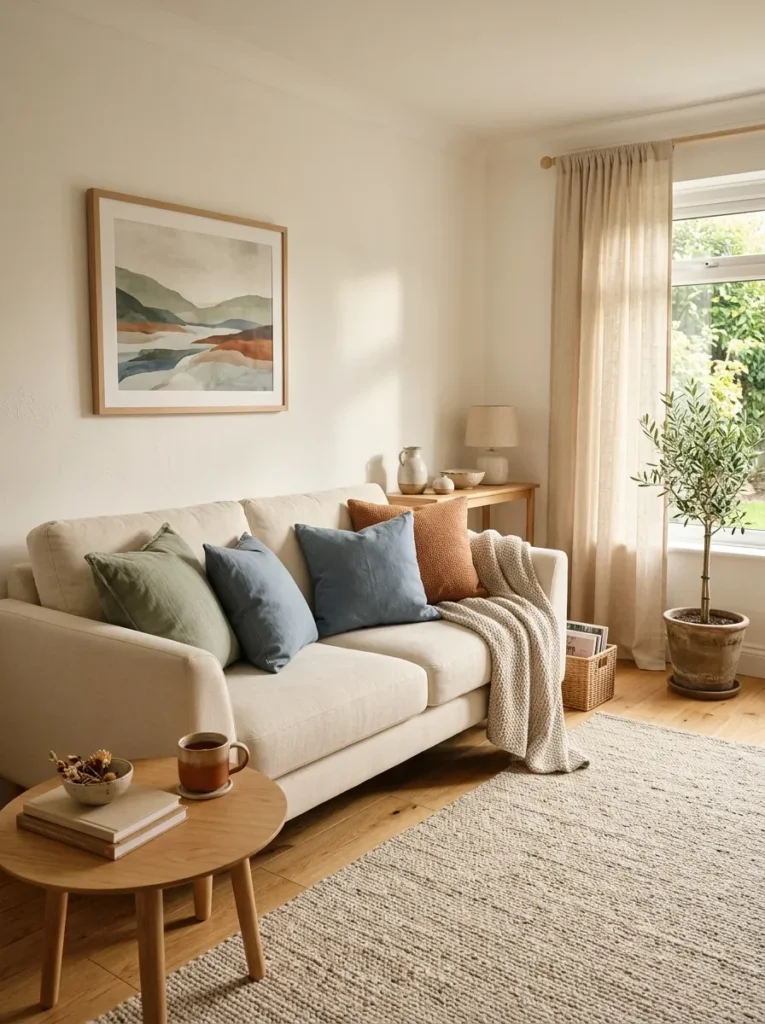
- Adds personality without overwhelming the room.
- Refreshes neutral spaces with subtle seasonal color.
- Creates a balanced and calming visual flow.
- Makes decorating updates quick and affordable.
A few carefully chosen accent colors can completely refresh a compact living room while preserving its cozy atmosphere. Instead of introducing bold, overpowering shades, choose muted tones like sage green, dusty blue, soft terracotta, or warm caramel. These colors blend beautifully with neutral furniture and natural wood finishes, creating gentle contrast without making the room feel busy. Swapping pillow covers, throws, or decorative vases is an easy way to update the look throughout the year while keeping the overall design timeless and inviting.
In my experience, limiting accent colors to two or three complementary shades creates the most harmonious result. Repeating those colors in small details across the room makes everything feel connected rather than random. This approach is especially useful in smaller spaces where too many competing colors can make the layout appear cluttered. Soft accents bring warmth, highlight favorite decor pieces, and create a welcoming environment that feels thoughtfully styled without requiring a complete room makeover.
20. Simple Cozy Styling
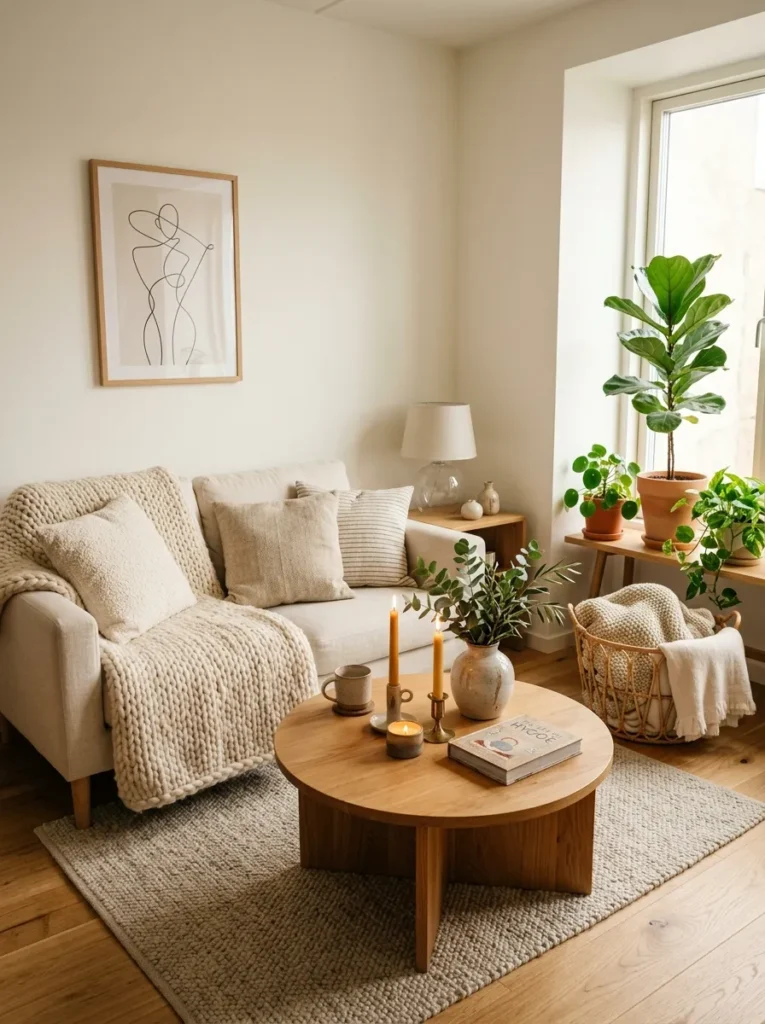
- Brings every design element together naturally.
- Prevents clutter while maintaining warmth.
- Highlights quality over quantity in decorating.
- Creates an inviting space that’s easy to maintain.
The most inviting small living rooms are rarely filled with endless decorations. Instead, they rely on a thoughtful balance of comfort, texture, lighting, and functional furniture. A few meaningful accessories, neatly arranged books, soft fabrics, candles, and natural greenery create a welcoming atmosphere without overwhelming the layout. Leaving open surfaces and allowing furniture to breathe makes the room feel larger while drawing attention to the details that truly matter. Simple styling often delivers the biggest impact with the least effort.
I’ve noticed that the homes people remember most aren’t always the largest or most expensive. They’re the ones that feel comfortable, personal, and easy to enjoy every day. Focus on decorating with intention rather than filling every empty space. Choose pieces you genuinely love, keep the room organized, and let natural textures add warmth over time. This approach creates a living room that feels timeless, relaxing, and effortlessly welcoming for both everyday living and special moments with family and friends.
Conclusion
Creating a warm and welcoming home doesn’t require a large budget or a spacious floor plan. With these Cozy Living Room Ideas For Small Spaces, you can transform even the smallest living area into a comfortable place filled with style, personality, and everyday function. Start with one idea, build gradually, and enjoy the difference each thoughtful update makes. I’ve seen how small changes like these can completely transform a space over time. If you found these ideas inspiring, save this post on Pinterest, share it with someone who loves home decor, and try your favorite idea today.