20 Creative Narrow Living Room Ideas for a Cozy Modern Home
Does your living room feel long, cramped, or difficult to decorate? You’re not alone.
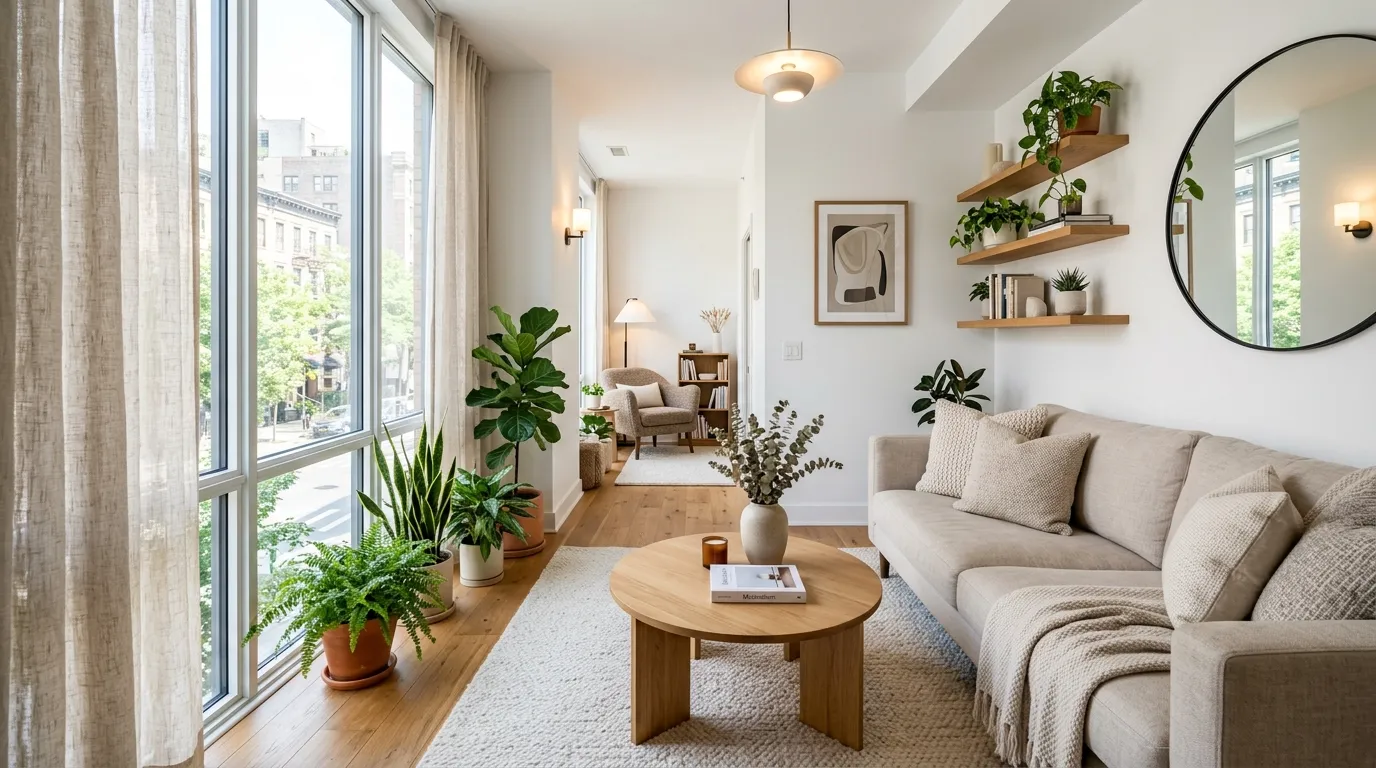
These Narrow Living Room Ideas will help you turn even the slimmest space into a cozy, modern retreat you’ll love spending time in.
Designing a narrow room can feel challenging, especially when every furniture choice affects comfort and movement.
The good news is that you don’t need a major renovation to create a space that feels open, balanced, and inviting.
In this collection, you’ll discover smart layouts, clever storage solutions, lighting tricks, and decorating ideas that make compact living areas feel much larger while keeping them warm and welcoming.
In my experience, the biggest improvements often come from small, intentional updates rather than expensive makeovers.
I’ve noticed that changing furniture placement, adding vertical decor, or choosing lighter colors can dramatically improve how a room looks and functions.
Whether you’re decorating your first apartment, refreshing your family home, or simply looking for fresh inspiration, these practical ideas are designed to help you create a beautiful living room that’s both stylish and comfortable.
Also visit: 20 Charming Farmhouse Front Porch Ideas for Instant Curb Appeal
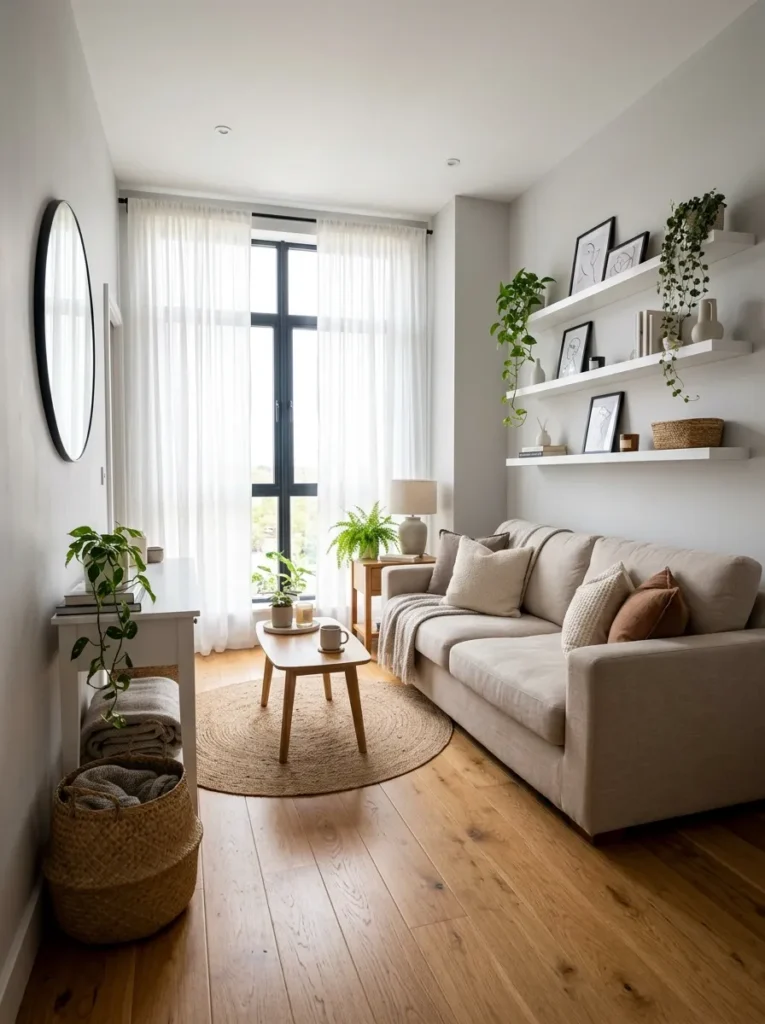
1. Slim Floating Shelves
- Creates extra storage without taking up floor space.
- Draws the eye upward, making the room feel taller.
- Displays books and decor in a clean, organized way.
- Keeps everyday essentials within easy reach.
- Adds personality while maintaining an open look.
A simple wall upgrade can completely change how a long, tight space feels. Floating shelves lift storage off the floor, helping the room appear wider and less crowded. Instead of bulky cabinets, you gain space for books, framed photos, candles, or small plants that add warmth without visual clutter. This approach works especially well in Narrow Living Room Ideas because it balances function with style while preserving valuable walking space. The result is a cleaner layout that feels intentional, bright, and welcoming every day.
Well-planned shelving also gives you flexibility to refresh the room throughout the year. Swap seasonal decor, rotate artwork, or introduce textured baskets without changing the furniture layout. I’ve noticed that leaving a little empty space between decorative objects keeps shelves from feeling overloaded, especially in compact rooms. Choosing wood tones that match the flooring also creates visual continuity, making the entire living area feel longer and more connected. Small styling choices like these often have a surprisingly large impact on everyday comfort and overall design harmony.
2. Compact Sectional Sofa
- Maximizes seating without overwhelming the room.
- Keeps the floor plan open and comfortable.
- Defines the conversation area naturally.
- Reduces wasted corners in tight layouts.
- Makes family gatherings feel more inviting.
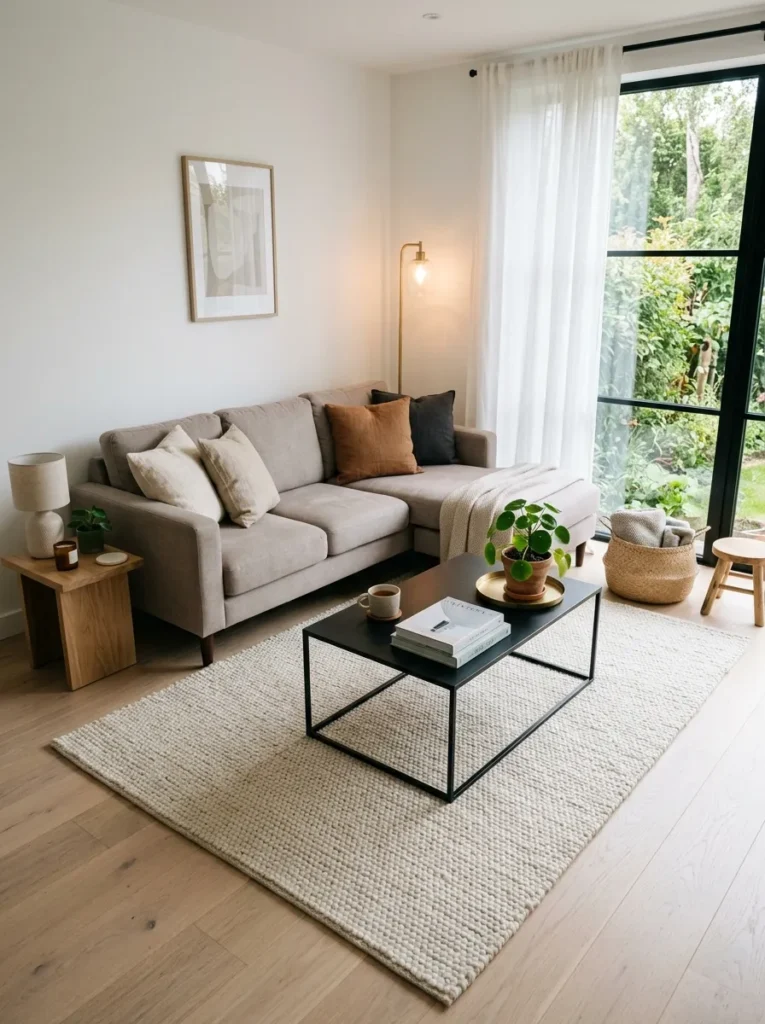
The right sofa can instantly improve the flow of a compact living area. A streamlined sectional fits neatly into one corner, offering generous seating while keeping the center of the room open for movement. Instead of several separate chairs, one thoughtfully sized piece creates a unified arrangement that feels comfortable without appearing oversized. This layout helps every inch work harder while maintaining a relaxed atmosphere that welcomes both everyday living and casual entertaining with ease.
Choosing a sectional with raised legs adds another subtle advantage because more visible flooring creates the illusion of extra space. That’s why many designers recommend lighter upholstery in slim rooms, as it reflects light instead of absorbing it. Pair the seating with a small round coffee table to soften straight lines and improve traffic flow. In my experience, this combination makes even an unusually narrow space feel balanced, functional, and much easier to decorate over time without creating visual heaviness.
3. Oversized Wall Mirror
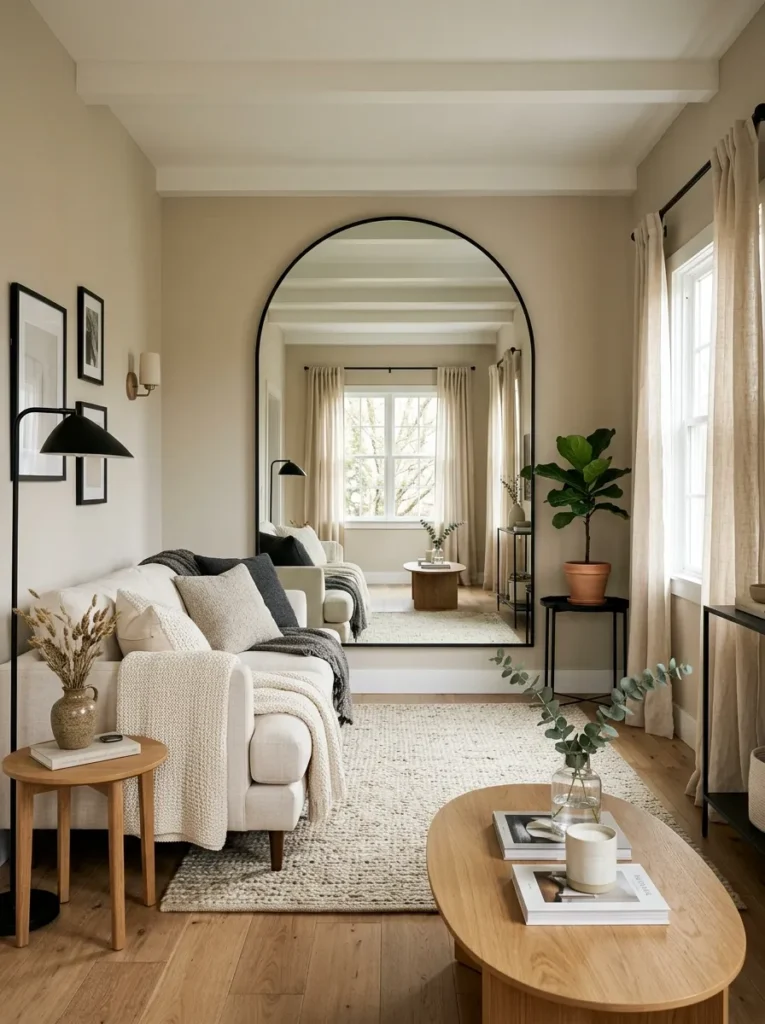
- Reflects light to brighten darker corners.
- Creates the illusion of a larger room.
- Adds elegance without increasing clutter.
- Enhances depth with a simple design update.
- Works with both modern and classic interiors.
One decorative piece can dramatically change how a compact room is perceived. A large wall mirror reflects natural light across the space, instantly creating more brightness and visual depth. Placing it opposite a window or beside a light source doubles the sense of openness without requiring major renovations. This timeless trick is one of the easiest ways to make a long, slim living area feel more inviting while adding an elegant focal point that blends beautifully with many decorating styles.
Mirror placement matters just as much as mirror size. Positioning it where it reflects attractive furniture, artwork, or greenery creates a more interesting view while avoiding unnecessary visual clutter. I’ve seen this work well in many homes because the reflected light softens shadows and helps every decorative detail feel more intentional. A slim black or natural wood frame keeps the design modern without overpowering the room, allowing the entire space to feel lighter, calmer, and noticeably more spacious.
4. Vertical Gallery Wall
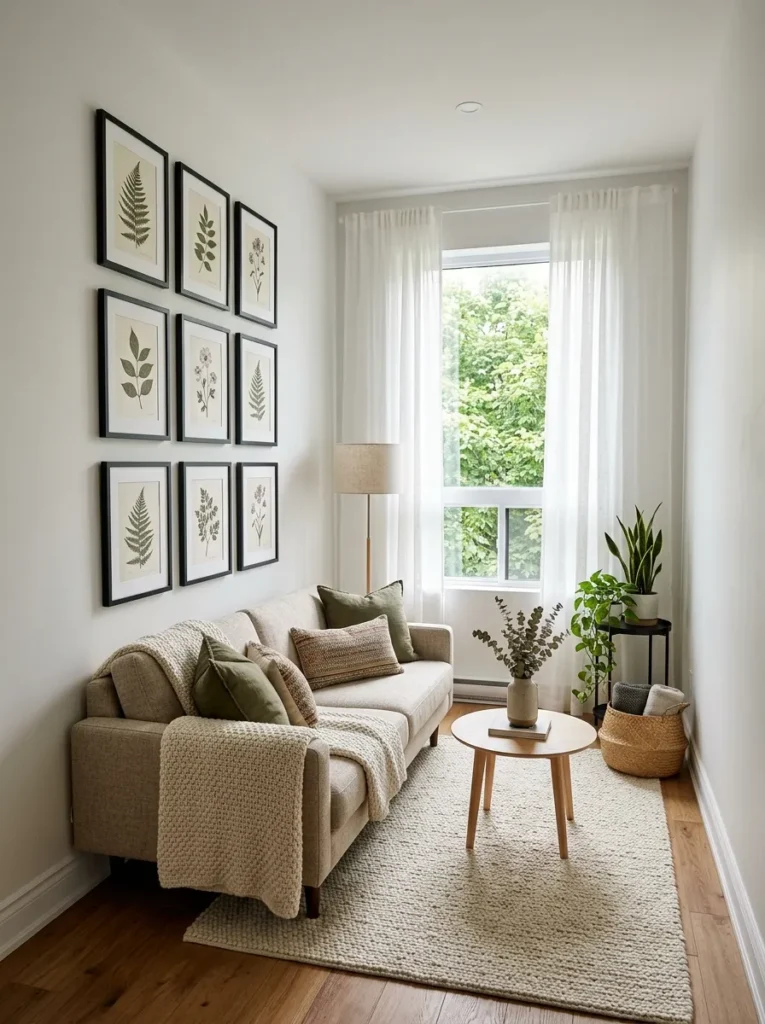
- Draws attention upward for a taller appearance.
- Personalizes the room without adding furniture.
- Creates a stylish focal point on a blank wall.
- Works beautifully with family photos or artwork.
- Makes a compact layout feel thoughtfully designed.
A blank wall offers more design potential than many people realize. A vertical gallery arrangement naturally guides the eye upward, making the ceiling appear higher while adding personality to the room. Mixing artwork, family photos, and simple prints creates a collected look that feels warm instead of overwhelming. Rather than filling valuable floor space, this decorating approach transforms an empty surface into an eye-catching feature that makes the living room feel finished, balanced, and welcoming for everyday life and guests alike.
Keeping consistent frame colors helps multiple pieces feel connected even when the artwork varies. I’ve noticed that leaving equal spacing between frames creates a cleaner appearance and prevents the display from looking busy. Combining larger prints with a few smaller accents also introduces rhythm without visual clutter. This simple update gives the room more character while encouraging the eye to travel vertically, making the overall layout appear taller, brighter, and more thoughtfully styled without requiring expensive renovations.
5. Round Coffee Table
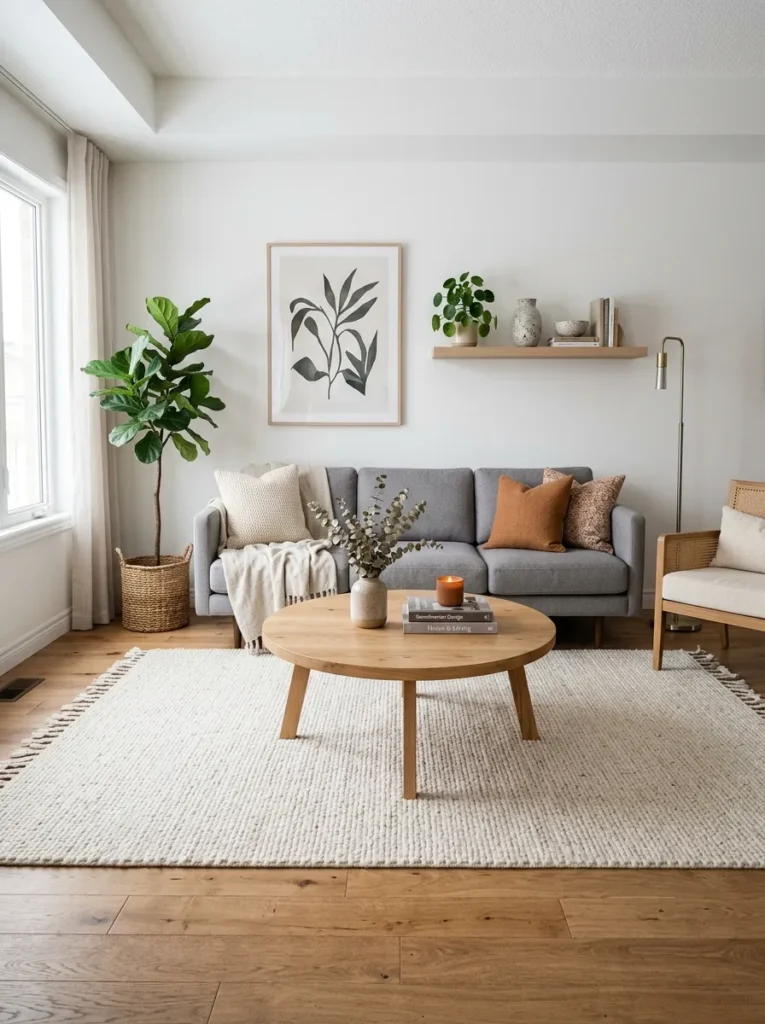
- Softens long straight lines throughout the room.
- Improves movement around the seating area.
- Creates a welcoming conversation space.
- Adds balance without overwhelming the layout.
- Fits comfortably in tight floor plans.
Sometimes the smallest furniture change delivers the biggest visual improvement. A round coffee table breaks up the straight lines that often dominate long, narrow layouts, creating a softer and more inviting atmosphere. Without sharp corners blocking movement, the room feels easier to navigate and noticeably more comfortable. This simple choice works especially well for families or frequent entertainers because it improves circulation while still providing a practical surface for books, drinks, decorative trays, or fresh flowers.
Choosing a table with an open base keeps the floor visible, helping the space feel lighter instead of crowded. That’s why many designers recommend glass, light wood, or slim metal designs for compact living rooms. In my experience, pairing a circular table with a textured rug creates a balanced focal point that naturally anchors the seating arrangement. Together, these details make the room appear more spacious while maintaining a cozy atmosphere that feels welcoming every single day.
6. Floor-to-Ceiling Curtains
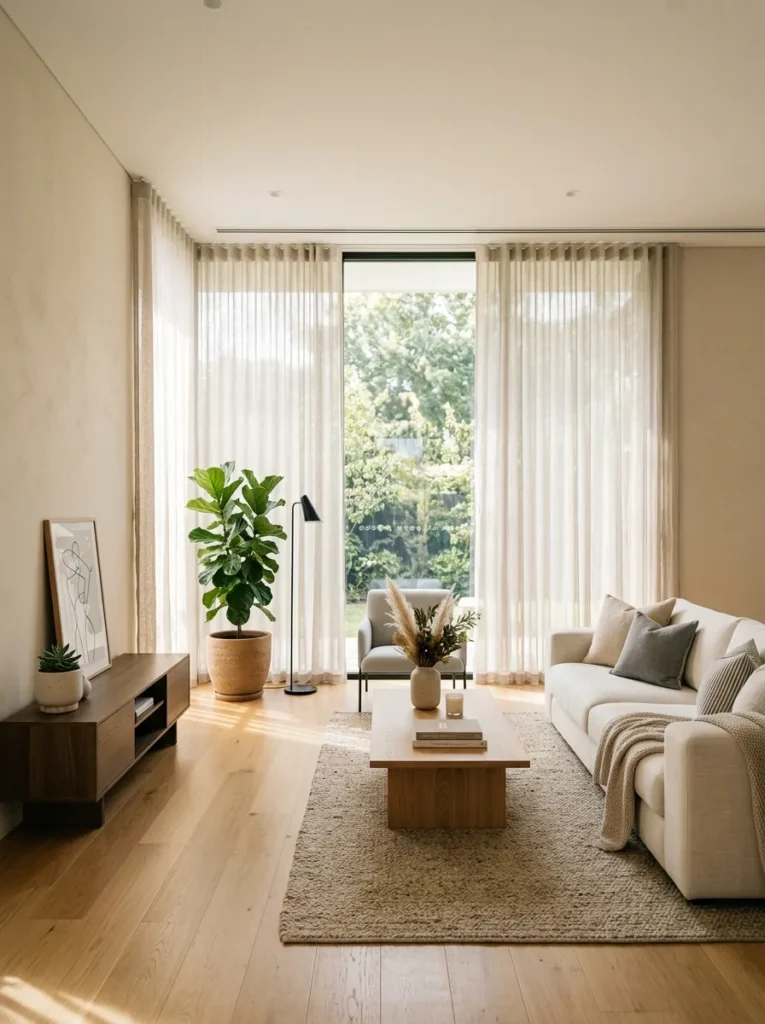
- Makes ceilings appear significantly taller.
- Softens the room with texture and warmth.
- Maximizes natural light while maintaining privacy.
- Frames windows with an elegant finish.
- Creates a polished, designer-inspired appearance.
One fabric choice can completely transform how a room feels. Hanging curtains from the ceiling instead of directly above the window creates a taller visual line that instantly enhances the sense of height. Long flowing panels also add softness, reducing the boxed-in feeling common in compact spaces. This timeless styling technique brings elegance to everyday interiors while making windows appear larger, allowing more natural light to become part of the overall design experience.
Lightweight linen or sheer fabrics work especially well because they filter sunlight without making the room feel heavy. I’ve seen this work well in many homes where darker curtains previously made the space seem smaller than it actually was. Extending the curtain rod beyond the window frame also exposes more glass when the panels are open, increasing brightness throughout the day. These subtle adjustments create a room that feels airy, refined, and much more comfortable for relaxing or entertaining.
7. Built-In Window Bench
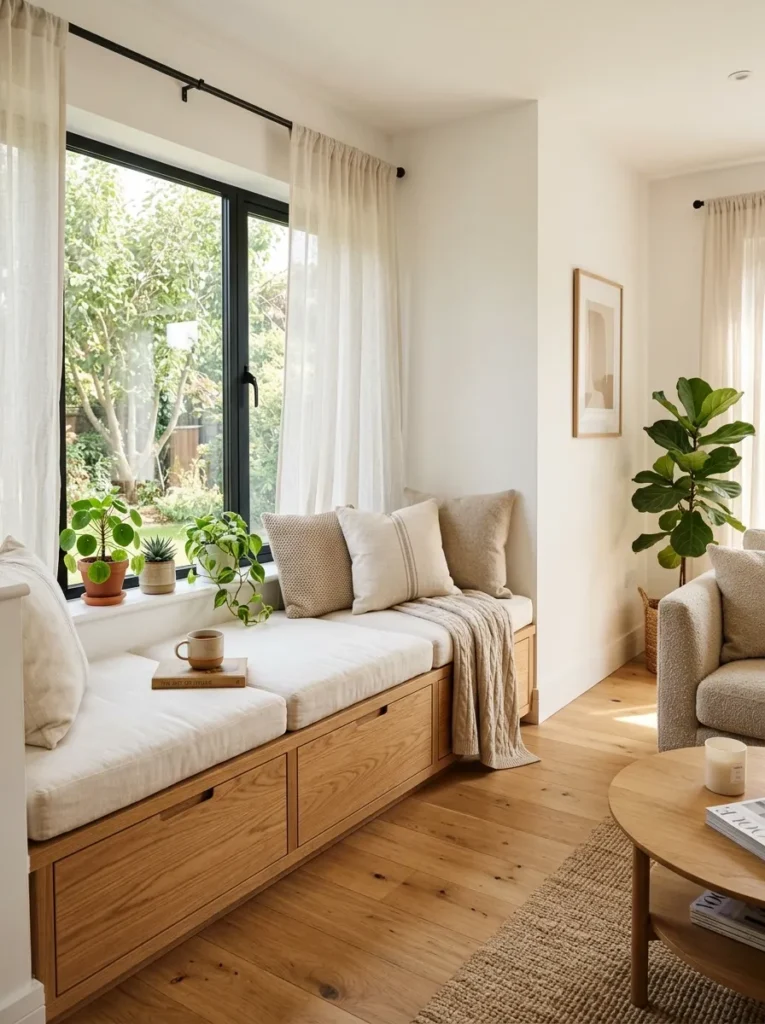
- Adds comfortable seating without crowding the room.
- Provides hidden storage for everyday essentials.
- Turns an unused window area into a functional feature.
- Creates a cozy reading or relaxing corner.
- Keeps the overall layout neat and organized.
An overlooked window can become one of the most useful features in a compact living room. A built-in bench creates extra seating while making smart use of space that often goes unused. Hidden drawers or lift-up storage keep blankets, books, and seasonal decor neatly tucked away, reducing clutter throughout the room. This practical addition makes the space feel custom-designed while adding warmth and comfort that naturally encourages family members and guests to gather by the window.
Soft cushions, textured pillows, and a cozy throw instantly make the bench feel inviting without overwhelming the room. I’ve noticed that choosing storage with the same finish as nearby furniture creates a seamless appearance, helping the entire layout feel more spacious. Adding a small side table or nearby floor lamp transforms the area into a relaxing reading corner. Small multifunctional features like this often make everyday living noticeably easier while maintaining a clean, uncluttered design.
8. Light Neutral Palette
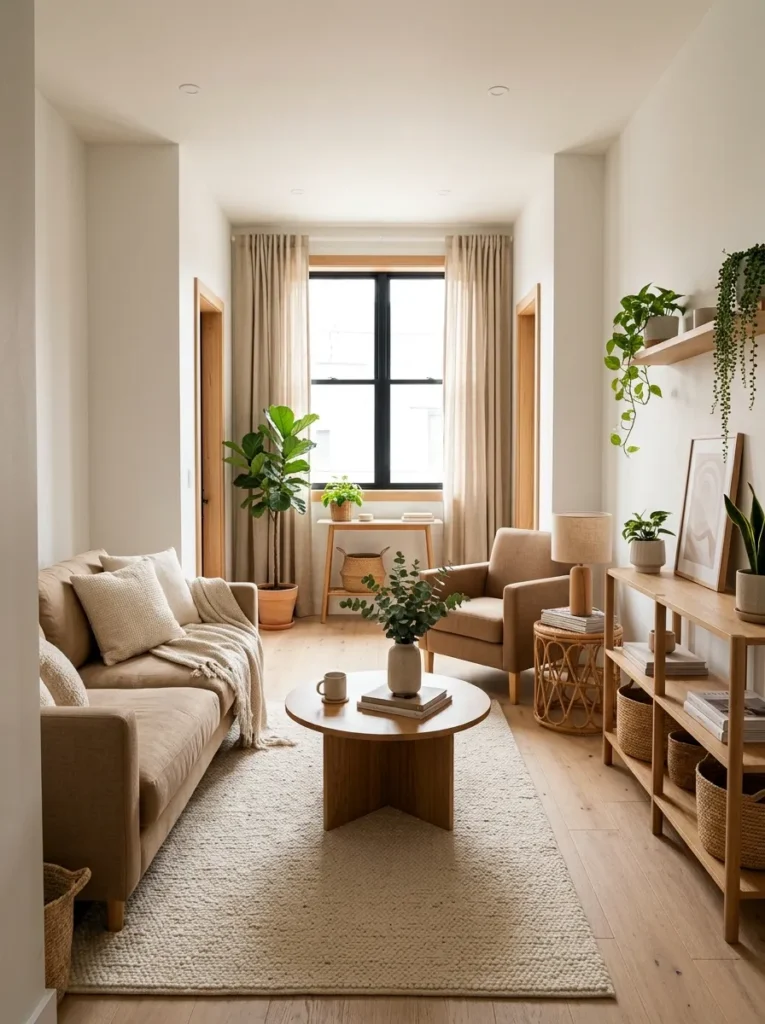
- Reflects more light throughout the room.
- Creates an airy and spacious appearance.
- Makes furniture feel lighter and less bulky.
- Provides a timeless backdrop for seasonal decor.
- Enhances the calm, welcoming atmosphere.
Color has a remarkable effect on how spacious a room appears. Soft whites, warm beiges, gentle grays, and pale wood tones reflect natural light instead of absorbing it, helping even the narrowest layout feel brighter. These calming shades also allow decorative accents to stand out without overwhelming the space. If you’re searching for Narrow Living Room Ideas, a light neutral palette remains one of the simplest ways to create an open, inviting environment that feels fresh every season.
Layering different neutral shades prevents the room from looking flat or unfinished. That’s why many designers recommend mixing woven textures, soft fabrics, natural wood, and matte ceramics for added warmth. In my experience, introducing just a few darker accents through picture frames or decorative objects creates contrast while preserving the airy feeling. This balanced approach keeps the room visually interesting and comfortable without sacrificing the clean, spacious look that smaller homes benefit from most.
9. Slim Console Table
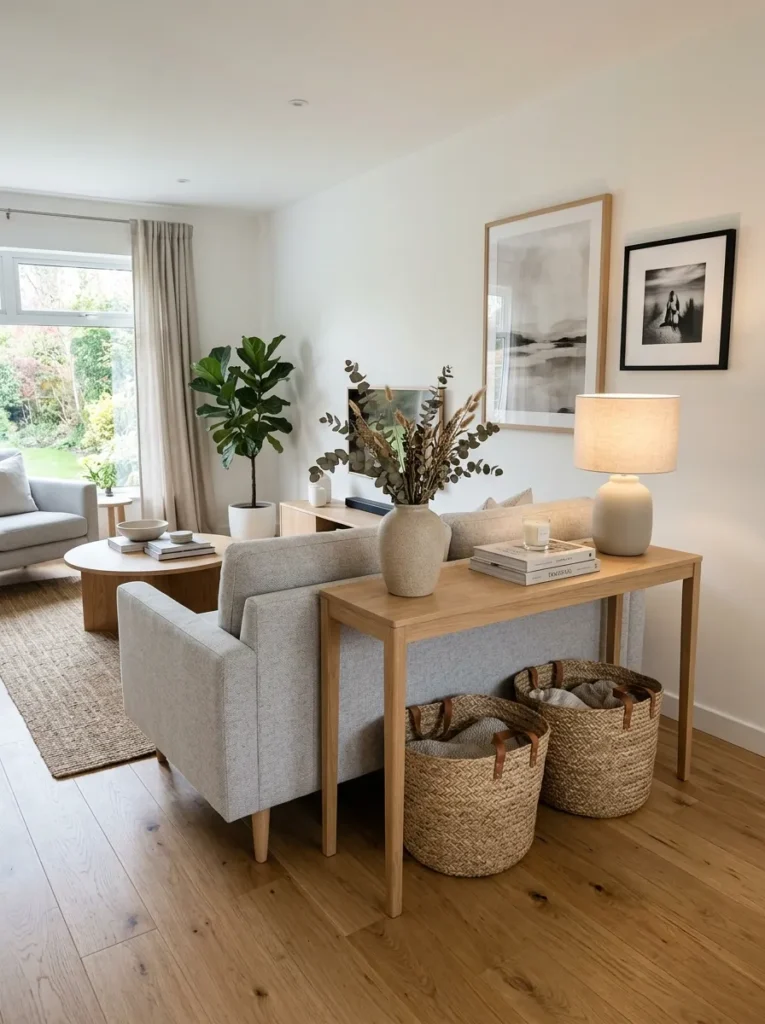
- Adds storage without taking up much floor space.
- Creates a finished look behind the sofa.
- Displays decorative accents in a practical way.
- Keeps everyday essentials organized and accessible.
- Improves balance within a long room layout.
A narrow console table is an easy way to make overlooked space more useful. Positioned behind a sofa or along an empty wall, it provides a surface for lamps, decorative pieces, and daily essentials without interrupting movement. Its slim profile keeps the room feeling open while adding a polished, intentional finish. This versatile furniture choice helps organize smaller items neatly, making the living area appear tidier and more functional without introducing unnecessary visual weight or bulk.
Selecting a console with open shelving or baskets underneath increases storage while maintaining an airy appearance. I’ve seen this work well in many homes because the table defines different zones without closing off the room. A small lamp, a stack of books, and a simple vase are often all that’s needed to create an attractive display. Thoughtful styling keeps the space balanced and practical, proving that even the narrowest layouts can feel beautifully organized and comfortable.
10. Wall-Mounted TV
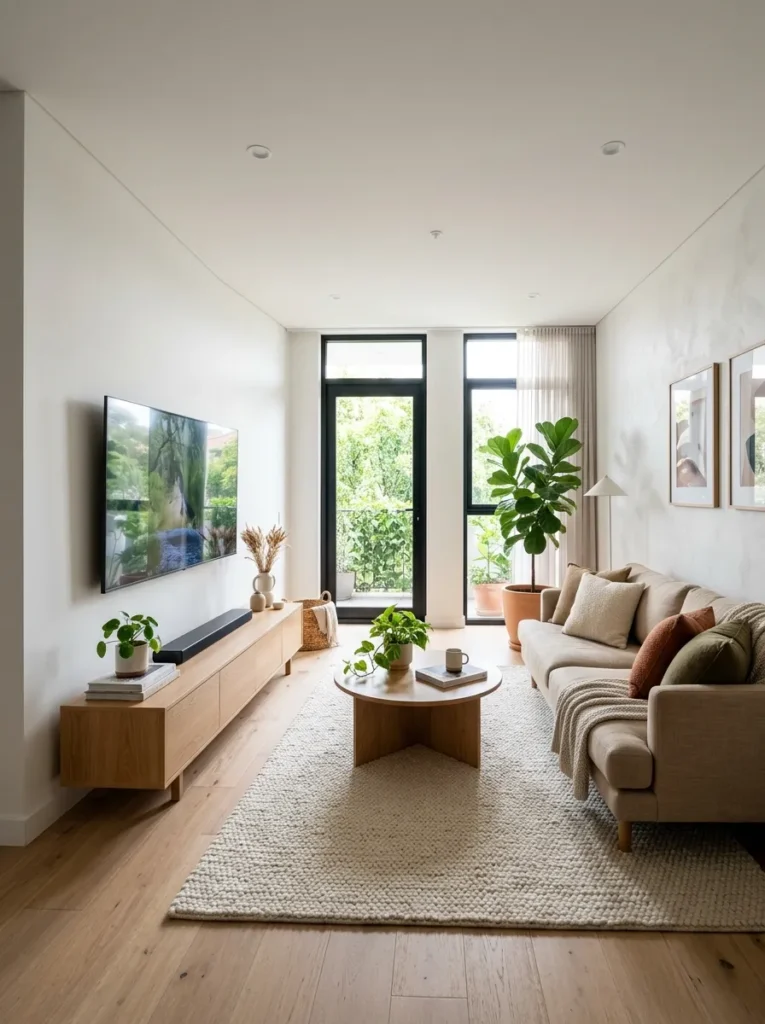
- Frees valuable floor space instantly.
- Creates a cleaner, more streamlined look.
- Reduces visual clutter with hidden cables.
- Makes the entertainment area feel modern.
- Improves movement throughout the room.
A mounted television can make a surprisingly big difference in a compact layout. Lifting the screen off the floor opens up valuable space below, making the room feel lighter and less crowded. Hidden cable management adds to the clean appearance while creating a polished focal point. Instead of a bulky entertainment unit dominating the room, the design feels simple, organized, and visually balanced, allowing other decorative features to stand out without competing for attention or making the layout feel cramped.
Choosing a slim floating media shelf underneath keeps essentials accessible while maintaining the open look. I’ve noticed that positioning the TV at a comfortable viewing height also improves the overall flow because furniture can be arranged more naturally. Soft lighting behind the screen adds warmth during evening use without overwhelming the space. These thoughtful details help transform an ordinary entertainment area into a stylish feature that blends beautifully with the rest of the room.
11. Layered Area Rug
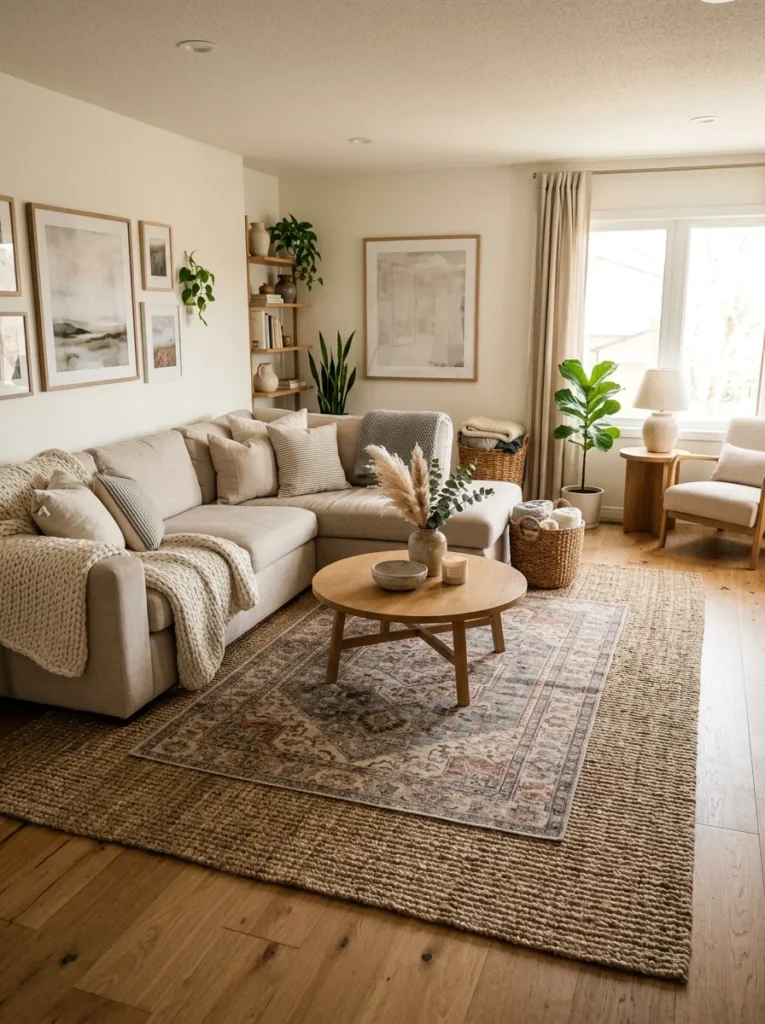
- Defines the seating area beautifully.
- Adds warmth through layered textures.
- Creates visual depth in a compact room.
- Softens hard flooring for extra comfort.
- Brings subtle personality without clutter.
Texture often makes a room feel complete, and layered rugs achieve that with very little effort. Placing a smaller accent rug over a larger neutral base adds dimension while clearly defining the seating area. This combination introduces warmth and visual interest without requiring additional furniture. Even a simple arrangement feels more inviting because the layered effect creates depth, making the room appear thoughtfully designed while encouraging a cozy atmosphere that works throughout every season.
Selecting complementary colors instead of bold contrasts keeps the room feeling open rather than busy. That’s why many designers recommend natural fibers paired with softer woven patterns for smaller spaces. In my experience, layering rugs also helps connect furniture pieces into one cohesive arrangement instead of leaving them visually separated. The finished look feels balanced, comfortable, and welcoming while giving the entire living room a subtle designer-inspired upgrade that remains practical for everyday living.
12. Corner Reading Nook
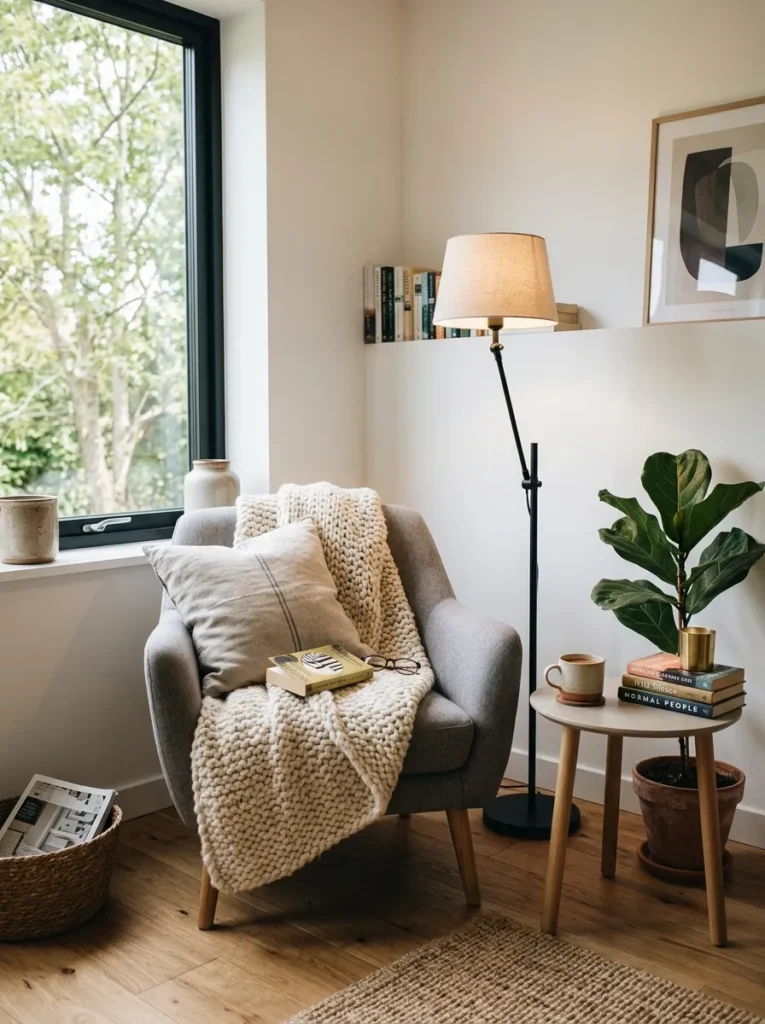
- Makes an unused corner feel purposeful.
- Creates a peaceful place to relax.
- Adds charm without requiring much space.
- Balances the room with a functional feature.
- Encourages daily moments of comfort.
Every narrow room has a corner with untapped potential. Transforming it into a reading nook instantly adds purpose while making the entire layout feel more complete. A comfortable chair, a compact side table, and a warm lamp create a relaxing destination without occupying much floor space. This small addition introduces character and comfort, helping the room feel lived in rather than simply decorated. The result is a cozy retreat that’s perfect for quiet mornings or peaceful evenings.
I’ve seen this work well in many homes because even the smallest reading corner encourages people to slow down and enjoy the space more often. A soft throw, textured cushion, and nearby plant make the area feel welcoming without adding clutter. If natural light reaches the corner, the atmosphere becomes even brighter and more inviting throughout the day. Thoughtful details like these transform overlooked spaces into favorite spots that add both beauty and everyday function.
13. Open Wood Shelving
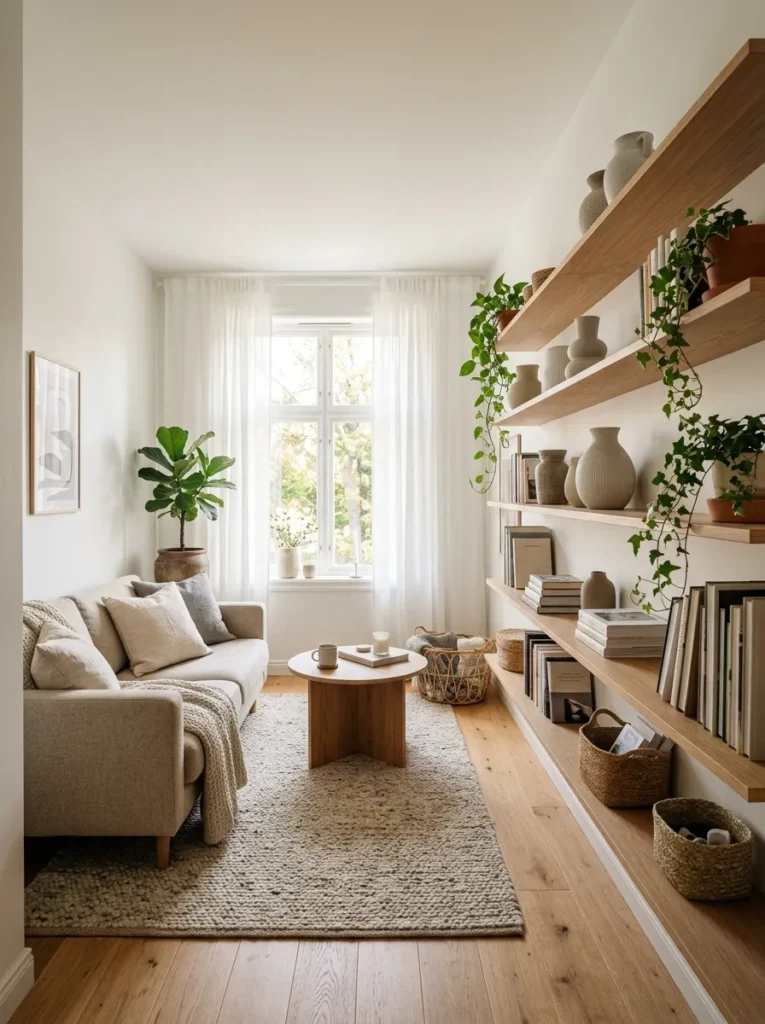
- Keeps storage visually light and organized.
- Displays favorite decor without bulky cabinets.
- Makes everyday items easy to access.
- Adds warmth with natural wood textures.
- Enhances style while preserving openness.
Smart storage doesn’t have to make a room feel heavy. Open wood shelving offers space for books, decorative accents, and woven baskets while maintaining an airy appearance. Unlike large cabinets, slim shelves leave more of the wall visible, helping the room feel brighter and less confined. Styling only a few carefully chosen pieces keeps the display attractive and uncluttered, allowing each item to stand out while supporting a relaxed, welcoming atmosphere that feels comfortable every day.
The key is balancing decorative objects with open space instead of filling every shelf. I’ve noticed that grouping items in small clusters creates a cleaner, more intentional look than lining everything up evenly. Mixing greenery, ceramics, and natural textures adds warmth without overwhelming the design. Leaving a little breathing room between objects also makes cleaning easier and keeps the room feeling fresh, spacious, and beautifully organized throughout changing seasons.
14. Glass Coffee Table
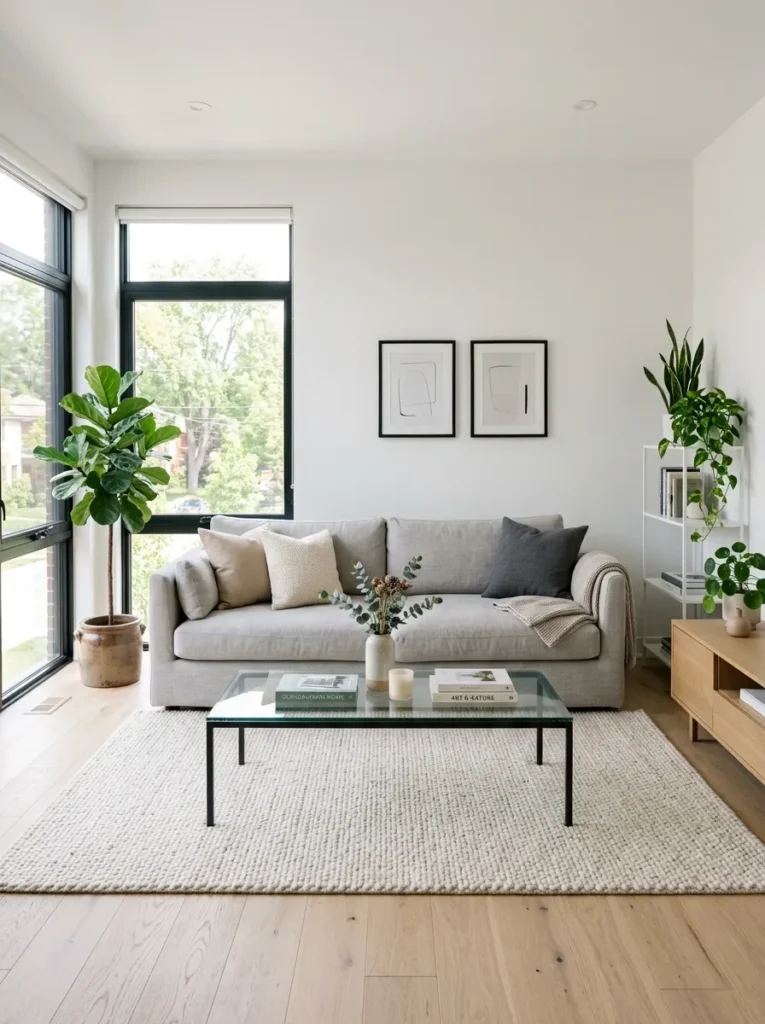
- Keeps the center of the room visually open.
- Allows more flooring to remain visible.
- Blends easily with different decor styles.
- Creates a modern and elegant appearance.
- Prevents the layout from feeling crowded.
Furniture that almost disappears can completely change how a compact room feels. A glass coffee table allows the eye to travel across the floor without interruption, creating the impression of more space. Its transparent surface reflects light while maintaining functionality for everyday use. This simple choice works well in long living areas because it provides a practical centerpiece without adding unnecessary visual weight, making the overall layout feel lighter, cleaner, and more inviting.
Pairing glass with slim metal or natural wood legs keeps the design balanced and timeless. That’s why many designers recommend avoiding oversized decorative accessories on transparent tables. A single tray, a candle, and a small vase are often enough to create a polished display. I’ve seen this approach make compact living spaces appear noticeably more open while still feeling warm and comfortable for daily life and entertaining guests.
15. Statement Ceiling Light
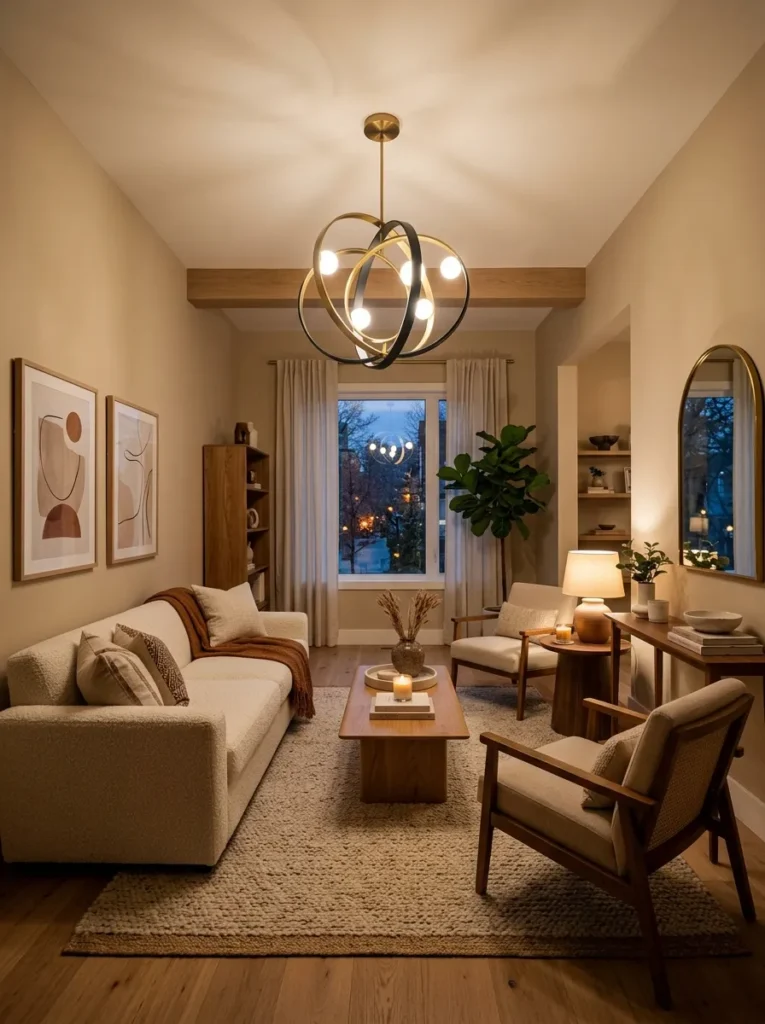
- Draws attention upward naturally.
- Adds personality without using floor space.
- Defines the main seating area beautifully.
- Creates a warm and inviting atmosphere.
- Elevates the overall room design instantly.
Lighting has the power to reshape how a room is experienced. A statement ceiling fixture naturally attracts attention upward, making the room feel taller while adding a memorable focal point. Whether it’s a modern pendant or a sculptural chandelier, the right design introduces character without occupying valuable floor space. In many Narrow Living Room Ideas, this simple upgrade helps balance the room visually while creating a welcoming atmosphere during both daytime and evening hours.
Warm bulbs make decorative lighting feel even more inviting, especially when layered with table lamps or wall sconces. In my experience, choosing a fixture that matches the room’s scale is just as important as its style. Oversized designs can overwhelm a compact layout, while a thoughtfully proportioned light creates elegance without clutter. This finishing touch ties the entire room together, making the space feel intentionally designed, cozy, and beautifully complete.
16. Vertical Indoor Plants
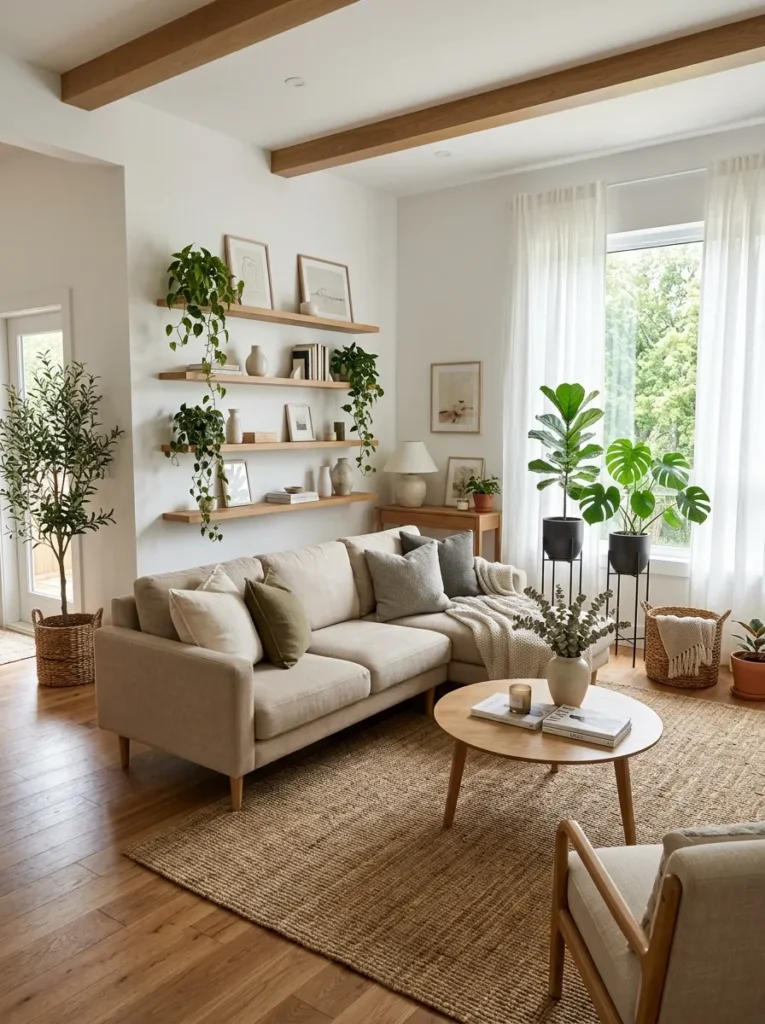
- Brings fresh color without using much floor space.
- Softens straight lines throughout the room.
- Adds height and visual balance naturally.
- Creates a calm and refreshing atmosphere.
- Complements both modern and classic interiors.
A touch of greenery can instantly make a compact living room feel more inviting. Using tall plants, slim plant stands, or trailing vines on wall shelves introduces natural texture while keeping valuable floor space open. Vertical greenery draws the eye upward, helping the room appear taller and more balanced. This decorating approach creates a peaceful environment without adding visual heaviness, making the living area feel fresh, welcoming, and connected to nature throughout every season.
Choosing easy-care varieties makes this idea practical for busy households. I’ve noticed that placing plants near windows where they receive filtered sunlight keeps them healthier while brightening the entire room. Mixing different leaf shapes also adds subtle depth without making the arrangement look crowded. Even one tall plant in an empty corner can transform the atmosphere, proving that natural elements often have one of the biggest visual impacts in smaller living spaces.
17. Minimalist Media Console
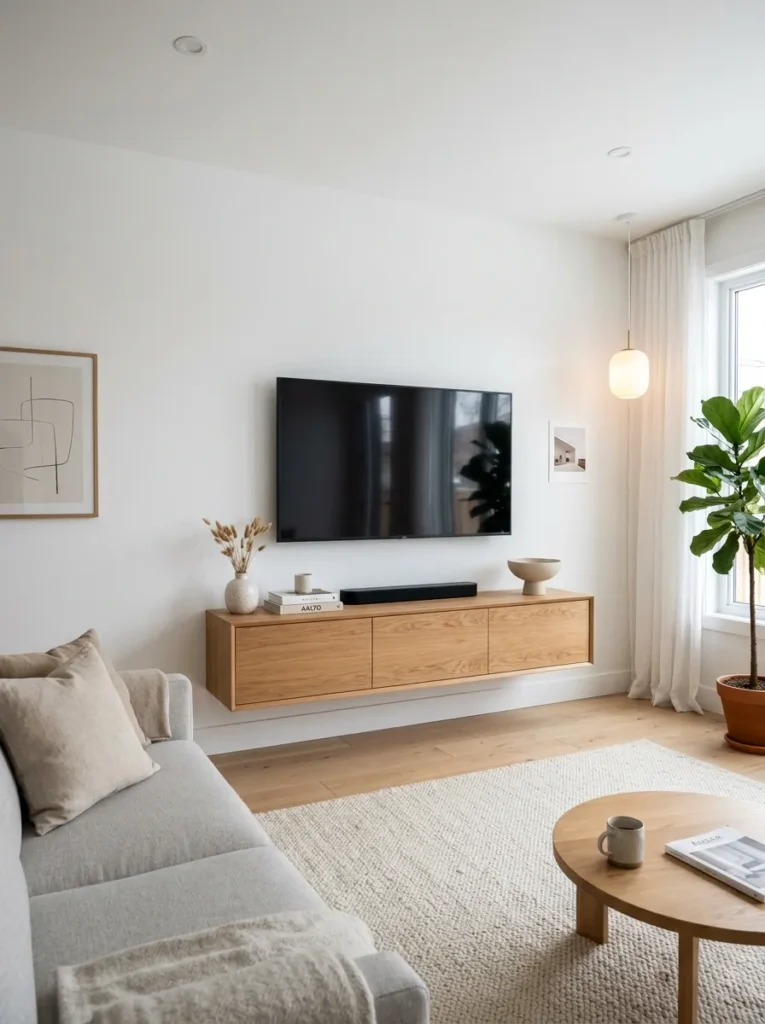
- Keeps electronics neatly organized.
- Hides everyday clutter behind clean doors.
- Maintains a sleek and modern appearance.
- Preserves valuable walking space.
- Creates a balanced entertainment area.
The furniture below your television deserves as much attention as the screen itself. A minimalist media console offers practical storage while maintaining a streamlined profile that suits compact layouts. Closed cabinets hide cables, remotes, and gaming accessories, leaving the room looking tidy and uncluttered. Slim proportions prevent the entertainment wall from feeling bulky, allowing the entire space to remain open, functional, and visually balanced for both everyday use and special gatherings.
Selecting a floating design makes the room feel even lighter because more flooring stays visible underneath. That’s why many designers recommend furniture with simple lines and discreet hardware for smaller interiors. I’ve seen this work well in many homes where replacing oversized cabinets immediately improved the overall flow. A few carefully chosen decorative accents on top complete the look without distracting from the clean, organized atmosphere that makes compact rooms feel larger.
18. Multi-Use Ottoman
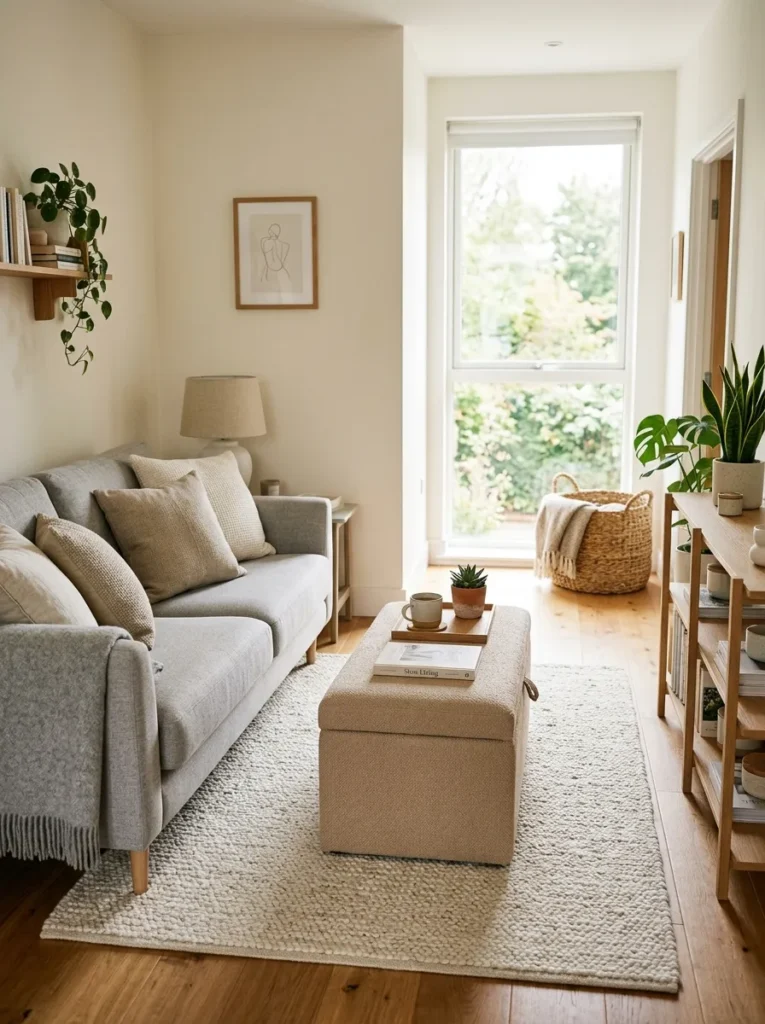
- Provides hidden storage for daily essentials.
- Offers extra seating when guests visit.
- Doubles as a comfortable footrest.
- Reduces clutter with practical functionality.
- Adds softness to the overall design.
Furniture that serves more than one purpose is a smart solution for compact homes. A storage ottoman provides a place to rest your feet, offers extra seating for visitors, and keeps blankets or magazines neatly tucked away inside. Instead of adding multiple pieces, one versatile item performs several functions while maintaining a clean appearance. This practical upgrade helps the room stay organized and comfortable without making the layout feel crowded or difficult to navigate.
Soft upholstery and rounded edges also introduce warmth that balances modern furniture. In my experience, selecting an ottoman that coordinates with the sofa creates a more cohesive design while allowing it to blend naturally into the room. A decorative tray placed on top instantly transforms it into a casual coffee table whenever needed. These flexible features make everyday living easier while keeping the space stylish, organized, and welcoming.
19. Symmetrical Sofa Styling
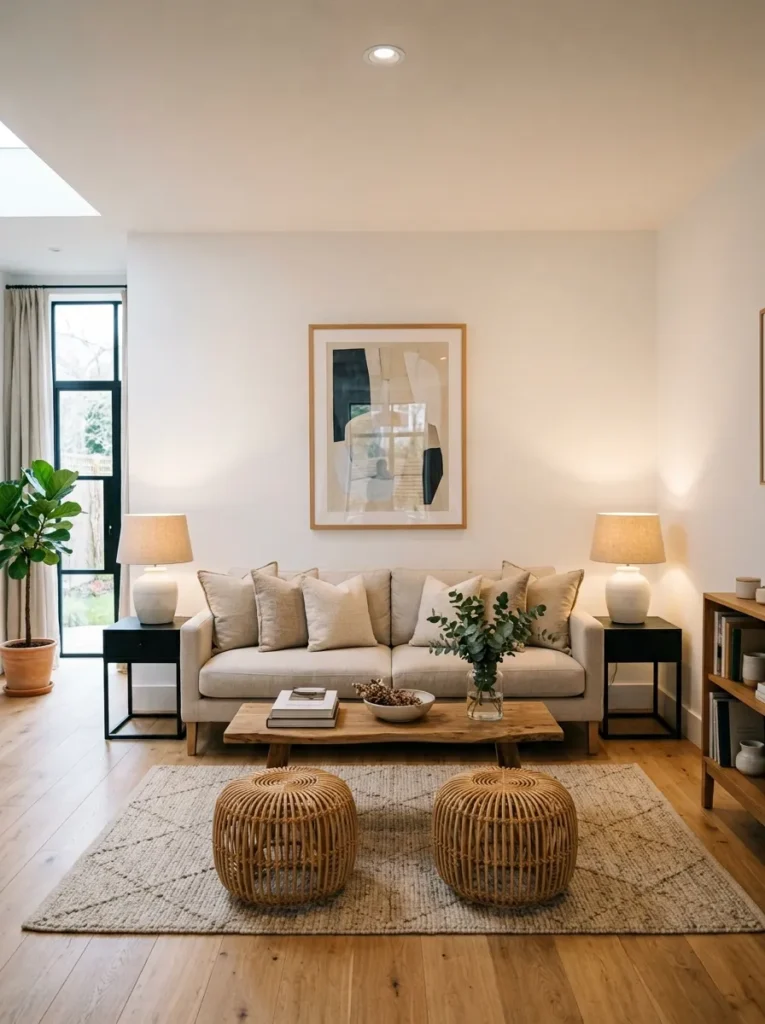
- Creates a balanced and organized appearance.
- Makes the room feel calmer and more spacious.
- Highlights the sofa as the focal point.
- Brings visual harmony with minimal effort.
- Works with both modern and timeless decor.
A balanced arrangement can make even the slimmest living room feel more comfortable. Matching pillows, identical side tables, and coordinated lamps naturally create order without adding extra furniture. Symmetry helps reduce visual distractions, allowing the room to appear wider and more intentional. This decorating technique is especially useful when the layout feels long because it gives the eye a clear focal point while maintaining a clean, welcoming atmosphere that feels polished yet relaxed for everyday living.
The secret is keeping the styling simple rather than perfectly identical. I’ve noticed that using matching furniture with slightly varied decorative accents creates warmth while preserving visual balance. A pair of similar lamps with different ceramic textures or coordinated cushions in complementary fabrics keeps the arrangement interesting without looking staged. These thoughtful details help the room feel elegant, comfortable, and easy to refresh whenever you want to update the decor with seasonal accessories.
20. Cozy Layered Lighting
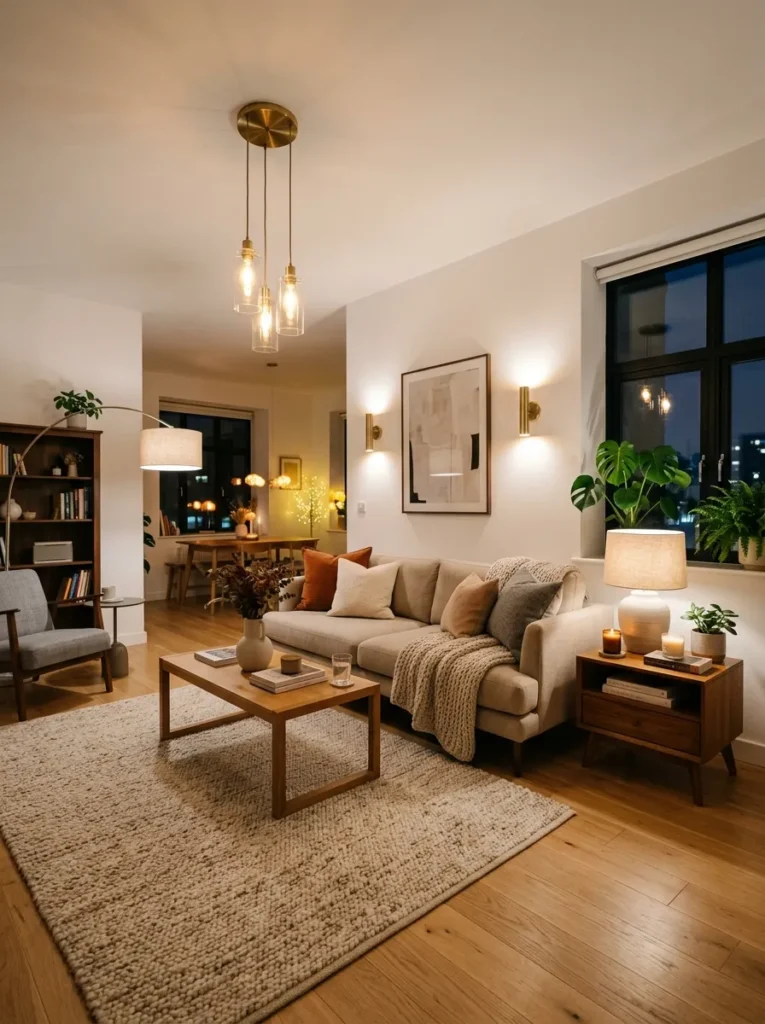
- Adds warmth and depth throughout the room.
- Eliminates harsh shadows in tight spaces.
- Creates flexible lighting for different activities.
- Makes evenings feel more relaxing and inviting.
- Enhances every decorative detail beautifully.
The right lighting can completely transform how a compact living room feels after sunset. Instead of relying on a single ceiling fixture, combining table lamps, wall sconces, and a floor lamp creates soft layers of light that add depth and warmth. This approach reduces harsh shadows while highlighting furniture, artwork, and decorative textures. One of the most effective Narrow Living Room Ideas is simply improving the lighting plan, making the entire room feel larger, cozier, and more welcoming every evening.
Different light sources also make the room more flexible throughout the day. That’s why many designers recommend warm white bulbs that create a comfortable atmosphere without feeling too dim or overly bright. I’ve seen this work well in many homes because layered lighting allows every corner to feel useful instead of forgotten. Whether you’re reading, entertaining guests, or relaxing with family, this finishing touch brings comfort, elegance, and a beautifully balanced mood to the entire living space.
Conclusion
A narrow living room doesn’t have to feel limiting. With thoughtful furniture choices, smart storage, balanced lighting, and simple styling techniques, you can create a space that feels open, functional, and beautifully inviting. These Narrow Living Room Ideas prove that even small design changes can make a remarkable difference. I’ve seen how simple updates like these can completely transform the way a room looks and feels. Save this guide on Pinterest for future inspiration, try one or two ideas in your own home, and share it with anyone looking to make a compact living space feel brighter, cozier, and more stylish.