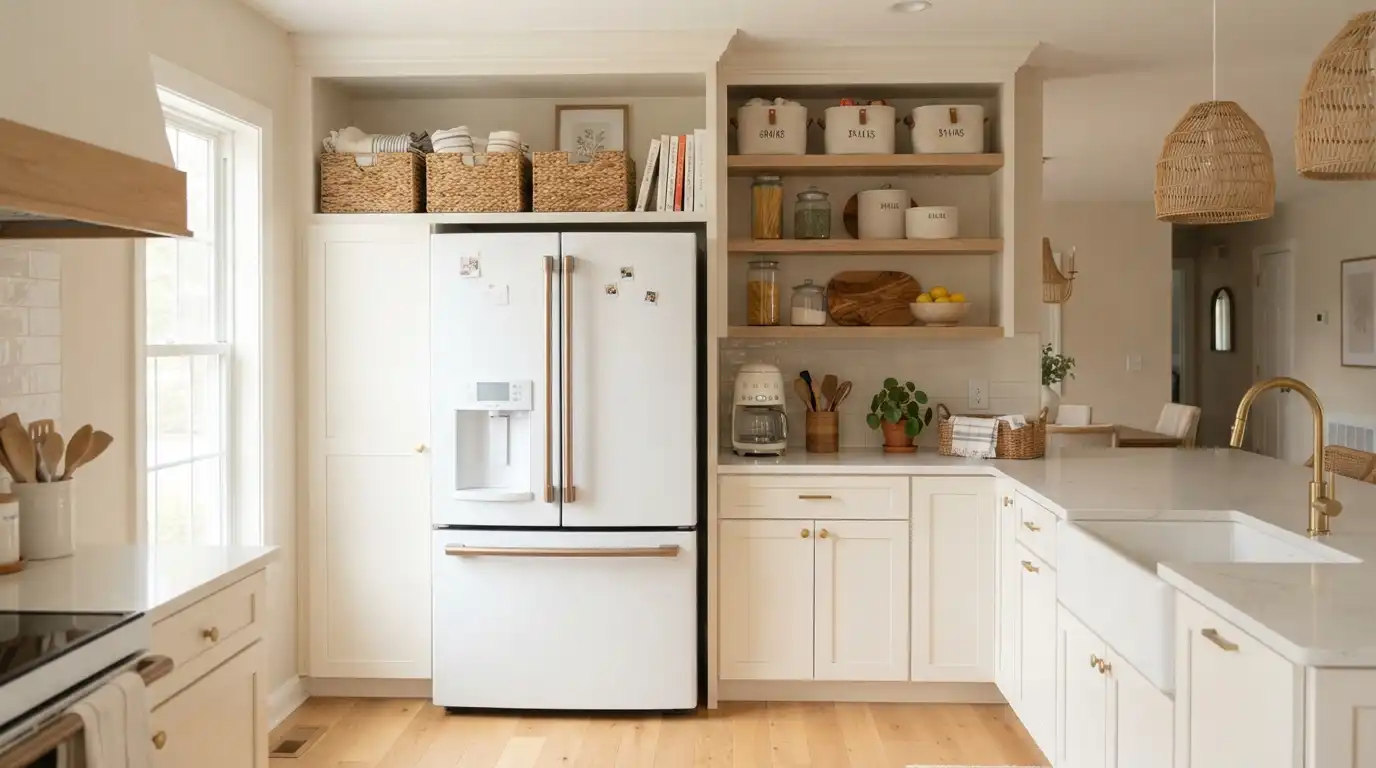
15 Brilliant Over The Refrigerator Storage Ideas to Stay Organized
That empty space above your refrigerator could be doing so much more than collecting dust and forgotten items.
With the right setup, it can become one of the smartest storage spots in your kitchen.
These Over The Refrigerator Storage Ideas are designed to help you turn awkward vertical space into practical, attractive organization.
From woven baskets and slim shelves to custom cabinets and labeled bins, each idea offers a simple way to store items without crowding your counters or everyday cabinets.
You’ll find options for modern, farmhouse, minimalist, and cozy kitchens, whether you rent or own your home.
In my experience, the best storage solutions are the ones that make frequently frustrating spaces easier to use.
These ideas can help you create a kitchen that feels calmer, cleaner, and much more intention.
Also view: 13 Amazing Green Bathroom Ideas for a Fresh Modern Retreat
1. Slim Storage Cabinet
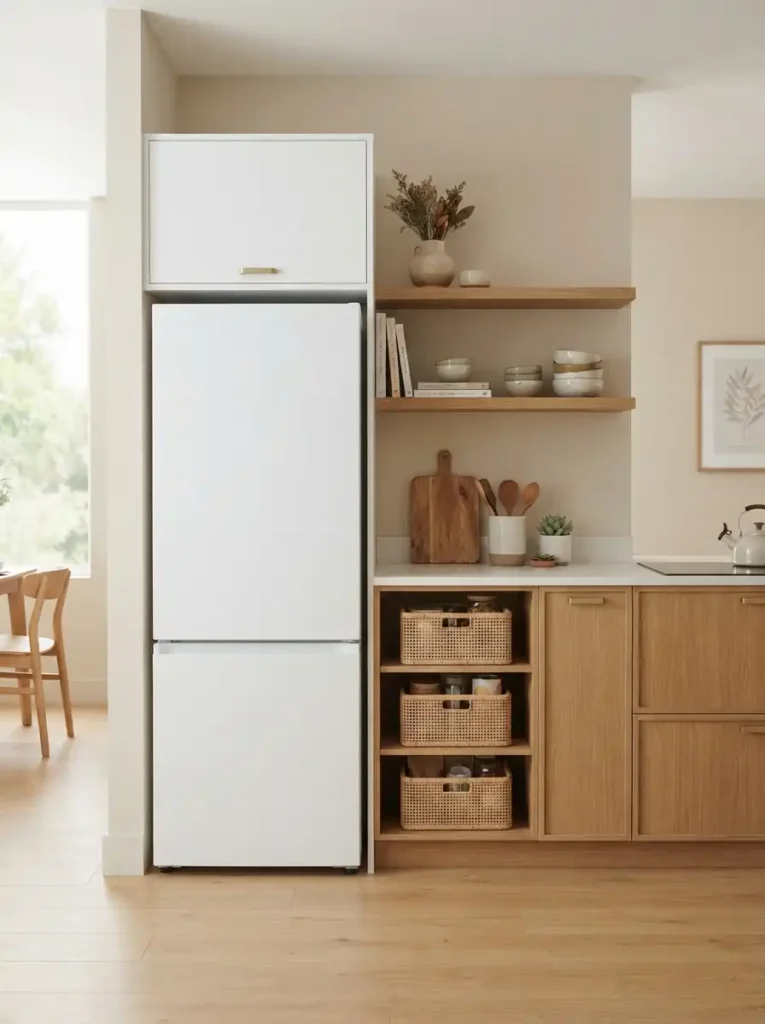
- Creates a clean, built-in look without wasting vertical space.
- Keeps rarely used kitchen items hidden and dust-free.
- Matching finishes help the refrigerator area feel intentional.
- Adjustable shelves make awkward storage easier to customize.
A slim cabinet above the refrigerator can turn an awkward gap into useful hidden storage. Choose a cabinet with flat doors and a finish that matches the surrounding kitchen so the refrigerator area feels intentional rather than crowded. Inside, use labeled bins for baking supplies, small appliances, serving pieces, or seasonal items you rarely need every day. In my experience, closed storage works especially well in busy kitchens because it reduces visual clutter instantly. Keep frequently used items elsewhere, and reserve this higher cabinet for lightweight, occasional-use belongings that can stay neatly contained.
The biggest advantage of this setup is how seamlessly it blends organization with the kitchen’s existing design. A cabinet installed flush with nearby wall units creates a continuous line that makes the room look more finished and spacious. Choose adjustable shelves so tall containers and shallow baskets can fit without wasted space. Soft-close doors are another useful upgrade, especially in a compact kitchen where every movement is noticeable. For safety, avoid storing heavy cookware overhead. A simple interior system of bins, labels, and clear categories makes the cabinet much easier to maintain over time.
2. Woven Storage Baskets
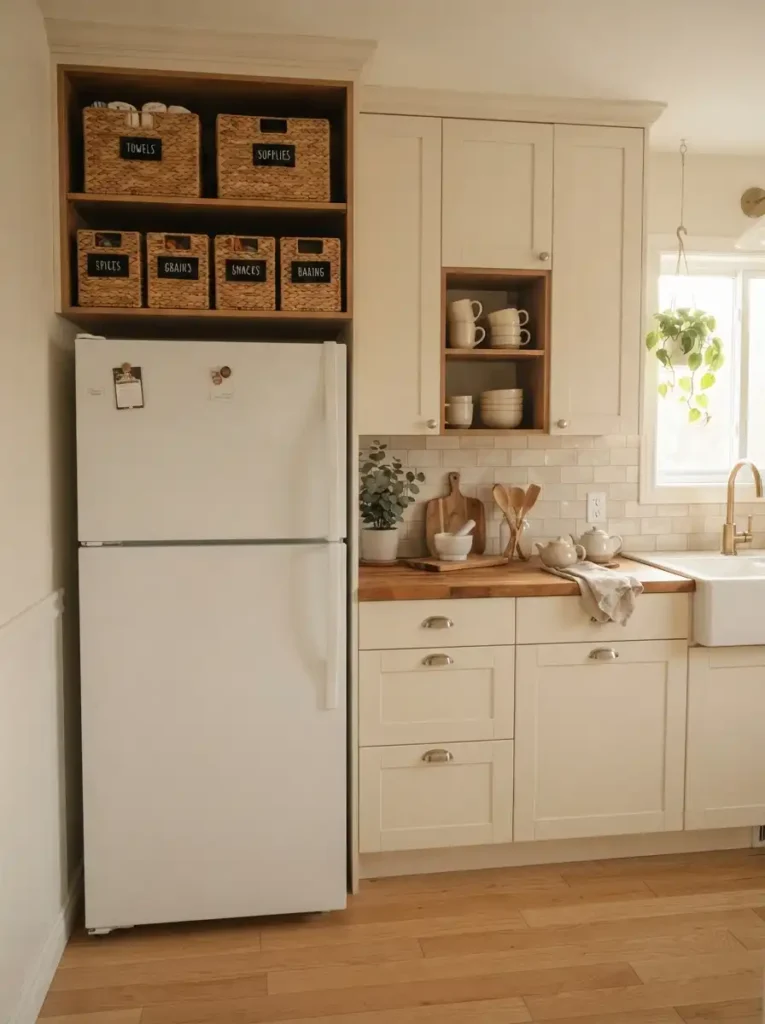
- Adds texture while keeping loose kitchen supplies contained.
- Matching baskets create a coordinated look across the space.
- Labels make seasonal and occasional items easier to find.
- Lightweight contents are safer for elevated storage.
When cabinet space is limited, a row of matching baskets can make the top of the refrigerator surprisingly useful. Select sturdy bins in one material, such as woven seagrass, canvas, or matte plastic, and keep each one dedicated to a clear category. Seasonal table linens, extra napkins, specialty baking tools, or entertaining supplies can disappear neatly inside. I’ve noticed that matching containers create a calmer look even when the storage area is visible. Add simple labels to the front edge so you can find what you need without pulling every basket down every day.
Open baskets work best when the refrigerator sits beneath a cabinet-free wall or when you want easy access without installing permanent furniture. Leave enough clearance above the appliance for ventilation and everyday cleaning, then position the baskets securely so they cannot slide forward. Choose neutral tones that echo nearby cabinetry, flooring, or countertops for a cohesive finish. This small styling decision can make the entire kitchen feel more intentional. For homes with children, keep breakable or sharp items elsewhere and use the upper baskets only for lightweight, nonhazardous supplies.
3. Floating Storage Shelf
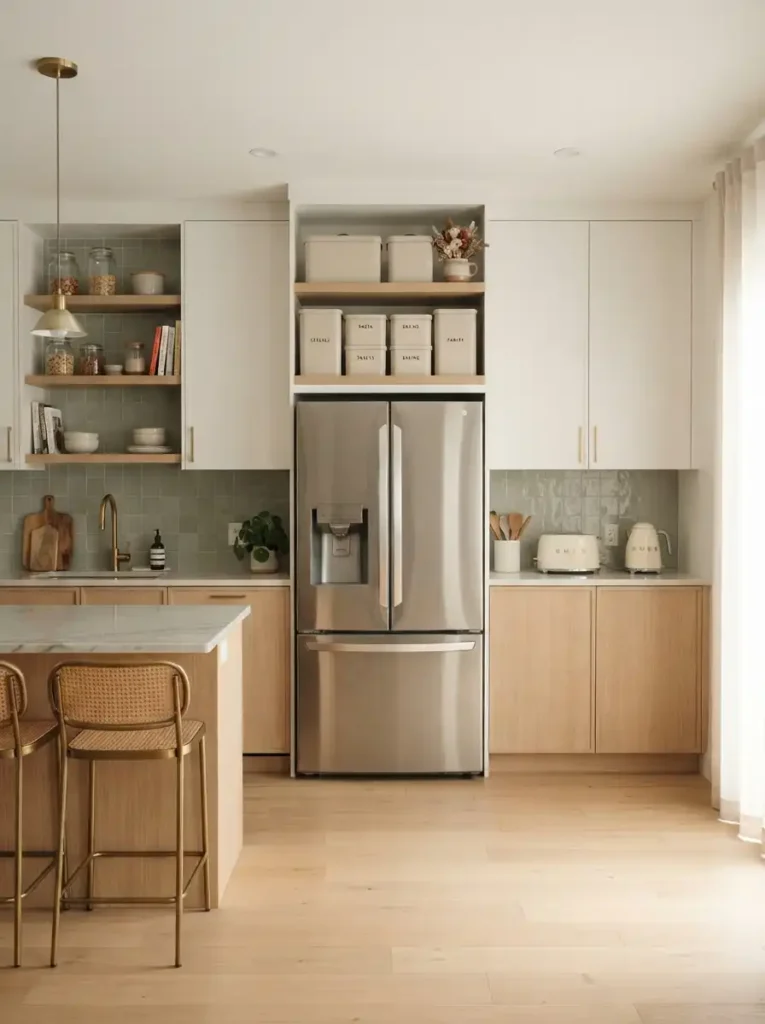
- Uses vertical space without adding a bulky cabinet.
- Lidded boxes conceal items that could make the area look messy.
- Repeated wood or metal finishes connect the shelf to the kitchen.
- A small decorative accent keeps the arrangement visually balanced.
A floating shelf can turn the unused space above a refrigerator into a clean display and storage zone without making the kitchen feel bulky. Install a shallow shelf that leaves comfortable clearance around the appliance, then use matching boxes or lidded containers to hide less attractive essentials. This approach works beautifully for extra coffee supplies, rarely used serving pieces, or small kitchen accessories. The shelf itself can also hold one decorative object, such as a ceramic vase or small plant, creating balance without adding clutter. Keeping the palette restrained helps the storage feel like part of the original kitchen design.
For a polished result, repeat one or two materials already used nearby, such as oak, black metal, or white cabinetry. Measure the refrigerator width first and choose a shelf that feels proportionate rather than oversized. I’ve seen this work well in smaller kitchens because the vertical storage adds function while keeping valuable counter space clear. Use lightweight containers on the shelf and avoid stacking items too high. A simple arrangement with one storage box, one basket, and one decorative accent can provide practical organization while giving this overlooked area a finished, Pinterest-friendly appearance.
4. Pull-Out Pantry Cart
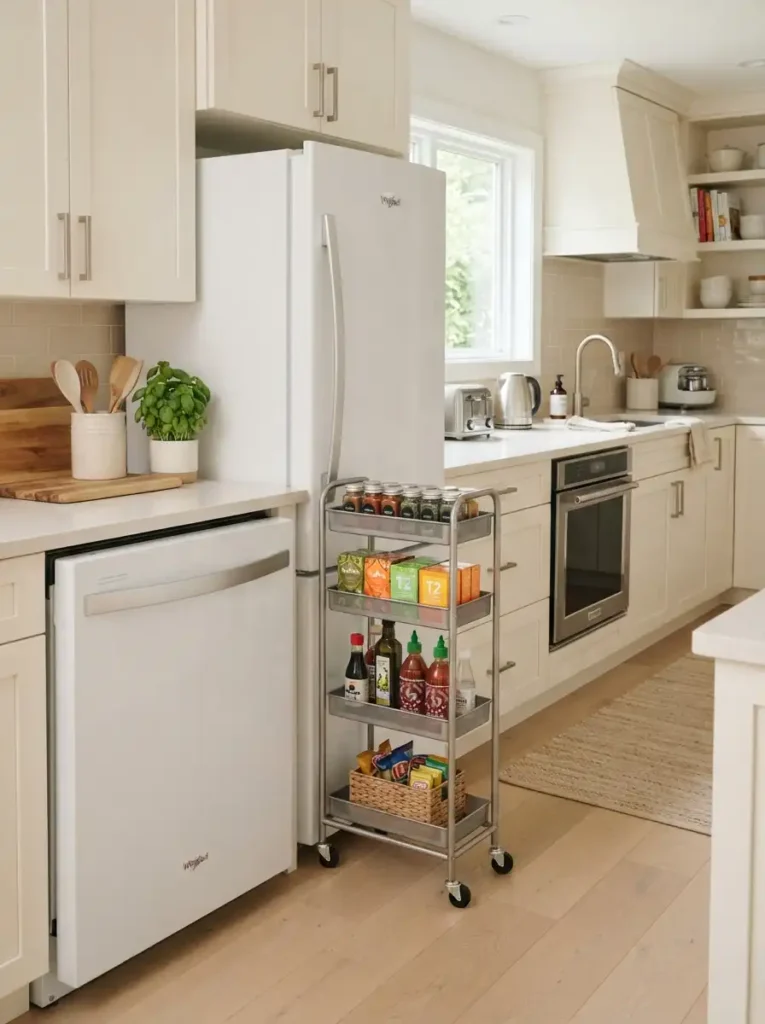
- Turns a narrow refrigerator gap into practical pantry storage.
- Keeps small bottles and packets grouped by category.
- Rolling access makes deep storage easier to reach.
- A slim profile preserves the kitchen’s open appearance.
Turn an awkward refrigerator gap into a useful pantry zone with a narrow pull-out organizer. A slim rolling cart can hold spices, bottled sauces, tea, coffee, baking ingredients, or backup pantry staples while staying almost invisible when pushed into place. Choose a unit with several shallow levels so smaller containers remain easy to see. This is especially helpful in kitchens where cabinet drawers are already full. In my experience, pull-out storage works best when similar items are grouped together, because the entire collection becomes accessible with one smooth movement instead of digging through crowded shelves.
A narrow rolling organizer also makes cleaning and maintenance much easier around the refrigerator. Because the cart can slide forward, you can quickly wipe the floor and check for forgotten products hiding at the back. Select a sturdy model with locking casters and enough clearance for the refrigerator door to open comfortably. Keep heavier bottles on the lowest level and lighter packets higher up for better stability. If the kitchen has a minimalist look, choose white, wood, or matte black finishes that coordinate with nearby cabinetry. The result is discreet storage that adds function without visually overwhelming the room.
5. Hanging Peg Rail
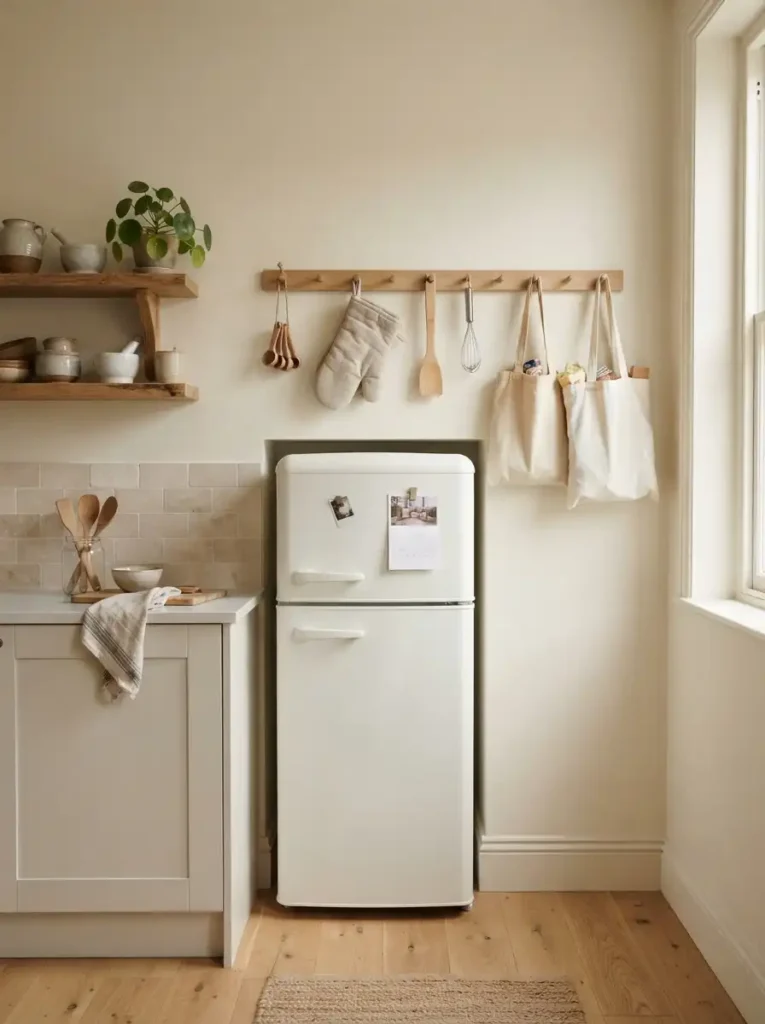
- Uses vertical wall space for lightweight kitchen essentials.
- Keeps frequently used tools visible and accessible.
- Matching hardware can connect the rail to existing finishes.
- A sparse arrangement prevents the area from feeling cluttered.
A simple peg rail above the refrigerator can give small kitchen tools a dedicated home while keeping them visible and easy to grab. Use a narrow wood or metal rail with sturdy hooks for lightweight items such as measuring cups, cloth bags, oven mitts, or small utensils. This works particularly well when surrounding cabinets leave little room for another enclosed unit. Keep the arrangement intentionally sparse so it feels styled rather than crowded. I’ve noticed that grouping everyday tools by function makes compact kitchens feel easier to use, especially when everything has a clearly defined place.
For a cohesive finish, choose peg rail hardware that repeats a material already used elsewhere in the kitchen. Black hooks can complement cabinet handles, while natural wood can soften a modern space with white cabinetry and pale counters. Position the rail high enough to avoid interfering with refrigerator doors, then leave generous space between hooks so items do not overlap. This setup is best for lightweight objects rather than heavy cookware. Add one small woven basket or simple framed print nearby if the wall feels empty. The finished area becomes practical storage with a relaxed, handcrafted visual character.
6. Seasonal Storage Bin
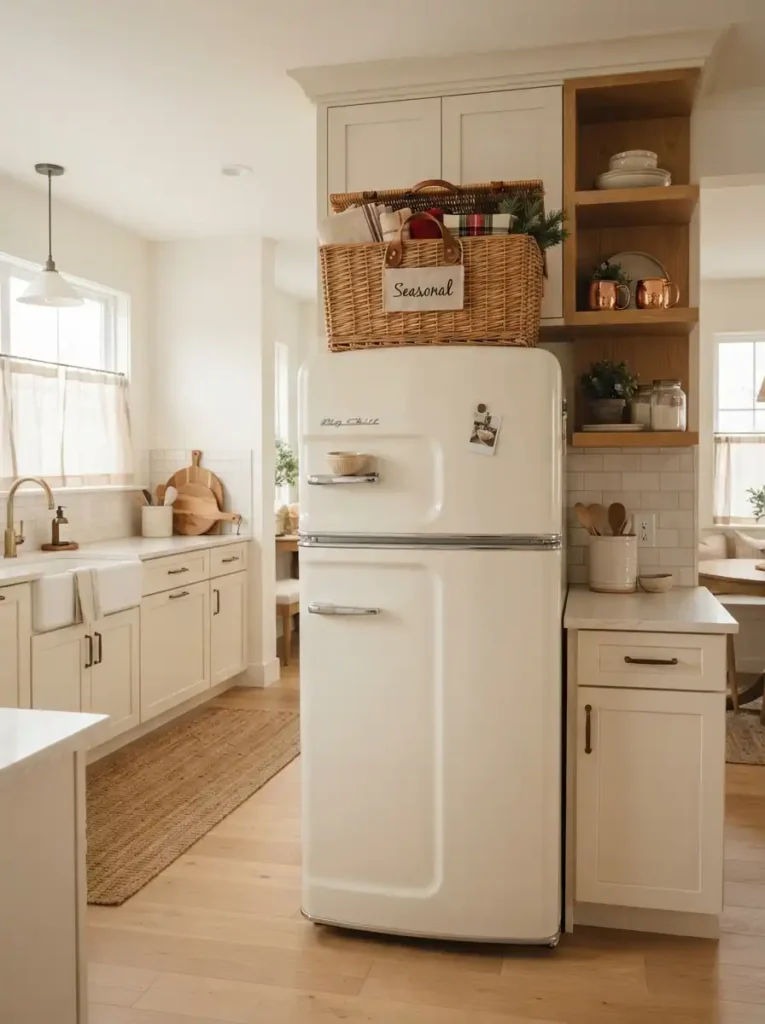
- Keeps holiday and seasonal kitchen items together.
- Lidded containers protect rarely used supplies from dust.
- Clear labels make yearly decorating and hosting easier.
- Neutral finishes maintain a polished visual appearance.
Give the top of your refrigerator a cleaner purpose by using one large lidded bin for seasonal kitchen supplies. Instead of scattering holiday linens, specialty serving pieces, or entertaining accessories across several cabinets, keep them together in a clearly labeled container. A neutral bin with a fitted lid creates a streamlined appearance and protects contents from dust. This approach is especially useful when you only need those items a few times each year. In my experience, assigning one container to one seasonal category makes decorating and hosting preparation much faster because everything is ready to retrieve together.
Choose a container that fits comfortably within the available space without blocking ventilation or making the refrigerator look top-heavy. Woven baskets add warmth to farmhouse and cottage kitchens, while simple fabric or matte plastic bins suit modern interiors. Use a large, easy-to-read label such as “Holiday Linens” or “Entertaining” rather than a vague category. Store only lightweight items inside, and keep fragile or heavy pieces elsewhere. When the season arrives, you can lift down one organized container instead of searching through multiple cupboards, saving time while keeping everyday cabinets available for frequently used supplies.
7. Glass Storage Jars
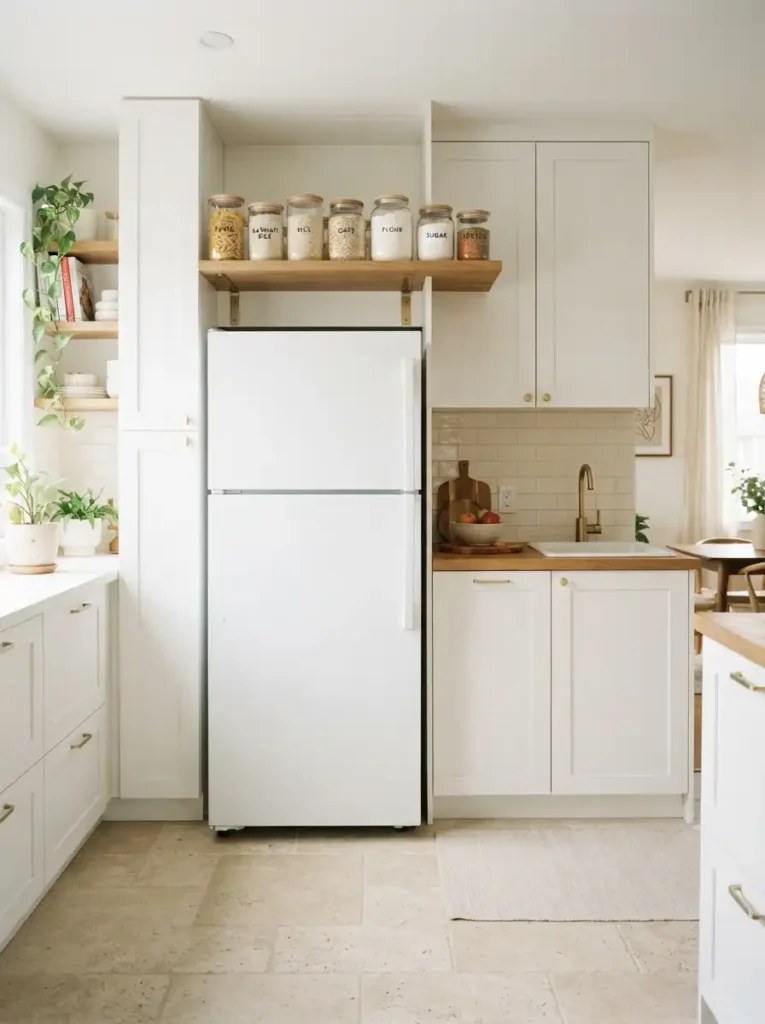
- Keeps dry ingredients visible and easy to identify.
- Uniform containers create a cleaner, more intentional display.
- Labels prevent confusion when several ingredients look similar.
- A limited color palette keeps open storage visually calm.
Clear glass jars can turn visible refrigerator-top storage into a neat, useful display for dry goods. Fill matching containers with items such as pasta, rice, oats, flour, or baking ingredients, then add simple labels for quick identification. The transparency makes it easy to see when supplies are running low, while consistent shapes create a more organized appearance. This approach works best when the jars are placed on a secure shelf rather than directly on the appliance. Choose lightweight containers and avoid storing anything that would be difficult or unsafe to lift down from above.
A coordinated jar collection can also add subtle decorative interest without taking over the kitchen. Choose cylindrical or square containers that fit neatly together, leaving enough room to remove each one comfortably. I’ve noticed that repeating the same container style makes even a small storage area look intentionally designed. Keep the palette simple by pairing clear glass with white labels, natural wood lids, or neutral accents. For practical maintenance, reserve this elevated area for backup or less frequently used dry ingredients. Frequently reached-for foods are usually better stored at waist level, where they are safer and easier to access.
8. Labeled Fabric Bins
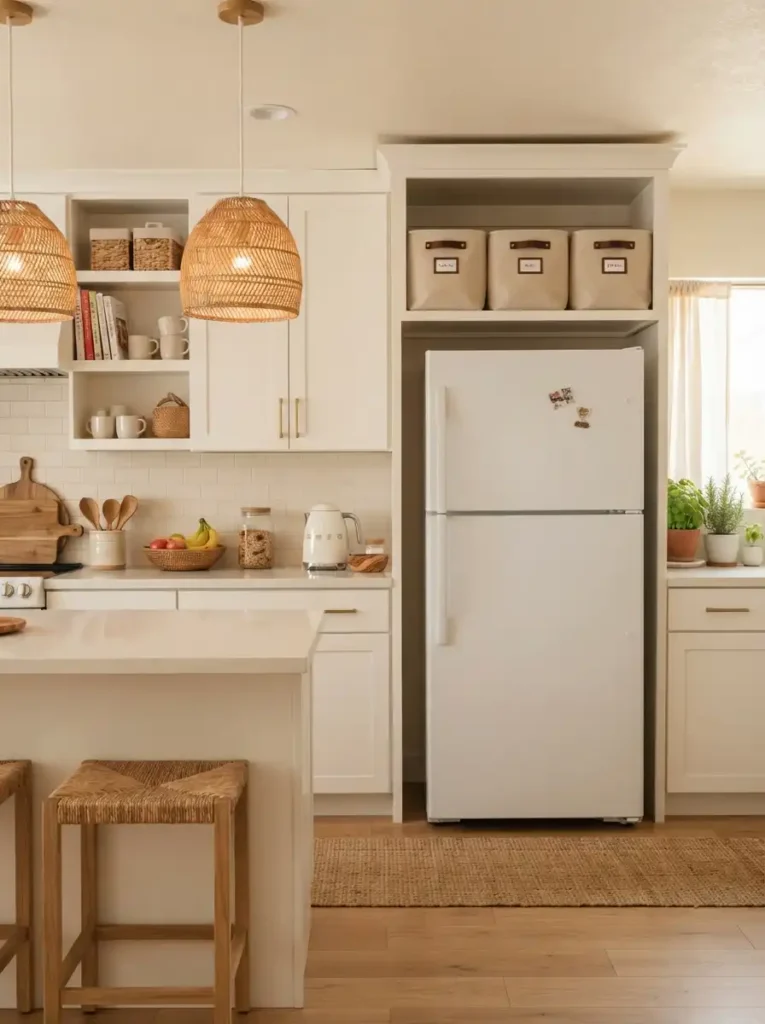
- Soft bins hide mismatched kitchen supplies from view.
- Labels make categories instantly recognizable.
- Neutral fabrics complement both modern and traditional kitchens.
- Handles make elevated containers easier to pull down.
Fabric bins offer an easy way to hide miscellaneous kitchen supplies while keeping the area visually soft. Choose structured containers with reinforced sides and sturdy handles for items such as extra dish towels, reusable bags, table linens, or small entertaining accessories. Clear labels on the front prevent the bins from becoming mystery boxes over time. This method is especially helpful when your refrigerator area is open to the rest of the kitchen. Instead of seeing several unrelated objects, you see a small collection of coordinated containers that looks deliberate and tidy.
The best fabric bins for elevated storage are lightweight, stable, and easy to remove. Measure the available height and width before buying so the containers do not scrape cabinetry or interfere with appliance doors. In my experience, handles make a surprisingly big difference because they provide a secure grip when reaching upward. Stick with beige, cream, gray, or another neutral shade that echoes the kitchen palette. Assign each bin a specific purpose and avoid overfilling it. A little empty space makes retrieval easier and helps the entire storage arrangement maintain its clean, uncluttered appearance.
9. Built-In Open Cubby
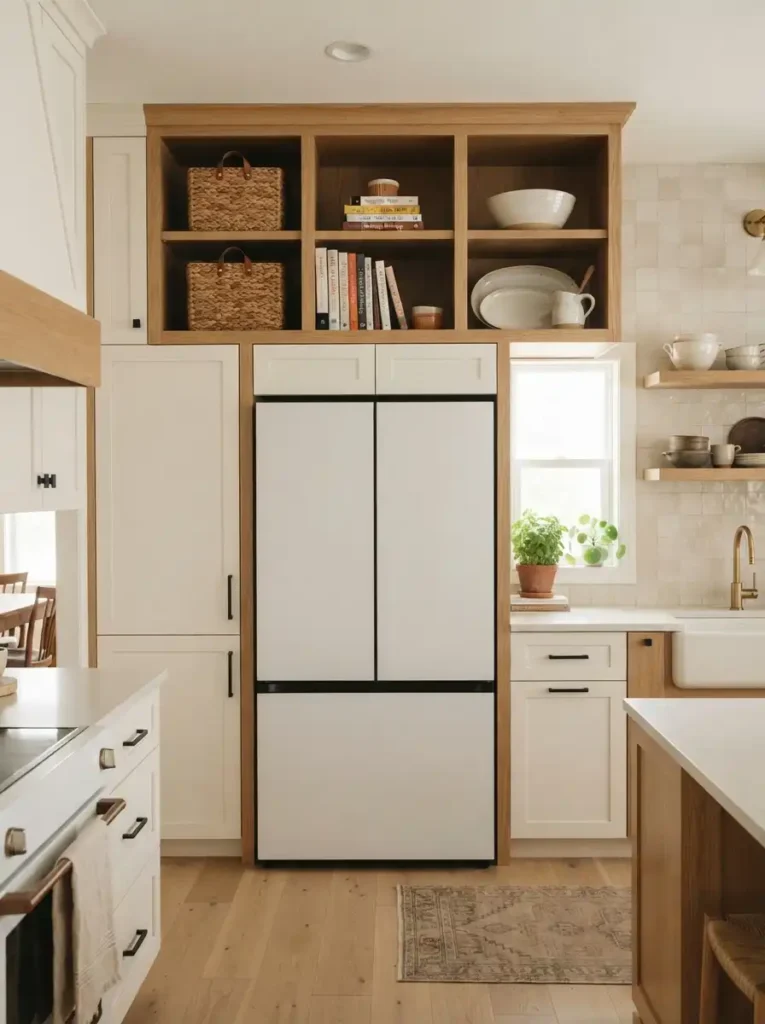
- Creates dedicated compartments for different kitchen categories.
- Makes frequently overlooked vertical space more functional.
- Open compartments keep essentials visible at a glance.
- Matching woodwork creates a custom architectural appearance.
A built-in open cubby can make the unused area above a refrigerator feel like part of the kitchen architecture. Divide the space into two or three compartments and assign each one a simple purpose, such as cookbooks, serving pieces, backup supplies, or baskets. Open shelving makes contents easy to see, but the repeated compartments keep everything visually contained. This option is especially attractive during a kitchen renovation because the cubby can be designed around the exact refrigerator dimensions. The result feels intentional rather than like an afterthought added to an awkward leftover space.
For a polished appearance, repeat the cabinetry finish or use complementary wood throughout the cubby. Keep each compartment lightly styled instead of filling every inch. One woven basket, a small stack of cookbooks, or a few attractive ceramic pieces can provide useful storage without creating visual noise. That’s why many designers recommend treating open storage as both organization and composition. Leave clearance around the refrigerator for ventilation and maintenance, and make sure the built-in structure is properly supported. With thoughtful proportions, this setup can transform an overlooked area into a functional architectural feature.
10. Magnetic Storage Containers
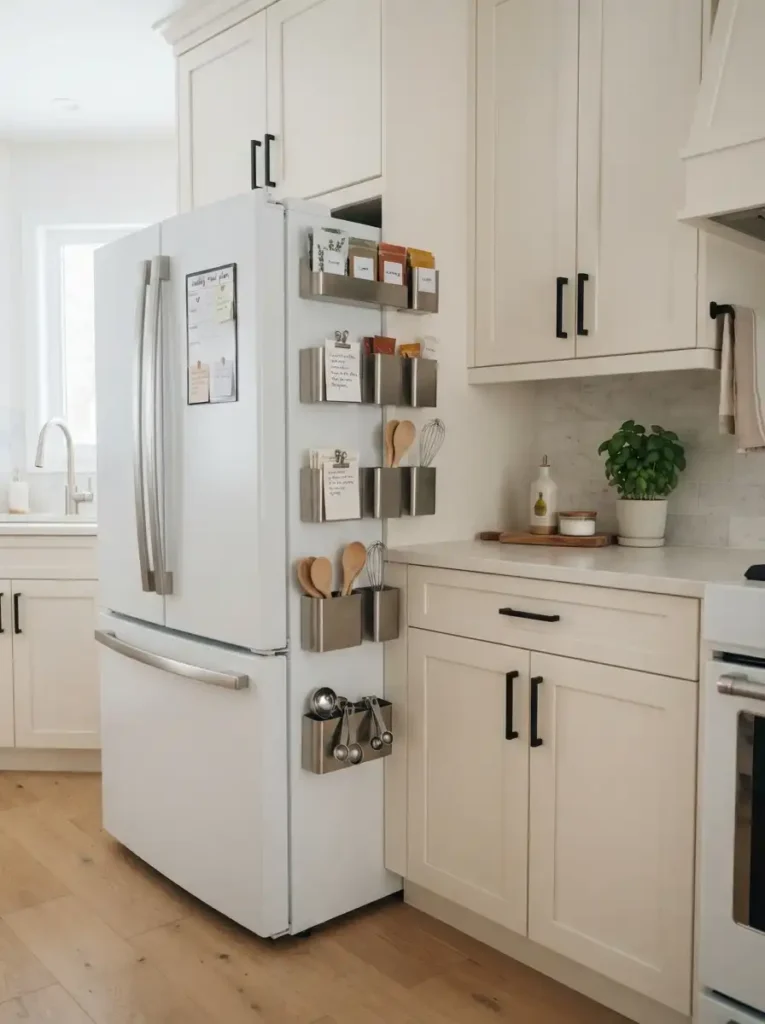
- Uses the refrigerator’s side surface for compact organization.
- Keeps small items visible without taking counter space.
- Matching containers create a streamlined visual arrangement.
- Works especially well for lightweight kitchen essentials.
Magnetic containers can extend your storage capacity without adding another shelf or cabinet above the refrigerator. Slim magnetic tins or baskets attached to the refrigerator side can hold lightweight items such as spice packets, recipe cards, clips, measuring spoons, or small kitchen tools. This works particularly well when the space above the appliance is already occupied. Keep the containers uniform in shape and finish so the arrangement looks intentional rather than improvised. I’ve noticed that magnetic storage is most effective when each container has one clear purpose, preventing small items from becoming a mixed-up collection.
Before attaching anything, check that the refrigerator surface is compatible with magnets and that the containers stay securely attached when the door moves. Avoid placing heavy glass jars or sharp objects where they could fall. For a modern kitchen, matte metal containers create a sleek appearance, while white or neutral baskets blend quietly with the appliance. Position them where they remain easy to reach but do not interfere with handles or doors. This small addition can free up valuable drawers and counters while making frequently misplaced little essentials much easier to find.
11. Stacked Wooden Crates
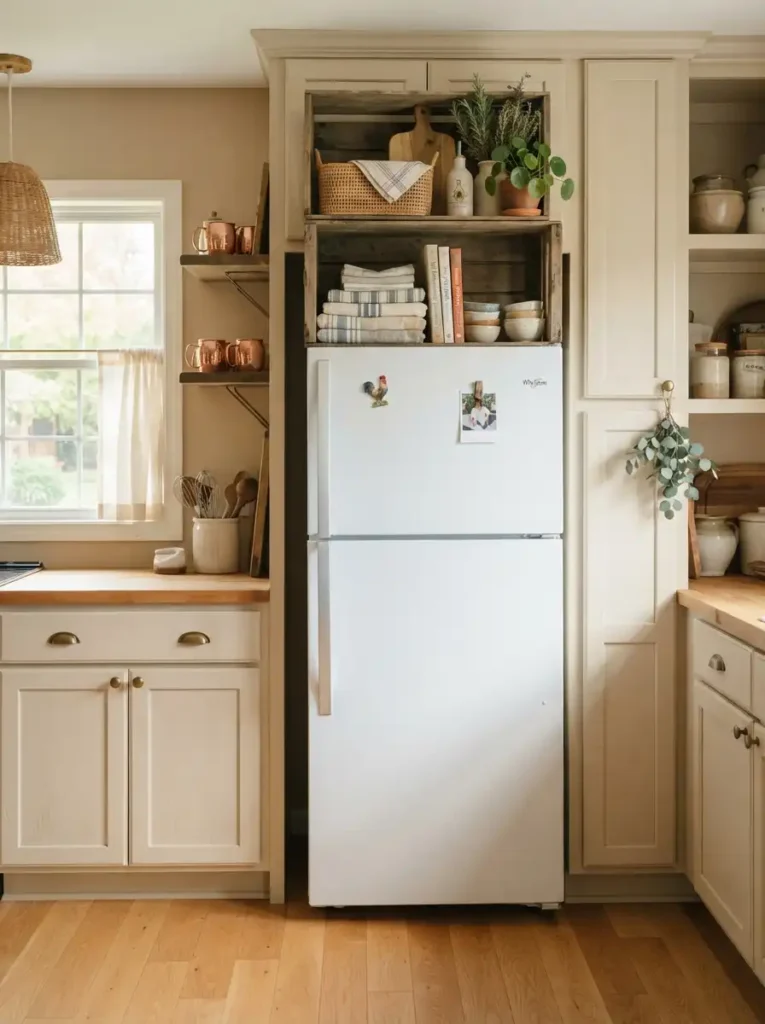
- Adds vertical storage with a warm natural texture.
- Creates separate compartments for different kitchen supplies.
- Open fronts make contents quick to identify.
- Wood tones soften modern appliances and cabinetry.
Stacked wooden crates can create inexpensive vertical compartments for organizing the area around a refrigerator. Use two sturdy crates with their openings facing outward, creating separate spaces for cookbooks, folded linens, lightweight serving accessories, or small baskets. Natural wood introduces warmth beside a cool appliance and can make a simple kitchen feel more layered. Choose crates with smooth edges and solid construction, then secure them appropriately if they are placed in a position where they could shift. This setup is particularly useful when you want flexible storage without committing to permanent cabinetry.
Keep the arrangement visually balanced by limiting the number of objects inside each crate. A few folded towels, a small basket, or neatly stacked books can look attractive while remaining functional. I’ve seen this approach work well in rental kitchens because the crates can often be rearranged or removed when storage needs change. Choose a wood tone that complements nearby shelves, cutting boards, or flooring. Avoid placing heavy cookware in elevated crates, and leave enough surrounding clearance for refrigerator maintenance. With careful styling, basic crates become practical compartments with a relaxed, handcrafted feel.
12. Wire Basket Organizer
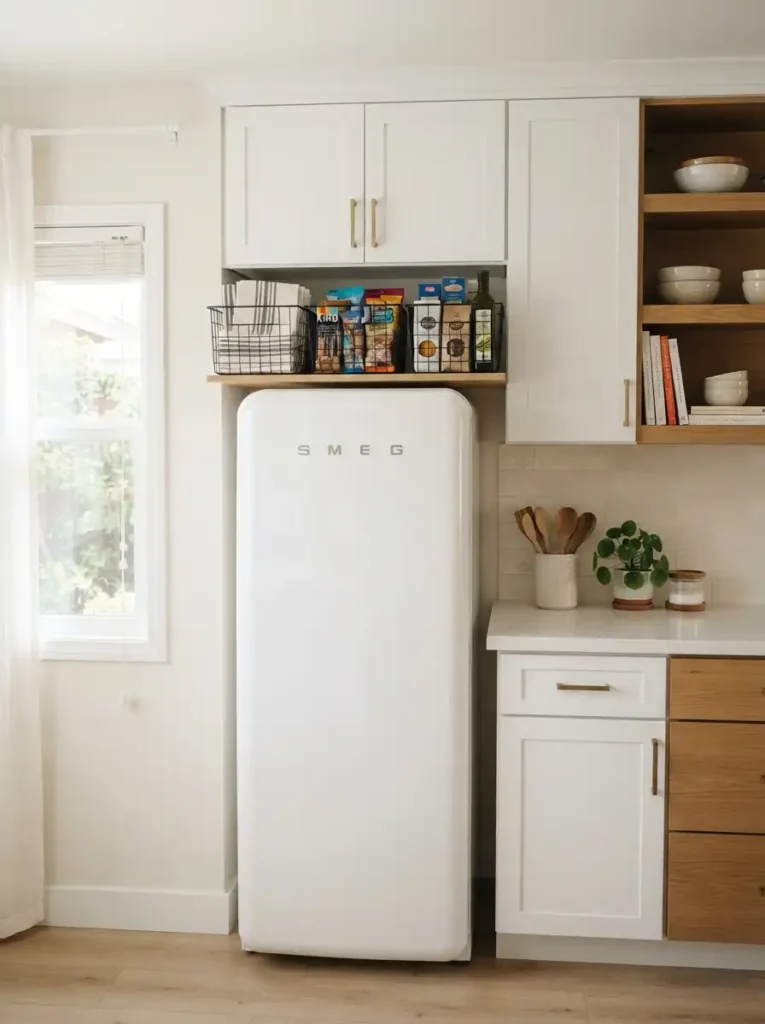
- Keeps pantry extras contained while maintaining an airy look.
- Open construction makes stored items easy to spot.
- Metal finishes complement modern kitchen hardware.
- Multiple baskets allow simple category-based organization.
Wire baskets provide lightweight storage while keeping the refrigerator area visually open. Their open construction makes it easy to see what is inside, which is useful for backup snacks, kitchen towels, reusable bags, or small pantry supplies. Arrange two or three baskets in a row and give each one a dedicated category. Black wire adds definition to a white kitchen, while brass or white finishes can create a softer effect. Because the containers do not visually block the wall, they are especially helpful when you want practical organization without making a compact kitchen feel closed in.
Choose baskets with reinforced handles or sturdy frames so they can be safely moved when needed. Line them with fabric if you are storing soft goods that could snag against the wire. For elevated storage, keep the contents lightweight and avoid overfilling the baskets. In my experience, the simplest systems are easier to maintain when every container has a clear job. Add small labels if the contents are not immediately obvious. When arranged with consistent spacing and similar finishes, wire baskets can turn unused vertical space into a neat storage zone that feels purposeful rather than crowded.
13. Slim Open Shelving
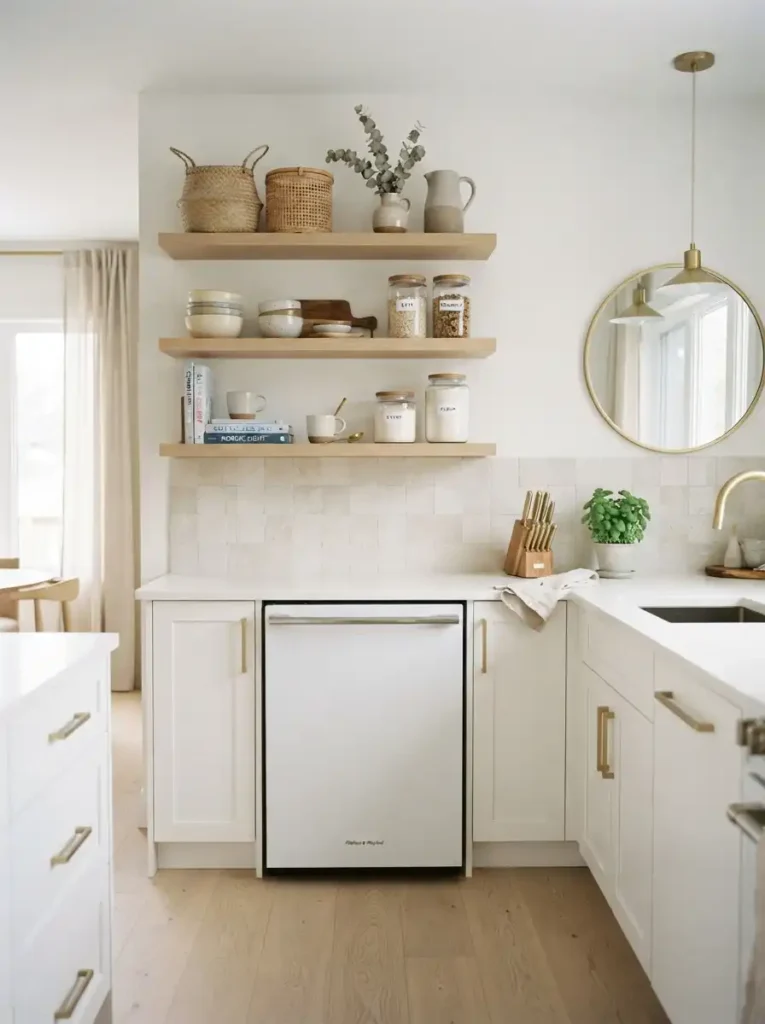
- Adds useful vertical storage without visually closing the kitchen.
- Keeps attractive containers and serving pieces within sight.
- Narrow shelves work well in compact refrigerator areas.
- Repeated materials create a cohesive, finished appearance.
Slim open shelves can make the vertical area above a refrigerator feel lighter while still adding practical storage. Install two or three shallow shelves and use them for lightweight baskets, cookbooks, small serving pieces, or attractive pantry containers. Because the shelves remain visually open, they can prevent a compact kitchen from feeling boxed in. Keep the shelf depth modest so stored items do not project too far into the room. This setup also gives you flexibility to rearrange the display as your storage needs change without committing to a large overhead cabinet.
For a polished result, repeat one finish throughout the shelving system. Natural wood works beautifully with warm neutral kitchens, while white shelves can visually disappear against the wall. Place the most frequently accessed lightweight items on the lowest shelf and reserve higher levels for occasional-use pieces. I’ve noticed that open shelving looks best when about one-third of the surface remains visually open. Avoid filling every inch with containers. A few carefully selected baskets and functional pieces can provide plenty of storage while keeping the refrigerator wall airy, organized, and easy to maintain.
14. Lidded Plastic Bins
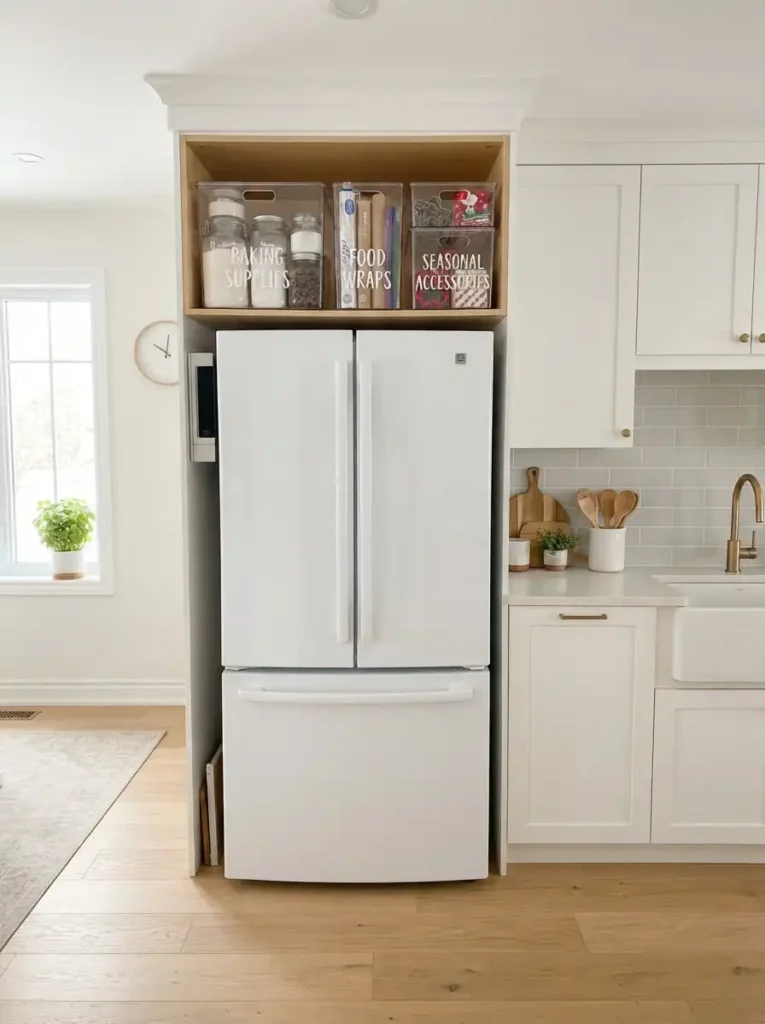
- Protects rarely used supplies from dust and kitchen grease.
- Clear sides make contents easier to identify.
- Stackable shapes maximize limited vertical space.
- Uniform bins create a streamlined storage system.
Lidded plastic bins are a practical choice when you want enclosed storage without installing another cabinet. Clear or translucent containers let you identify contents quickly while protecting supplies from dust and grease. Use separate bins for baking extras, food-storage accessories, seasonal linens, or entertaining pieces that are not needed every day. Stackable designs are especially useful when vertical clearance is limited. This is one of the simplest ways to create organized refrigerator-top storage because the containers can be labeled, rearranged, and replaced without changing the kitchen itself.
Choose sturdy bins with secure lids and smooth surfaces that are easy to wipe clean. Before stacking them, check that the lower container is strong enough to support the weight above it and keep heavier items closer to the bottom. A small label on each bin can prevent unnecessary searching, especially when the containers are stored at eye level or higher. Keep the system limited to a few categories rather than creating too many tiny compartments. The result is functional, protected storage that makes an overlooked kitchen zone easier to use and maintain.
15. Decorative Storage Boxes
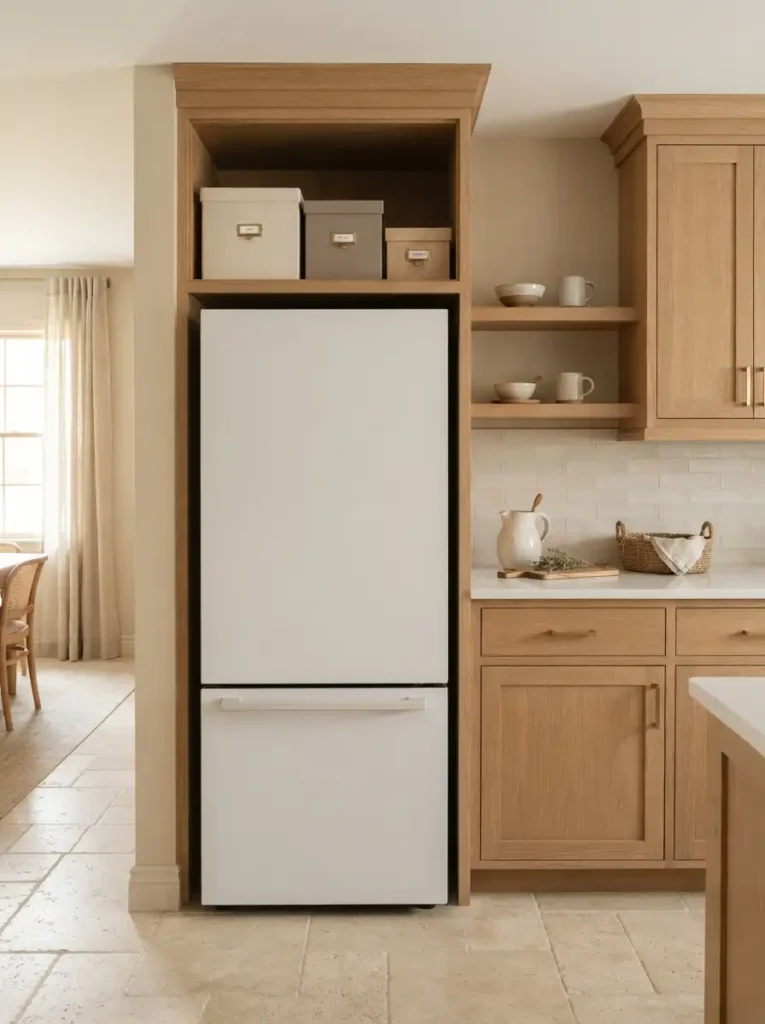
- Hides everyday clutter behind attractive coordinated covers.
- Adds personality without sacrificing useful storage.
- Different box sizes accommodate varied kitchen accessories.
- Decorative finishes can complement the surrounding kitchen palette.
Decorative storage boxes make practical organization feel like part of the kitchen styling. Choose coordinated boxes in linen, canvas, wood, or another durable material and use them to conceal small appliances, extra linens, specialty utensils, or entertaining supplies. Unlike mismatched packaging, attractive boxes create a consistent visual rhythm above the refrigerator. This is particularly useful when the storage area remains visible from the living room or dining space. Keep the colors connected to your kitchen palette so the containers feel like intentional decor rather than storage added as an afterthought.
Vary the box sizes slightly while keeping their materials and finishes consistent for a collected but orderly appearance. Labels can be subtle, such as small metal tags or simple neutral lettering, so they do not compete with the design. In my experience, closed decorative boxes are especially helpful for items that are useful but visually unattractive. Keep each box relatively light and avoid storing heavy cookware overhead. Leave enough room to remove a box safely without disturbing neighboring containers. With this approach, storage becomes a quiet design element that keeps clutter out of sight.
16. Narrow Pantry Shelf
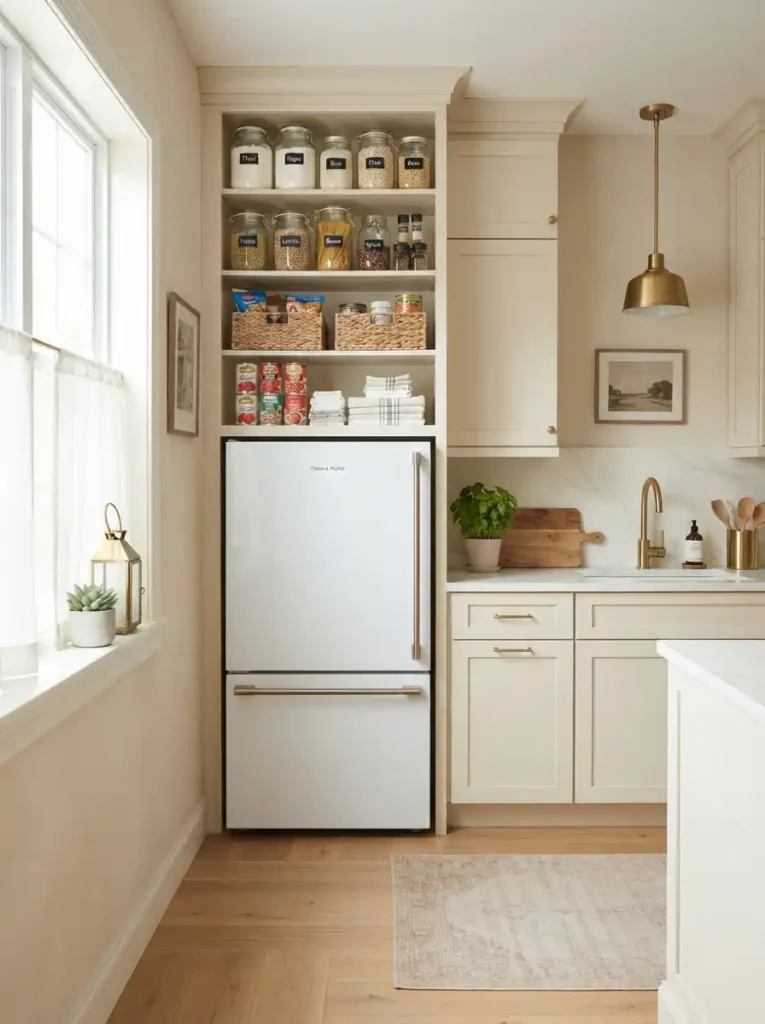
- Turns unused vertical space into dedicated pantry capacity.
- Shallow shelves keep ingredients visible instead of buried.
- Adjustable levels accommodate containers of different heights.
- A narrow profile prevents the refrigerator area from feeling bulky.
A narrow pantry shelf can make surprisingly good use of the vertical space surrounding a refrigerator. Instead of adding deep storage that becomes difficult to reach, use shallow shelves for small pantry staples, extra napkins, jars, or lightweight kitchen accessories. The reduced depth keeps everything visible and prevents items from disappearing behind one another. Adjustable shelves are especially useful because you can change the spacing as your needs evolve. For small kitchens, this kind of focused storage can free up crowded cabinets while keeping everyday organization simple and easy to understand.
Choose a shelf finish that coordinates with nearby cabinetry or countertops so it looks integrated into the room. Group similar items together, such as baking supplies on one level and entertaining accessories on another. I’ve noticed that shallow storage stays organized longer because you can immediately see what you own. Avoid overloading the shelves, particularly when they sit high above the floor. Use baskets for small loose items and labels where categories are not obvious. The finished setup gives the kitchen more usable storage while preserving a clean sightline around the refrigerator.
17. Appliance Garage
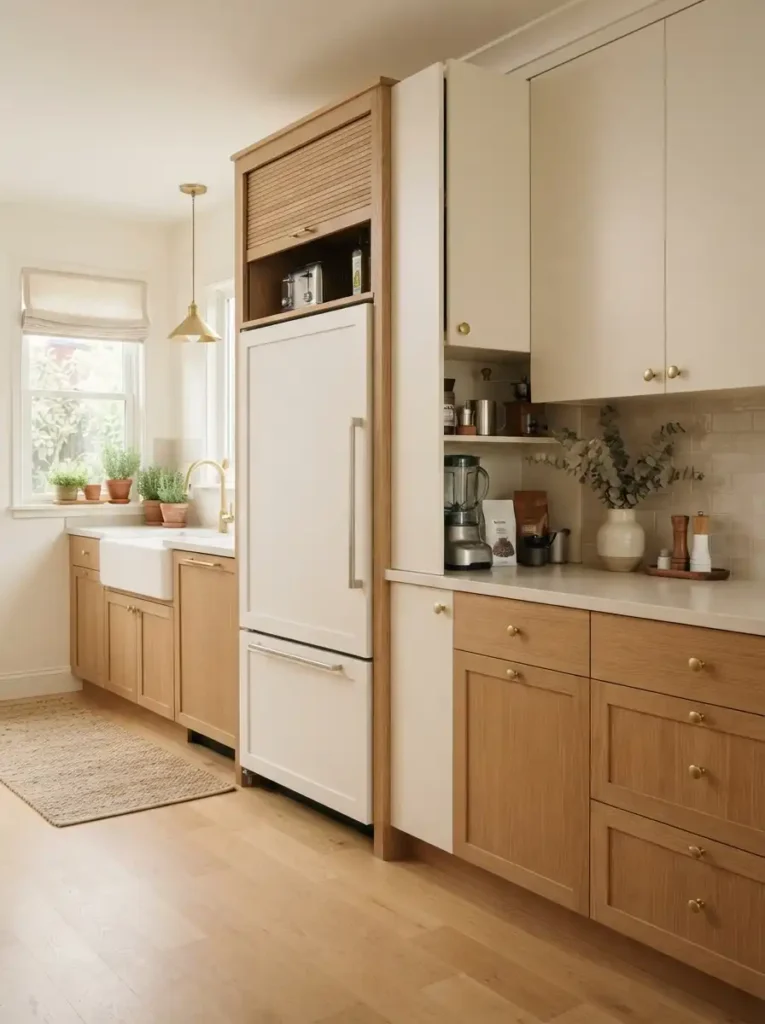
- Conceals small appliances that otherwise crowd the countertop.
- Keeps occasional-use equipment together in one location.
- Matching cabinetry creates a seamless custom appearance.
- Doors reduce visual clutter throughout the kitchen.
An appliance garage above the refrigerator can hide bulky equipment that rarely needs to stay on the counter. A compact cabinet with doors can hold a small blender, toaster, hand mixer, specialty coffee accessories, or other occasional-use appliances. This keeps countertops clear while giving those items a predictable home. The idea works especially well in kitchens where visual simplicity matters. Rather than allowing several appliances to become permanent countertop fixtures, you can close the doors and create a smooth, uninterrupted cabinet line.
Plan the interior carefully before installing the cabinet, because appliances need enough clearance for safe placement and easy removal. Add an adjustable shelf if the space allows, but avoid creating an overcrowded compartment. In my experience, this type of storage is most valuable when it holds appliances used weekly or less often, while daily equipment stays within easier reach. Match the cabinet doors to the surrounding kitchen for a built-in effect. Good ventilation, safe electrical planning, and sufficient lifting clearance are important considerations when designing any enclosed appliance storage area.
18. Corner Basket Stack
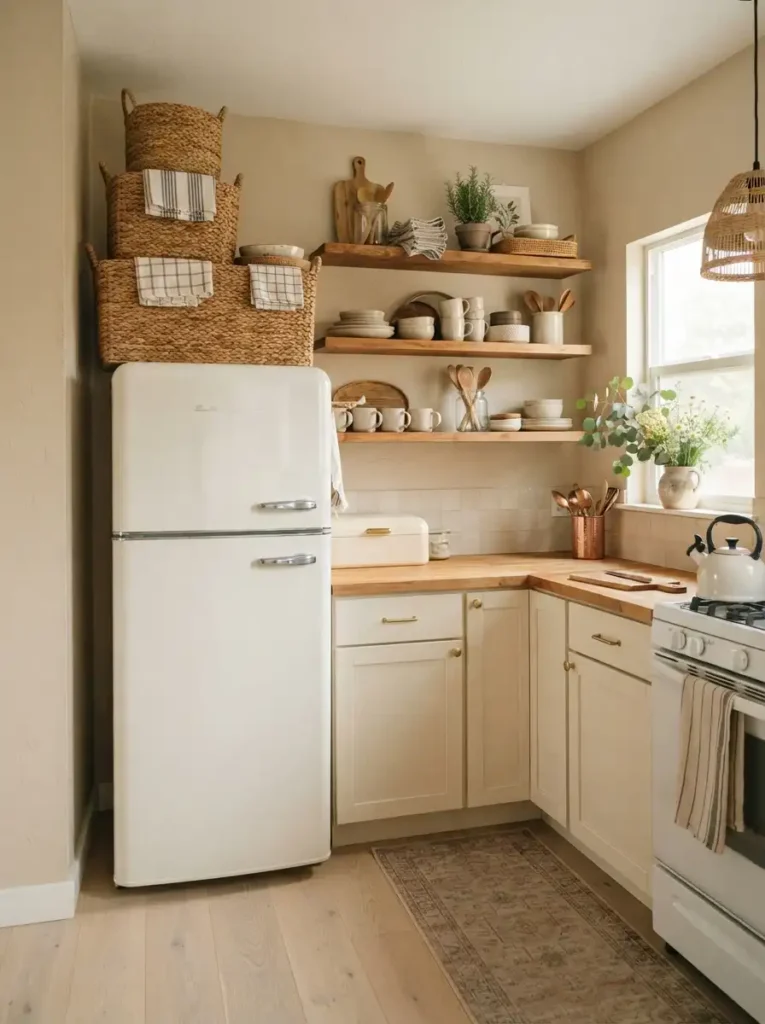
- Uses an overlooked corner above the appliance efficiently.
- Stacked baskets create clear storage levels.
- Natural textures soften a modern refrigerator wall.
- Handles make each basket easier to access.
A corner basket stack can make use of an awkward upper area that might otherwise remain empty. Choose two or three lightweight baskets that fit securely above or beside the refrigerator, then assign each basket a simple category. One might hold extra kitchen towels, another reusable shopping bags, and another seasonal table linens. The repeated shapes create visual order while the natural texture adds warmth. This setup is especially effective when you want storage that feels decorative rather than strictly utilitarian. Keep the basket arrangement compact so the refrigerator remains the visual anchor of the kitchen.
Look for baskets with sturdy handles because elevated storage should be easy to lift down safely. Natural seagrass, rattan, or woven cotton can complement farmhouse, cottage, Scandinavian, and relaxed modern interiors. I’ve seen this work particularly well when the surrounding kitchen already includes wood or woven accents. Keep contents lightweight and avoid placing fragile items where they could fall. If the baskets are visible from the dining area, use simple labels or consistent liners for a finished look. A small, coordinated stack can add storage capacity without requiring major construction or sacrificing the room’s open feeling.
19. Glass-Front Cabinet
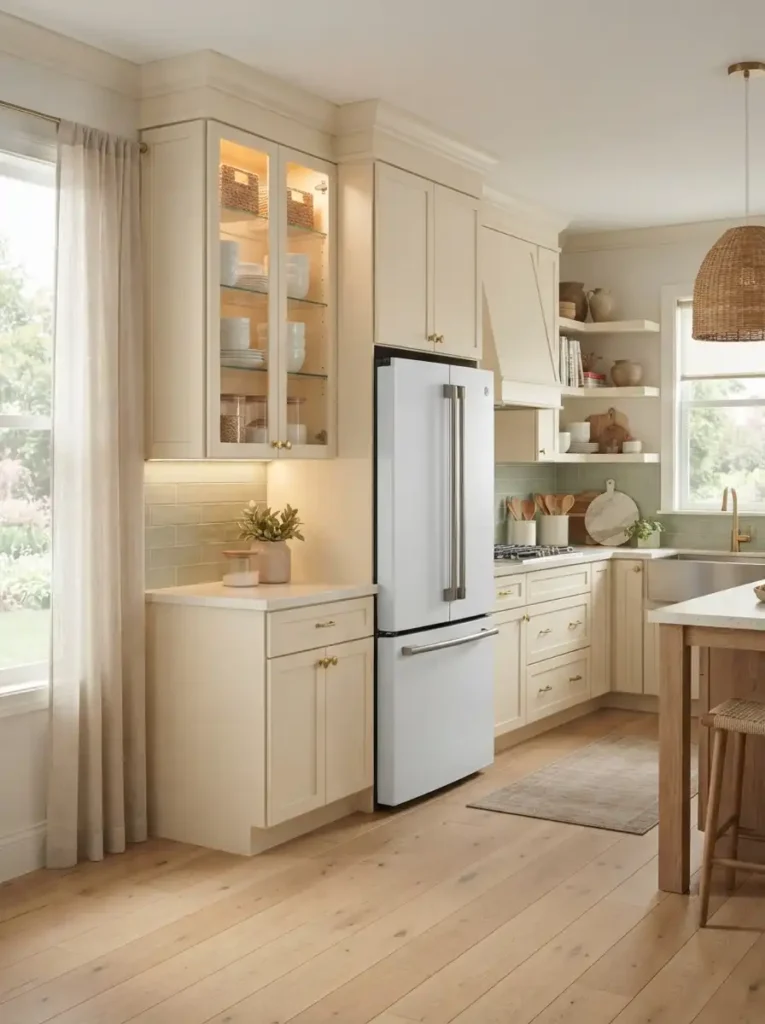
- Keeps stored items protected while adding visual interest.
- Glass doors make contents easier to locate quickly.
- Interior lighting can highlight attractive kitchen pieces.
- Coordinated dishware creates a polished, curated appearance.
A glass-front cabinet can turn the unused area above a refrigerator into both practical storage and a subtle display. Use it for attractive serving bowls, neatly arranged glassware, ceramic pieces, or coordinated pantry containers that deserve to stay visible. The glass protects everything from everyday kitchen dust while making it easier to see what is stored inside. Choose simple shelving and avoid overcrowding the cabinet. A restrained arrangement allows the pieces to become part of the kitchen design rather than creating another visually busy storage zone that needs constant attention.
For the most polished effect, group items by color, shape, or purpose. White ceramics, clear glass, and natural woven baskets create a calm palette that works in many kitchens. If the cabinet has interior lighting, use a soft warm glow rather than harsh overhead light to highlight the contents. In my experience, glass-front storage works best when you treat the interior almost like open shelving, keeping only the most attractive and useful pieces on display. Store heavier cookware elsewhere, and make sure the cabinet is properly anchored before placing anything inside.
20. Custom Overhead Cabinet
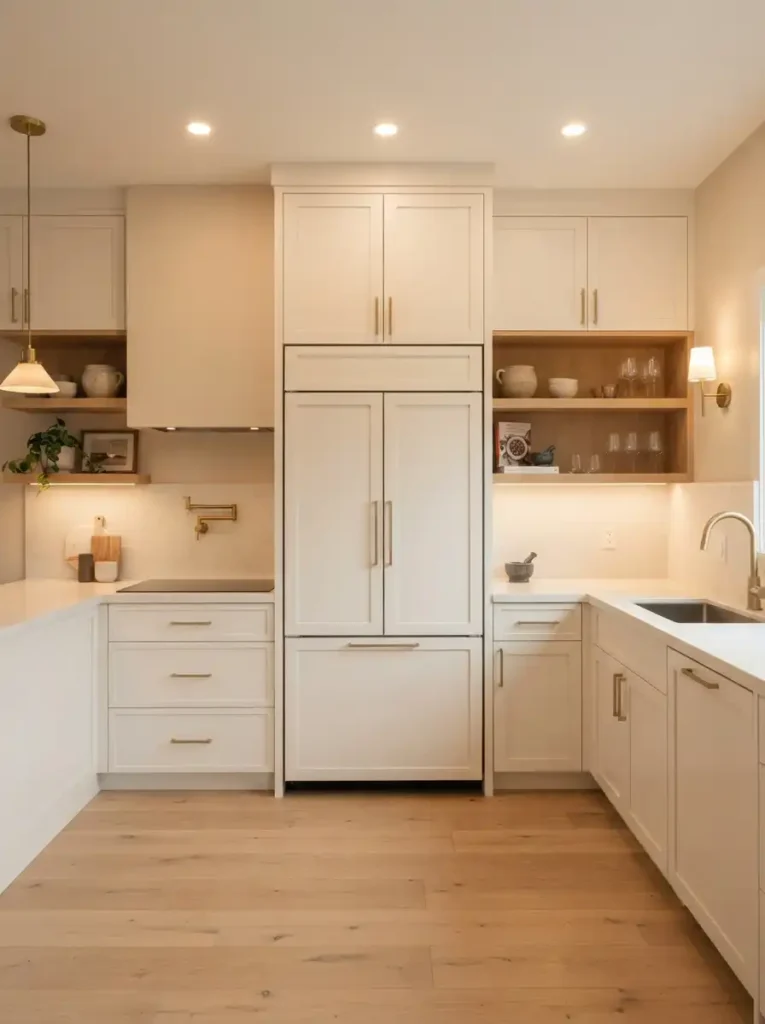
- Maximizes every inch of otherwise unused vertical space.
- Creates a seamless transition between refrigerator and cabinetry.
- Adjustable interiors support changing storage needs.
- Closed doors keep visual clutter completely concealed.
A custom overhead cabinet is one of the most effective ways to transform unused refrigerator space into purposeful storage. Designed to match the surrounding cabinetry, it can create a seamless built-in appearance while providing room for seasonal cookware, serving pieces, baking equipment, or other occasional-use items. This approach is especially valuable during a kitchen remodel because the cabinet can be sized precisely around the refrigerator. If you want a clean, uninterrupted look, closed doors keep everything hidden while maintaining the visual flow of the cabinetry.
Plan the cabinet interior around the things you actually need to store rather than simply maximizing capacity. Adjustable shelves allow the space to adapt when your storage needs change, while pull-down hardware can make higher compartments easier to access for some users. Keep heavy items at a safer, more accessible height whenever possible. I’ve noticed that custom storage feels most successful when it solves a specific problem instead of becoming a place to collect extras. With thoughtful proportions, matching finishes, and clear interior organization, this final setup turns an overlooked refrigerator area into valuable, long-term kitchen storage.
Conclusion
A small, overlooked space can make a surprisingly big difference in an organized kitchen. These Over The Refrigerator Storage Ideas show how baskets, shelves, cabinets, bins, and clever containers can turn wasted vertical space into useful storage. Choose an approach that fits your kitchen layout, style, and everyday needs rather than trying to maximize every inch. I’ve seen how small changes like these can make a busy kitchen feel noticeably calmer and easier to maintain. Save this post on Pinterest for your next organization project, try your favorite idea, and share it with someone who could use a little extra kitchen storage inspiration.