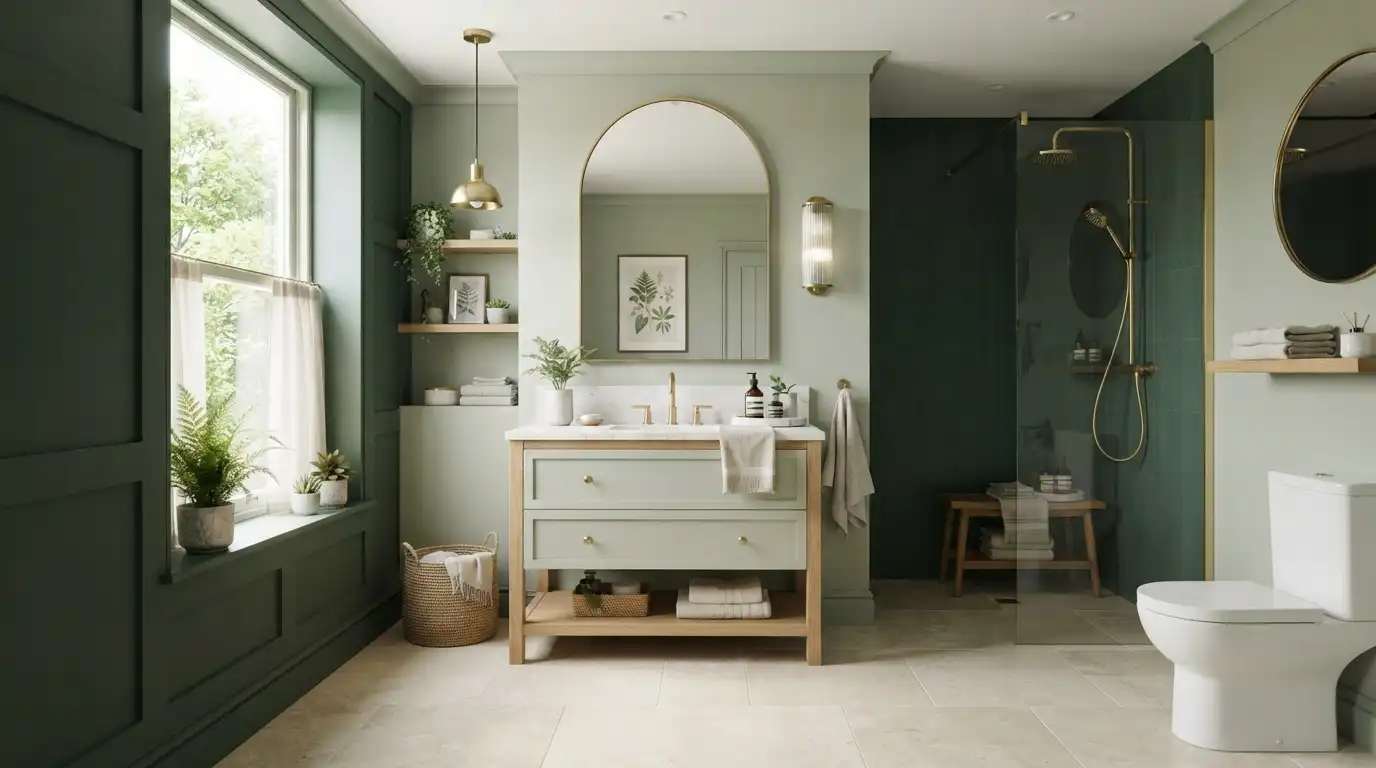
13 Amazing Green Bathroom Ideas for a Fresh Modern Retreat
Ready to give your bathroom a fresh look without starting from scratch?
Green Bathroom Ideas can turn an ordinary space into a calm, stylish retreat with just a few thoughtful changes.
From deep forest walls and soft sage cabinetry to botanical accents, green tile, and natural wood, this collection shows how versatile this color can be.
Whether your bathroom is tiny, spacious, modern, or more traditional, there’s an approach that can fit your space and budget.
You’ll also find practical ways to balance stronger greens with light surfaces, warm metals, and natural textures so the room feels inviting rather than overwhelming.
In my experience, even one carefully chosen green feature can completely change the mood of a bathroom.
Save your favorite ideas and use them as inspiration for your next refresh.
Also read: 20 Beautiful Baby Shower Theme Ideas for a Sweet Party
1. Deep Green Walls
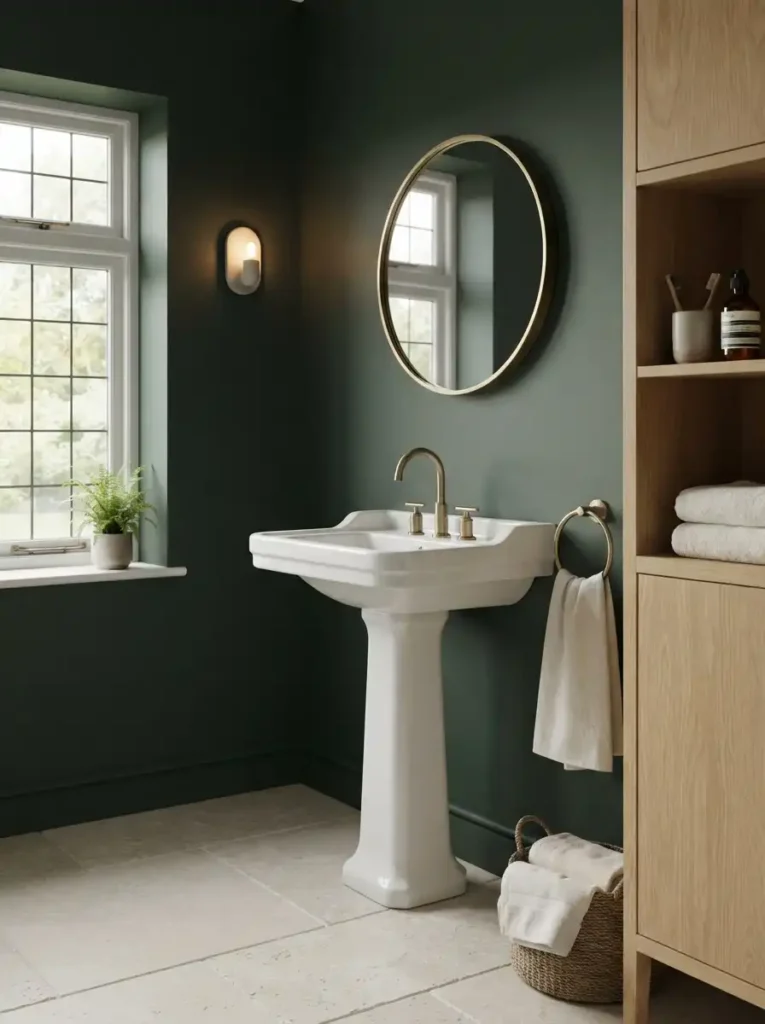
- Rich green walls create an instant focal point without requiring complicated decor.
- White fixtures keep the darker backdrop feeling fresh and balanced.
- Light stone and brass accents add contrast and warmth.
- Matte paint can be practical for disguising minor wall imperfections.
Fresh color can completely change how a bathroom feels, and deep green walls make that transformation especially striking. Choose a rich forest or bottle green for the walls, then balance it with crisp white fixtures, pale stone, and brushed brass details. The darker backdrop creates depth without making the room feel closed in when natural light is available. In my experience, matte green paint also hides minor wall imperfections better than very light shades. Keep the floor simple, add one framed mirror, and let the saturated wall color become the room’s main visual feature.
A green bathroom can feel polished rather than overly dramatic when the surrounding finishes stay quiet and intentional. Pair saturated walls with a white pedestal sink, streamlined toilet, and light oak storage to introduce warmth. Soft daylight from a window will reveal subtle green undertones, while warm bulbs keep the room welcoming after sunset. Add a small plant or woven basket for texture instead of filling every surface with accessories. This approach works particularly well in compact bathrooms because the strong wall color creates a defined focal point while the lighter fixtures preserve an airy, modern appearance.
2. Soft Sage Palette
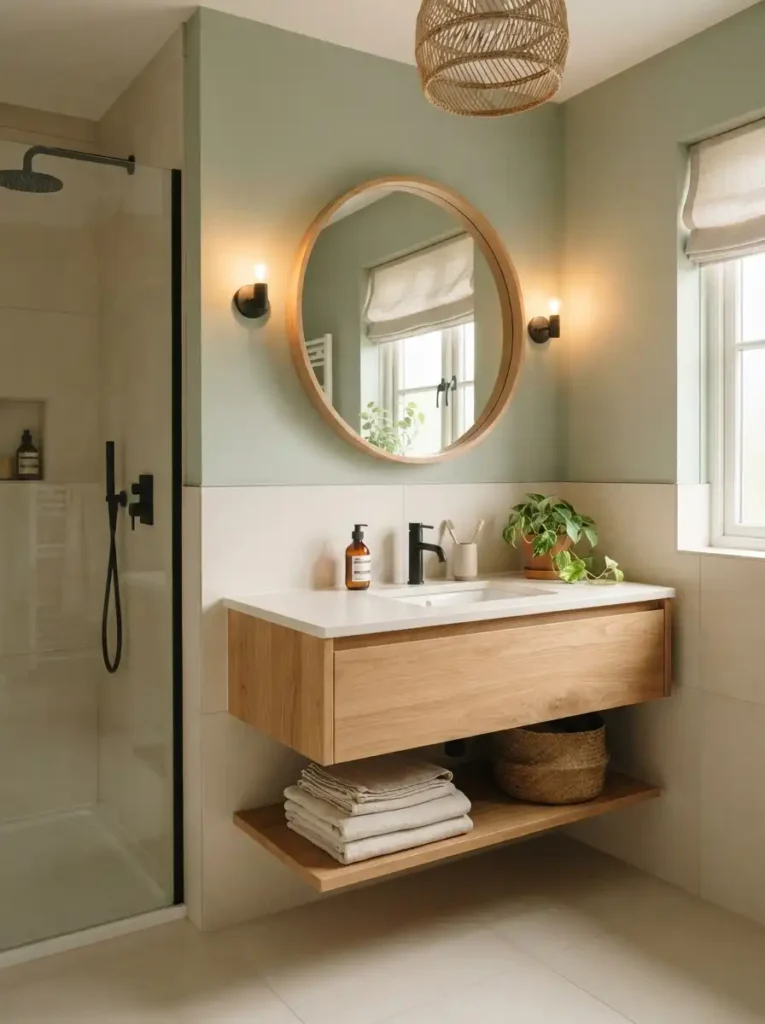
- Soft sage brings color into the room without feeling overwhelming.
- Creamy surfaces make the palette look warmer and more sophisticated.
- Natural wood adds depth and prevents pale green from feeling cold.
- Minimal black hardware gives the gentle scheme a crisp modern edge.
Soft sage can make a bathroom feel instantly calmer, especially when paired with creamy neutrals and natural wood. Paint the walls a muted sage, then bring in an oak vanity, ivory countertop, and simple white basin for a relaxed modern palette. The low-saturation green reflects daylight gently instead of creating a heavy contrast. I’ve noticed this combination is particularly forgiving in bathrooms with changing natural light because sage can shift beautifully from fresh in the morning to warmer in the evening. Finish with linen towels, a rounded mirror, and minimal black hardware for quiet definition.
The beauty of sage is its ability to add color without overwhelming the practical parts of the room. Use large-format cream tiles on the floor or shower walls to create a clean foundation, then repeat the green through a vanity, towels, or a small artwork. Keep the countertop visually uncluttered so the soft palette remains intentional. This setup is useful for anyone who wants a modern retreat that still feels comfortable and lived-in. A few leafy plants can reinforce the natural connection, while warm wood tones prevent the pale green from looking cold or overly clinical.
3. Emerald Vanity Focus
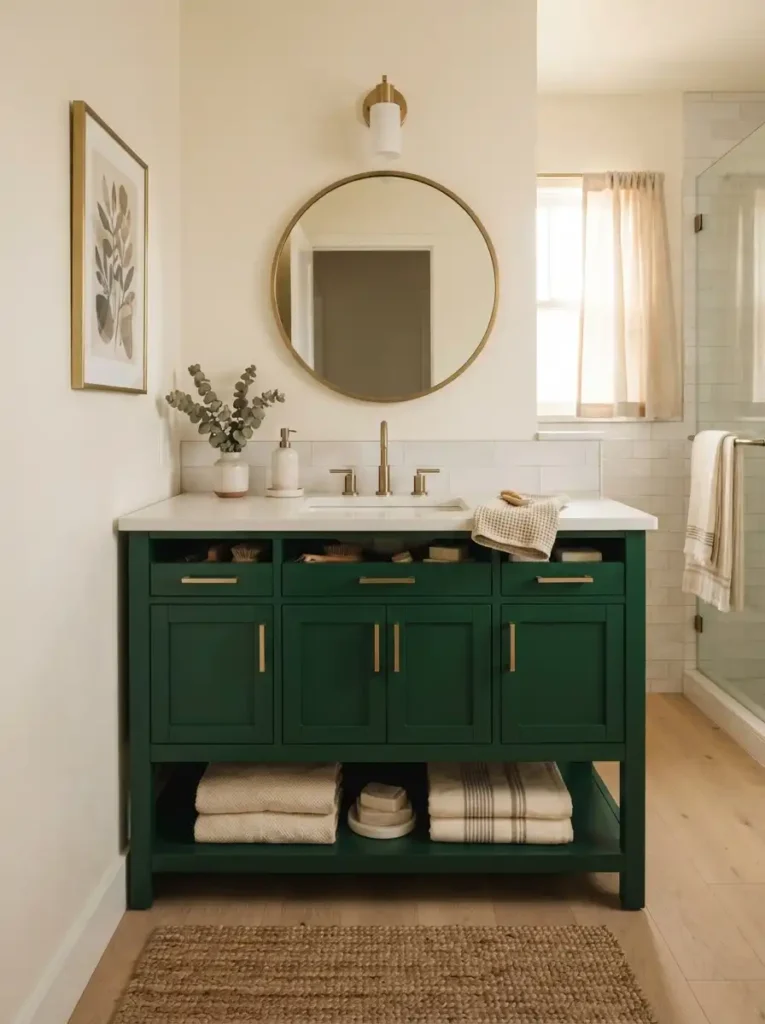
- An emerald vanity becomes a strong focal point while keeping the walls light.
- White quartz creates a clean contrast against saturated cabinetry.
- Brass pulls introduce a polished decorative detail.
- Built-in drawers make the stylish centerpiece practical for everyday storage.
For a more tailored look, combine emerald green cabinetry with crisp white surfaces and clean geometric lines. A deep green vanity instantly becomes the anchor, especially when topped with a white quartz counter and paired with an undermount sink. Brass pulls add a refined highlight without competing with the cabinet color. I’ve seen this work well in both small powder rooms and larger family bathrooms because the cabinetry delivers strong personality while keeping storage practical. Choose flat-front or lightly paneled doors for a modern finish, then repeat the green subtly in a small framed print or hand towel.
Green cabinetry offers a smart way to introduce color without committing every wall to a bold shade. Keep the walls white or warm ivory, use pale flooring, and let the vanity provide the strongest visual contrast. This makes the room easier to update later because towels, artwork, and accessories can change without replacing the main finishes. Add drawers for everyday toiletries and a wider lower cabinet for cleaning supplies or spare linens. The result feels organized as well as stylish, which is important in a bathroom where beautiful surfaces need to work alongside real daily routines.
4. Green Tile Shower
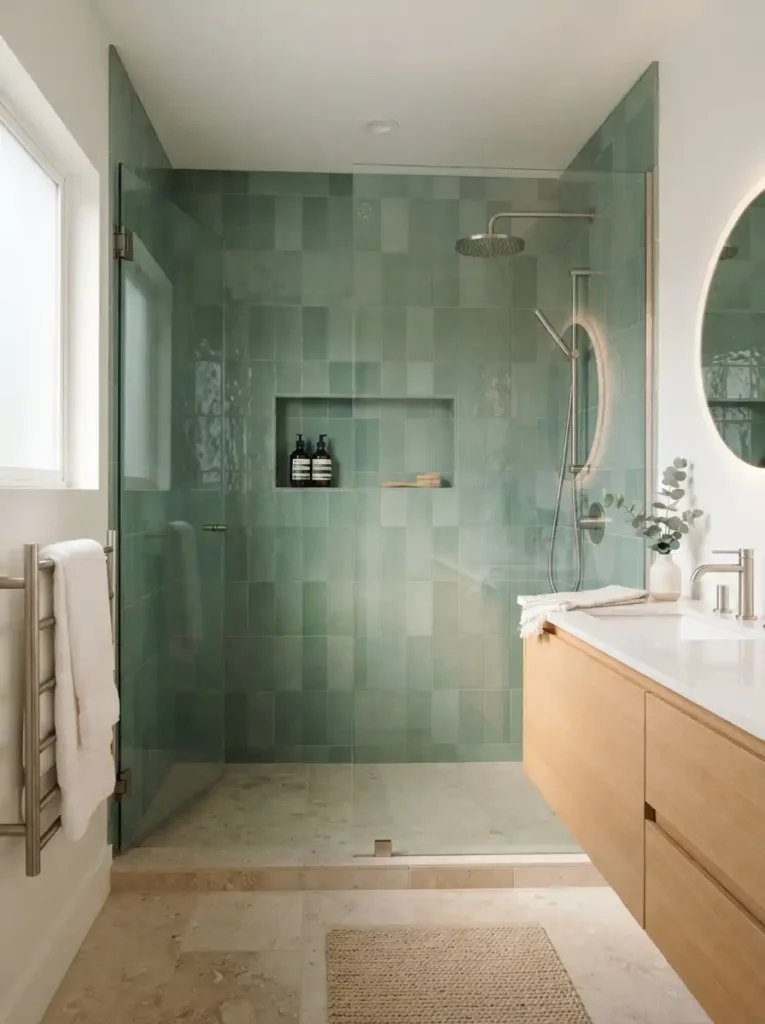
- Green shower tile adds color while keeping the rest of the room simple.
- Glossy surfaces reflect light and make the shower feel brighter.
- White grout can emphasize the tile pattern and create crisp definition.
- A recessed niche keeps bottles organized without adding visual clutter.
Turn the shower into the room’s standout feature with green wall tile arranged from floor to ceiling. A muted emerald, olive, or moss tone can add depth while keeping the surrounding walls neutral. Choose glossy tile if the bathroom receives limited daylight because its reflective surface helps bounce light around the enclosure. In my experience, extending the tile vertically also makes a shower feel taller and more finished. Add a recessed niche with matching tile for toiletries, then use simple chrome or brushed nickel fixtures so the colorful surface remains the main attraction.
A tiled shower can also make everyday routines feel more organized because the design naturally creates dedicated zones. Pair green ceramic or porcelain tile with a pale stone floor and frameless glass enclosure to maintain a spacious appearance. Keep grout lines consistent, especially when using smaller tiles, because uneven spacing can make an otherwise polished installation look busy. For a modern finish, choose a simple rainfall showerhead and streamlined controls. This approach works beautifully in both compact bathrooms and larger layouts, giving the bathing area a defined identity without requiring bold colors throughout the entire room.
5. Botanical Green Accents
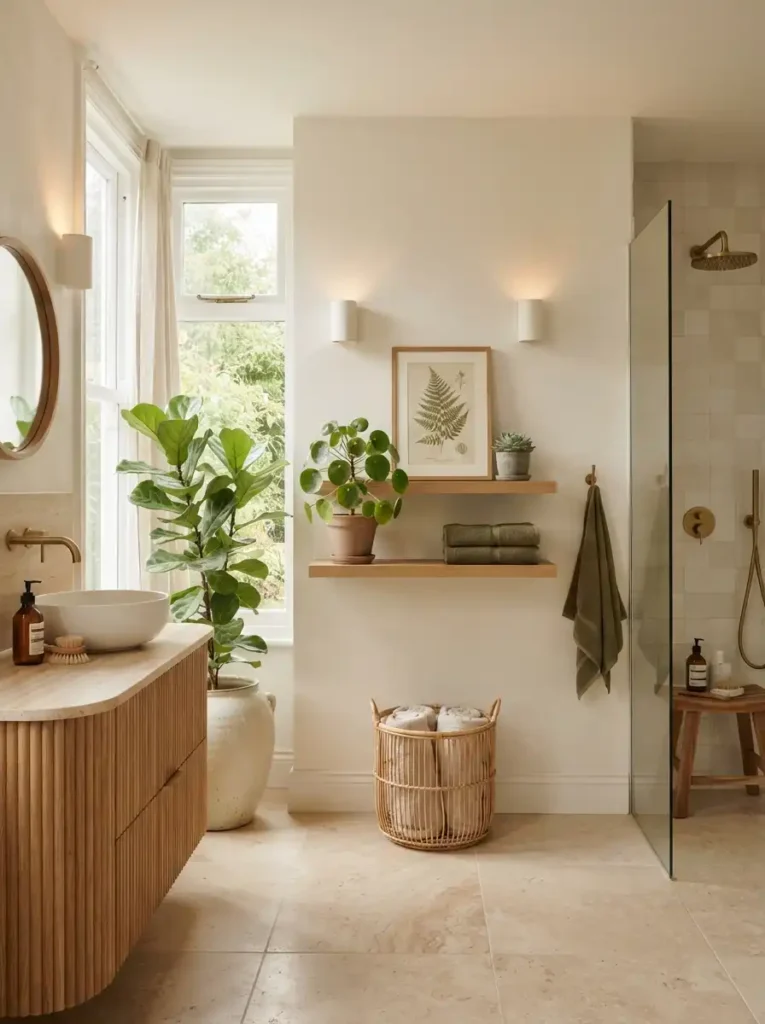
- Botanical details make a neutral bathroom feel more connected to nature.
- Small plants add texture without taking up valuable floor space.
- Green artwork can repeat the color palette in an effortless way.
- Natural baskets and wood accents soften hard bathroom surfaces.
Bring a fresh, organic feeling into the bathroom by combining neutral finishes with botanical green accents. Start with warm white walls and pale flooring, then add leafy plants, framed botanical prints, and green-toned towels. Choose plants that tolerate the bathroom’s humidity and available light rather than selecting them only for appearance. A small trailing plant on an open shelf can soften hard tile and glass, while a larger leafy plant beside the vanity adds height. This layered approach keeps the room visually interesting without making every surface green, creating a balanced retreat that feels naturally collected.
The most effective botanical styling usually comes from repeating small details rather than buying a matching set of accessories. Try an olive-green hand towel, eucalyptus-inspired artwork, woven storage baskets, and a simple ceramic planter. I’ve noticed that natural textures help bathrooms feel less sterile, particularly when the room contains lots of glossy tile or metal. Keep the palette restrained so the greenery remains noticeable without competing with architectural features. If space is limited, use wall-mounted shelves or a narrow ledge for plants. The result feels fresh, personal, and easy to refresh as seasons or decorating preferences change.
6. Olive Green Cabinetry
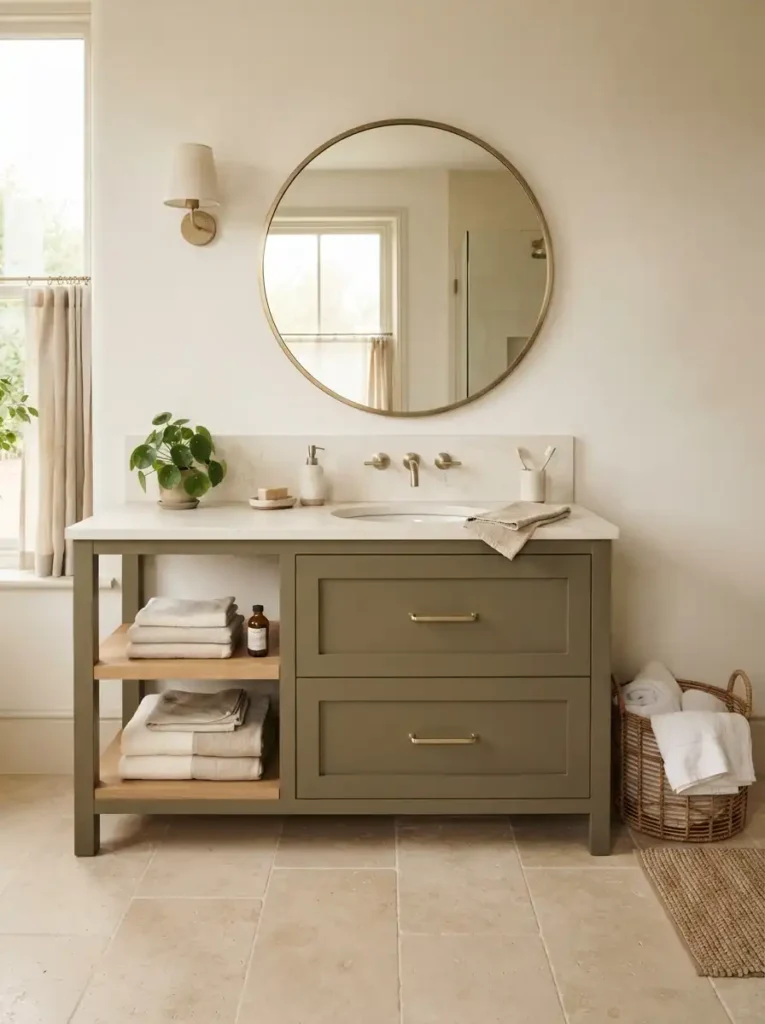
- Olive cabinetry adds warmth without the intensity of darker green finishes.
- Wood accents complement the earthy undertones beautifully.
- Cream countertops keep the overall palette light and welcoming.
- Simple hardware gives the vanity a contemporary, uncluttered appearance.
Olive green cabinetry brings an earthy character that feels both modern and comfortable. Choose a muted olive finish for the vanity, then pair it with a creamy countertop and warm white walls to keep the bathroom bright. Natural oak shelves or a wooden stool can reinforce the earthy palette without making the room feel rustic. For hardware, brushed brass creates warmth, while matte black offers sharper contrast. This is one of the most versatile green bathroom ideas for homeowners who want noticeable color but prefer something softer than emerald. The result feels grounded, sophisticated, and easy to accessorize.
Olive works especially well when the bathroom already contains natural materials such as stone, wood, linen, or woven fibers. Keep the flooring light, then introduce the cabinet color as the strongest saturated element in the space. A round mirror can soften the straight cabinet lines, while integrated drawers provide convenient storage for daily essentials. That balance between practical organization and decorative color makes the design useful beyond photography. If the room feels visually flat, add a small plant, textured towel, or warm wood accessory rather than introducing another strong color. This keeps the palette cohesive and restful.
7. Forest Green Wainscoting
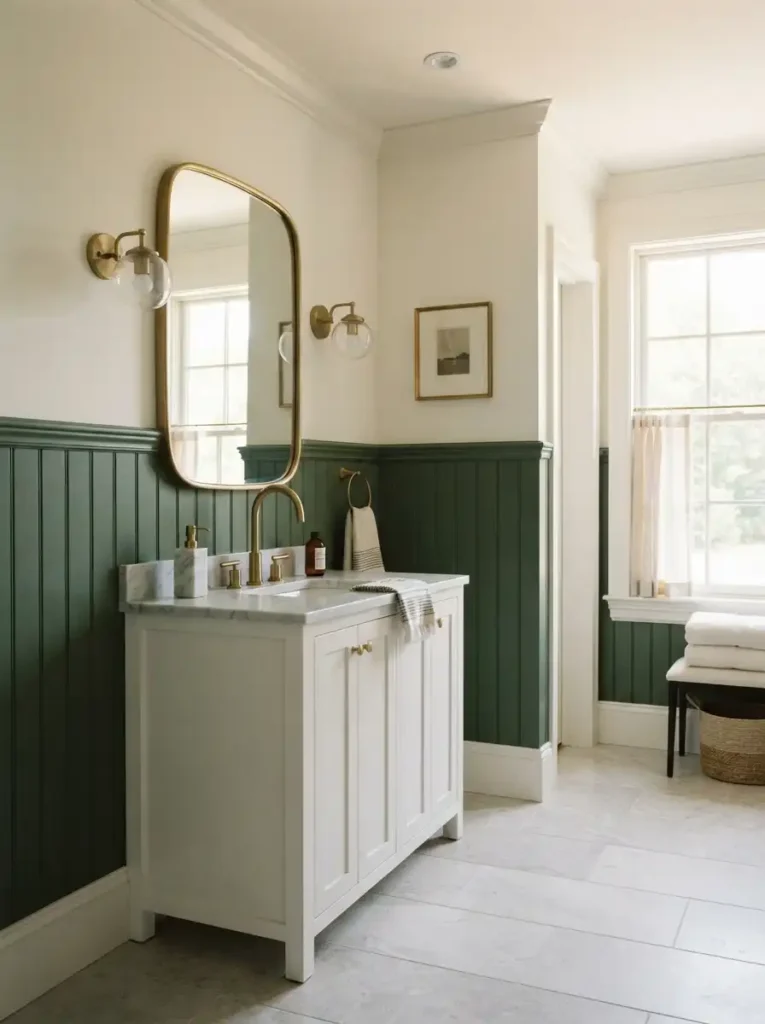
- Forest green wainscoting adds architectural character without covering every wall.
- A lighter upper wall keeps the room feeling open and bright.
- Classic trim details make the bathroom look more finished.
- Brass fixtures add warmth against the deeper green lower section.
Give the bathroom architectural depth with forest green wainscoting covering the lower portion of the walls. Keep the upper walls warm white or soft cream so the darker color feels balanced rather than heavy. This treatment works especially well in bathrooms with traditional trim, tall ceilings, or older architectural details that deserve emphasis. Use semi-gloss or washable paint below the chair rail for easier maintenance in a humid environment. Pair the green panels with a simple white vanity, brass faucet, and rounded mirror to create a polished combination that feels classic while still looking fresh.
Wainscoting is also a practical way to introduce a strong color without committing to a full painted wall. The horizontal division gives the room a clear visual structure and can make a compact bathroom feel more intentionally designed. Choose simple rectangular panels for a contemporary look or raised molding for a more traditional character. Keep the flooring light and avoid excessive patterns so the green remains the main feature. In my experience, repeating the same green through a small towel or artwork helps connect the lower wall treatment to the rest of the room without making the palette feel overly coordinated.
8. Green Marble Accents
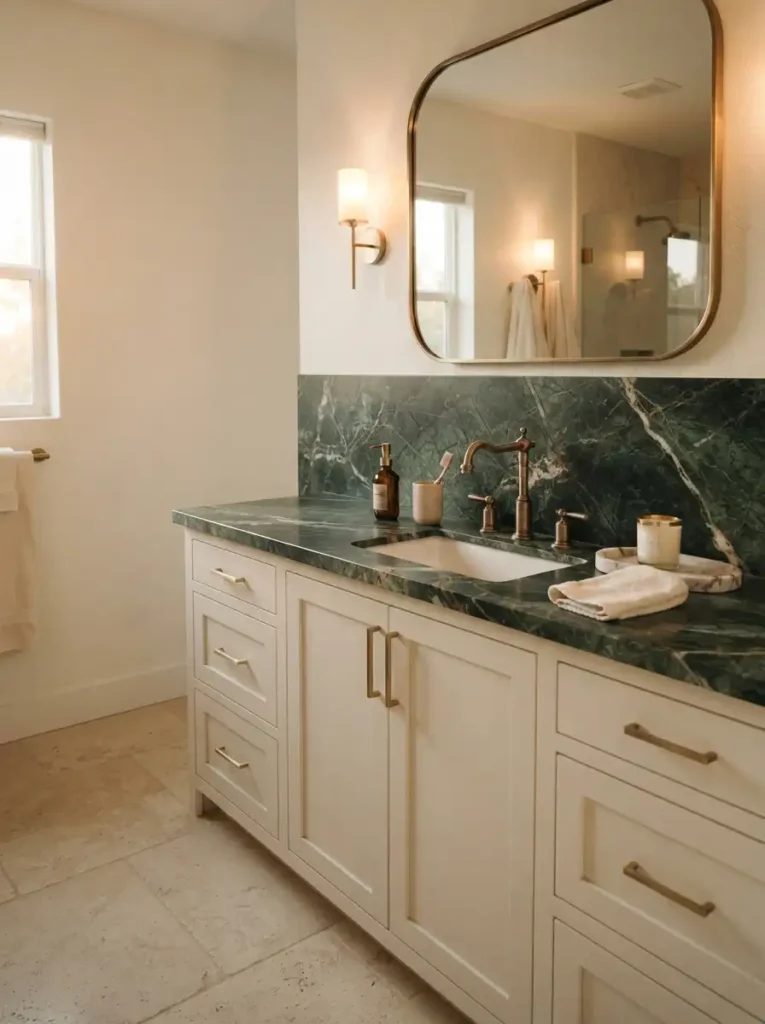
- Green marble introduces natural movement and luxurious visual texture.
- A marble backsplash can become a focal point without overwhelming the room.
- Warm metal fixtures complement the stone’s organic veining.
- Simple cabinetry lets the material remain the star.
Make a sophisticated statement with green marble used selectively around the vanity or shower area. Deep green stone with pale veining creates natural movement that instantly adds visual richness, while keeping the surrounding finishes simple prevents the bathroom from becoming visually crowded. Use the marble as a backsplash, countertop, or narrow shower feature rather than covering every surface. Pair it with warm white cabinetry and brushed brass fixtures for a refined contrast. The varied veining means every slab looks different, giving the space a distinctive character that feels more considered than a perfectly uniform printed pattern.
Green marble works particularly well when the rest of the room provides a quiet backdrop. Choose large-format pale flooring, streamlined cabinetry, and minimal accessories so the stone remains visually dominant. If authentic marble is outside your budget, high-quality porcelain with a convincing green stone pattern can provide a similar appearance with different maintenance requirements. Always check the material’s suitability for wet areas before installation. A rounded mirror can soften the stronger stone geometry, while warm lighting reveals subtle veining after dark. The finished bathroom feels elevated without relying on excessive decoration or unnecessary visual clutter.
9. Two-Tone Green Tiles
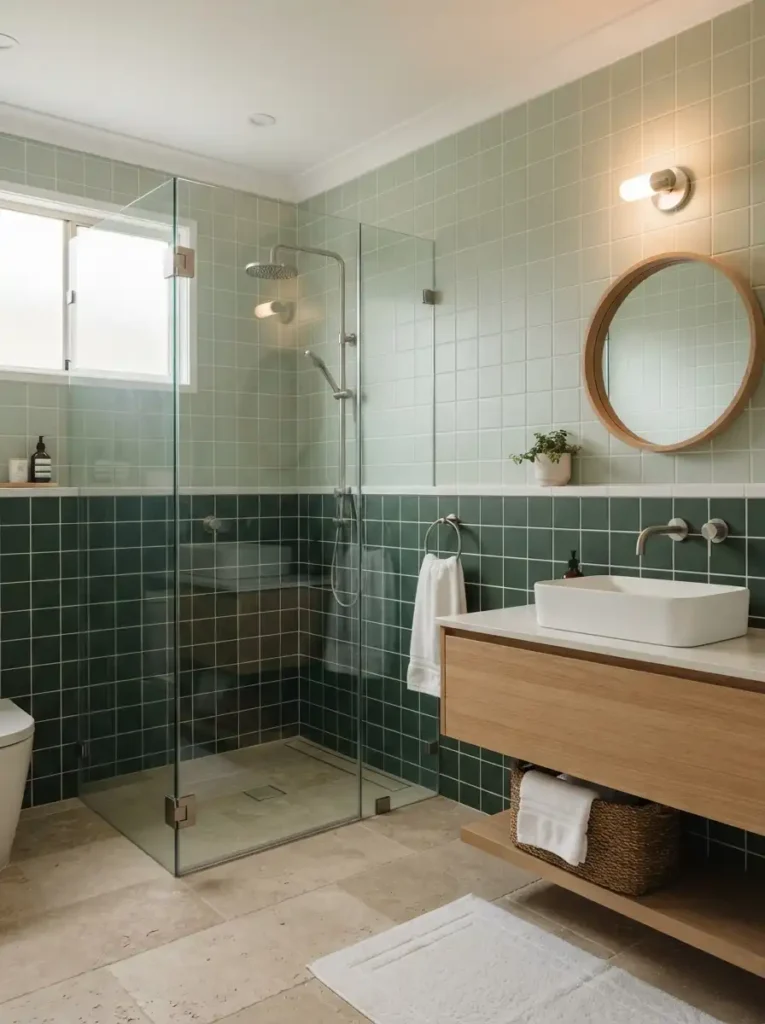
- Combining two green shades creates depth without adding busy patterns.
- Darker lower tiles visually ground the room.
- Lighter upper tiles help maintain brightness.
- Consistent shapes keep the layered palette looking intentional and modern.
Create a dimensional wall treatment by pairing two complementary green tile shades. Use a deeper green on the lower section and a softer sage or eucalyptus tone above it to establish contrast without introducing unrelated colors. Keeping both tiles within the same color family makes the combination feel intentional rather than busy. A simple rectangular or square tile shape works especially well because the color contrast provides enough visual interest. Add white grout, light flooring, and streamlined fixtures to keep the overall bathroom feeling crisp, balanced, and easy to maintain.
Two-tone tiling can also help define different zones within the room. For example, a darker green can frame the shower while a lighter shade continues around the vanity, creating subtle separation without physical partitions. Keep the tile sizes similar if you want a calm appearance, or use a slightly smaller format in one zone for gentle variation. I’ve noticed that this approach is especially effective in bathrooms where plain white walls feel too ordinary but a single saturated color would feel excessive. The layered greens add personality while preserving a cohesive, contemporary atmosphere.
10. Moss Green Shower
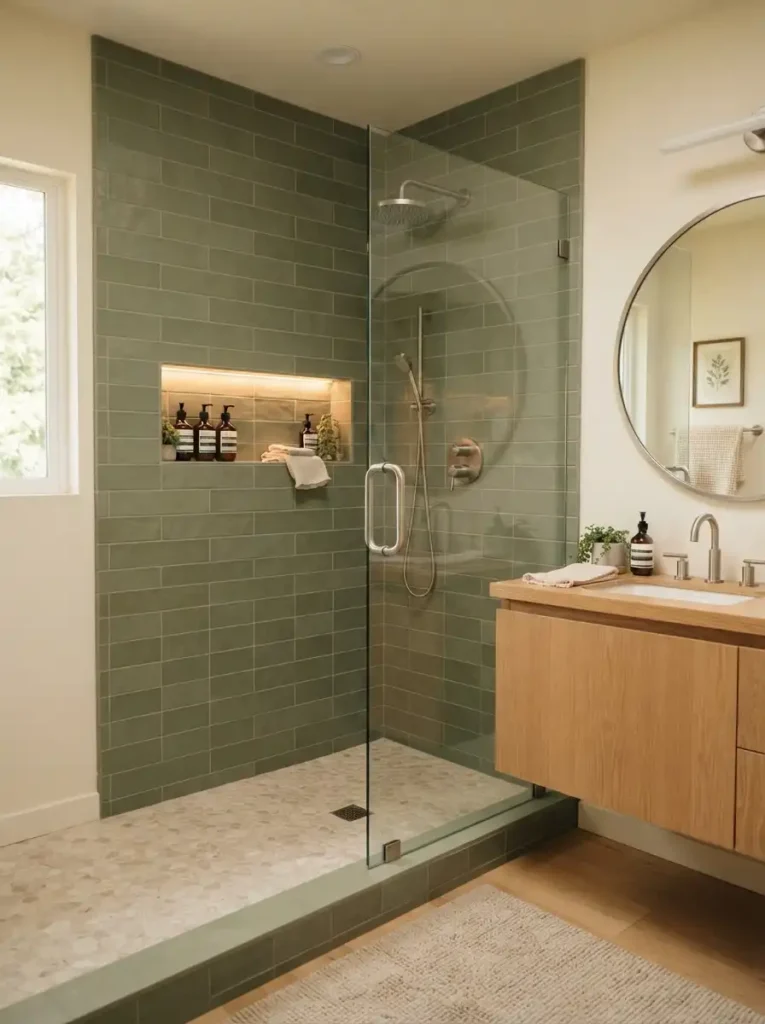
- Moss green creates a softer alternative to brighter saturated shades.
- Matte tile gives the shower a calm, earthy appearance.
- Pale flooring keeps the darker green from feeling heavy.
- A built-in niche adds useful storage without disrupting the clean design.
Bring an earthy sense of calm into the shower with moss green tile in a soft matte finish. The muted shade feels grounded without becoming as intense as emerald or forest green, making it easy to pair with warm neutrals. Use the tile across the shower walls, then contrast it with a pale stone floor and clear glass enclosure. A recessed niche can hold shampoo and soap while keeping the walls visually clean. Add brushed nickel or aged brass fixtures depending on whether you want a cooler contemporary finish or a warmer, more organic look.
Moss green is particularly useful when you want a bathroom to feel connected to nature without relying heavily on plants or wood. Its subtle undertones work beautifully with cream, beige, limestone, and light oak, creating a palette that feels comfortable rather than overly styled. Keep the shower accessories simple so the tile texture remains visible. If the room has limited natural light, use layered warm-white lighting around the vanity and ceiling rather than relying on one bright fixture. This makes the green surface easier to appreciate while keeping the entire bathroom functional and welcoming.
11. Mint Green Tiles
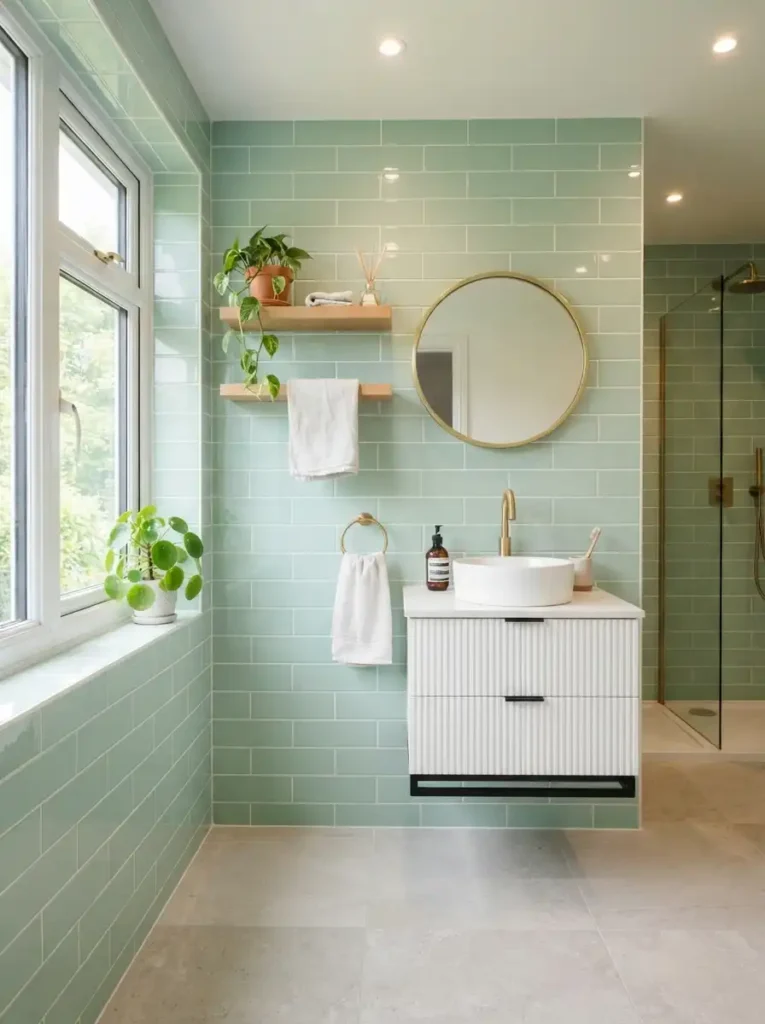
- Mint green tiles brighten the bathroom with a crisp, airy appearance.
- White fixtures reinforce the clean color combination.
- Pale wood adds warmth to prevent the palette feeling too cool.
- Glossy tile surfaces help reflect available daylight around the room.
Freshen the bathroom with mint green tiles that bring a light, cheerful quality to the walls. This pale shade works especially well in smaller bathrooms because it introduces color without visually weighing down the space. Pair glossy mint tiles with white grout, a white vanity, and pale flooring for a clean foundation. A light oak stool or floating shelf can add warmth and keep the room from feeling overly cool. Choose simple fixtures and limited accessories so the tile remains the main decorative element while the overall design stays contemporary.
Mint green can transform a bathroom that feels dark or dated into something noticeably brighter. Use it behind the vanity, throughout the shower, or as a partial backsplash rather than covering every available surface. I’ve noticed that glossy pale tiles are especially helpful in rooms with small windows because they catch daylight and distribute subtle reflections across nearby surfaces. Keep artificial lighting warm but not yellow, and choose white or cream towels to maintain the airy effect. A small plant can add a natural contrast, while brushed brass hardware gives the pale palette a refined finishing touch.
12. Green and Wood
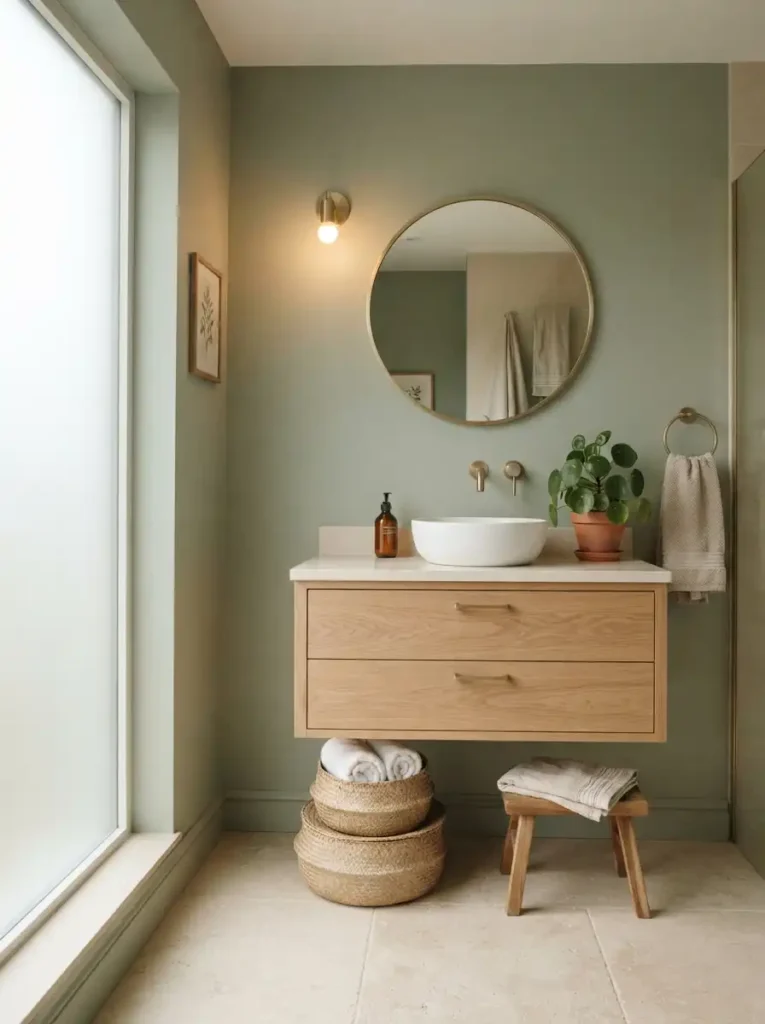
- Green and natural wood create a warm, nature-inspired bathroom palette.
- Oak cabinetry softens the stronger color of painted or tiled walls.
- Stone flooring adds a grounded material contrast.
- Woven accessories bring subtle texture without overwhelming the room.
Pairing green with natural wood creates one of the easiest ways to make a bathroom feel warm and inviting. Choose muted green walls or cabinetry, then introduce a light oak vanity with visible grain for contrast. The organic texture of wood softens the painted color and prevents the room from looking overly sleek or cold. Add pale stone flooring, a simple round mirror, and woven storage to complete the natural palette. This combination works across modern, Scandinavian, organic, and transitional styles because both colors and materials feel familiar, balanced, and easy to live with.
The key is to let each material have enough visual space to stand out. If the walls are a deeper green, choose lighter wood and cream-colored surfaces to maintain brightness. If the green is pale, slightly richer walnut or medium oak can create more definition. Keep metal finishes consistent throughout the room so the wood and green remain the primary visual story. In my experience, this pairing also ages gracefully because natural wood and muted green rarely feel tied to one short-lived trend. Add practical closed storage wherever possible to preserve the calm, uncluttered appearance.
13. Green Terrazzo Floor
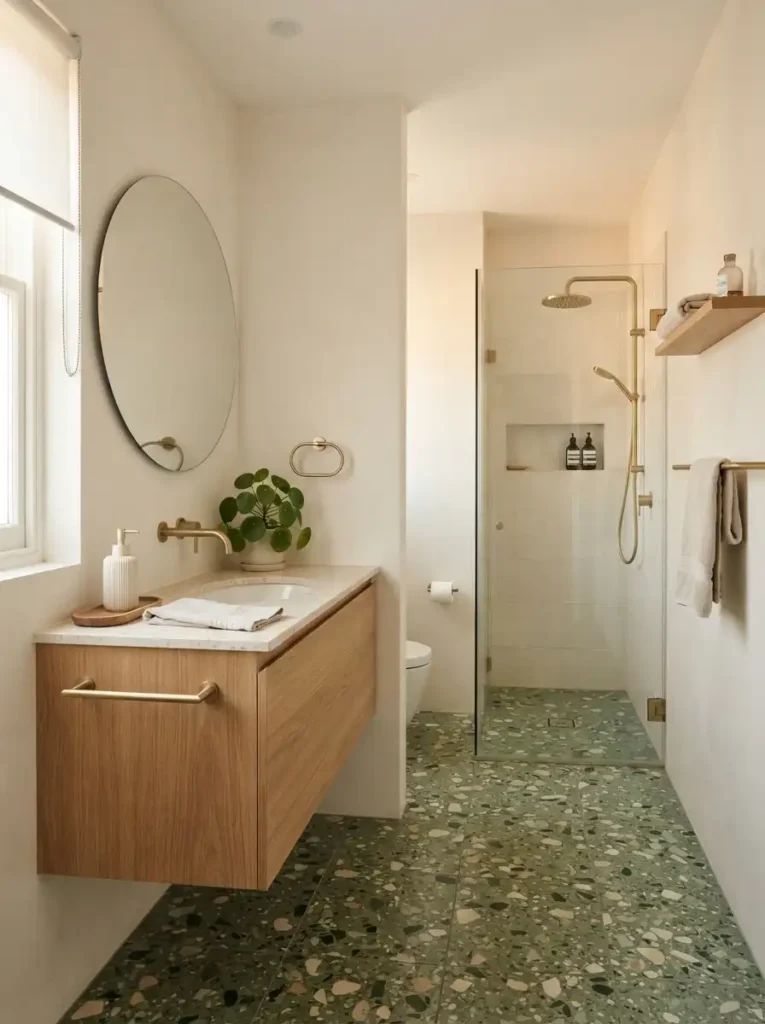
- Green terrazzo adds personality underfoot without overwhelming the walls.
- Speckled chips introduce subtle color variation and texture.
- Neutral walls keep the patterned flooring visually balanced.
- A simple vanity prevents the floor from competing with other focal points.
Give the bathroom a playful foundation with green terrazzo flooring that combines a soft base with colorful stone chips. This surface can introduce several shades of green while still connecting naturally with cream, white, beige, or gray finishes. Keep the walls relatively simple so the floor becomes the visual anchor. A streamlined vanity and plain shower surround allow the terrazzo pattern to stand out without creating competition. For a cohesive look, repeat one subtle shade from the floor in towels, artwork, or cabinetry rather than matching every accessory exactly.
Terrazzo is especially useful when you want visual interest but prefer not to rely on bold wall patterns. Its scattered chips create movement across the floor while disguising small marks that can appear with everyday use. Choose a slip-resistant finish appropriate for bathroom flooring and confirm installation requirements before committing to a specific product. I’ve noticed that a patterned floor often makes a small bathroom feel more intentionally designed because it adds detail at eye level and below. Keep the remaining surfaces quiet, and let the floor provide the personality.
14. Green Subway Tile
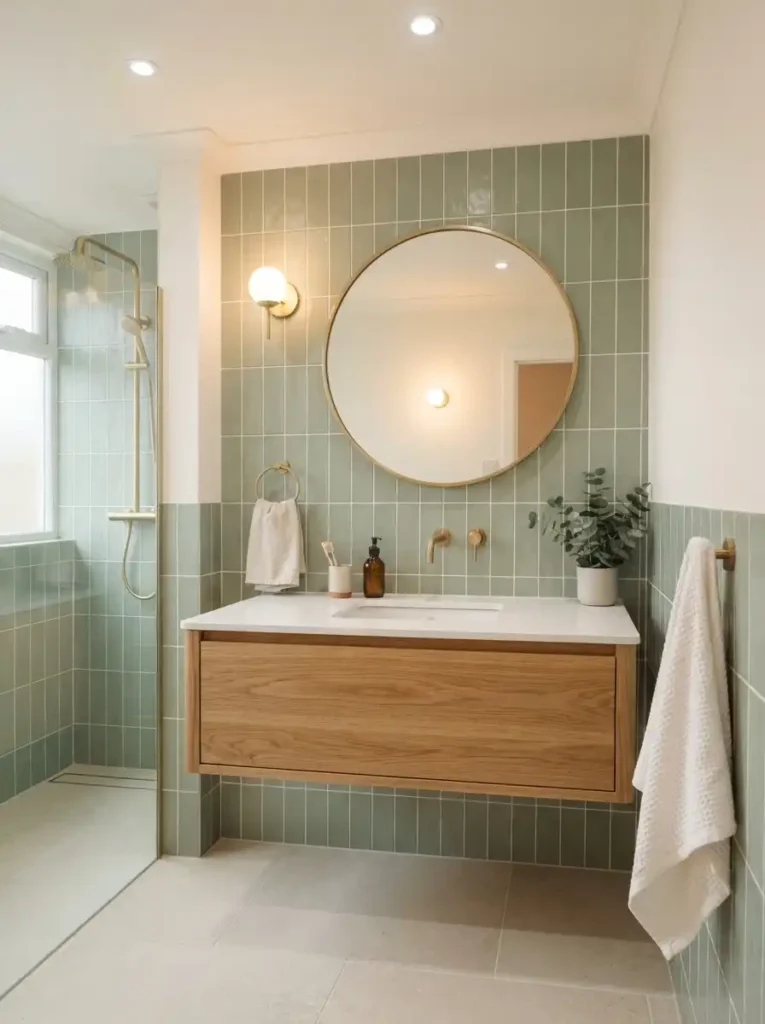
- Classic subway tile gains a modern character when finished in green.
- Vertical placement can visually emphasize ceiling height.
- White grout creates clean definition between individual tiles.
- Simple fixtures prevent the traditional shape from feeling dated.
Give a familiar bathroom material a fresh update with green subway tile arranged in a clean, contemporary pattern. A muted sage, olive, or deep green finish can completely change the character of this classic tile shape. Install it horizontally for a traditional feel or vertically when you want to draw the eye upward and emphasize ceiling height. Pair the tile with warm white walls, pale flooring, and a simple vanity to keep the room balanced. Glossy surfaces reflect light, while matte finishes create a softer, more understated appearance that suits modern interiors.
Subway tile is also practical because its straightforward shape works across many bathroom layouts and decorating styles. Use consistent grout lines for a polished appearance, and consider contrasting white grout when you want each tile to stand out more clearly. If the bathroom is narrow, vertical installation can create a subtle sense of height without changing the architecture. Keep accessories minimal and repeat the green only through a few carefully chosen details. That restraint lets the tile remain the main feature while the rest of the room feels clean, functional, and visually organized.
15. Green Accent Wall
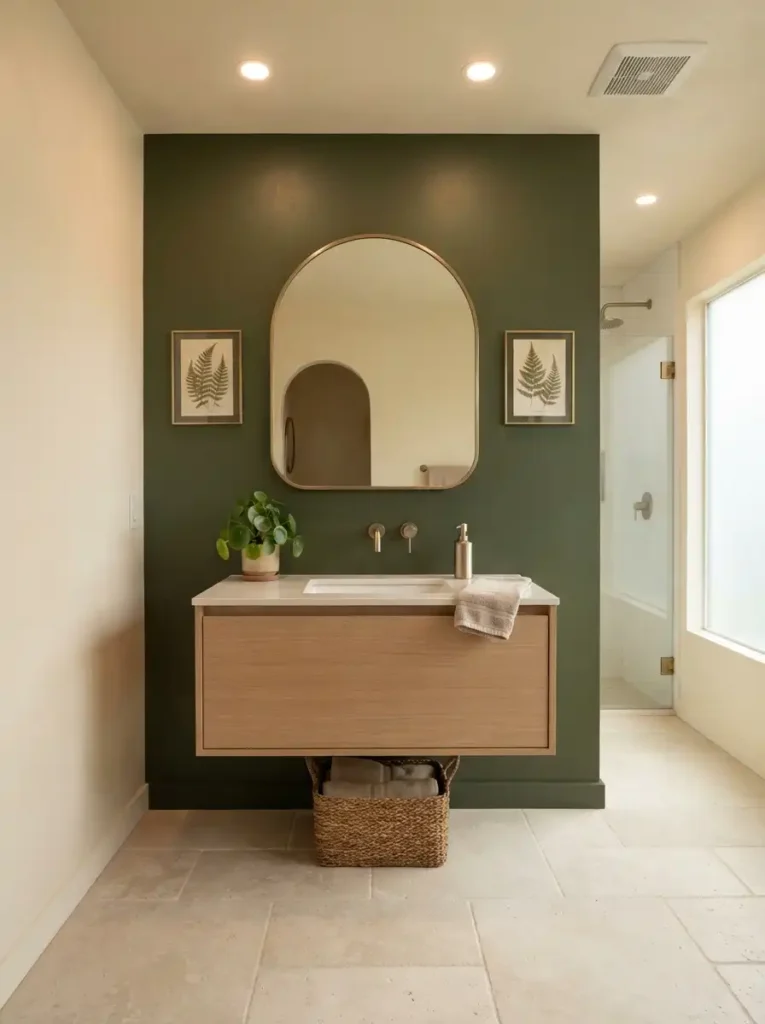
- A single green wall creates a strong focal point with minimal commitment.
- Neutral surrounding surfaces keep the room bright and versatile.
- Green artwork and towels can subtly reinforce the accent color.
- This approach is easy to refresh if decorating preferences change.
Create a focused burst of color with one green accent wall behind the vanity or bathtub. This approach is ideal when you love saturated shades but do not want them throughout the entire bathroom. Choose a wall that naturally attracts attention, then keep the remaining surfaces warm white, cream, or pale stone. A deep olive or forest green works beautifully behind a light vanity, while softer sage creates a gentler backdrop. Add one framed print, a rounded mirror, or a small plant to complete the focal area without covering the wall with unnecessary decoration.
An accent wall gives you flexibility because the strongest color stays concentrated in one defined area. This can be especially useful in rental-friendly decorating when painting the entire room feels like too much commitment, provided your lease allows it. Use removable accessories such as towels, artwork, and countertop storage to echo the green elsewhere. In my experience, this restrained approach often feels more sophisticated than using several competing green shades. Keep the floor and major fixtures neutral, and the bathroom will remain easy to update while still having a memorable visual identity.
Conclusion
A beautiful bathroom doesn’t always require a major renovation. The right shade of green, thoughtful materials, and a few well-chosen details can create a space that feels fresher, warmer, and more intentional. These Green Bathroom Ideas offer plenty of ways to experiment, from a bold accent wall to subtle sage cabinetry or natural botanical touches. I’ve seen how small design changes can completely transform an everyday room. Save this post on Pinterest so you can revisit your favorite looks when planning your makeover, and share it with someone searching for fresh bathroom inspiration. Then choose one idea and start creating your retreat.