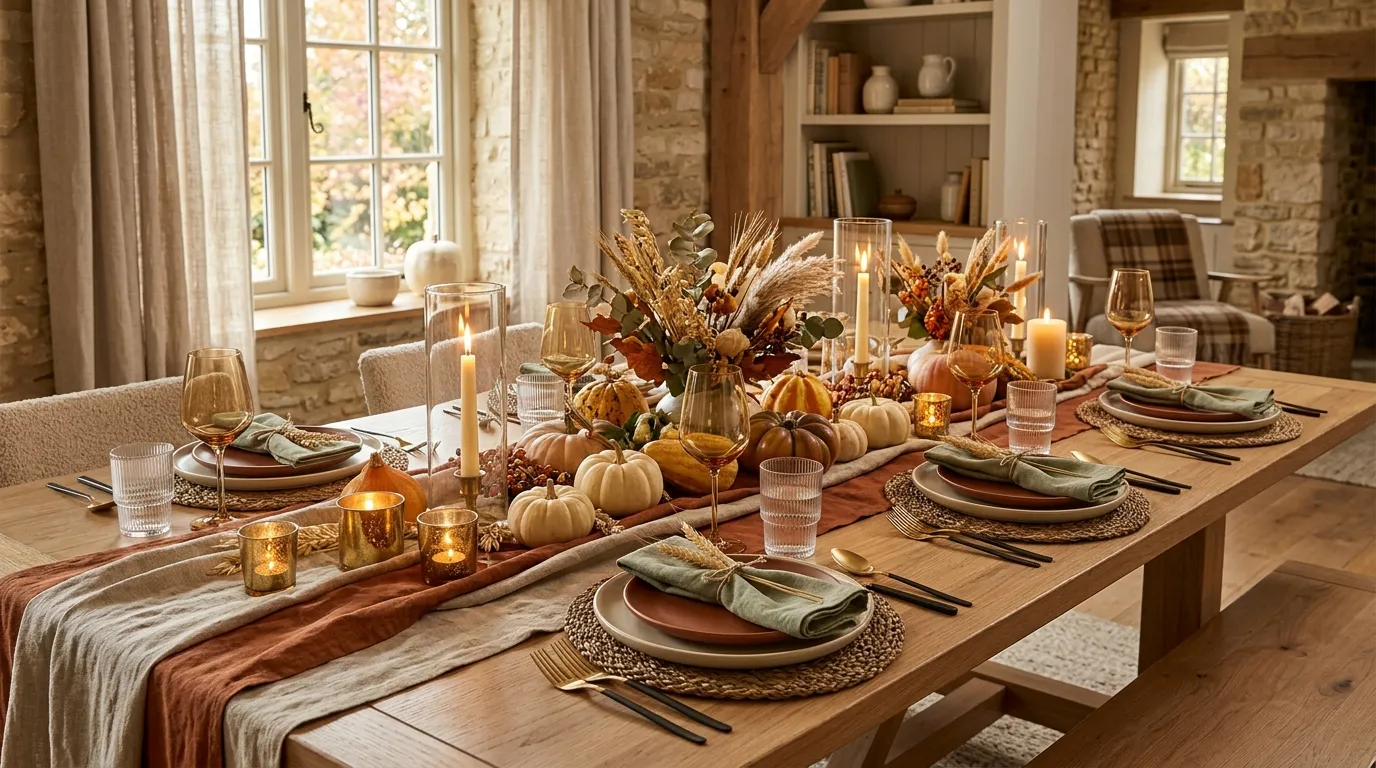
25 Charming Fall Table Setting Ideas for Autumn Gatherings
Your autumn table can feel magical without being complicated. 🍂
A few thoughtful details can turn an ordinary dinner into a warm gathering everyone remembers.
These Fall Table Setting Ideas are designed to help you create a beautiful seasonal table using simple colors, natural textures, candles, pumpkins, foliage, and layered place settings.
Whether you are hosting a cozy family dinner, Friendsgiving, Thanksgiving, or a casual weekend meal, the right combination of small details can completely change the atmosphere.
You’ll find ideas ranging from rustic wood and dried wheat to elegant white pumpkins, velvet napkins, amber glass, and soft greenery.
In my experience, the most inviting tables are rarely the most expensive; they simply balance beauty with practicality.
These ideas will help you create a table that feels welcoming, personal, and effortlessly autumnal.
Also view: 25 Smart Kitchen Counter Organization Ideas for a Tidy Space
1. Harvest Pumpkin Centerpiece
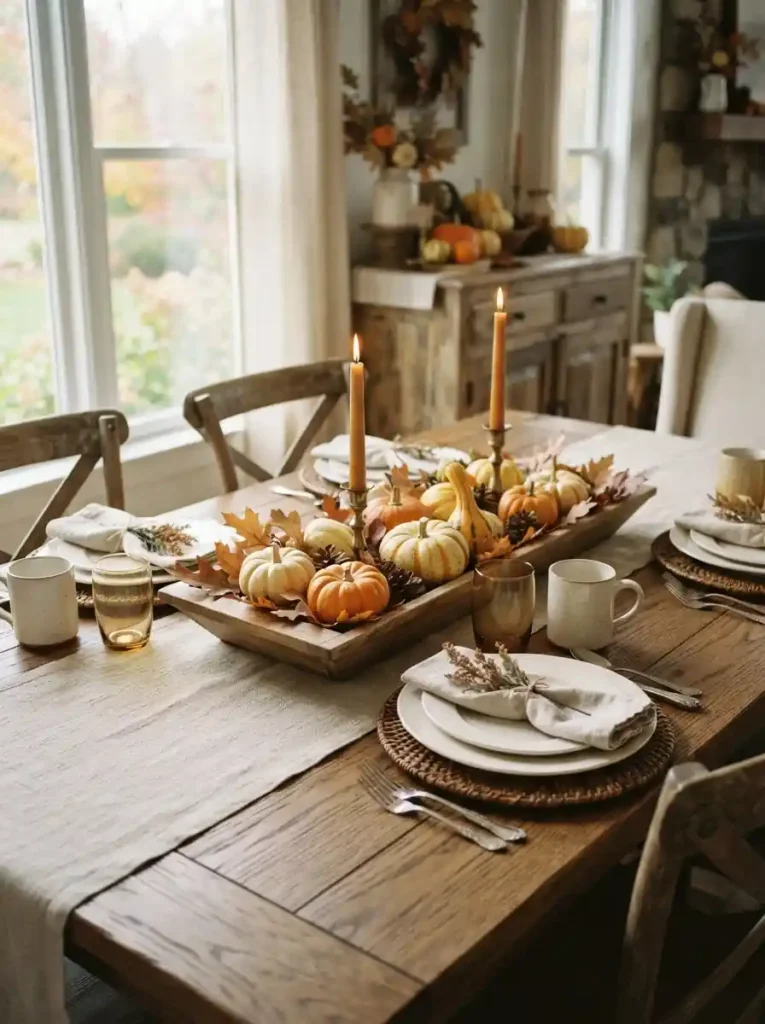
- Mini pumpkins and gourds instantly bring an autumn feel to the table.
- A low arrangement keeps the centerpiece beautiful without blocking conversation.
- Wooden trays add warmth and make small decorations feel more cohesive.
- Neutral linens help balance brighter orange and golden accents.
- This setup is easy to rearrange when serving dishes need more room.
A warm harvest centerpiece can instantly make an everyday dining table feel ready for autumn entertaining. Start with a low wooden tray filled with mini pumpkins, gourds, dried leaves, and a few taper candles in amber holders. The natural textures create depth without blocking conversation across the table. Layer the arrangement over a neutral linen runner so the colors feel intentional rather than busy. In my experience, keeping the centerpiece low is one of the easiest ways to make seasonal decorating practical for family meals, especially when guests need plenty of space for serving dishes and shared plates.
For a polished finish, repeat two or three harvest colors through the place settings rather than adding every autumn shade at once. Warm ivory plates, rust napkins, and muted sage accents balance the orange pumpkins beautifully. Add woven chargers or wooden utensils for subtle texture, then leave comfortable space between each setting. This approach works especially well in real homes because the table still feels functional after the decorations are added. The result is one of those Fall Table Setting Ideas that looks abundant in photos while remaining easy to clear, rearrange, and enjoy during a relaxed gathering.
2. Candlelit Autumn Foliage
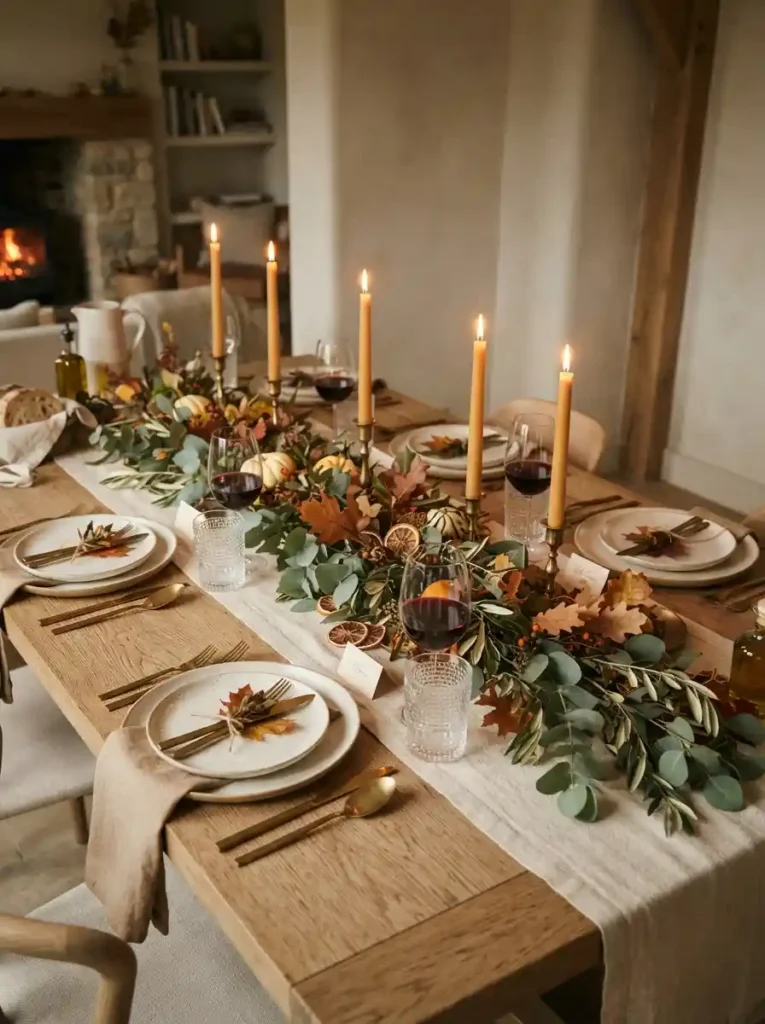
- Taper candles create a welcoming glow as daylight begins to fade.
- Low greenery keeps the arrangement elegant without overwhelming the table.
- Brass or matte black holders add a refined contrast.
- Preserved leaves provide seasonal color without needing fresh flowers.
- Evenly spaced elements make the table look balanced from every seat.
Candlelight and autumn foliage create a simple tablescape that feels intimate without becoming overly formal. Place slim taper candles between small bundles of eucalyptus, olive branches, or preserved fall leaves, keeping greenery low and evenly spaced. Choose brass or matte black holders to add structure against a soft linen runner. The warm glow becomes especially inviting as daylight fades, while the organic foliage keeps the arrangement fresh and relaxed. I’ve noticed this combination works beautifully for dinner parties because it adds atmosphere without competing with food, conversation, or the natural character of the dining room.
Keep the color palette restrained by pairing creamy whites with copper, bronze, and soft brown accents. Use simple stoneware plates, textured linen napkins, and small ceramic vessels to give the table a collected look. A few seasonal leaves tucked beneath each napkin can replace bulky decorations and create a thoughtful finishing detail. For smaller dining areas, this lighter arrangement also helps the table feel open instead of crowded. The gentle metallic touches catch candlelight beautifully, while natural materials prevent the setting from looking too polished or themed. It feels seasonal, comfortable, and easy to recreate with pieces you already own.
3. Rustic Wood Layering
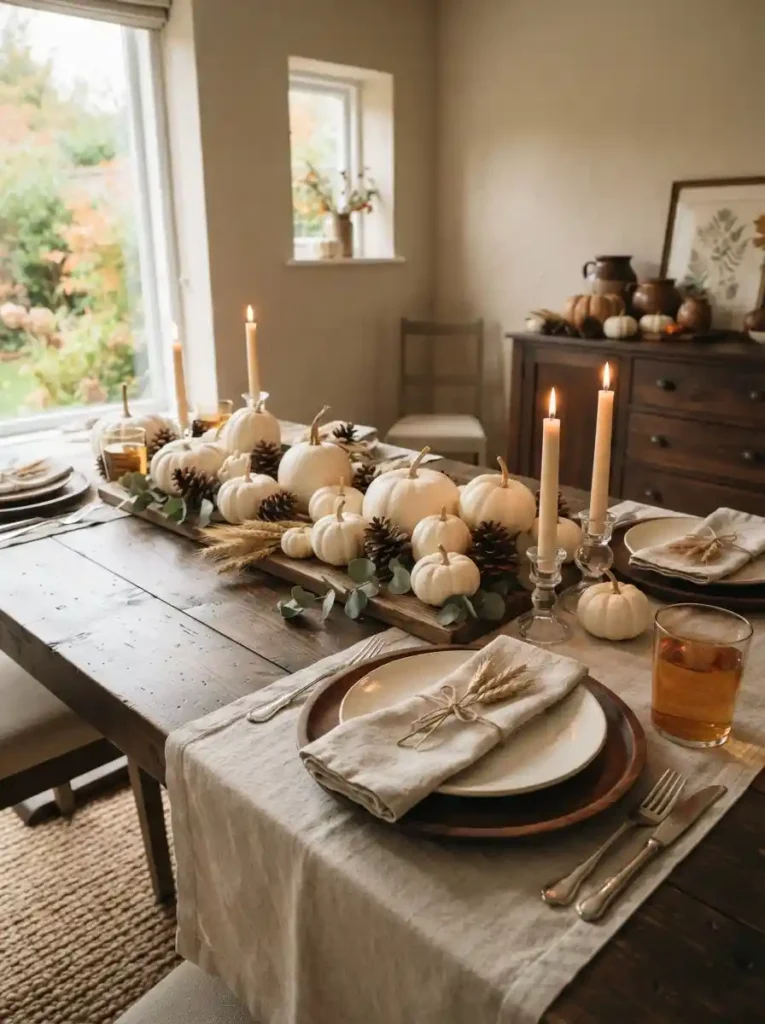
- Reclaimed wood brings natural warmth and farmhouse character.
- White pumpkins keep the rustic palette light and inviting.
- Dried wheat adds height and a distinctly autumn texture.
- Glass candleholders introduce a subtle contrast against rough wood.
- Layering different materials makes simple decorations look thoughtfully styled.
A rustic centerpiece becomes especially charming when natural wood and warm neutrals do most of the decorating. Arrange a reclaimed wooden board down the center of the table, then add small white pumpkins, pinecones, dried wheat, and simple glass candleholders. The mix of rough and smooth textures gives the setting visual interest without requiring expensive accessories. Keep larger objects toward the middle and smaller pieces near the place settings so guests can see across the table. This layered approach brings farmhouse character to ordinary dining furniture and makes a casual autumn meal feel thoughtfully prepared for family and friends.
For extra warmth, pair the centerpiece with oatmeal linen napkins, cream plates, and wooden chargers. A few amber glass votives can add a soft glow while echoing the golden tones of dried wheat. I’ve seen this style work particularly well on dark wood tables because the pale fabrics and light pumpkins create contrast without looking stark. If your table is already visually busy, skip a full runner and use one narrow central arrangement instead. The finished look feels relaxed rather than staged, making it suitable for everyday dinners, weekend brunches, or a larger Thanksgiving-style gathering.
4. Plaid Napkin Accents
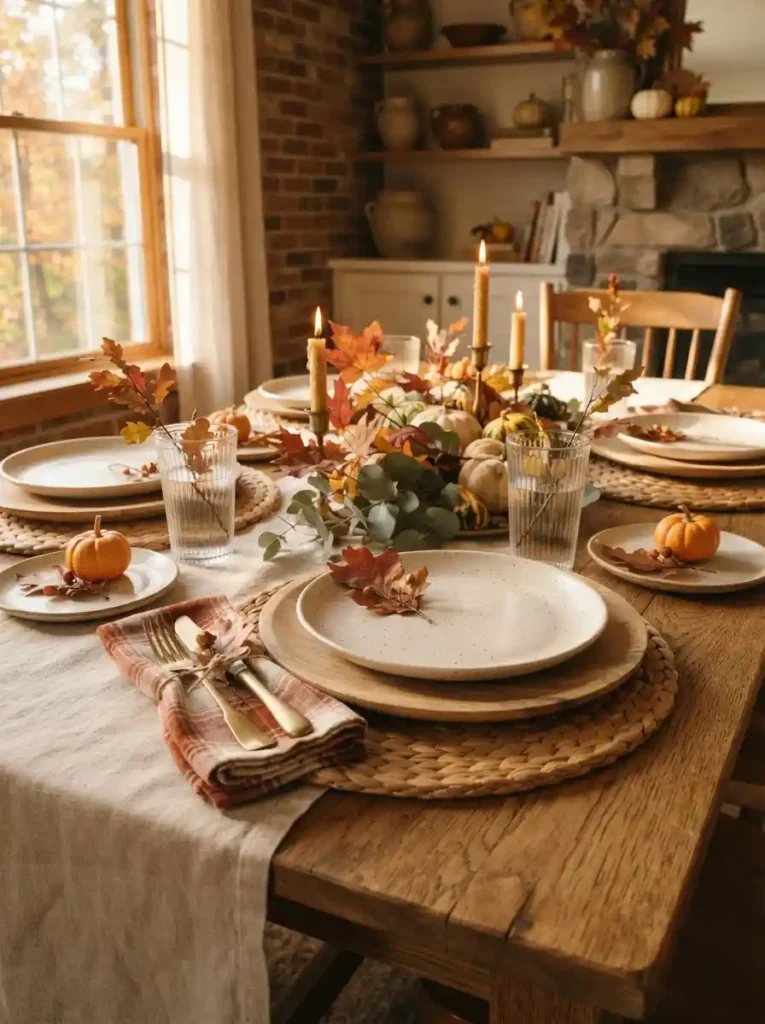
- Plaid instantly introduces classic autumn color and pattern.
- Folded napkins add personality without taking up valuable table space.
- Rust, cream, and olive tones create an inviting seasonal palette.
- Small foliage sprigs make each place setting feel intentional.
- Simple plates keep the patterned fabric from becoming overwhelming.
A simple plaid napkin can completely change the personality of an autumn table without adding visual clutter. Choose a pattern featuring rust, cream, olive, or muted brown, then fold each napkin neatly beside the plate or tuck it beneath the cutlery. The pattern becomes a small focal point that immediately signals the season. Pair it with solid-colored dishes and natural wood chargers to keep the setting balanced. This is one of the easiest ways to refresh your dining room because you can swap textiles while leaving larger furniture and everyday tableware exactly as they are.
To make the arrangement feel more finished, place a tiny dried leaf, rosemary sprig, or wheat stem across each napkin. Keep the botanical accent small so it complements rather than competes with the plaid. In my experience, repeating one fabric color elsewhere on the table makes patterned napkins look much more intentional. A rust shade can echo pumpkins, while olive can connect with greenery or foliage. The result feels warm and collected without looking overly coordinated. It also photographs beautifully from above, making this setup especially appealing for Pinterest inspiration and seasonal entertaining.
5. White Pumpkin Elegance
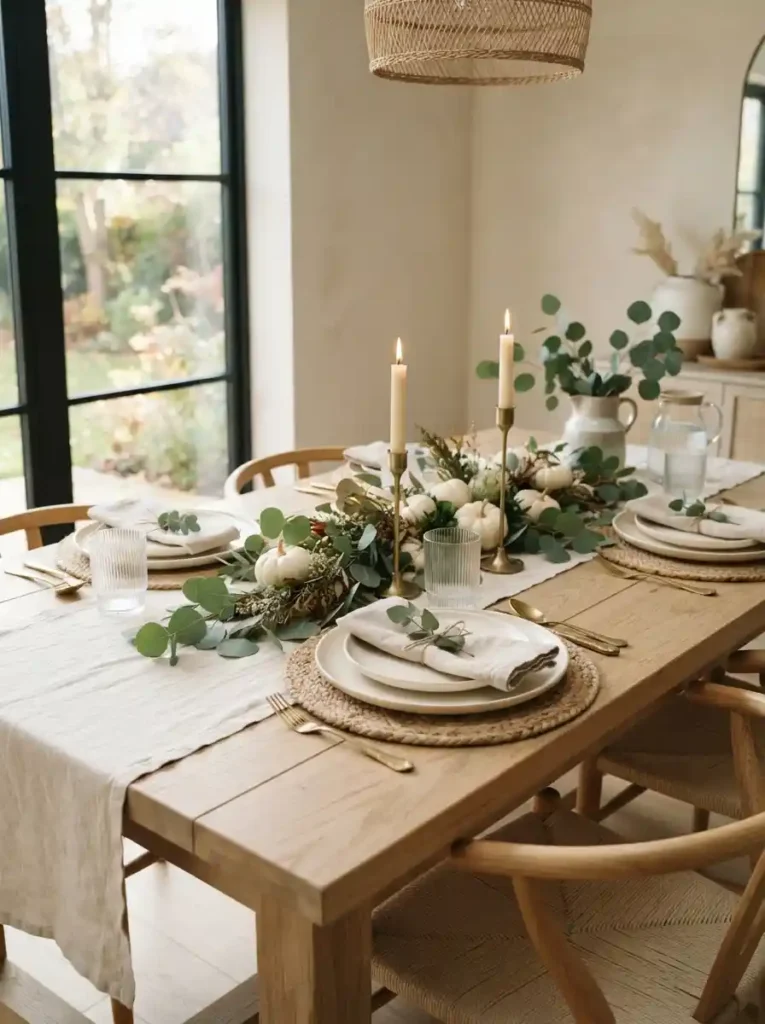
- White pumpkins create a softer alternative to traditional orange decorations.
- Creamy tableware keeps the entire setting bright and sophisticated.
- Brass accents add warmth without overpowering the neutral palette.
- Eucalyptus or olive branches provide gentle natural contrast.
- This palette works beautifully in modern and farmhouse dining rooms.
White pumpkins offer an easy way to create a sophisticated seasonal table while keeping the palette calm and versatile. Arrange several ivory and cream pumpkins along a linen runner, mixing different sizes for a natural rhythm. Add eucalyptus or olive branches to introduce muted greenery, then finish the place settings with creamy ceramic plates and woven chargers. Brushed brass candleholders bring subtle warmth and prevent the neutral colors from feeling flat. The overall effect is bright, understated, and distinctly autumnal, making it especially useful for dining rooms where bold orange decorations might clash with existing furniture or finishes.
For extra dimension, combine matte ceramic surfaces with woven fibers, soft linen, and lightly polished metal. These contrasting textures make a restrained palette feel layered rather than plain. Place the largest pumpkins near the center and gradually use smaller pieces toward the ends of the arrangement. Leave enough open table space for serving bowls and glasses. That practical balance matters during real gatherings, when beautiful decor needs to coexist with food and conversation. The finished look works equally well for a casual family dinner or an elegant celebration, proving that seasonal styling does not have to rely on strong colors.
6. Moody Amber Glass
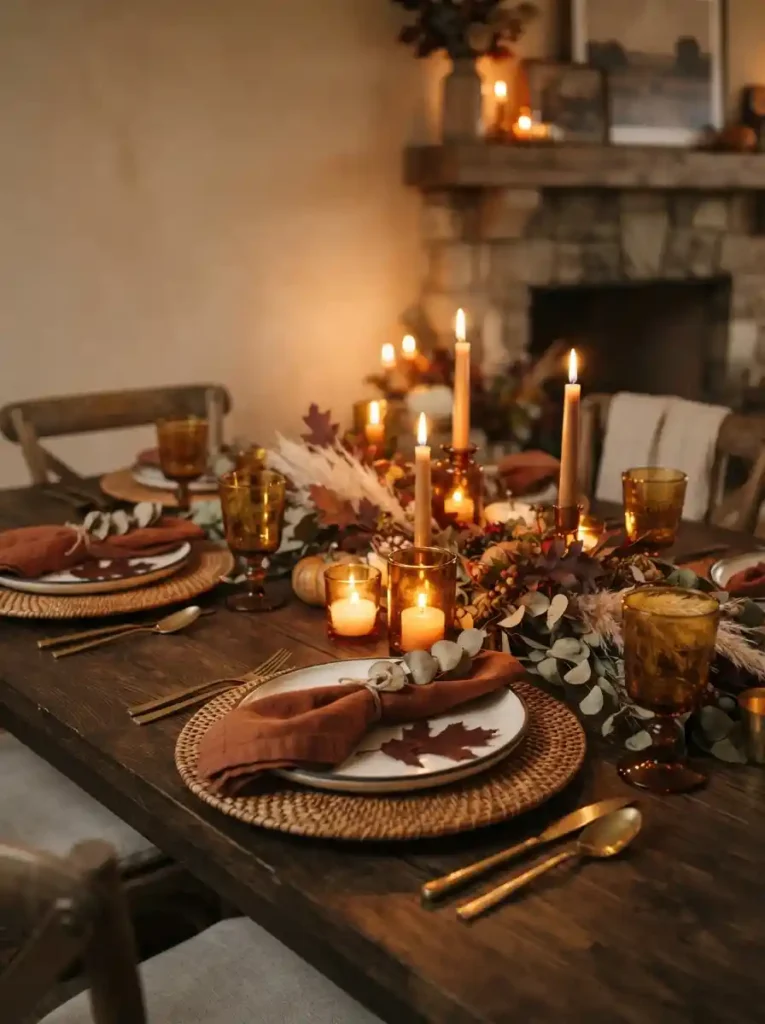
- Amber glass adds rich autumn color without overwhelming the setting.
- Candlelight makes the glass glow beautifully during evening meals.
- Cream plates create a soft contrast against deeper tones.
- Darker accents suit dining rooms with warm wood furniture.
- Mixing glass with linen keeps the mood inviting rather than heavy.
Amber glass brings instant depth to a fall table, especially when candlelight passes through its warm golden surface. Use small amber votives or drinking glasses as accents alongside cream stoneware, rust linen napkins, and natural woven chargers. Add a few dried branches or muted leaves down the center for organic texture. The deeper color works beautifully with walnut or dark oak furniture because it reinforces the table’s warmth rather than fighting against it. For evening gatherings, the glowing glass creates an intimate atmosphere while still leaving enough visual space for food, serving pieces, and comfortable conversation.
Keep the rest of the palette grounded with cream, tan, muted brown, and small touches of burgundy. Too many dark elements can make a dining table feel heavy, so balance amber pieces with lighter fabrics and pale dishes. I’ve noticed that transparent glass is especially helpful because it adds color without visually blocking the surface underneath. Place candles at different points along the center rather than clustering everything together. This creates a gentle trail of warm light that guides the eye across the table and makes the entire setting feel more layered, welcoming, and ready for autumn entertaining.
7. Dried Wheat Runner
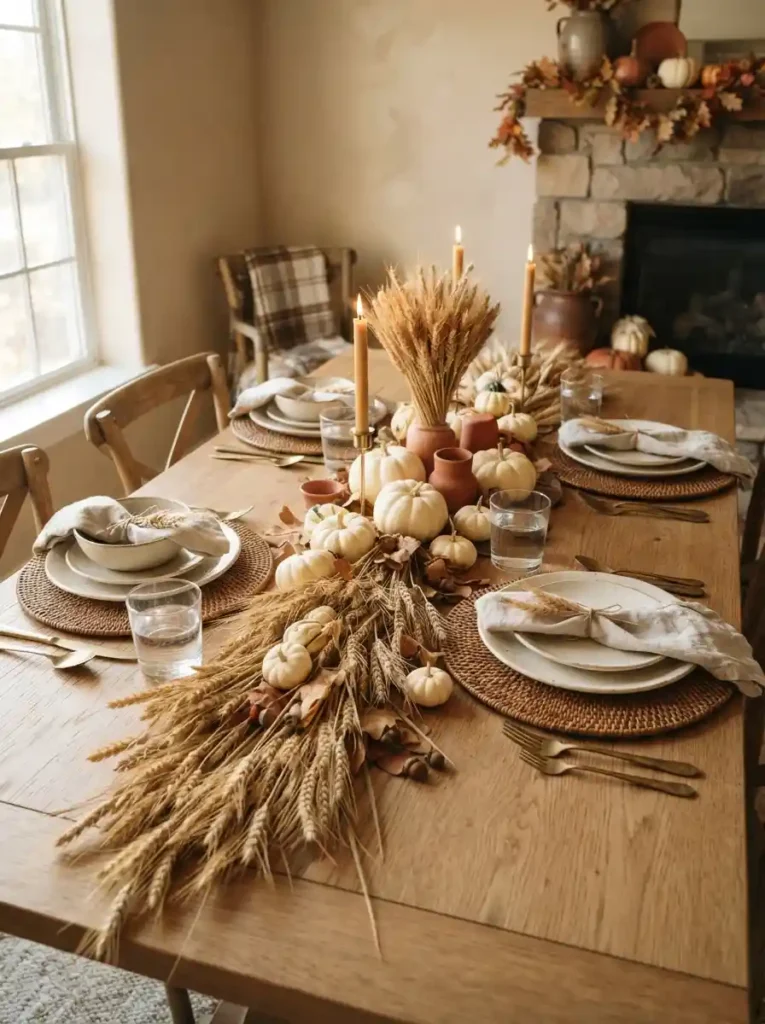
- Dried wheat brings soft golden color and natural movement.
- A loose arrangement feels relaxed rather than overly formal.
- Linen underneath adds softness to the rustic texture.
- Small pumpkins can reinforce the harvest-inspired palette.
- Wheat lasts through the season and needs minimal maintenance.
A dried wheat runner creates an instantly recognizable autumn look while keeping the table beautifully simple. Lay several wheat stems loosely along the center of a natural wood table, allowing their golden tips to overlap naturally instead of arranging them in a rigid line. Add a few cream pumpkins or small ceramic vessels between the stems for variation. The warm wheat tones complement oatmeal linen and ivory dishes especially well. Because the arrangement stays low and narrow, it leaves plenty of room for serving bowls and glasses, making the setup practical for everyday meals as well as larger seasonal gatherings.
For a more polished finish, trim uneven stems so the arrangement has gentle movement without becoming messy. Place woven chargers underneath neutral plates to repeat the natural texture, then use simple linen napkins in beige or muted rust. Dried wheat is also useful when you want seasonal decoration that can remain on the table for weeks with almost no upkeep. In my experience, natural dried elements are particularly effective when a room already has wood furniture because they connect the table to the surrounding materials. The result feels warm, organic, and effortlessly appropriate for autumn.
8. Copper Candle Glow
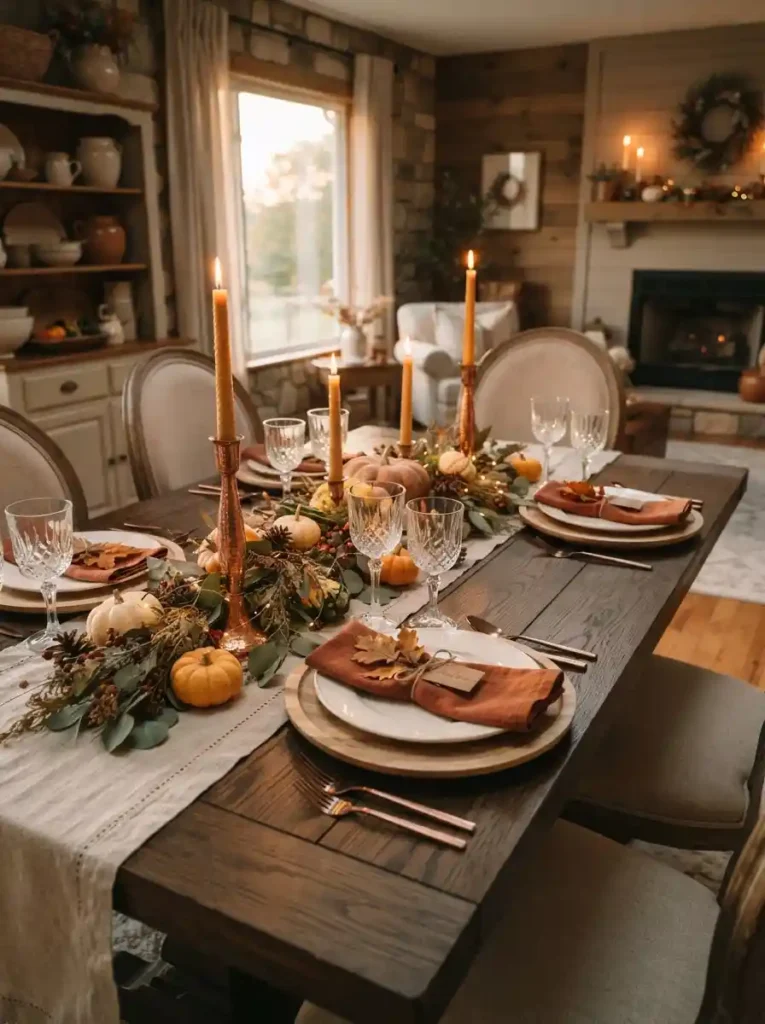
- Copper introduces a rich metallic accent suited to autumn decorating.
- Warm candlelight makes the finish look softer and more inviting.
- Neutral dishes prevent metallic details from becoming too dominant.
- Small pumpkins add seasonal character without crowding the centerpiece.
- Mixing copper with wood creates an attractive rustic contrast.
Copper accents can make a simple autumn table feel warmer and more refined without requiring a complete change of decor. Place copper candleholders along a narrow linen runner, spacing them between small pumpkins or dried foliage. The metallic finish catches candlelight beautifully and adds subtle variation to a palette of cream, rust, brown, and gold. Pair the centerpiece with ivory plates and natural wood chargers to keep the look grounded. This combination works especially well for evening meals because the reflective copper surfaces create small points of light across the table without making the setting feel overly formal.
Balance the metallic accents with matte and organic materials so the table still feels comfortable. Linen napkins, unfinished wood, woven chargers, and ceramic dishes provide enough texture to soften the shine. If your dining table is already dark, lighter pumpkins and plates will help keep the overall arrangement visually open. I’ve noticed that copper works best when used sparingly rather than repeated on every accessory. Two or three carefully placed pieces are usually enough to create cohesion. The finished setting feels festive, warm, and polished while remaining practical for a relaxed autumn gathering.
9. Layered Harvest Place Settings
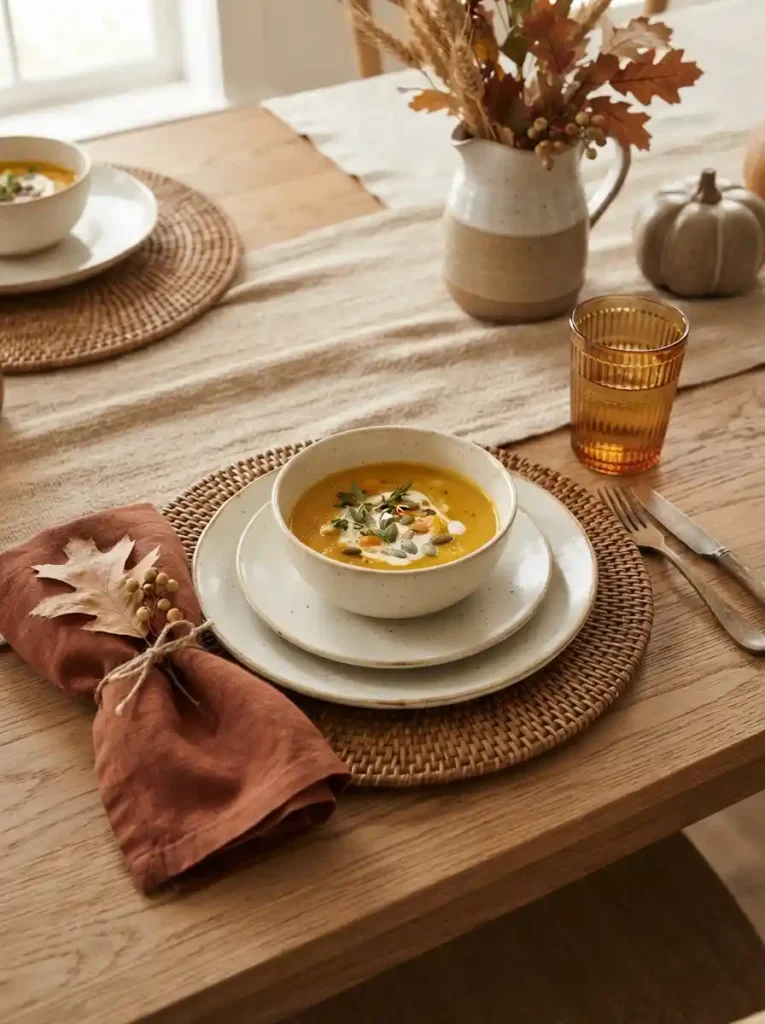
- Layered chargers and plates create depth at every seat.
- Natural materials make simple tableware feel more special.
- A folded napkin adds softness and useful color.
- Small seasonal details personalize each setting.
- Leaving generous spacing keeps the table comfortable for guests.
Layering the individual place settings can make an ordinary table feel thoughtfully prepared before guests even sit down. Start with a woven or wooden charger, then add an ivory dinner plate and a smaller bowl or salad plate. Fold a rust or oatmeal linen napkin between the layers or place it neatly beside the cutlery. Finish with a tiny dried leaf or wheat stem for seasonal character. Each layer introduces a different texture and shape, creating depth without relying on a large centerpiece. This approach is especially useful when you want the table itself to provide most of the visual interest.
Keep the arrangement practical by checking that each guest has enough elbow room and that glasses sit comfortably above the knife area. You can repeat one or two colors from the centerpiece to make every setting feel connected. For example, rust napkins can echo pumpkins, while woven chargers can complement a natural wood centerpiece. This kind of repetition creates a cohesive appearance without making everything identical. That’s why many designers recommend varying texture instead of adding more color when a table already has several seasonal elements. The result looks abundant, balanced, and welcoming from every angle.
10. Layered Linen Textures
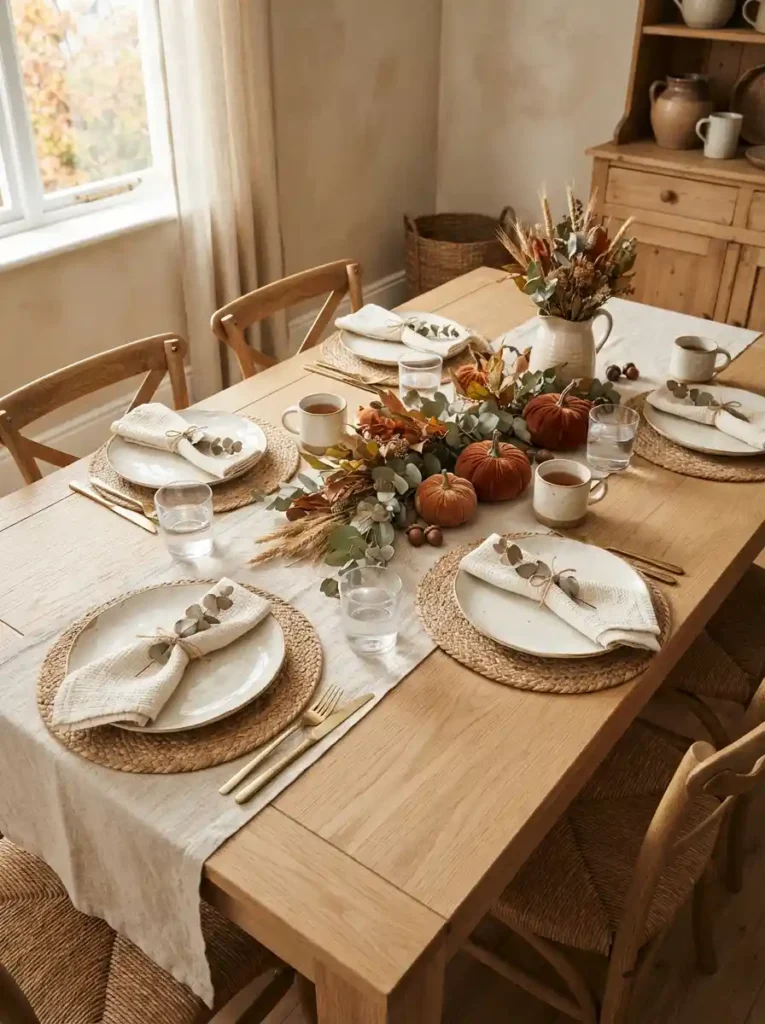
- Combining linen layers adds softness and visual depth.
- Neutral fabrics let autumn accents stand out naturally.
- A runner defines the table without covering the entire surface.
- Textured napkins make each place setting feel more inviting.
- Mixing subtle fabric tones prevents a monochromatic table from looking flat.
Layered linen textures can make a fall table feel warm and collected without adding lots of decorations. Begin with an oatmeal runner, then place woven or linen placemats beneath each setting for another soft layer. Choose cream or taupe napkins with a visible weave so the neutral palette still has plenty of texture. Add a few small pumpkins or dried branches down the center to introduce subtle seasonal color. This approach works especially well in homes with minimalist interiors because the table gains depth through materials rather than excessive accessories, creating an inviting look that still feels clean and uncluttered.
Keep the fabric colors within a close tonal range, such as ivory, sand, oatmeal, and warm beige. Small variations make the layers noticeable without creating distracting contrast. If your table is dark wood, lighter linens will brighten the arrangement and make the place settings stand out. If you have a pale table, slightly deeper taupe fabrics can provide definition. I’ve noticed that natural linen also photographs beautifully because its small wrinkles and woven texture make the table feel lived-in rather than staged. The result is comfortable, understated, and easy to adapt for casual dinners throughout the season.
11. Foraged Branch Centerpiece
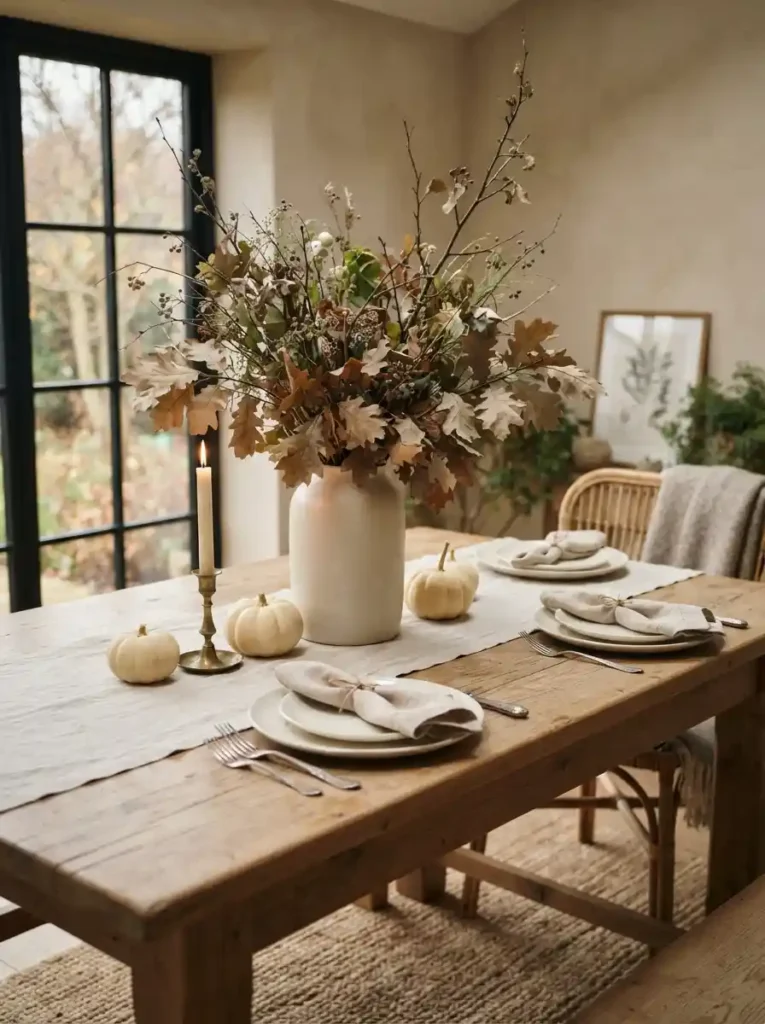
- Bare branches add height and an organic seasonal shape.
- Foraged foliage can create a beautiful centerpiece at little cost.
- A simple ceramic vase keeps the arrangement visually grounded.
- Neutral place settings prevent the branches from feeling too dramatic.
- Sparse branches work well when you prefer uncluttered decorating.
Foraged branches bring an organic focal point to the dining table and can create height without requiring a complicated floral arrangement. Choose sturdy branches with muted leaves, berries, or bare twigs, then place them in a simple ceramic vase near the center of the table. Keep the arrangement slightly airy so individual shapes remain visible. Surround the vase with a few small pumpkins or scattered leaves rather than filling every open space. The natural variation in branch height and shape gives the table character, while the restrained styling keeps the centerpiece practical enough for regular autumn meals.
When using branches, make sure the tallest stems do not interfere with sightlines across the table. For a long dining table, use one central vase or two smaller arrangements positioned symmetrically. Pair the branches with ivory plates, oatmeal linens, and wooden chargers to maintain an earthy palette. In my experience, this type of centerpiece is particularly effective when you want seasonal decor that feels connected to the outdoors. It also allows you to use materials from your own garden or nearby natural surroundings, making the finished table feel personal without needing expensive floral arrangements or elaborate decorations.
12. Burgundy Berry Accents
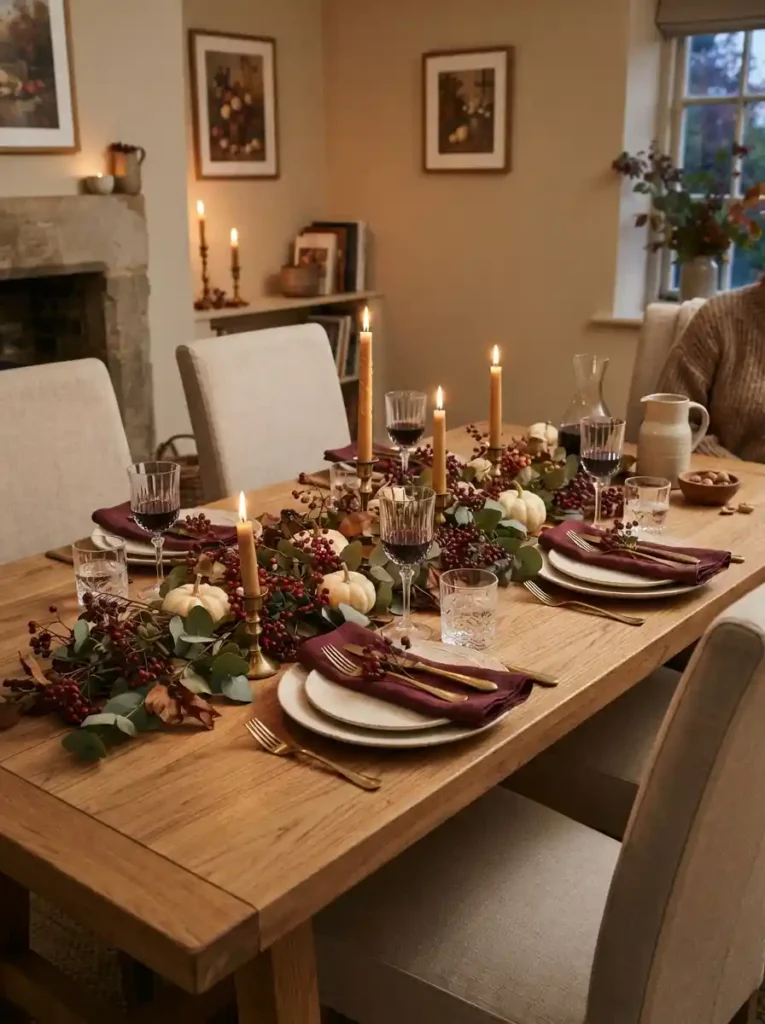
- Burgundy berries introduce rich color without overwhelming the table.
- Small berry stems create delicate seasonal detail.
- Cream dishes provide a bright contrast against deeper tones.
- Brass or bronze accents complement the warm palette beautifully.
- Repeating burgundy in napkins or candles creates visual cohesion.
Burgundy berry accents can give an autumn table a richer, more sophisticated color story. Tuck a few berry branches into a low centerpiece or place short stems beside each napkin for small bursts of deep red. Pair them with ivory plates, warm wood, and muted beige linens so the color feels intentional rather than overpowering. A few brass or bronze candleholders can echo the warmth of the berries while adding gentle shine. This palette works particularly well for evening gatherings because darker tones become richer under warm lighting, creating a cozy setting without relying on heavy seasonal decorations.
Use burgundy sparingly if your dining room already contains strong colors. Repeating the shade in just two or three places is enough to connect the entire arrangement. For example, berry stems can coordinate with linen napkins while a small candle adds another subtle echo. I’ve seen this work well on long tables because the deeper accents help guide the eye from one end to the other. Keep the centerpiece low and distribute the color evenly so every guest sees a balanced arrangement. The finished look feels elegant, seasonal, and welcoming while remaining simple enough for home entertaining.
13. Cinnamon Stick Details
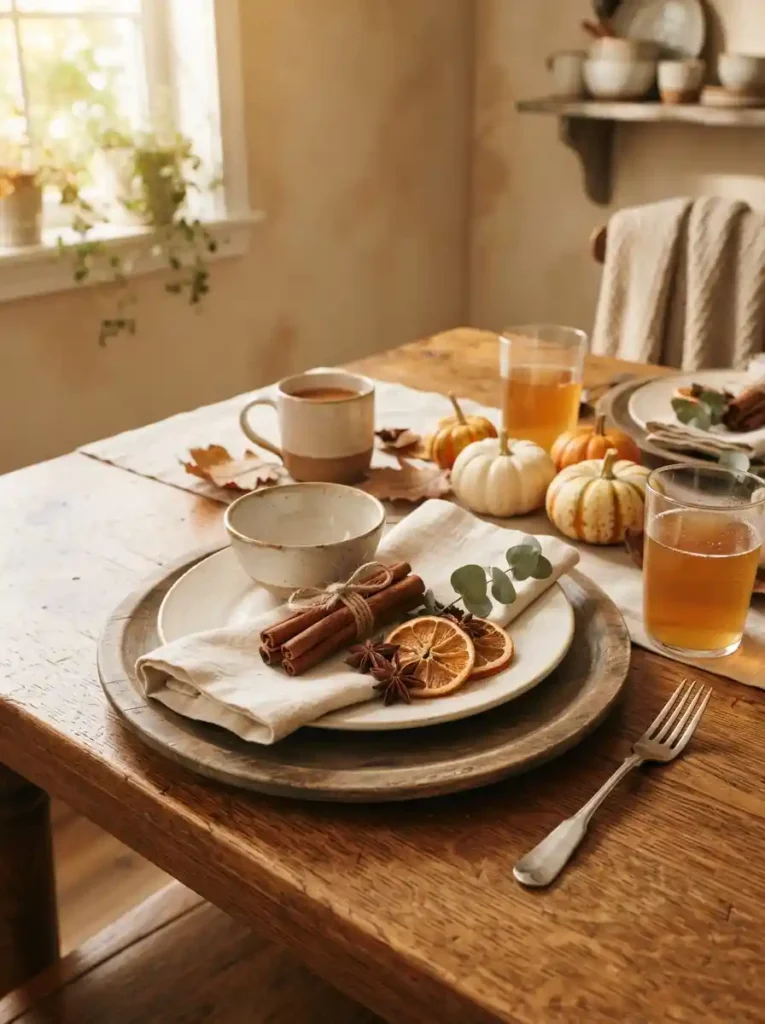
- Cinnamon sticks add warm brown tones and natural texture.
- Small bundles make charming accents beside individual place settings.
- Twine keeps the arrangement rustic and understated.
- Neutral dishes let the earthy details stand out.
- Wooden elements reinforce the cozy autumn palette.
Cinnamon sticks make an easy seasonal detail when you want the table to feel warm without adding bulky decorations. Tie two or three sticks together with natural twine and place a small bundle beside each napkin or across the plate. Pair them with ivory dishes, wooden chargers, and cream linen to create a soft earthy palette. A few dried orange slices or tiny pumpkins can reinforce the autumn theme without competing with the cinnamon. The small bundles also add texture at each place setting, making the table feel thoughtfully decorated from the moment guests sit down.
For a more polished arrangement, keep the cinnamon bundles similar in size and repeat the same twine throughout the table. You can also place a few loose cinnamon sticks inside a shallow wooden tray with dried leaves for a simple centerpiece. In my experience, small repeated details often have more impact than filling the entire table with seasonal objects. They give guests something interesting to notice without taking away space needed for plates, glasses, and serving dishes. The finished setting feels rustic and personal, while the natural brown tones blend easily with most autumn decorating palettes.
14. Dried Orange Garnishes
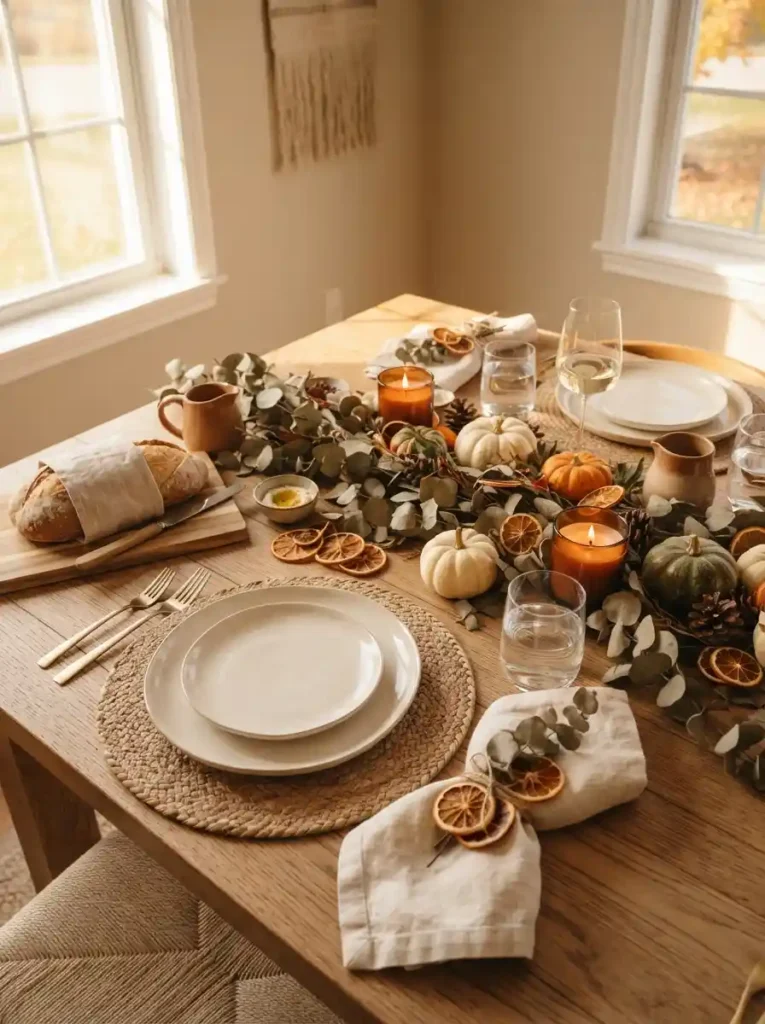
- Dried orange slices add a bright but natural seasonal accent.
- Their translucent texture catches warm candlelight beautifully.
- Orange tones connect easily with pumpkins and autumn leaves.
- Small slices work well beside napkins or within centerpieces.
- Neutral tableware keeps the citrus details looking sophisticated.
Dried orange slices bring a sunny autumn accent to the table while adding texture and a handcrafted feel. Arrange a few slices beside folded linen napkins, tuck them into a low foliage centerpiece, or scatter a small number along a wooden tray. Their warm orange color pairs naturally with pumpkins, rust textiles, and amber glass. Because the slices are thin and lightweight, they add visual interest without taking up much room. This makes them especially useful when you want seasonal decoration that feels detailed but still leaves enough surface space for serving dishes and comfortable dining.
Balance the brighter citrus tones with cream, tan, and muted green so the arrangement stays refined. A few eucalyptus stems or dried leaves can soften the orange and create a more organic composition. If you are styling the table for photographs, position some slices where natural light can pass through them; the translucent edges create beautiful warmth and dimension. I’ve noticed that dried citrus also works particularly well with rustic materials such as wood, linen, and woven fibers. Together, these elements create an inviting table that feels handmade, seasonal, and easy to recreate.
15. Black Accent Tableware
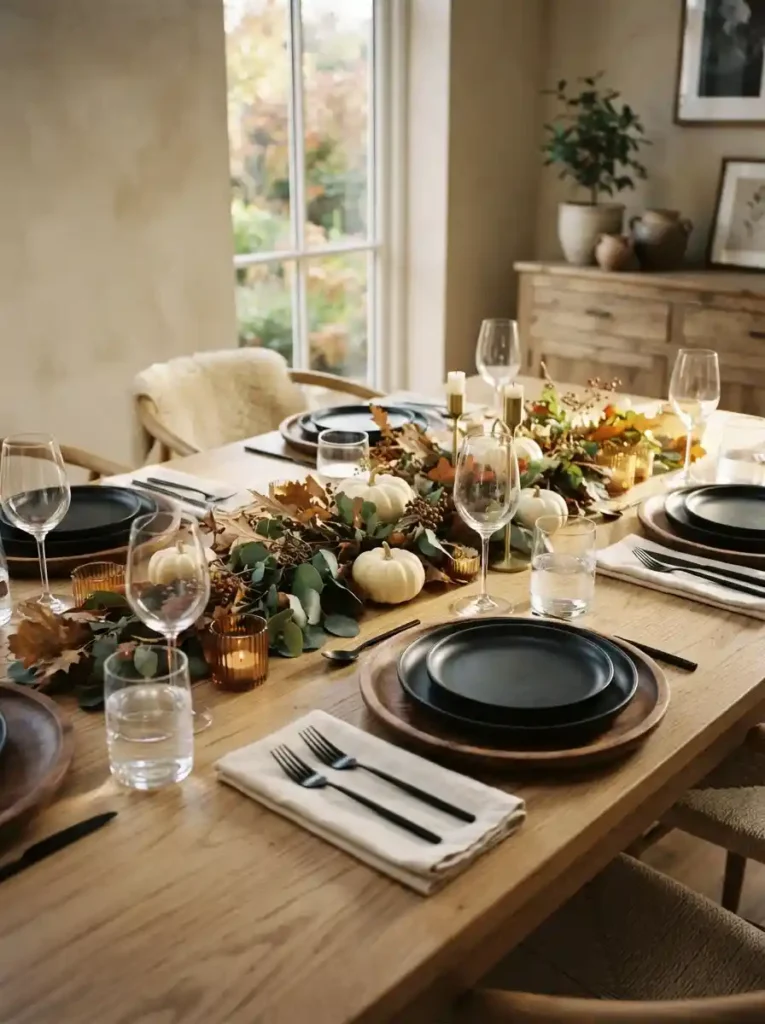
- Black plates create striking contrast against light autumn linens.
- Matte finishes keep the darker color feeling modern and sophisticated.
- Warm wood prevents the setting from looking too stark.
- Small pumpkins soften the dramatic contrast.
- Brass or amber details add warmth around the darker dishes.
Matte black tableware can give an autumn table a striking modern edge while still feeling warm and inviting. Start with black ceramic dinner plates layered over natural wood or woven chargers, then soften the contrast with cream linen napkins. Add small ivory pumpkins, amber glass, or dried foliage to bring seasonal warmth around the darker dishes. The combination works particularly well in contemporary dining rooms because the black creates definition against lighter surfaces. Instead of looking heavy, the table feels intentional and sophisticated when the darker pieces are balanced with plenty of natural materials.
Keep the centerpiece relatively light so the black plates remain the strongest visual element. A few small pumpkins, branches, or amber votives are enough to connect the setting with autumn. Brass cutlery or candleholders can add another warm layer without introducing too many colors. That contrast is especially helpful on Pinterest because the dark plates create a clear focal point in photographs. For everyday use, choose durable ceramic or stoneware pieces with a matte finish that can handle regular meals. The finished arrangement feels contemporary, seasonal, and surprisingly easy to maintain.
16. Mini Gourd Clusters
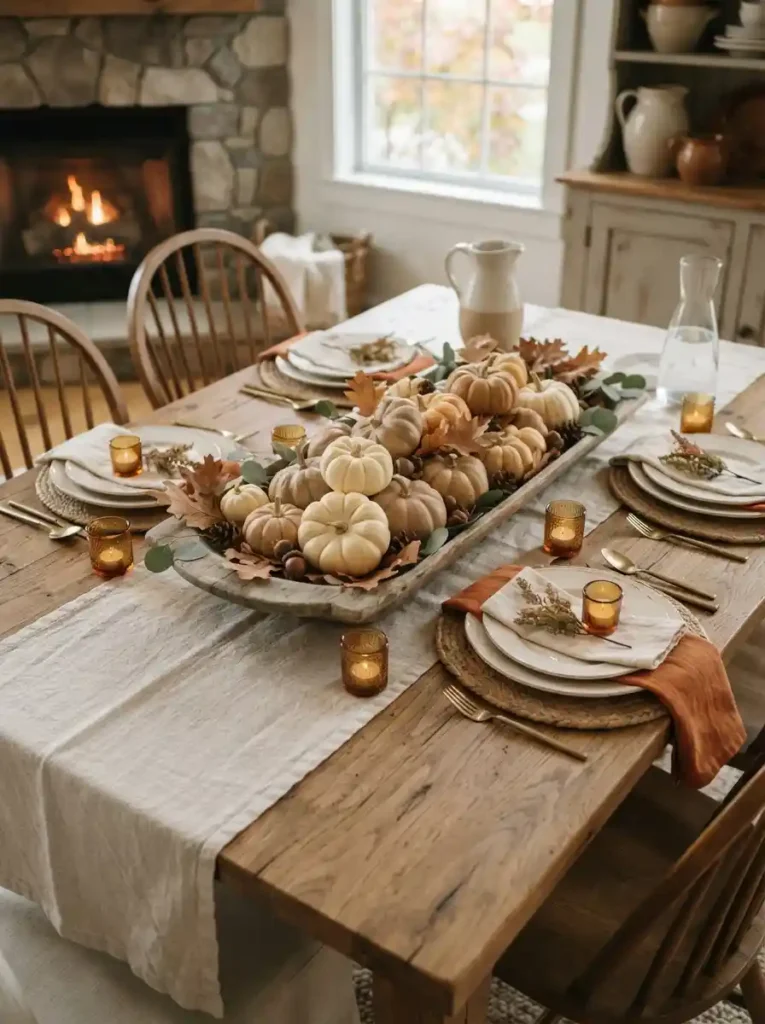
- Small gourds create playful seasonal detail without overwhelming the table.
- Grouping different shapes makes the centerpiece feel naturally abundant.
- Cream, tan, and muted orange keep the palette sophisticated.
- A shallow tray keeps clusters organized and easy to move.
- Smaller arrangements leave plenty of space for serving dishes.
Mini gourds are an easy way to create a fuller autumn centerpiece without covering the entire table. Gather several small gourds in cream, tan, pale green, and muted orange, then arrange them in loose clusters along a shallow wooden tray. Vary their shapes and sizes so the display feels natural rather than perfectly matched. Add a few dried leaves or small candles between the groups for gentle contrast. Because the individual pieces are compact, you can easily shift the clusters when serving food or creating more room for guests. The result feels abundant while staying practical for real gatherings.
For a more cohesive look, repeat one or two gourd colors in the place settings. Cream pumpkins can coordinate with ivory plates, while muted orange can echo linen napkins or amber glass. Keep the tray low enough that guests can see across the table comfortably. I’ve noticed that grouped objects often look more intentional than scattered decorations because they create visual anchors without making the whole surface feel busy. Once dinner is over, the tray can also be lifted away quickly, making this arrangement useful for homes where the dining table needs to serve several purposes throughout the day.
17. Velvet Napkin Folds
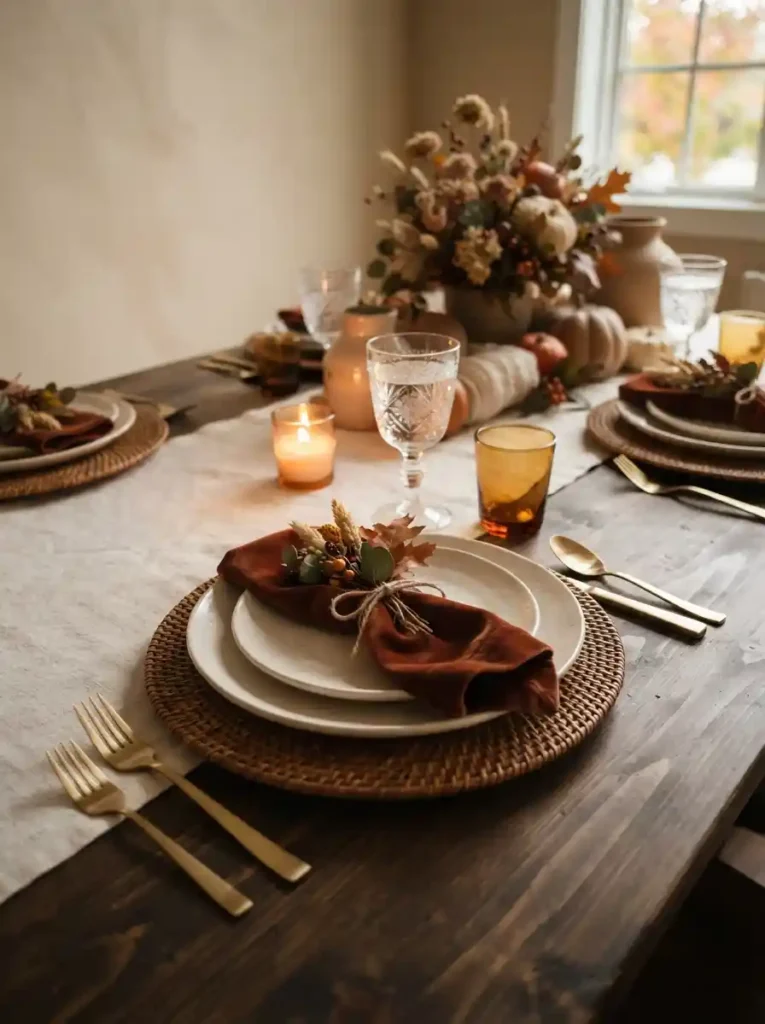
- Velvet adds luxurious texture to a simple autumn setting.
- Deep rust or olive shades create rich seasonal contrast.
- A simple fold keeps the fabric looking elegant rather than fussy.
- Gold-toned cutlery complements the softness of the textile.
- Minimal centerpieces let the napkins become the visual highlight.
Velvet napkins can instantly make a simple dining table feel richer and more luxurious for autumn gatherings. Choose deep rust, olive, plum, or warm brown velvet and fold each napkin neatly beside an ivory plate. The fabric’s soft sheen catches natural or candlelight, creating subtle movement without requiring elaborate decoration. Pair the napkins with woven chargers, neutral ceramics, and understated greenery so the texture remains the star. This approach works particularly well for dinner parties because the table feels special and elevated while the overall arrangement remains simple enough to recreate without professional styling.
When working with velvet, avoid adding too many other shiny materials. One warm metallic detail, such as brushed brass flatware or a small candleholder, is usually enough to complement the fabric. Keep the centerpiece low with a few dried leaves or miniature pumpkins so guests still have clear sightlines. In my experience, textured textiles are one of the fastest ways to make familiar tableware feel completely different. They also photograph beautifully because the napkins add depth and softness to otherwise flat surfaces. The finished look feels cozy, sophisticated, and unmistakably suited to autumn entertaining.
18. Autumn Fruit Display
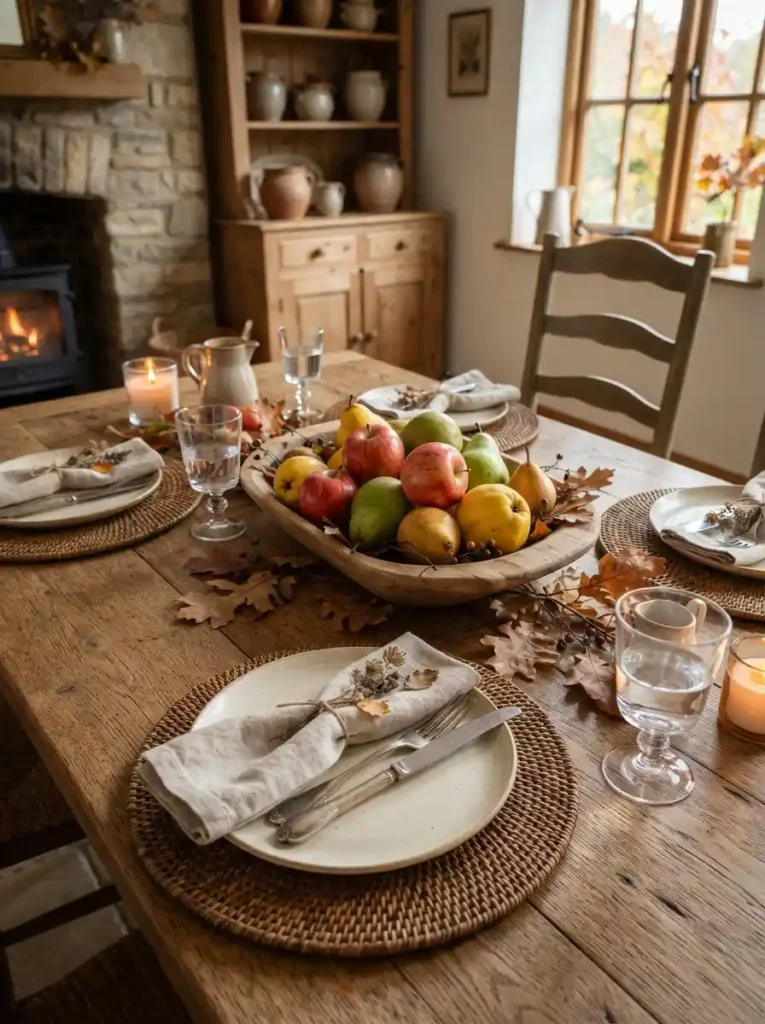
- Seasonal pears and apples add natural color and freshness.
- Wooden bowls create a relaxed farmhouse focal point.
- Fruit makes the centerpiece useful as well as decorative.
- Warm reds, greens, and golds complement traditional autumn palettes.
- A few leaves or branches provide a natural finishing touch.
A bowl of seasonal fruit can become a beautiful centerpiece while giving your autumn table a practical purpose. Fill a shallow wooden bowl with red apples, green pears, golden fruit, or small pumpkins, then place it near the center of the table. Add a few dried leaves around the bowl for texture and seasonal definition. The natural colors create a warm focal point without looking overly decorated. This works especially well for family meals because the fruit can remain accessible throughout the gathering. It also provides an affordable alternative to elaborate floral arrangements while still making the table feel abundant.
Choose fruit with different shapes and colors so the arrangement feels naturally layered. Keep the bowl relatively low, especially on a table where guests will be sitting across from one another. Pair the display with cream plates, woven chargers, and oatmeal linens to keep the palette grounded. If you want a more polished look, use a handmade ceramic or carved wooden bowl rather than a highly decorative container. I’ve seen this approach work beautifully in farmhouse and cottage-style homes because it celebrates simple materials and everyday objects while still creating a memorable seasonal focal point.
19. Terracotta Pot Centerpiece
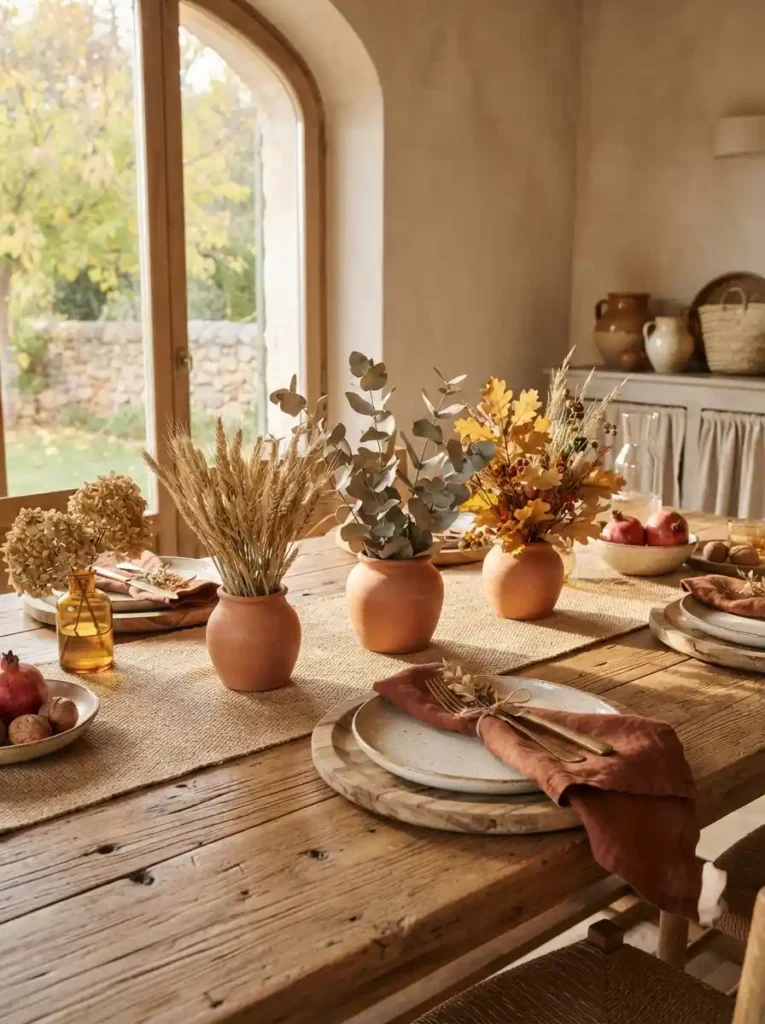
- Terracotta adds earthy warmth and handcrafted character.
- Small pots can hold dried flowers, herbs, or seasonal branches.
- The warm clay color complements pumpkins and natural wood.
- Repeating small vessels creates a balanced centerpiece.
- Simple ceramics keep the arrangement relaxed and approachable.
Terracotta pots bring earthy color and handcrafted texture to an autumn dining table without making the centerpiece feel overly formal. Arrange two or three small pots along the center, filling them with dried wheat, eucalyptus, rosemary, or delicate autumn branches. Their warm clay tones naturally complement pumpkins, wood, and rust-colored textiles. Keep the vessels slightly different in height for a relaxed layered effect. This setup works particularly well when you want your Fall Table Setting Ideas to feel collected rather than perfectly coordinated, because the imperfections of handmade-looking materials add warmth and personality to the overall arrangement.
To keep the table visually balanced, repeat terracotta in only a few places and let neutral ceramics provide contrast. Cream plates, oatmeal napkins, and woven chargers create a calm foundation around the warmer centerpiece. If you already have terracotta planters elsewhere in the dining room, repeating the material helps connect the spaces. I’ve noticed that small containers are also easier to move than one large centerpiece, which becomes useful when dinner is served. The result is an earthy, welcoming arrangement that feels seasonal without relying heavily on traditional orange decorations or elaborate floral displays.
20. Plaid Runner Layers
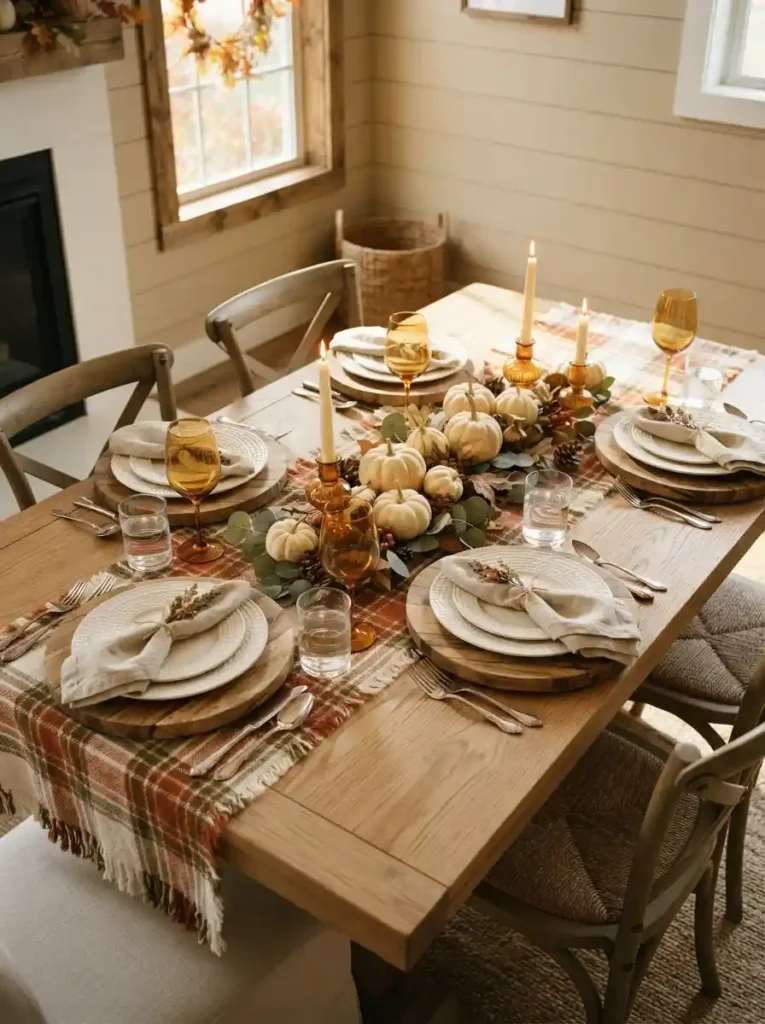
- A plaid runner creates an instant autumn focal point.
- Neutral dishes keep the pattern from dominating the table.
- Solid napkins can pull one subtle color from the plaid.
- Wooden chargers reinforce the cozy seasonal texture.
- A narrow runner leaves room for serving pieces and candles.
A plaid runner can transform a plain dining table into a cozy autumn setting with very little effort. Choose a pattern featuring rust, cream, brown, olive, or muted gold, then center it lengthwise across the table. Keep the surrounding tableware simple with ivory plates, wooden chargers, and solid linen napkins. A few small pumpkins or amber candleholders can sit along the runner without competing with its pattern. The key is letting the fabric establish the seasonal color story while the other elements support it. This creates a welcoming table that feels styled but still comfortable for everyday family meals.
If the plaid has several colors, select only one or two for the remaining accessories. For example, rust napkins can echo a small stripe in the fabric, while cream plates repeat its lighter background. This prevents the table from looking overly matched. Keep candles and decorative objects low so the runner remains visible from every seat. In my experience, patterned runners are especially helpful when you want a quick seasonal update because changing one textile can make familiar dishes and furniture look completely refreshed. The finished arrangement feels warm, layered, and ready for everything from brunch to dinner.
21. Golden Leaf Place Cards
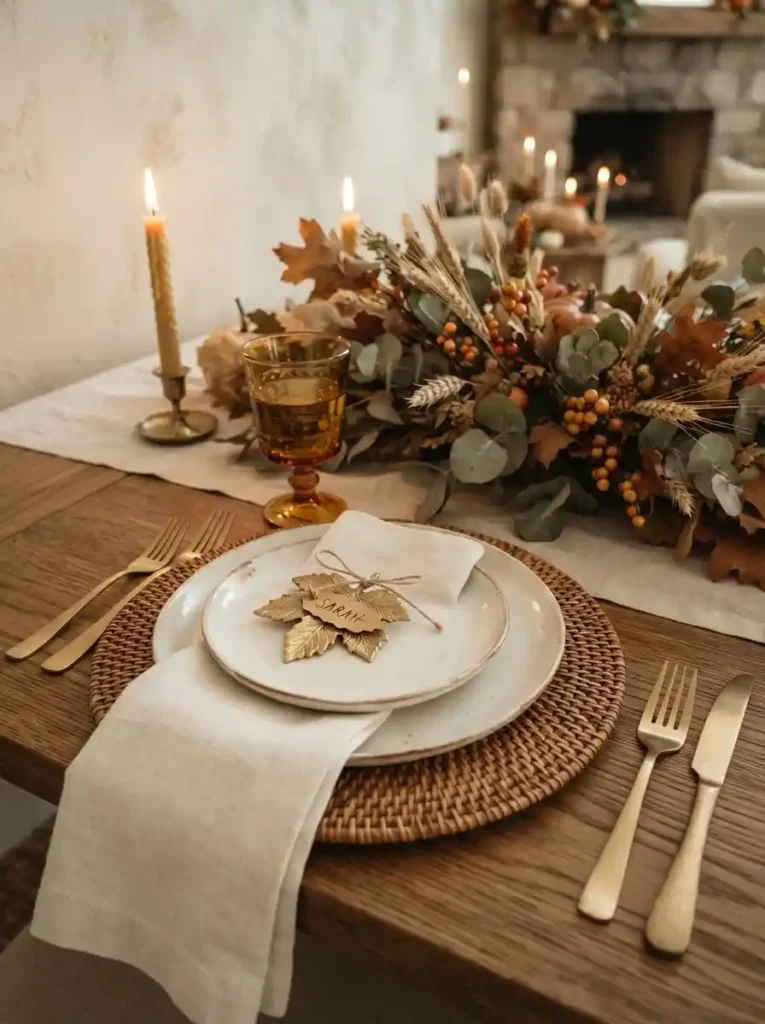
- Metallic leaves add a subtle touch of seasonal elegance.
- Personalized cards make guests feel thoughtfully welcomed.
- Neutral plates provide a clean background for the details.
- Small accents keep the place settings uncluttered.
- Gold catches candlelight beautifully during evening gatherings.
Golden leaf place cards add a refined seasonal detail while giving every guest a clearly defined seat. Use small cardstock leaves finished in muted gold, or choose simple metallic leaf-shaped tags and write each name in dark ink. Place one on a folded cream linen napkin or directly above each plate. Pair the cards with woven chargers, ivory ceramics, and brushed brass flatware so the gold feels connected to the rest of the table. This small detail can make even an informal gathering feel more intentional, especially when you want guests to feel personally welcomed without creating an overly formal tablescape.
Keep the lettering simple and readable, particularly if the table will be photographed. Avoid covering the entire place setting with decorative pieces; one thoughtful accent is enough. You can also use natural kraft cardstock with a small gold leaf painted onto each card for a more handmade appearance. That personal touch works beautifully for family dinners, Friendsgiving, or small celebrations. The golden accents catch warm candlelight and add gentle sparkle without becoming flashy. Combined with natural wood, soft linen, and muted autumn foliage, the result feels polished, personal, and easy to recreate with inexpensive craft supplies.
22. Olive Branch Runner
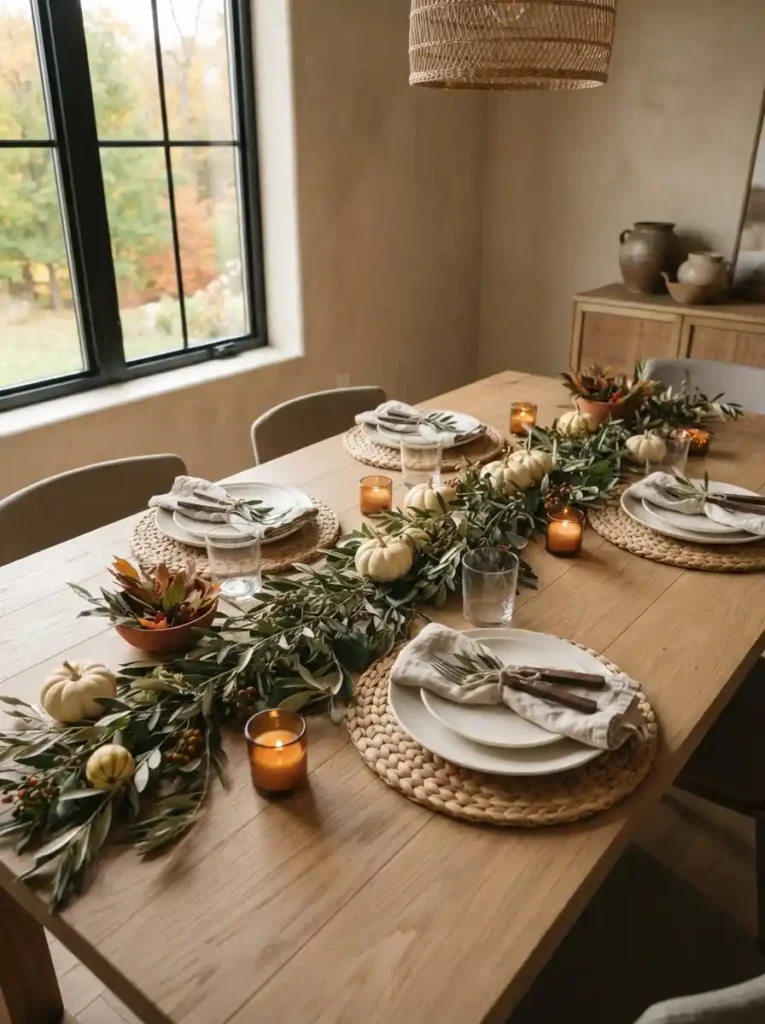
- Olive branches bring soft greenery and natural movement.
- Their muted color works beautifully with autumn neutrals.
- A loose arrangement keeps the table feeling fresh and relaxed.
- Cream pumpkins add seasonal warmth without overpowering the greenery.
- The branches pair easily with rustic or modern tableware.
An olive branch runner creates a softer take on seasonal decorating by bringing muted greenery into the autumn table. Lay several branches loosely down the center, allowing the leaves to overlap naturally without creating a perfectly symmetrical arrangement. Add cream pumpkins, small amber candles, or a few dried leaves between the branches for gentle seasonal contrast. The gray-green foliage works beautifully with ivory, beige, brown, and warm wood tones. Because the arrangement stays relatively low, it keeps sightlines open and leaves useful space for serving dishes, making it practical for relaxed family meals and larger gatherings.
For a more refined look, trim the branches so they follow the length of the table without extending too far beyond the edges. Pair them with simple ceramic plates and textured linen napkins rather than highly patterned tableware. The muted foliage provides enough visual interest on its own. I’ve noticed that greenery can also make autumn decorations feel less theme-heavy, which is helpful if you prefer a home that changes subtly with the seasons. The finished arrangement feels natural and timeless, blending autumn warmth with a fresh, understated quality that works beautifully in modern farmhouse and minimalist dining spaces.
23. Natural Woven Chargers
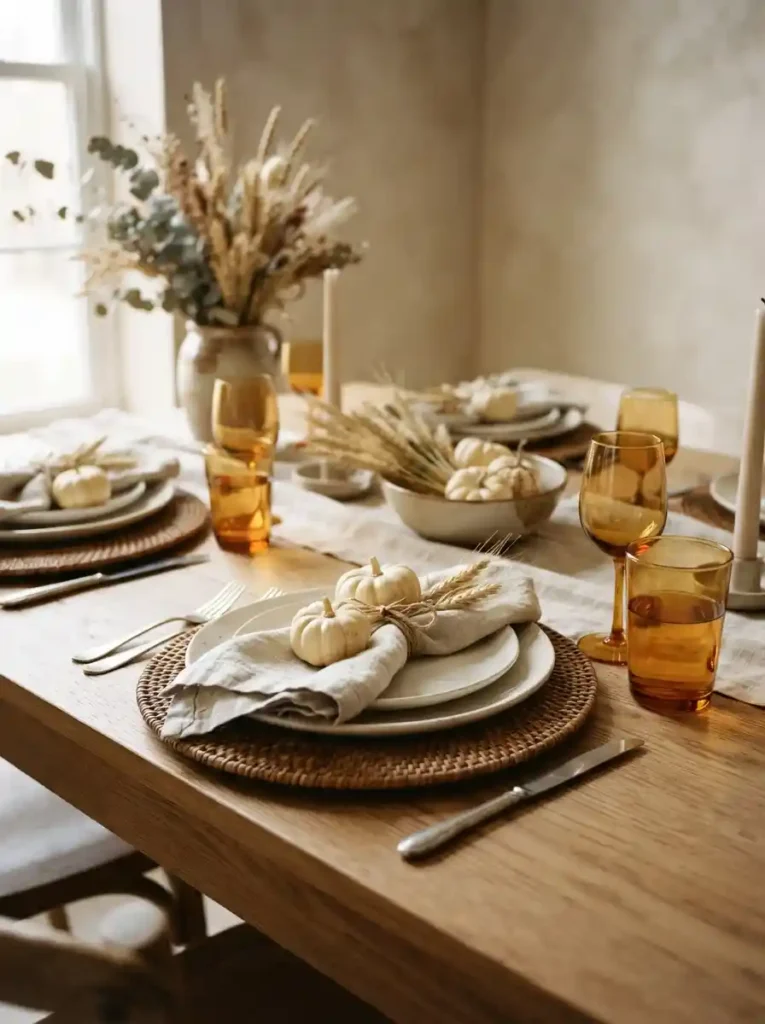
- Woven chargers add texture beneath simple dinnerware.
- Natural fibers create warmth without introducing strong colors.
- Layered plates make each seat look more thoughtfully styled.
- Linen napkins soften the woven material.
- Wood and rattan details create a cohesive organic palette.
Natural woven chargers can give an autumn table instant texture while keeping the color palette calm and versatile. Place a rattan, seagrass, or woven fiber charger beneath each ivory dinner plate, then add a soft linen napkin in oatmeal, rust, or cream. The contrast between rough woven fibers and smooth ceramic creates visual depth without needing many decorative objects. Add a few small pumpkins, dried wheat stems, or amber glasses to connect the setting with the season. This approach is especially useful when your tableware is simple because the chargers provide an additional layer that makes every place setting feel complete.
Choose chargers with a relatively subtle weave if you want a more refined appearance, or use chunkier fibers for a rustic farmhouse effect. Keep the centerpiece restrained so the texture around each seat remains noticeable. Woven materials also pair naturally with wooden tables, making them an easy choice for homes that already use organic finishes. In my experience, chargers are one of the most useful decorative layers because they can stay in place while plates and napkins change for different meals. The result is warm, practical, and visually rich without making the table feel crowded.
24. Soft Sage Greenery
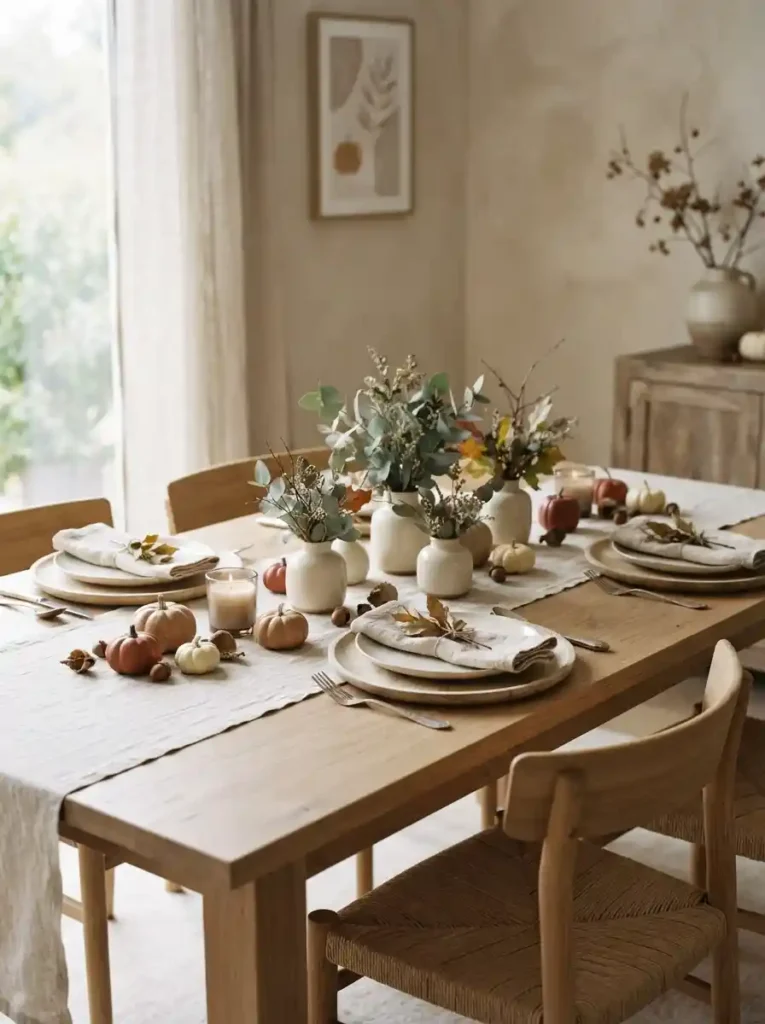
- Sage greenery introduces a calm contrast to traditional autumn colors.
- Muted foliage works beautifully with cream and warm brown.
- Small pumpkins provide just enough seasonal color.
- Ceramic vessels keep the arrangement clean and modern.
- Sage accents can bridge autumn decor with everyday styling.
Soft sage greenery offers a fresh alternative to stronger autumn colors while still creating a seasonal table. Arrange muted eucalyptus, dusty herbs, or sage-toned foliage in small cream ceramic vessels along the center. Add a few rust and cream pumpkins to introduce warmer autumn notes without overwhelming the greenery. Pair the arrangement with ivory plates, beige linen, and light wood chargers for a calm, organic palette. This style works particularly well in modern homes because the muted colors blend naturally with neutral interiors. The table feels seasonal but not overly themed, making it easy to leave the arrangement in place throughout autumn.
Keep the greenery slightly varied in height and shape so the centerpiece feels natural rather than overly structured. Small ceramic vessels can be spaced evenly along a long table or grouped together on a shorter one. If the room already contains sage or olive tones, repeating them at the table creates an effortless connection between the dining area and surrounding decor. That subtle repetition is useful when decorating an open-plan home because it helps different spaces feel coordinated. The finished setting is calm, textured, and welcoming, with just enough pumpkin and warm color to signal the season.
25. Warm Candlelit Setting
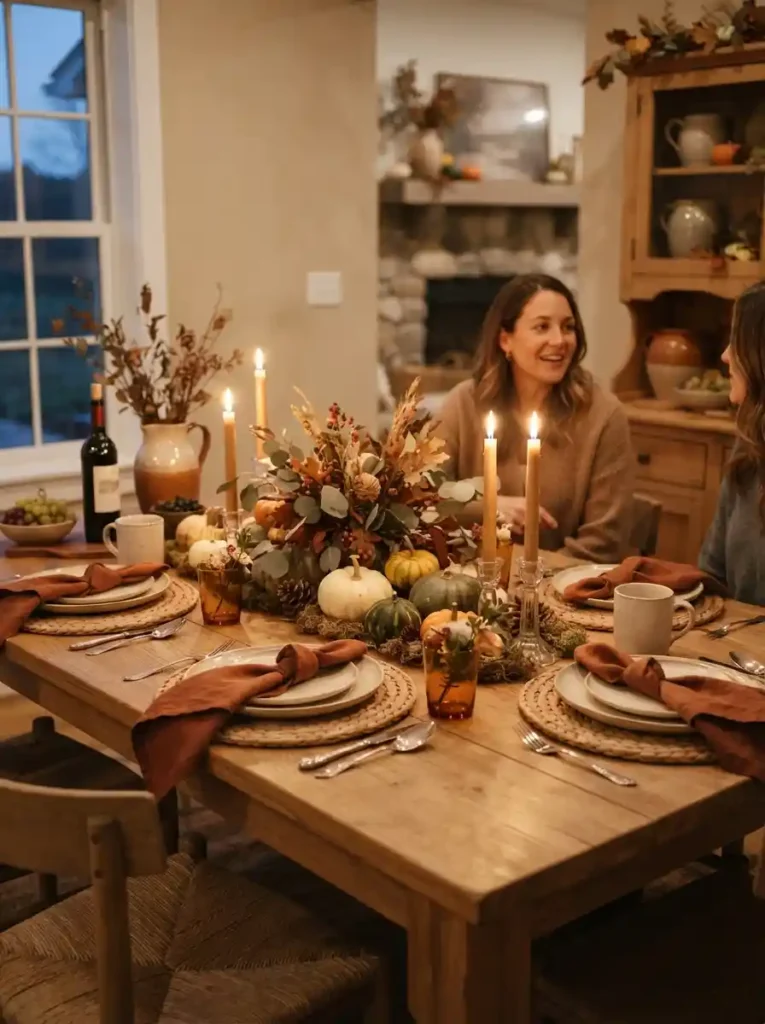
- Candlelight gives the entire table a cozy evening atmosphere.
- Warm neutrals keep the setting inviting rather than overly dramatic.
- Small pumpkins add recognizable seasonal character.
- Glass candleholders reflect light across plates and tableware.
- Soft linen balances the glow with natural texture.
Warm candlelight can completely transform an autumn table once the sun goes down. Place several taper candles or small votives along the center, using clear or amber glass holders to let the light spread naturally. Surround them with cream pumpkins, dried foliage, and simple linen accents for a relaxed seasonal arrangement. Keep the candle heights varied but avoid placing anything too tall directly in front of guests. The gentle glow makes familiar tableware feel more special while creating an inviting atmosphere for dinner. This is a simple finishing touch that can make the entire setting feel intentionally styled.
Choose warm ivory, rust, brown, and muted gold for the surrounding details so the candlelight has plenty of soft colors to complement. Natural wood and woven chargers add texture without reflecting too much light, while glass holders create small highlights across the table. Make sure candles are positioned securely and away from napkins, foliage, and other flammable materials. I’ve noticed that lighting often has a bigger effect on the final atmosphere than adding another decoration. A thoughtfully lit table feels intimate and welcoming, helping even simple autumn details look beautiful during relaxed gatherings.
Conclusion
A beautiful autumn table does not require complicated decorating or a huge collection of seasonal pieces. These Fall Table Setting Ideas show how simple changes—layered linens, natural textures, warm candlelight, pumpkins, greenery, and thoughtful place settings—can create a completely different atmosphere. Choose one idea that fits your style, then build around pieces you already have at home. I’ve seen how small changes like these can make a dining space feel more welcoming and special. Save this post on Pinterest for your next gathering, try your favorite setup, and share these ideas with someone who loves creating a cozy autumn home.