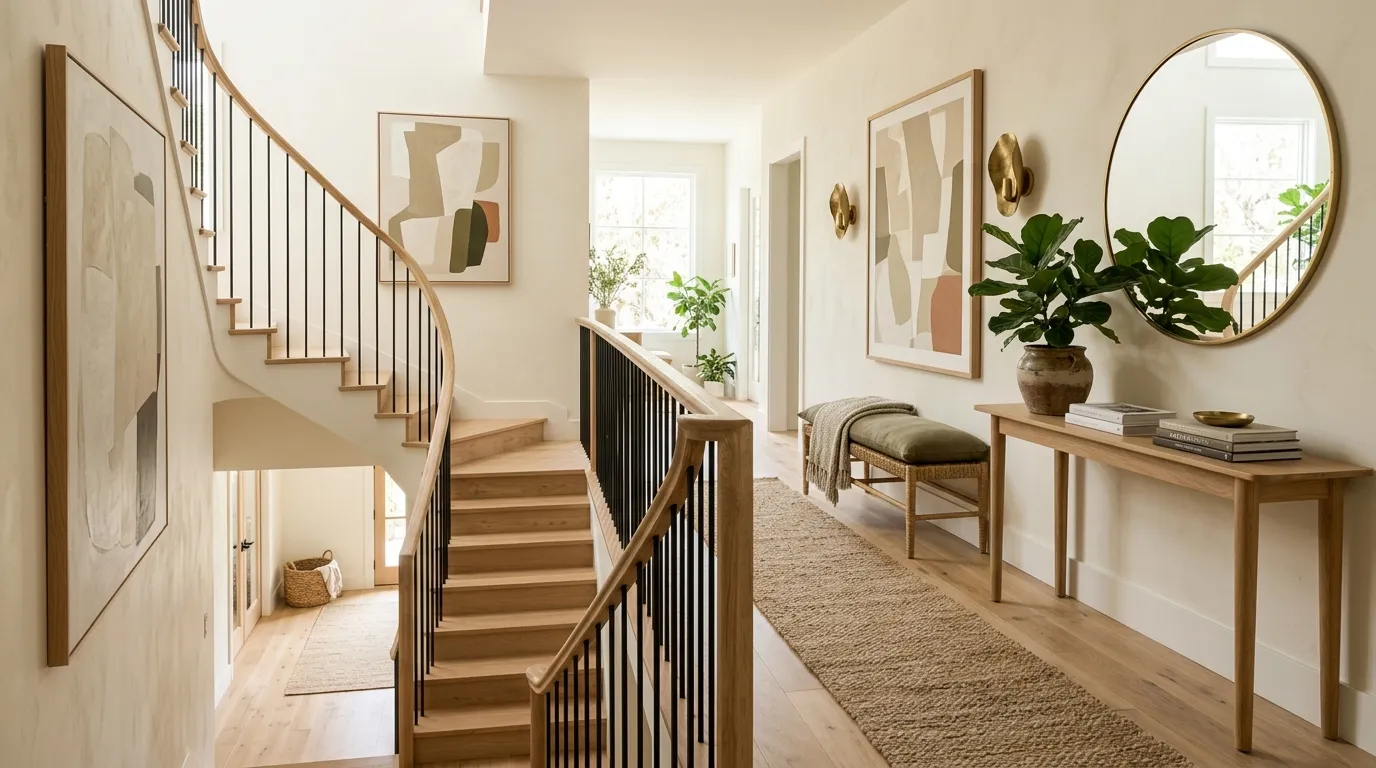
20 Gorgeous Staircase Wall and Landing Decor for Stylish Homes
Your staircase wall could be so much more than an empty stretch of paint.
Staircase Wall and Landing Decor can turn this overlooked area into one of the most beautiful details in your home.
Whether your landing feels plain, your stairway lacks personality, or you simply want a fresh decorating idea, the right details can make a surprising difference.
Think oversized artwork, warm wood accents, mirrors, gallery displays, plants, lighting, and thoughtful architectural touches.
Each idea can add character without taking away valuable walking space.
In my experience, staircases are often decorated last, even though they connect multiple rooms and are visible from so many angles.
That makes them a perfect opportunity to create visual flow throughout your home.
Inside, you’ll find practical ideas for different styles, layouts, and decorating needs, along with simple details that can make your staircase feel warmer, more polished, and intentionally designed.
Also view: 20 Creative Thanksgiving Table Decor Ideas for Gatherings
1. Oversized Statement Art
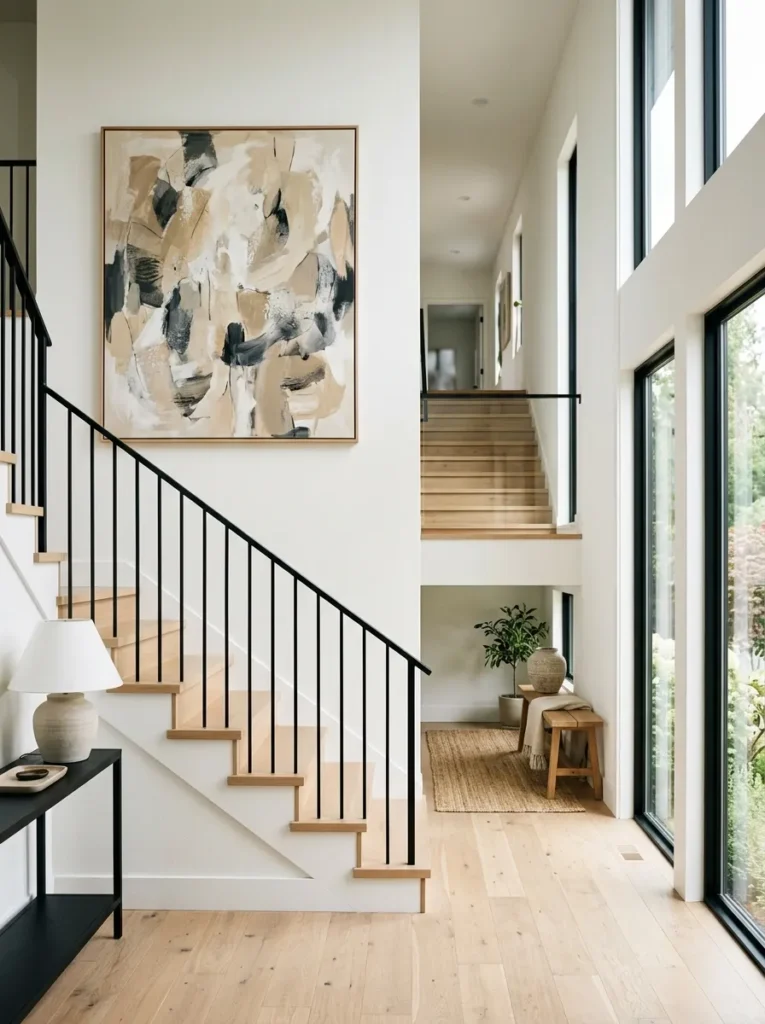
- Creates an instant focal point on an otherwise empty staircase wall.
- Makes a narrow vertical area feel intentional and finished.
- Choose colors that already appear in nearby rooms for better flow.
- A slim frame keeps the walkway feeling open and uncluttered.
A blank staircase wall can become the quiet focal point your home has been missing. A large framed artwork gives the vertical space purpose without making the landing feel crowded. Choose one oversized piece with colors already repeated in nearby rooms, such as warm beige, charcoal, olive, or muted blue. Hang it at a comfortable viewing height along the stair run, keeping the composition aligned with the slope. In my experience, one confident artwork often looks more polished than several small pieces competing for attention. It also creates an easy visual anchor when viewed from the entryway below.
Oversized artwork works especially well when your staircase has simple architecture, plain walls, or minimal furnishings. A textured canvas, abstract print, botanical study, or large landscape can introduce depth while keeping the walkway open and practical. Use a slim frame when the landing is narrow, and leave enough surrounding wall visible so the piece feels intentional rather than squeezed into the space. Soft daylight will reveal texture beautifully during the day, while a nearby picture light can add warmth at night. The result is a refined landing that feels decorated without sacrificing the clean lines people appreciate in busy homes.
2. Framed Gallery Grid
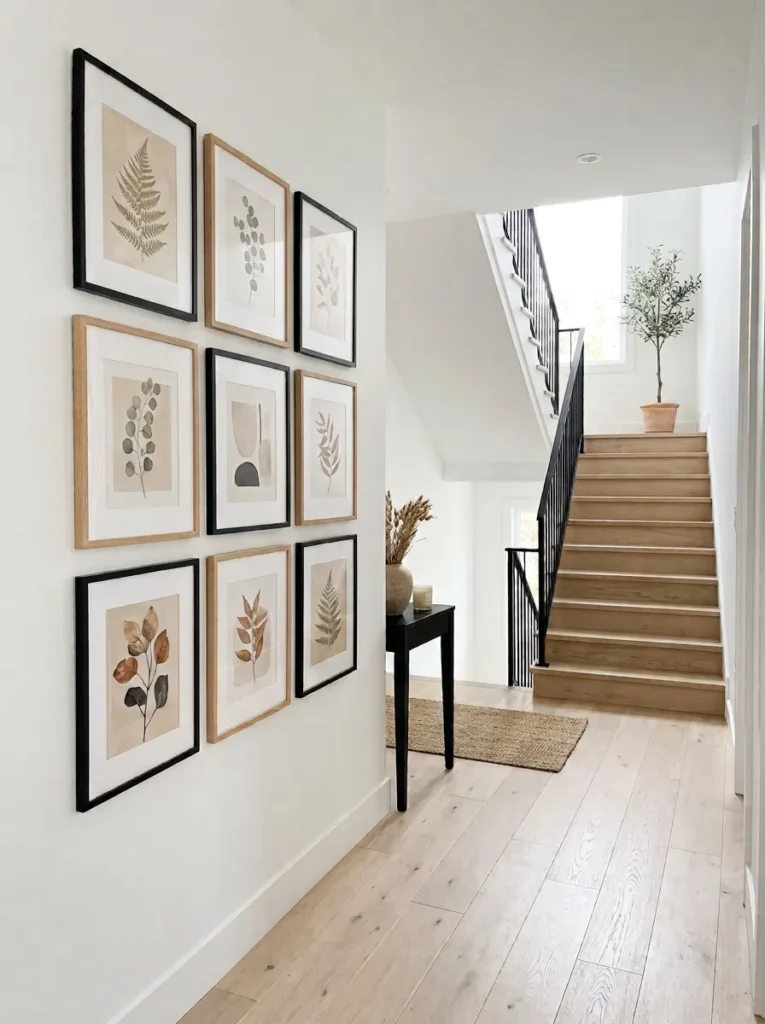
- Adds personality while keeping the staircase wall visually organized.
- Matching frames create a polished look even with affordable artwork.
- Botanical prints, family photos, and abstract pieces can work together.
- Paper templates make it easier to test spacing before drilling.
A staircase can feel like a transition zone rather than a finished room until the wall receives intentional styling. A simple gallery grid solves that problem by adding rhythm and personality along the vertical space. Choose three to six coordinated prints, then arrange them with equal spacing and a clear visual line. Black, white, brass, or natural wood frames can work beautifully depending on your existing finishes. I’ve noticed that consistent frame sizes make even inexpensive artwork look more considered. Keep the outer edges balanced, and avoid placing frames so low that they interfere with shoulders or daily movement.
For the landing itself, extend the gallery arrangement slightly beyond the staircase so the eye naturally connects both areas. Family photographs, botanical illustrations, architectural sketches, or neutral abstract prints can all work when they share a color thread. Before drilling holes, place paper templates on the wall to test spacing and alignment from several viewpoints. This small step can prevent a common mistake: creating a display that looks balanced from the stairs but awkward from the hallway. Use secure picture hardware, especially on busy stairways, and keep heavier frames firmly supported. The finished arrangement adds warmth without consuming valuable floor space.
3. Coordinated Landscape Prints
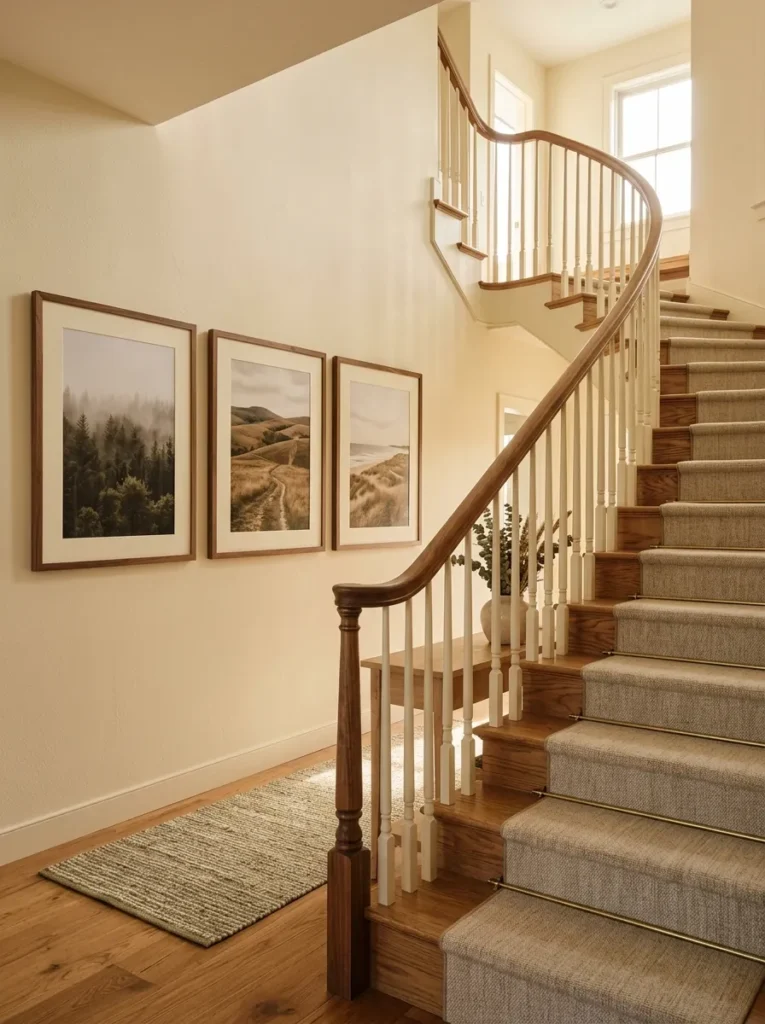
- Brings warmth and softness to a tall staircase wall.
- Matching frames make several artworks feel like one intentional display.
- Earthy landscapes can connect naturally with wood flooring and railings.
- Larger prints remain visible from both the stairs and lower level.
If your staircase feels plain, a trio of coordinated prints can add warmth without turning the landing into a crowded gallery. Choose three larger artworks with related colors, then place them in matching frames to create a calm, connected look. Landscapes, botanical prints, or simple line art are especially easy to blend with existing decor. Natural walnut or oak frames pair beautifully with cream, white, or soft greige walls. I’ve seen this work well in homes where the staircase is visible from the living room because the artwork creates a gentle visual bridge between the two spaces.
The key is keeping the arrangement proportional to the wall and staircase width. Hang the prints in a vertical or gently staggered composition, following the direction of the stairs while maintaining comfortable spacing. Choose artwork with enough contrast to be visible from the lower level, but avoid extremely bold colors if the surrounding rooms are quiet. A picture light or warm wall sconce can highlight the frames after sunset. This simple setup gives the landing a finished appearance and makes the stairway feel more connected to the home’s overall decorating style. It is polished, practical, and easy to update later.
4. Vertical Wood Slat Wall
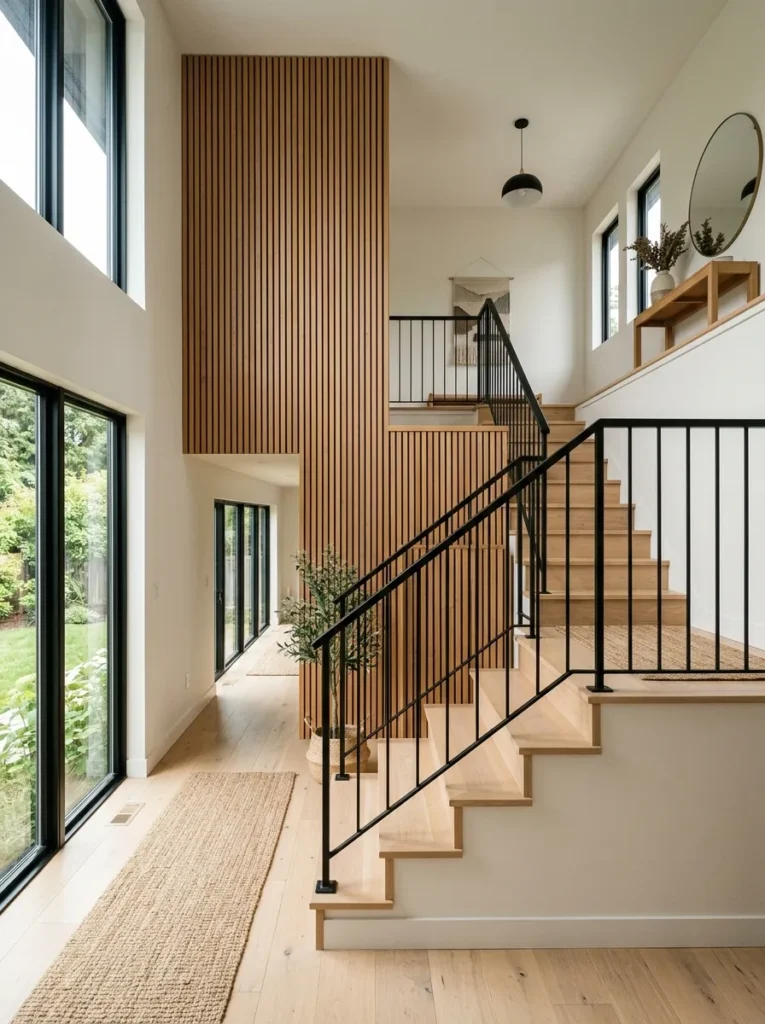
- Adds architectural texture without taking up floor space.
- Gives a tall staircase wall a stronger sense of proportion.
- Natural wood tones make white or neutral walls feel warmer.
- Narrow slats can visually emphasize the height of the staircase.
A plain staircase wall can gain instant architectural character with vertical wood slats. The narrow lines naturally emphasize the height of the wall while creating texture that changes beautifully as daylight moves across the surface. Light oak works especially well with white, cream, or warm greige paint, while darker walnut creates a richer contemporary effect. Keep the slats evenly spaced for a clean appearance, and consider covering only part of the wall if a full treatment feels too strong. This approach is particularly useful when you want visual interest without adding shelves, artwork, or furniture to a narrow passage.
Wood slats can also help connect the staircase with nearby rooms when the same timber tone appears elsewhere in the home. For example, matching the slats to flooring, a console table, or ceiling beams creates subtle continuity without making everything look identical. If you have a busy household, choose a durable finish that can handle occasional bumps and fingerprints. Concealed lighting along one edge can emphasize the texture after dark, while daylight keeps the surface feeling natural during the day. The result is a sophisticated landing feature that feels built into the architecture rather than simply decorated.
5. Sculptural Wall Sconces
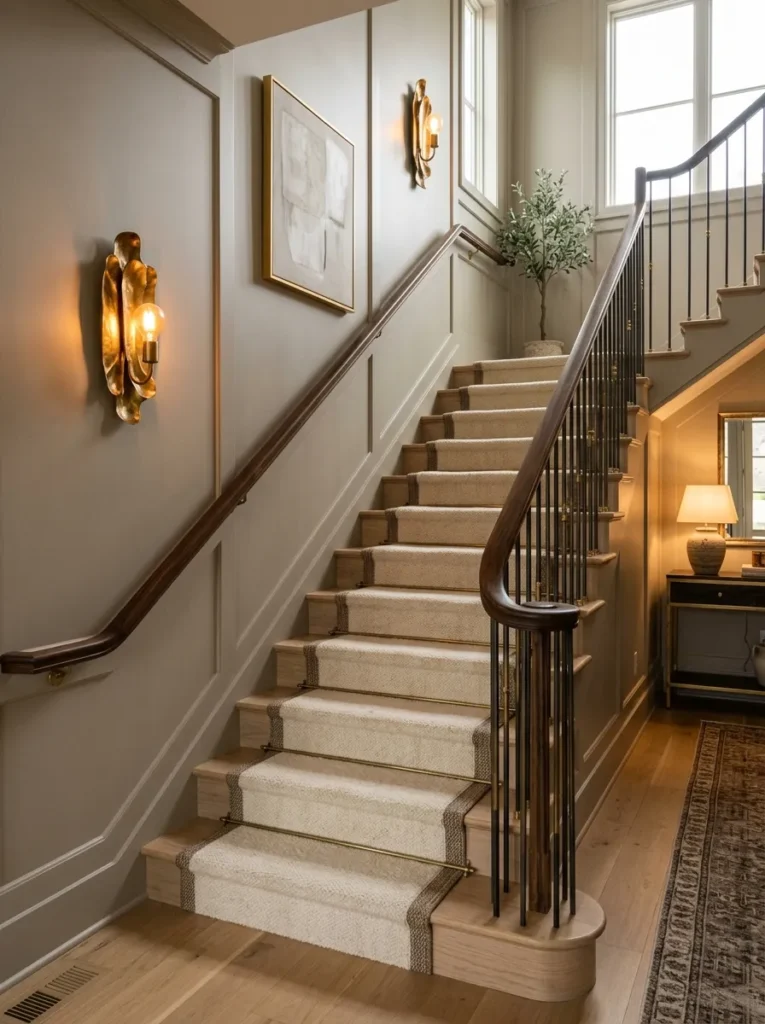
- Adds decorative interest while providing useful evening lighting.
- Creates soft shadows that make plain walls feel layered.
- Slim sconces work particularly well beside narrow staircases.
- Matching finishes can reinforce existing hardware and railing details.
Beautiful lighting can completely change how a staircase wall looks after sunset. Sculptural sconces combine decoration with function, giving the landing a soft glow while adding another layer of visual interest. Look for slim fixtures with curved metal arms, fluted glass, linen shades, or simple geometric shapes. Brass, aged bronze, and matte black can all work depending on your existing hardware. I’ve noticed that warm bulbs make staircases feel especially welcoming at night because they soften hard architectural lines. Position fixtures where they illuminate the path without creating glare for anyone walking up or down.
For a balanced arrangement, repeat the sconces at comfortable intervals rather than placing several fixtures too close together. If the staircase wall is long, two or three matching lights can create a steady rhythm that guides the eye toward the landing. Pair them with restrained artwork or leave surrounding space open so the fixtures remain the stars. Dimmers are worth considering because they let you shift from brighter evening visibility to a softer ambient glow. Always follow appropriate electrical and installation requirements, especially around stairways. The finished space feels warmer, safer, and more intentionally designed.
6. Floating Picture Ledge
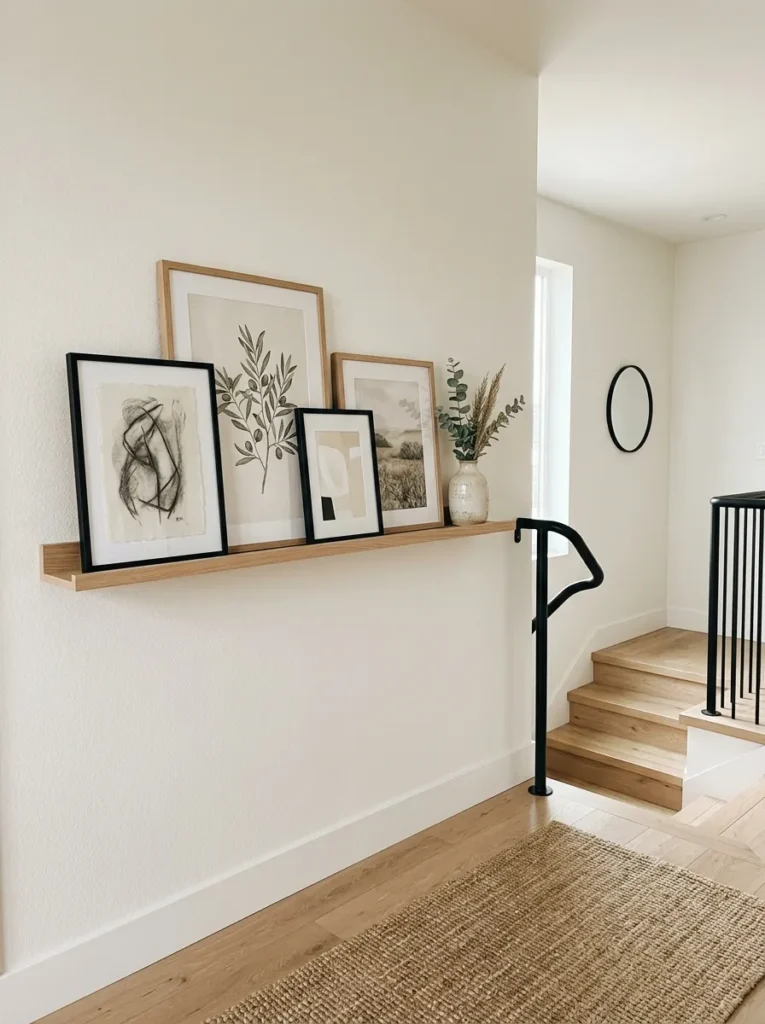
- Provides flexible display space without installing deep shelving.
- Makes it easy to rotate artwork as seasons or tastes change.
- A narrow ledge keeps the staircase visually light.
- Layering frames creates depth without overwhelming the wall.
A floating picture ledge is a smart way to decorate a staircase when you want flexibility without committing to a permanent gallery arrangement. The shallow shelf gives you a place to lean framed prints, photographs, small mirrors, or lightweight decorative objects while keeping the floor completely clear. Choose a ledge that is deep enough to support your frames but visually slim enough for the walkway. Layer two or three pieces at different heights to create depth. This setup works especially well for renters or anyone who enjoys refreshing their decor regularly without moving multiple wall-mounted frames.
Keep the display restrained so the landing does not become visually heavy. Start with one larger frame at the back, add a smaller piece in front, then introduce one simple accent such as a small ceramic vase or trailing plant. Repeating colors from your staircase runner, flooring, or nearby rooms will make the arrangement feel connected. Secure the ledge properly and avoid placing fragile or heavy objects where they could fall into the stair path. In my experience, this flexible approach makes seasonal updates surprisingly easy while keeping the wall polished between decorating changes.
7. Round Mirror Cluster
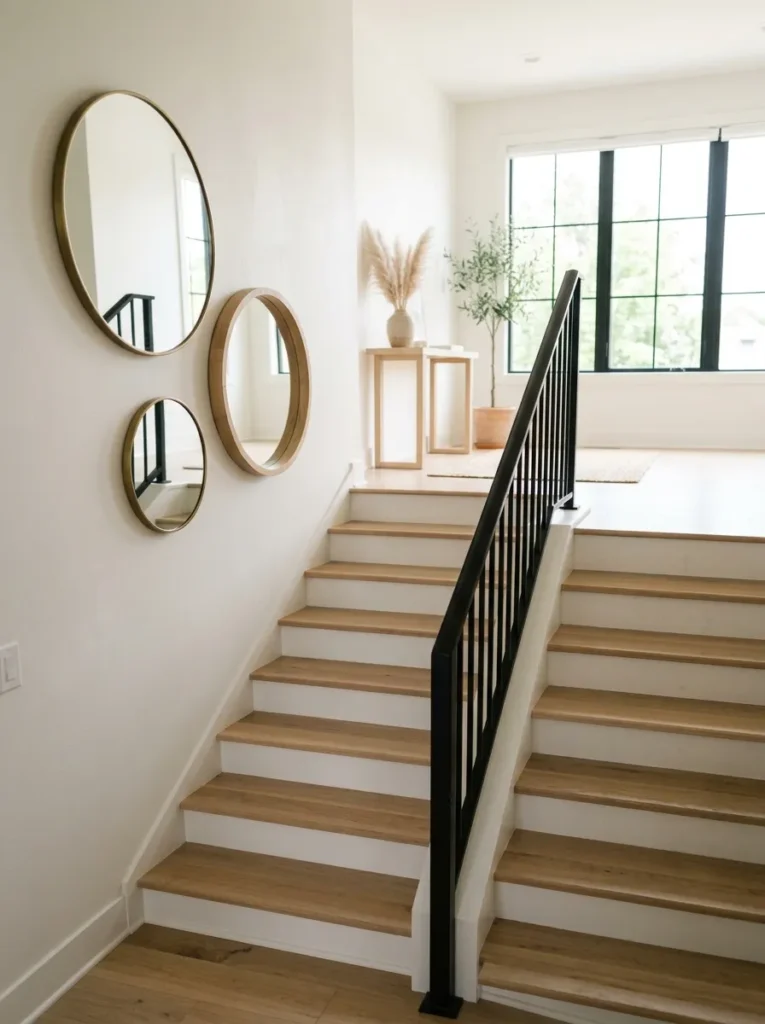
- Softens the straight lines of stairs and railings.
- Reflects natural light and makes the landing feel brighter.
- A mix of round mirrors adds dimension without bulky furniture.
- Repeating metallic or wood frames creates a cohesive finish.
Round mirrors bring a softer shape to a staircase dominated by straight lines, steps, railings, and door frames. Grouping several mirrors creates a collected focal point while reflecting daylight around the landing. Choose two or three different sizes and keep their frames within a related palette, such as brass, black, or natural wood. This arrangement is especially helpful in darker stairwells because reflective surfaces can bounce available light into the passage. I’ve noticed that placing the largest mirror slightly off-center often creates a more relaxed composition than lining every piece up perfectly.
Before hanging the mirrors, arrange them on the floor to test the overall cluster and spacing. Keep enough wall visible between each piece so the display feels airy rather than crowded. If your staircase is narrow, choose shallow-profile mirrors and avoid extending the arrangement too far into the walking zone. Pair the reflective surfaces with simple surrounding decor so they remain visually prominent. The result is a landing that feels brighter, more dimensional, and thoughtfully styled. It also gives you small reflective moments as you move through the home without requiring additional furniture or bulky storage.
8. Built-In Reading Nook
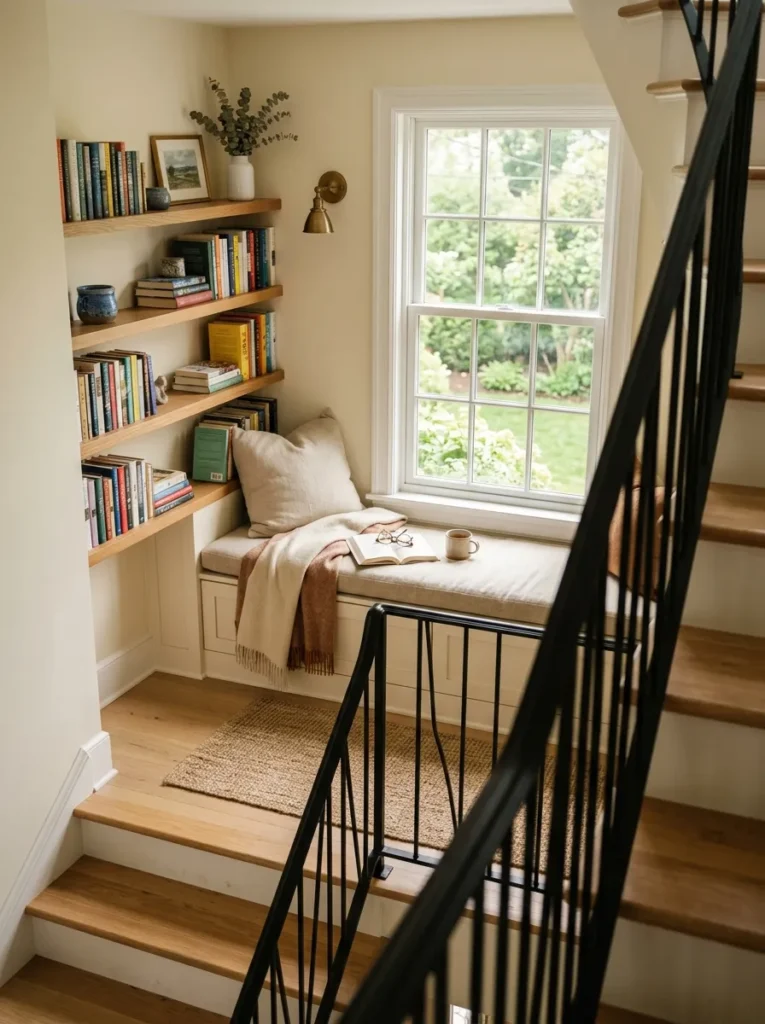
- Turns an unused landing corner into a purposeful destination.
- Adds seating without requiring a large room.
- Open shelves provide a practical place for books and accessories.
- Soft textiles make the transition area feel more inviting.
An unused landing can become far more useful when you turn a wider corner into a compact reading nook. A built-in bench fitted beneath a window or along a blank wall creates seating without taking over the circulation path. Add a comfortable cushion, one or two pillows, and shallow shelves for books or small decorative pieces. The design works particularly well in homes with wider upper landings where an empty corner otherwise feels disconnected. In my experience, even a small seat can make a hallway feel more intentional because it gives the space a clear purpose.
Keep the furniture proportions modest so the staircase remains easy to navigate. A built-in bench with drawers underneath can provide hidden storage for blankets, shoes, or seasonal items, while open shelves keep favorite books within reach. Use durable upholstery if the area receives frequent family traffic, and choose materials that connect with nearby flooring or trim. Soft lighting from a small wall fixture can make the nook usable after dark without flooding the entire stairway. The finished corner feels cozy yet practical, turning overlooked square footage into a useful extension of the home.
9. Textured Plaster Finish
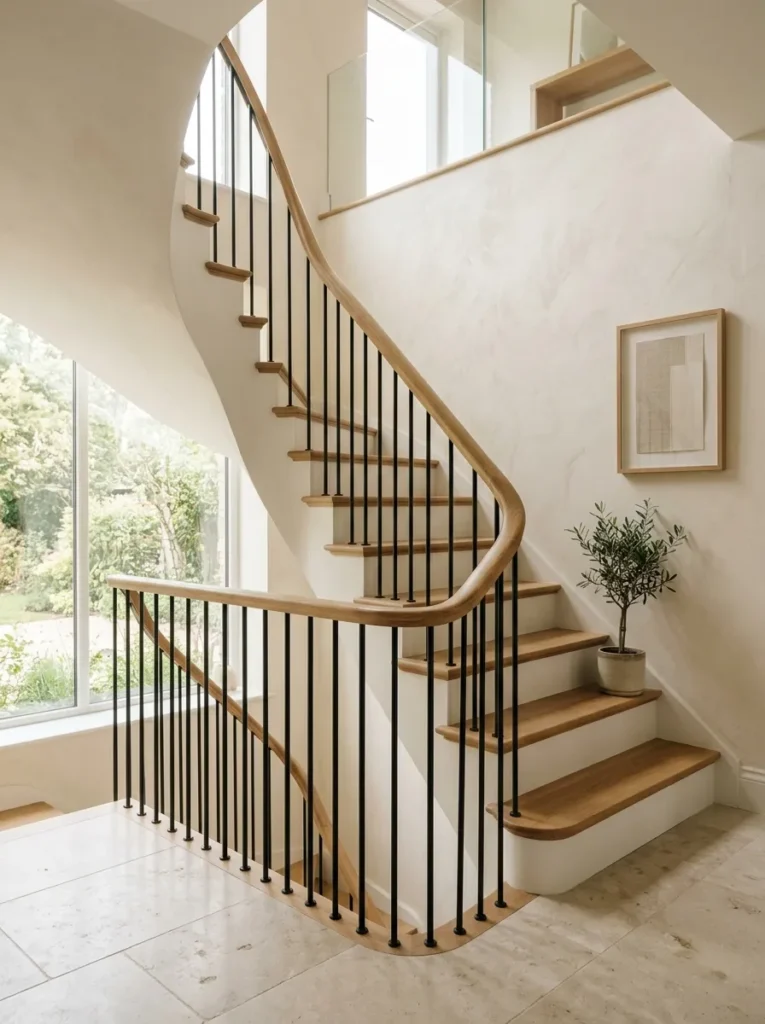
- Gives a plain wall depth without adding furniture or artwork.
- Subtle texture hides minor surface imperfections beautifully.
- Neutral plaster tones create a calm backdrop for changing decor.
- Works with modern, organic, Mediterranean, and transitional interiors.
Sometimes the strongest staircase styling comes from changing the wall itself rather than adding more decoration. A subtle plaster finish introduces movement, depth, and tactile character while keeping the overall palette quiet. Warm ivory, soft taupe, sand, or creamy beige can create a sophisticated background that works with both modern and traditional interiors. The irregular surface catches natural light differently throughout the day, making the wall feel alive without becoming visually busy. This is a useful choice when you want your staircase to look finished but prefer understated materials over a gallery-style display.
A textured wall also provides a flexible backdrop for future decorating changes. You can leave it nearly bare, add one sculptural object, or introduce simple artwork without worrying about visual competition. If using a decorative plaster product, prepare the surface properly and follow the manufacturer’s application guidance for the specific material. Test a sample first because texture and color can appear different under warm and cool lighting. That small preparation step can make a significant difference. The finished staircase feels layered and architectural while preserving an uncluttered appearance that works beautifully in everyday homes.
10. Slim Console Styling
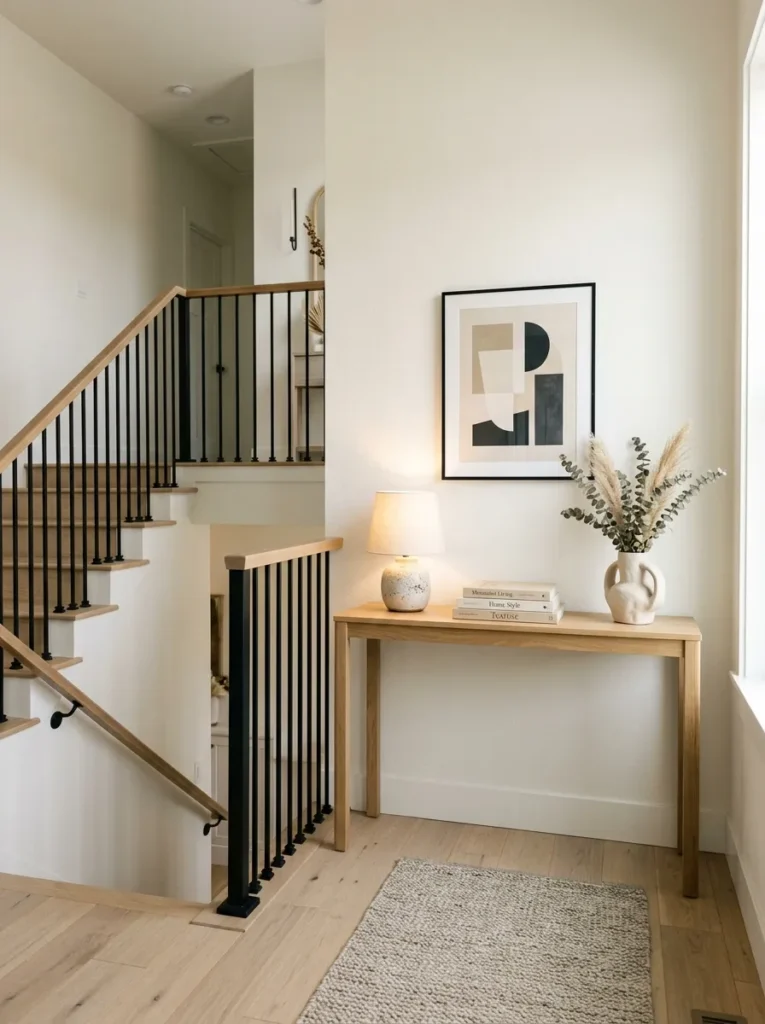
- Gives a wider landing a practical decorative anchor.
- Creates a place for a lamp, vase, or small artwork.
- A narrow profile preserves comfortable walking space.
- Repeating nearby wood or metal finishes makes the setup cohesive.
A wider landing can benefit from one carefully chosen piece of furniture, and a slim console is often the easiest solution. Its narrow depth creates a visual anchor without blocking the walkway, while the surface provides room for a lamp, vase, books, or a small decorative bowl. Choose a console that leaves generous clearance around the stairs and doors. Light oak, walnut, painted wood, or slim metal frames can all work beautifully. In my experience, keeping the tabletop lightly styled makes the landing feel more spacious and prevents this high-traffic area from becoming another clutter collection point.
Use the wall above the console to create vertical balance with one large artwork, a mirror, or a small coordinated arrangement. A lamp adds warmth at night, while a ceramic object or branch-filled vase introduces texture during the day. Keep heavier pieces toward the center and avoid placing anything unstable near the edge. If children or pets frequently use the staircase, prioritize rounded edges and securely positioned accessories. This combination turns an empty landing into a polished transition zone with a clear visual purpose. It can also subtly connect the staircase to nearby living spaces through repeated materials, colors, and finishes.
11. Botanical Stair Gallery
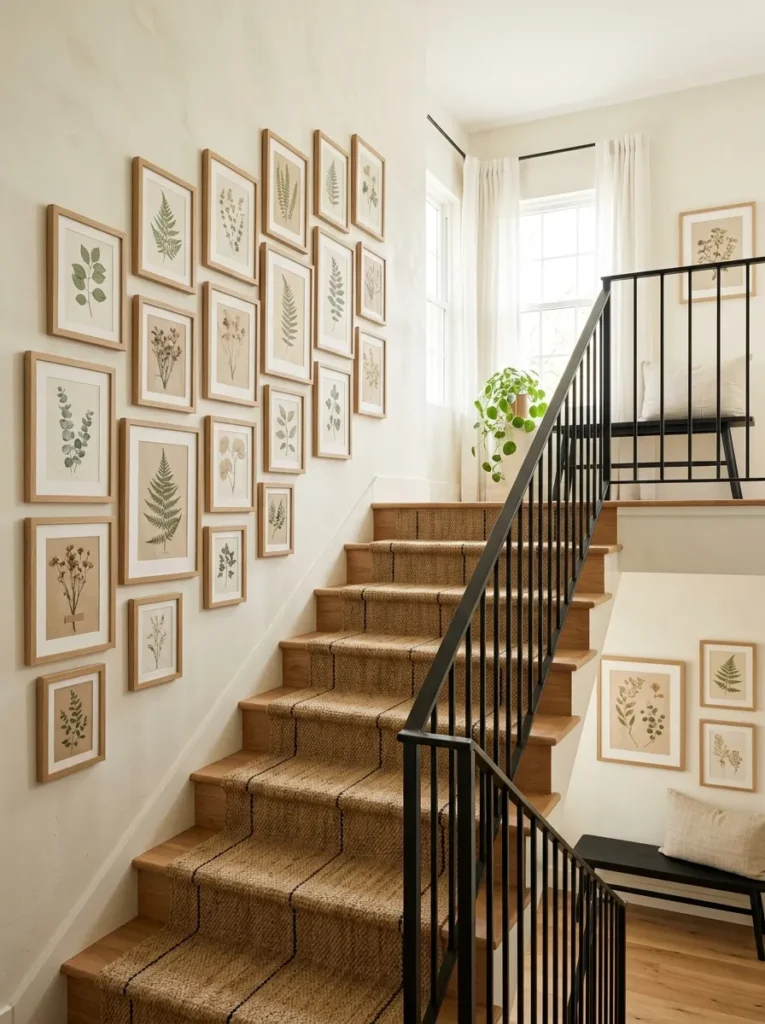
- Introduces natural color without overwhelming a neutral interior.
- Creates a gentle visual rhythm along the stair wall.
- Botanical prints pair naturally with wood and woven textures.
- Similar artwork styles keep the display looking intentional.
Botanical artwork can make a staircase feel fresher and more connected to nature without requiring actual plants along the stairs. Arrange a series of leaf, branch, herb, or floral prints in a consistent style, using natural wood frames to reinforce an organic look. Soft greens, muted browns, cream, and dusty blue are easy to blend with neutral interiors. The repeated shapes create movement as the eye travels upward, which makes the stair wall feel intentionally decorated rather than simply filled. This approach is particularly effective when nearby rooms already use woven materials, timber, linen, or other natural textures.
Keep the arrangement visually connected to the staircase rather than treating it like a random collection of pictures. A gentle diagonal alignment can follow the stair direction, while consistent frame spacing keeps the display orderly. If the wall is tall, slightly larger prints will remain readable from the lower level. Use archival-quality prints if you want the artwork to retain its appearance over time, particularly in spaces exposed to strong sunlight. The finished gallery adds personality, softness, and color while maintaining a calm atmosphere. It is an easy way to bring nature-inspired character into an otherwise overlooked transition space.
12. Arched Wall Detail
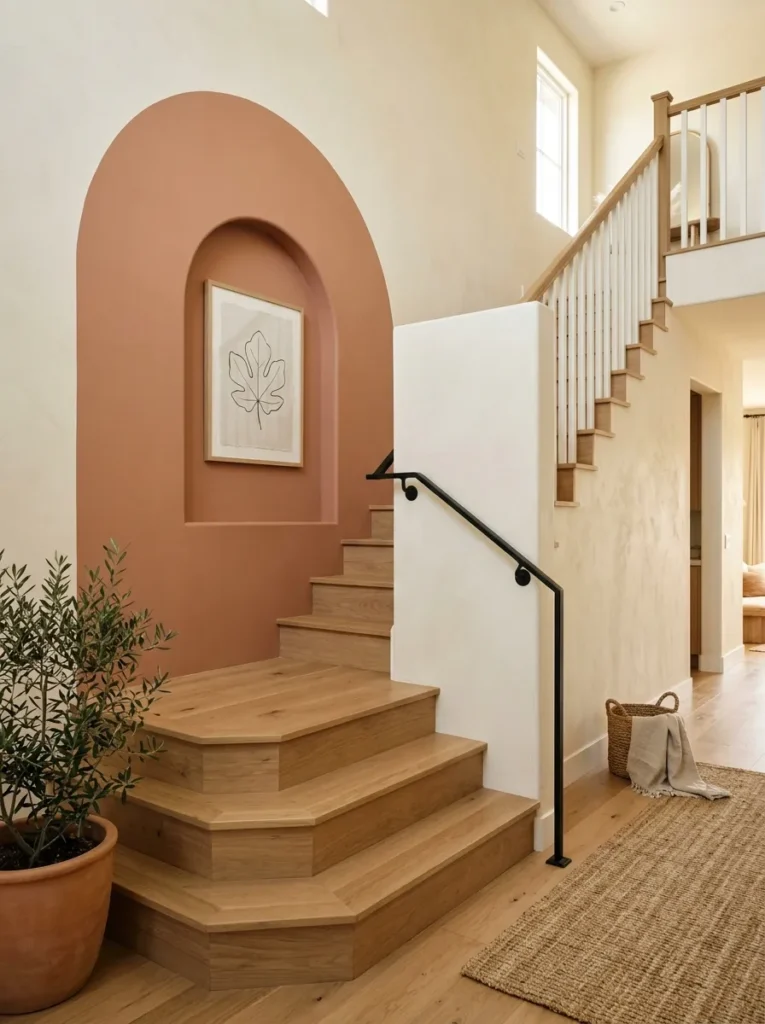
- Adds architectural softness to a boxy staircase area.
- Creates a natural focal point without filling the wall with objects.
- Painted arches can define artwork or a small display area.
- Curved shapes balance angular stairs and railings.
Curved shapes can instantly soften a staircase filled with hard architectural lines. A painted arch is a simple way to create that contrast without adding bulky materials or permanent construction. Choose a muted shade such as clay, dusty rose, olive, warm beige, or soft terracotta, then use the arch to frame one artwork, a small mirror, or an intentionally empty wall area. The shape naturally draws attention upward and gives a tall staircase wall a clear focal point. I’ve seen painted arches work especially well in homes where the rest of the architecture is simple and angular.
For the strongest effect, keep the interior of the arch relatively restrained. One framed print, small wall light, or sculptural object is usually enough because the painted shape already provides visual interest. Use painter’s tape and a template to establish the curve before applying color, and check the shape from both the bottom and top of the stairs. Lighting matters too: daylight will emphasize the color softly, while warm evening light can make earthy tones feel richer. The result is an inexpensive but distinctive update that gives the landing more personality while keeping the overall design uncluttered.
13. Statement Stair Runner
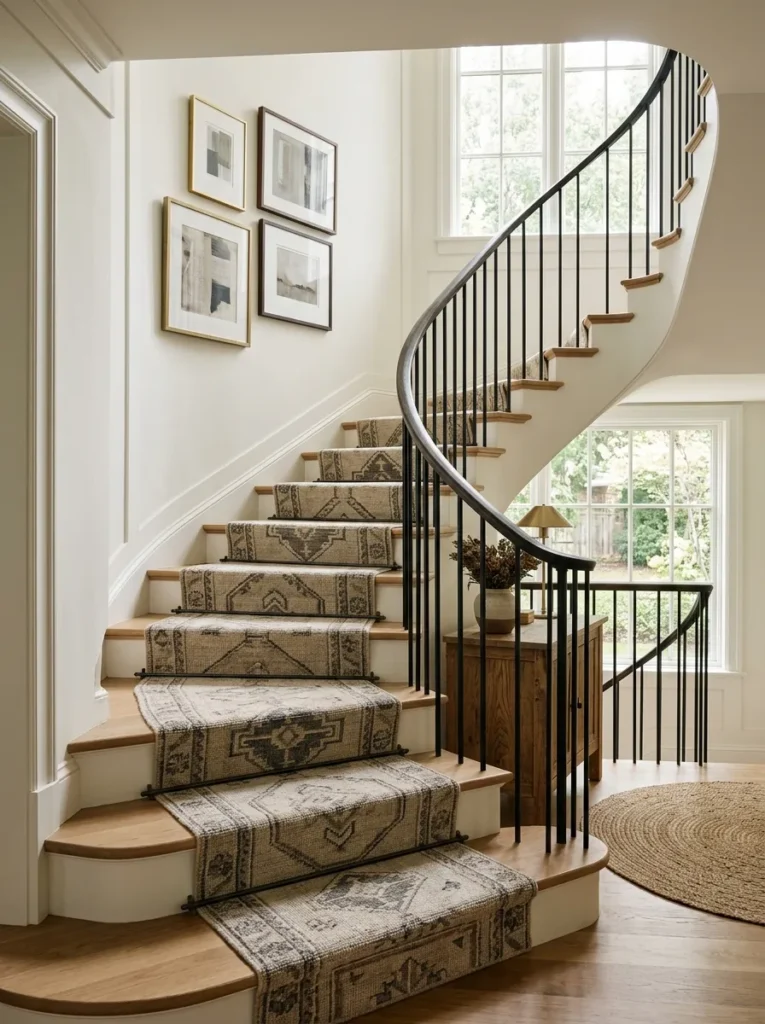
- Adds color and texture directly to the staircase.
- Helps visually connect the stairs with the decorated landing.
- A subtle pattern can hide everyday marks in busy homes.
- Natural fibers create warmth without making the space feel heavy.
A beautiful staircase should feel connected from the first step to the landing, and a well-chosen runner can create that visual link instantly. Look for subtle stripes, geometric motifs, or muted patterns that complement the colors already used upstairs. Beige, taupe, charcoal, olive, and warm cream are versatile choices for a calm interior. The runner adds softness beneath your feet while giving the staircase more personality. In my experience, patterned runners are especially practical in busy homes because small marks and everyday wear are less noticeable than they would be on a completely plain surface.
Use the runner to reinforce the overall direction of your staircase wall styling rather than treating it as a separate feature. For example, a runner with warm brown details can echo wooden frames or a console table on the landing. Make sure the runner is professionally secured with appropriate stair hardware or installation methods so it remains stable during everyday use. If the staircase receives limited daylight, avoid very dark patterns that could make it feel enclosed. A balanced runner can transform the entire stairway, making the transition between floors feel warmer, more finished, and visually cohesive.
14. Minimalist Family Photos
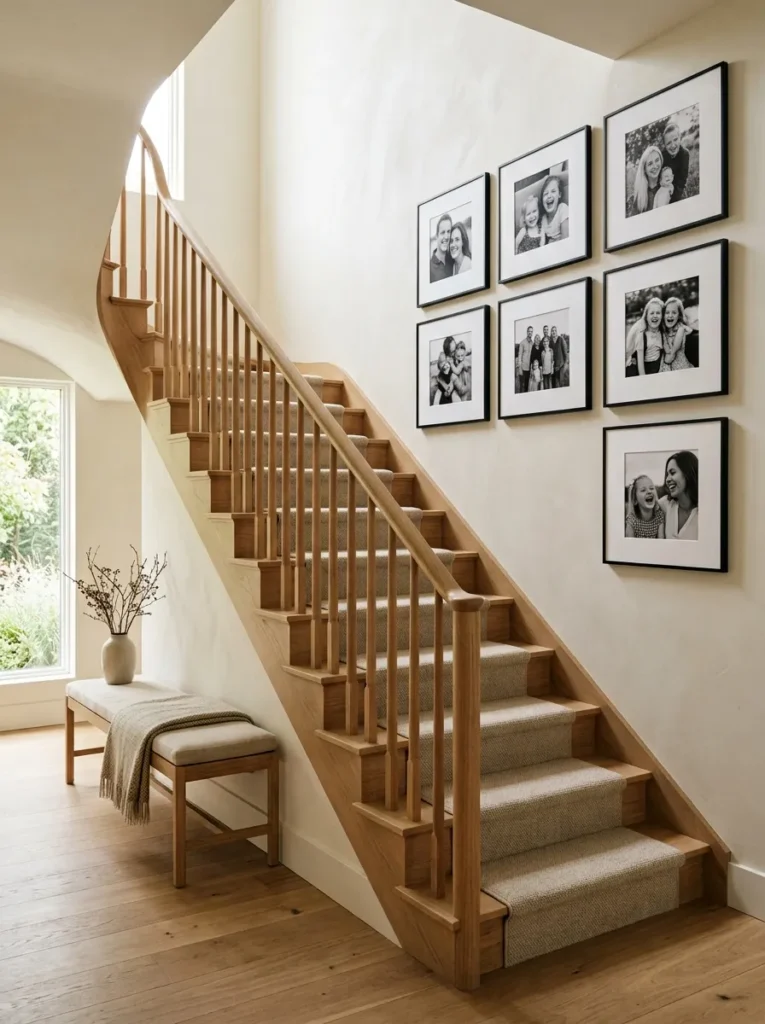
- Makes the staircase feel personal without creating visual clutter.
- Black-and-white images provide a timeless appearance.
- Consistent frames make different photographs feel coordinated.
- A restrained display keeps attention on meaningful moments.
Personal photographs can make a staircase feel like part of a real home rather than a carefully staged space. Instead of covering the wall with dozens of images, select a small collection of meaningful family moments and display them in matching frames. Black-and-white photography works particularly well because it reduces visual noise while allowing the memories themselves to remain the focus. Keep the frame style consistent and use even spacing to create a clean arrangement. This is one of the easiest ways to add personality while maintaining a polished look that fits modern, traditional, or transitional interiors.
Choose photographs with a similar visual treatment when possible, such as monochrome images, soft film tones, or consistent cropping. Arrange the frames along the staircase wall while maintaining a comfortable height and secure mounting. If you are updating an existing display, start by removing anything that no longer feels meaningful rather than simply adding more pieces. That small edit can make a surprisingly large difference. The result is a warm, personal feature that visitors notice as they move through the house. It also gives an otherwise overlooked passage a sense of history without requiring expensive decorative pieces.
15. Warm Neutral Paneling
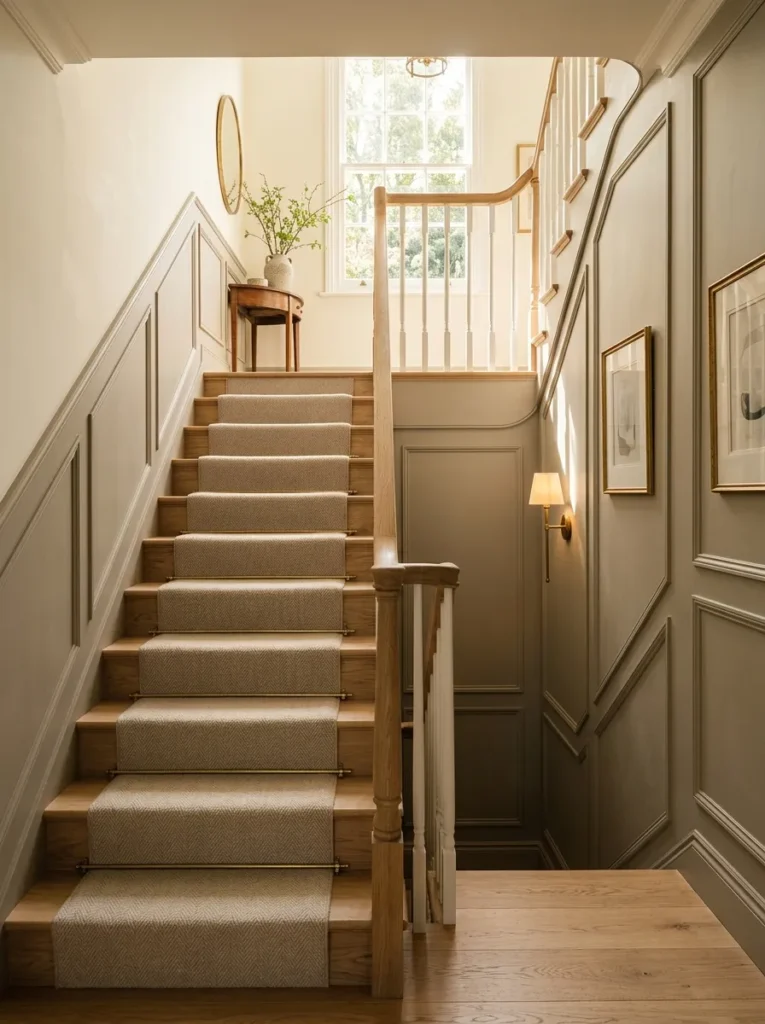
- Adds subtle architectural detail to a plain staircase wall.
- Creates depth while keeping the palette calm and versatile.
- Works beautifully with wood flooring and traditional trim.
- Provides a timeless background for artwork and mirrors.
For a timeless approach to Staircase Wall and Landing Decor, warm neutral paneling can add depth without relying on bold colors or busy accessories. Simple rectangular molding creates architectural structure across an otherwise flat wall, while shades such as warm white, greige, mushroom, or soft beige keep the space welcoming. The paneling works particularly well with traditional trim, natural wood, and classic stair details. Rather than covering every surface, consider treating only the main stair wall so the feature feels intentional. The result is subtle enough for everyday living but detailed enough to make the staircase feel professionally finished.
Proportion is important when choosing panel sizes. Narrow walls usually benefit from simpler, taller sections, while broader landings can handle larger rectangular frames. Paint the molding and wall in the same color for a quiet, built-in effect, or use a slightly deeper tone for gentle contrast. Add one mirror, artwork, or wall light if the area needs another layer, but avoid filling every panel. That restraint allows the architecture to remain visible. With thoughtful spacing and a warm neutral finish, the staircase becomes a cohesive part of the home’s interior rather than an empty passage between rooms.
16. Layered Wall Baskets
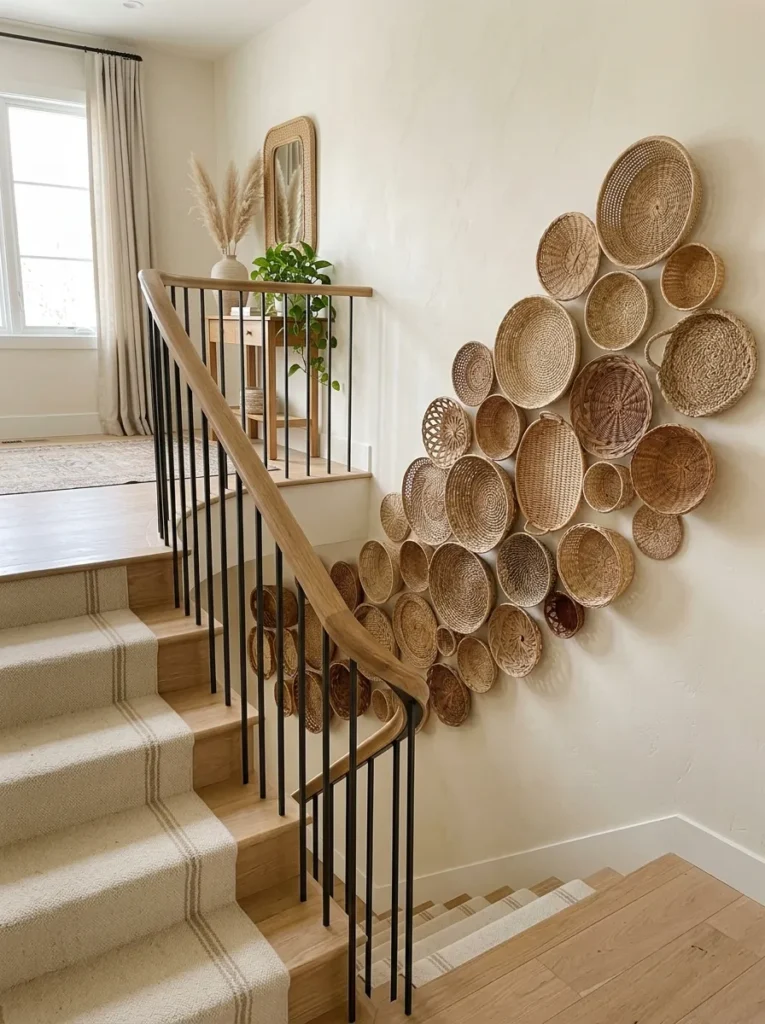
- Adds organic texture without making the staircase feel formal.
- Lightweight baskets create movement across a large blank wall.
- Natural fibers complement wood, linen, and neutral finishes.
- Different sizes make the arrangement feel collected rather than rigid.
Woven baskets can bring warmth and texture to a staircase wall that feels too plain for traditional artwork. Choose baskets in several sizes, shapes, and natural tones, then arrange them in a loose cluster that follows the vertical movement of the stairs. Rattan, seagrass, cane, and water hyacinth create subtle differences in texture while keeping the palette cohesive. This works especially well with warm wood, linen, and neutral interiors. I’ve noticed that baskets look most intentional when there is enough empty wall around the grouping, allowing the individual shapes to remain visible instead of blending into one busy mass.
Because stairways are high-traffic areas, secure every basket carefully rather than relying on lightweight adhesive alone. Keep the lowest pieces safely above shoulder and hand level, particularly where people pass frequently. You can mix shallow baskets with deeper woven pieces to create dimension, but avoid adding objects that protrude into the walkway. The arrangement can also be refreshed seasonally by moving pieces around or replacing one basket with another. This makes the wall feel collected rather than overly styled. The finished display adds handmade character, warmth, and natural texture while keeping valuable floor space completely open.
17. Landing Plant Corner
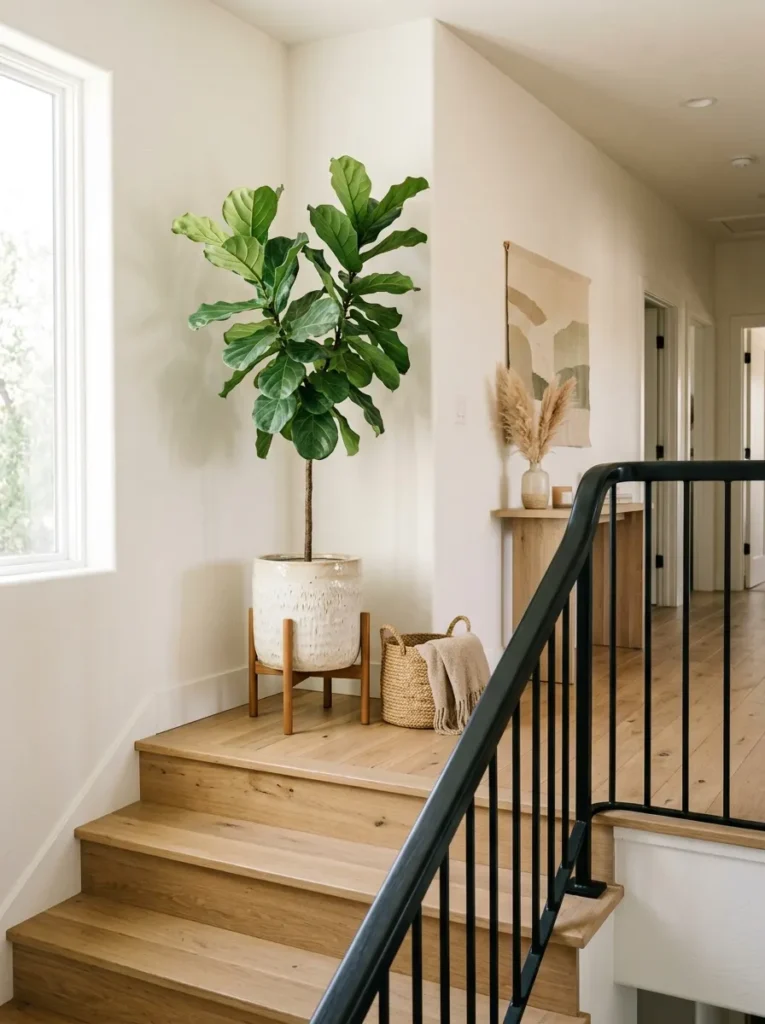
- Brings natural color and life into an overlooked landing.
- A tall plant can fill vertical space without wall clutter.
- Decorative pots add another layer of texture and personality.
- Choose low-maintenance varieties for busy household spaces.
A single well-placed plant can make an empty landing feel noticeably fresher and more welcoming. Choose a tall indoor plant with an attractive silhouette, then place it in a substantial pot at the corner where the stairs meet the upper hallway. Plants with upright leaves work well when space is limited, while fuller varieties can soften a broad landing. Select a planter in ceramic, stone, terracotta, or woven material to complement nearby finishes. This approach adds natural color and movement without covering the staircase wall with additional artwork or accessories.
Consider the actual conditions of the landing before choosing a plant. Check how much natural light reaches the area and select a variety suited to those conditions rather than choosing solely for appearance. Keep the pot clear of the walking path, door swings, and stair edges. If the area is difficult to maintain, a durable low-maintenance plant may be more practical than a delicate variety. In my experience, one healthy plant often has more impact than several small pots scattered around a landing. Its height fills an empty corner, while the greenery softens the harder lines of the staircase.
18. Accent Ceiling Lighting
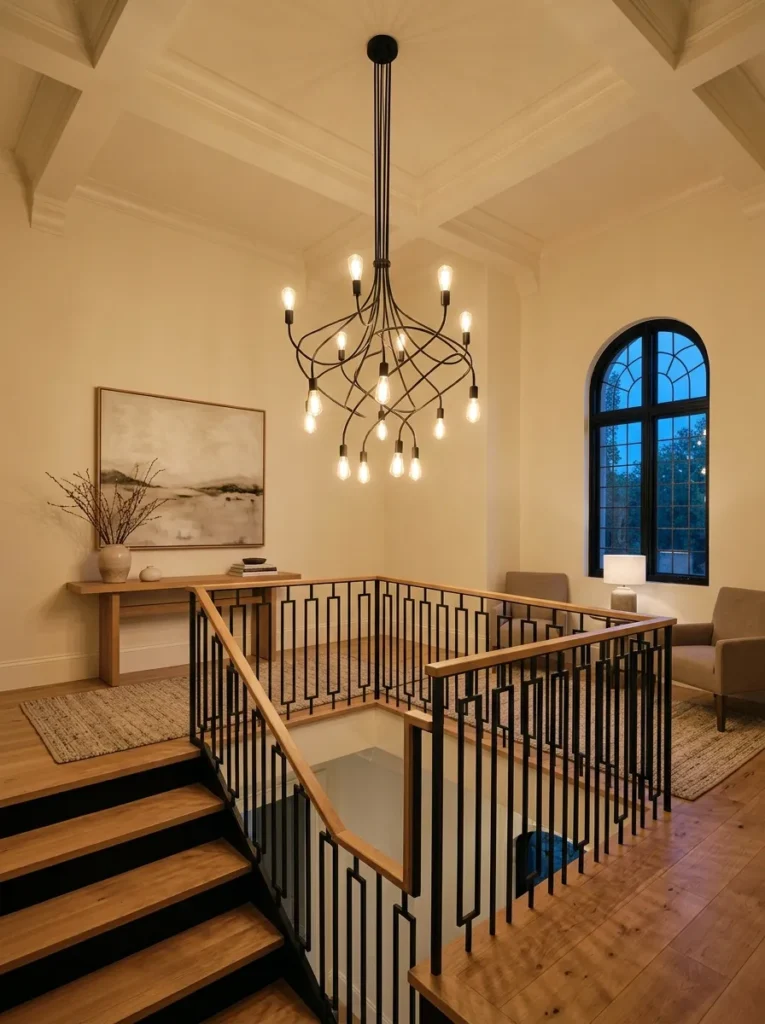
- Draws attention upward and highlights the landing architecture.
- Creates a warm evening atmosphere without crowding the walls.
- Pendant fixtures add sculptural interest in tall spaces.
- Layered lighting makes the staircase feel more finished and functional.
When the staircase has a tall ceiling, look upward for another opportunity to add character. A sculptural pendant can turn an overlooked vertical zone into a striking architectural feature while providing useful illumination after dark. Choose a fixture with an appropriate scale for the ceiling height, such as clustered glass globes, simple metal forms, or an elongated linear design. Warm bulbs create a welcoming atmosphere and emphasize surrounding textures. This lighting approach is particularly effective when the walls remain relatively simple because the fixture becomes the focal point without taking up valuable floor or wall space.
Before choosing a pendant, consider the stair geometry, ceiling height, sightlines, and installation requirements. The fixture should not interfere with movement, doors, or the handrail, and its height should be carefully planned for safe clearance. A dimmer can make the lighting more versatile, allowing brighter illumination when navigating the stairs and softer light during relaxed evenings. Pair the pendant with subtle wall lighting if additional visibility is needed. The combination creates depth and atmosphere across multiple levels, making the staircase feel intentional from both the lower floor and upper landing.
19. Decorative Staircase Trim
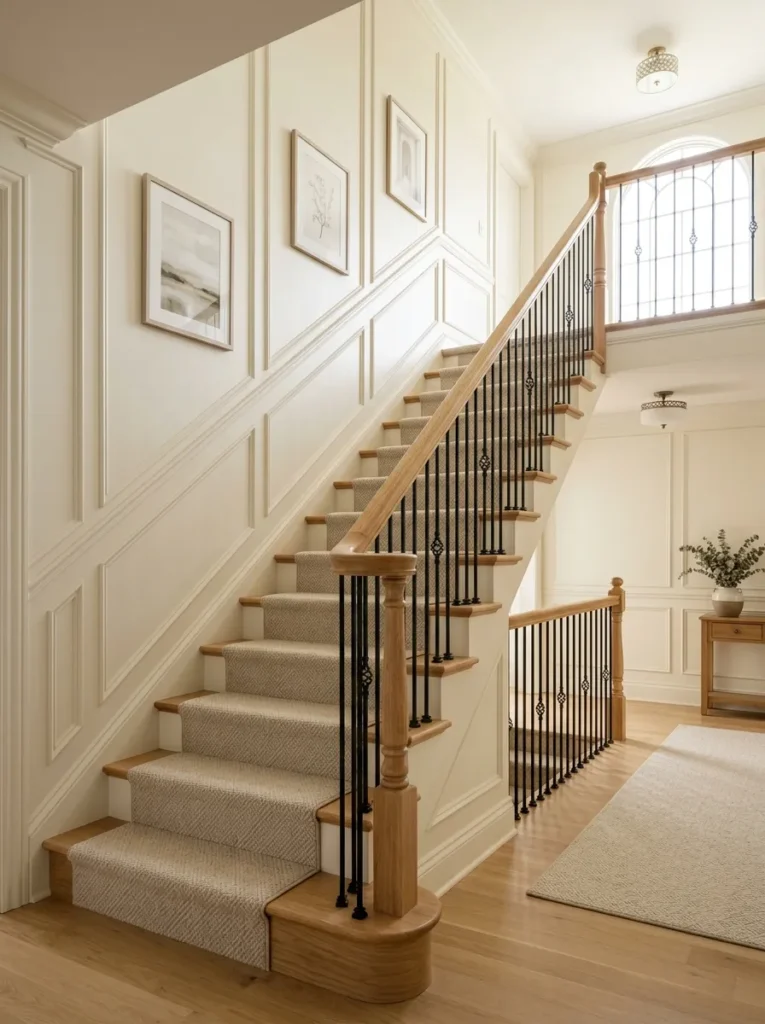
- Adds architectural definition to an otherwise plain stair wall.
- Creates a polished backdrop without needing many accessories.
- Simple trim works with both traditional and modern interiors.
- Painting everything one shade gives the detail a built-in appearance.
Decorative trim can give a staircase an expensive, finished appearance without filling the wall with accessories. Simple rectangular molding adds subtle dimension and creates visual structure along a long stair run. For a quiet, timeless look, paint the trim and wall the same warm neutral shade so the detail appears built into the architecture. White, ivory, greige, and soft taupe are particularly versatile choices. This treatment works beautifully when you want the staircase to feel elevated but still calm. In my experience, understated molding often creates more lasting appeal than highly decorative wall treatments.
Pay close attention to spacing and proportion before installation because uneven sections can make the entire wall feel unbalanced. Use painter’s tape to map the proposed rectangles and view them from different points along the stairs. Once the layout feels right, keep additional decorations minimal so the architectural detail remains visible. A single artwork, mirror, or wall light can provide a finishing layer without competing with the molding. If the staircase is narrow, avoid overly deep trim that reduces the sense of openness. The finished wall feels tailored, cohesive, and connected to the home’s existing architectural character.
20. Layered Landing Decor
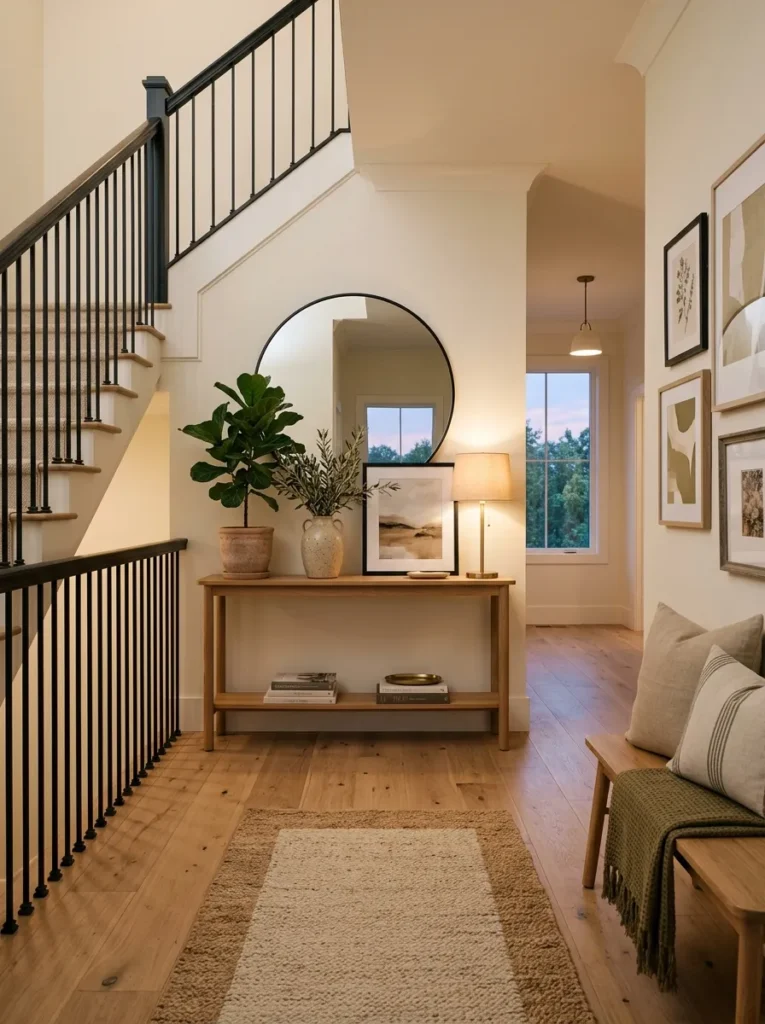
- Combines artwork, lighting, greenery, and texture in one balanced setup.
- Gives a larger landing a finished and lived-in appearance.
- Layering makes the space feel intentional without requiring matching pieces.
- Repeated materials help connect the staircase with nearby rooms.
The most successful staircase and landing arrangements often come from combining several small elements rather than relying on one oversized decoration. A slim console, framed artwork, mirror, lamp, and plant can work together when each piece has a clear role. Start with one anchor, such as a large mirror or artwork, then add height through a lamp or greenery and texture through ceramics, books, or woven accents. This layered approach makes a landing feel complete while still allowing the individual pieces to breathe. The key is repeating a few colors and materials so everything feels connected rather than randomly collected.
For everyday homes, practicality should guide the final arrangement. Keep pathways open, secure anything that could be knocked over, and avoid placing fragile accessories too close to the stair edge. Use lighting at different heights to create a softer atmosphere after sunset, while natural textures keep the space welcoming during the day. If the area starts feeling crowded, remove one or two objects instead of adding more. That editing step is often what makes a layered display look polished. The finished landing feels warm, personal, and purposeful, creating a natural transition between the staircase and surrounding rooms.
Conclusion
A staircase doesn’t need to remain an overlooked passage between floors. With the right Staircase Wall and Landing Decor, you can add personality, warmth, texture, and visual balance while keeping the space practical for everyday life. From gallery walls and mirrors to wood details, lighting, plants, and layered accessories, even small changes can create a noticeable transformation. I’ve seen how thoughtful decorating can make these transitional spaces feel like a natural part of the home. Save this post on Pinterest for your next decorating project, try an idea that fits your space, and share it with someone looking for fresh inspiration.