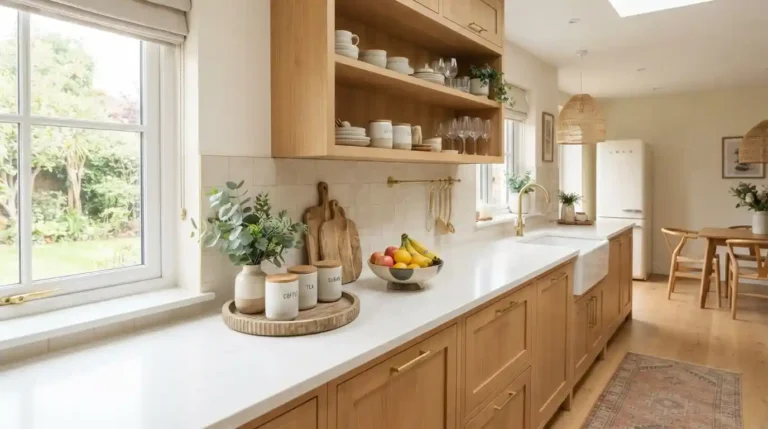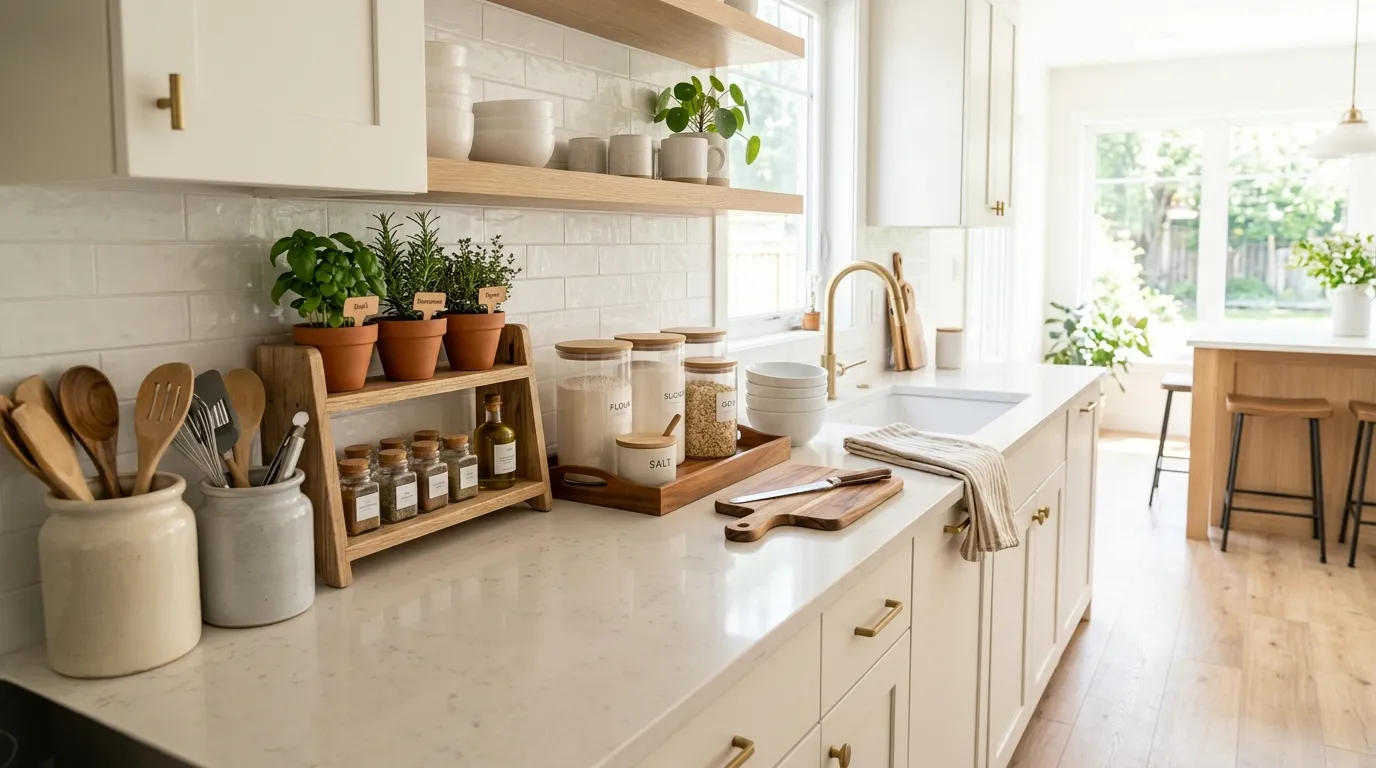
25 Smart Kitchen Counter Organization Ideas for a Tidy Space
A cluttered kitchen counter can make even a beautiful space feel smaller, busier, and harder to use.
The good news? Kitchen Counter Organization Ideas can transform that everyday frustration with simple, realistic changes.
This guide brings together 25 smart ways to make your counters feel cleaner without sacrificing the things you use every day.
Think tiered shelves, rolling carts, utensil crocks, organized trays, hidden charging spaces, and other practical setups that make cooking and cleanup easier.
Each idea focuses on using your existing space more intentionally while adding visual appeal.
In my experience, the biggest improvements often come from small changes rather than expensive renovations.
Whether your kitchen is compact or spacious, these ideas can help you create a calmer, more functional counter that looks beautiful enough to inspire your next Pinterest save.
Also visit: 20 Gorgeous Staircase Wall and Landing Decor for Stylish Homes
1. Ceramic Utensil Crock
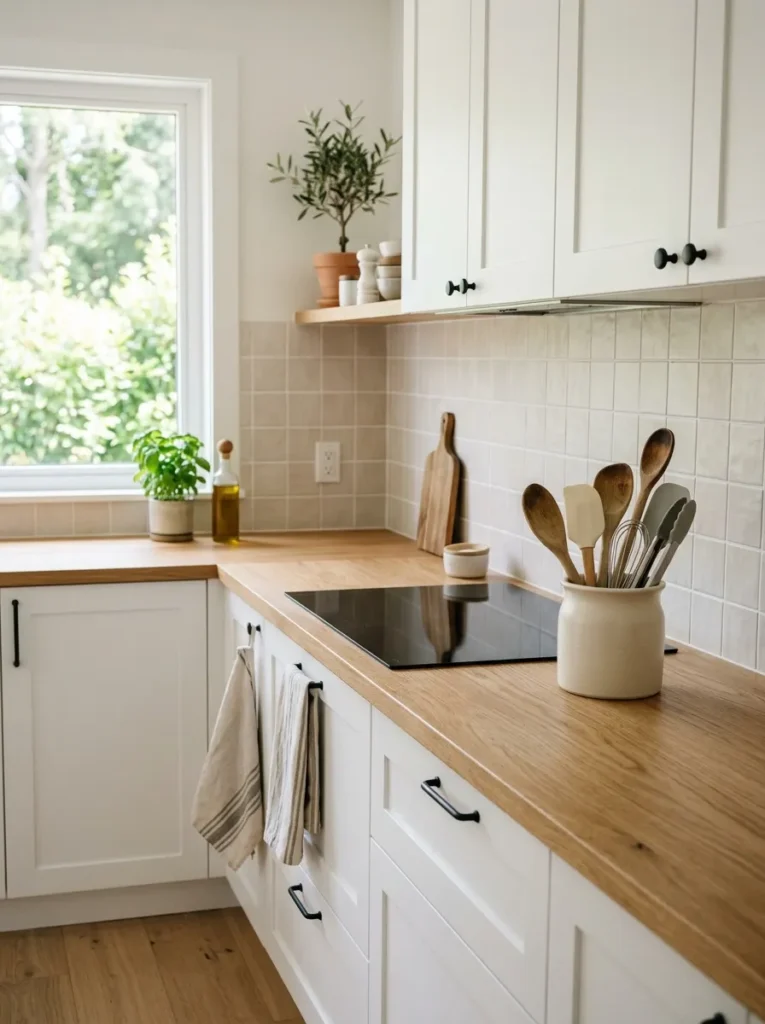
- Keeps everyday cooking tools together and easy to grab.
- Frees drawers from bulky spatulas, spoons, and whisks.
- A neutral ceramic finish adds a polished decorative touch.
- Positioning it near the cooktop makes meal prep smoother.
A clear counter can change the entire feel of a kitchen, and a slim utensil crock is one of the easiest ways to make that happen. Place a simple ceramic or stoneware holder beside the main prep area to keep wooden spoons, spatulas, whisks, and tongs within easy reach. Choose a finish that matches your cabinets or hardware so the container looks intentional rather than crowded. This setup works especially well when drawers are already full. In my experience, keeping everyday tools visible in one controlled spot makes cooking faster while leaving valuable workspace open for chopping, serving, and cleanup.
The best part of a countertop utensil holder is how quickly it creates visual order without requiring a major kitchen makeover. Group only the tools you use regularly, then store duplicates and specialty pieces elsewhere. A wide, stable container prevents utensils from leaning across the counter and makes each item easier to grab. Try placing it near the cooktop, but leave enough clearance for safe movement and cleaning. For a softer Pinterest-ready look, pair a neutral crock with warm wood utensils, a small cutting board, and a few understated accents. The result feels useful, balanced, and naturally styled.
2. Tiered Corner Shelf
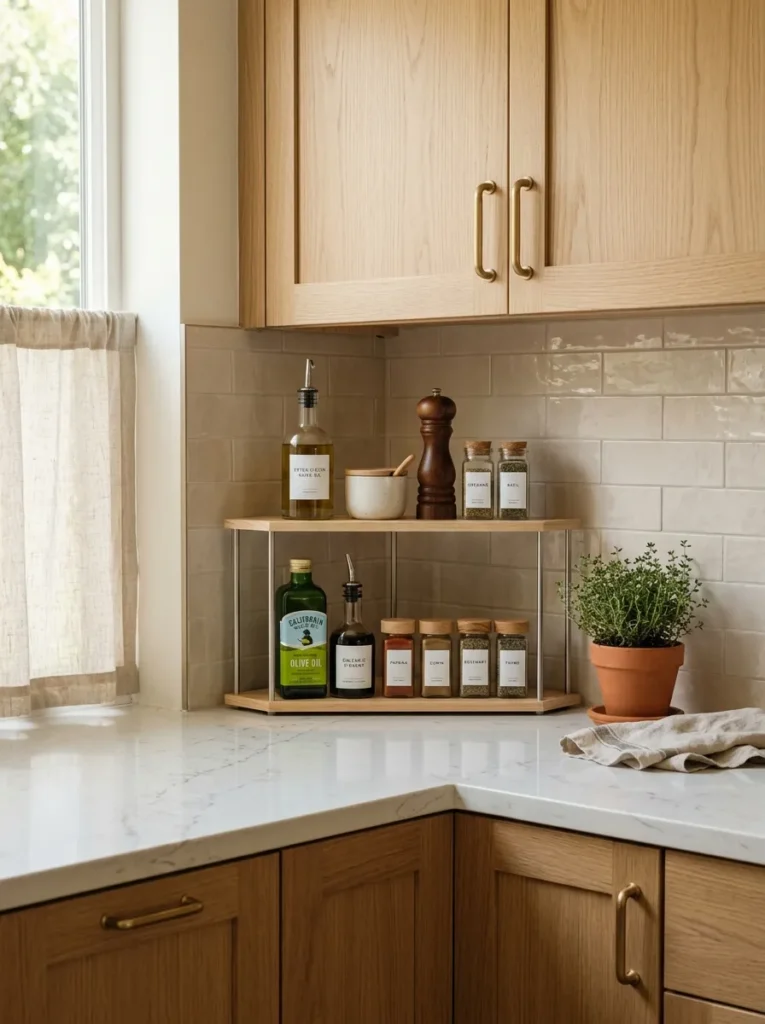
- Turns an awkward counter corner into useful vertical storage.
- Keeps frequently used bottles and seasonings visible without spreading them out.
- Different shelf levels make small items easier to see.
- A compact design preserves the main preparation area.
An empty corner can become surprisingly useful when you build upward instead of outward. A small tiered shelf gives oils, seasonings, and everyday condiments dedicated levels, helping the counter feel organized without sacrificing much surface area. Choose a narrow design that fits snugly against the backsplash, then place taller bottles toward the back and smaller jars on the upper tier. This simple arrangement makes frequently used ingredients easier to spot during cooking. It also creates a pleasing visual rhythm, especially when containers share similar colors, materials, or labels instead of looking like a random collection.
Tiered storage is particularly helpful in compact kitchens where every inch of counter space matters. Instead of lining bottles across one long row, stacking them vertically creates more breathing room around your main work zone. I’ve noticed this works especially well when the shelf is styled with restraint rather than filled to capacity. Leave a little empty space around each group so the setup feels intentional. For a polished finish, combine glass jars, wood accents, and neutral ceramics against a simple backsplash. The result is functional storage that also gives an otherwise overlooked corner a finished appearance.
3. Wooden Counter Tray
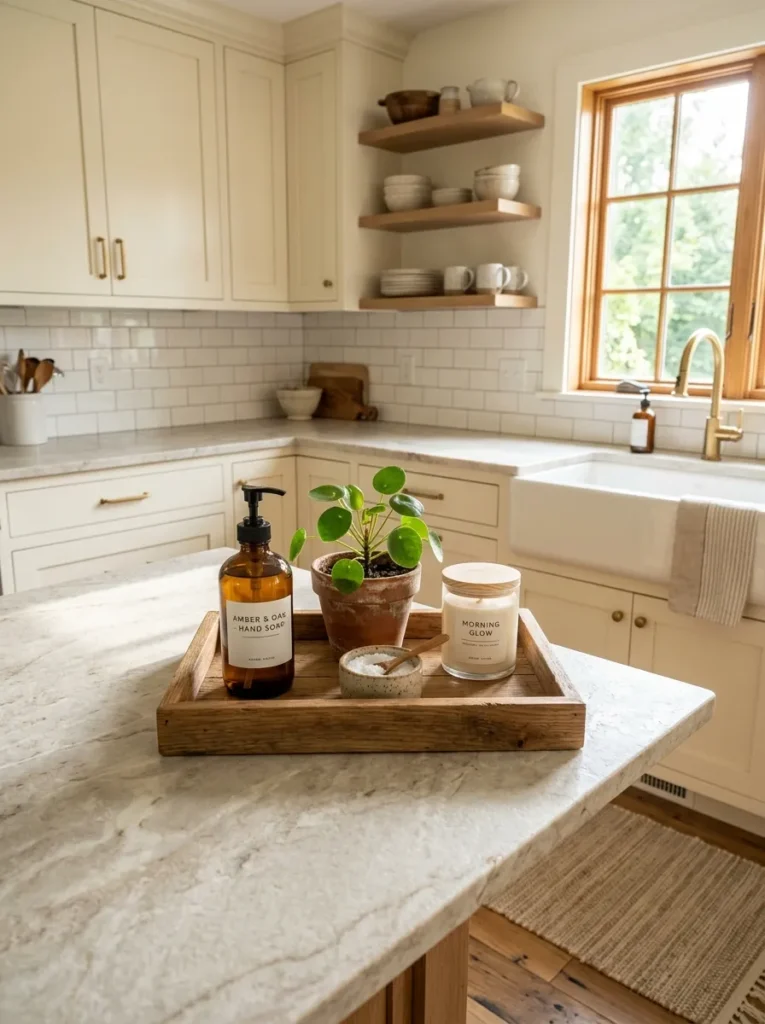
- Creates one defined home for small countertop essentials.
- Prevents soap, plants, and daily accessories from spreading outward.
- Warm wood introduces texture against stone or quartz surfaces.
- A shallow tray makes cleaning around grouped items much easier.
Sometimes the easiest way to organize a busy counter is to give loose items a clear boundary. A shallow wooden tray can gather a soap dispenser, small plant, candle, salt cellar, or other daily essentials into one neat arrangement. Rather than letting individual objects drift across the surface, the tray visually connects them and makes the counter look calmer. Choose a size that leaves plenty of surrounding workspace, especially near the sink or preparation zone. A natural wood finish adds warmth to white, gray, or stone surfaces while creating a simple focal point that feels decorative without becoming cluttered.
This approach is especially useful for households where several small objects need to stay accessible throughout the day. The tray keeps them together while making it easier to lift everything at once when wiping the countertop. That small convenience can make regular cleaning feel less frustrating. For stronger Kitchen Counter Organization Ideas, think about what genuinely belongs on the surface before filling the tray. Keep only useful pieces and avoid treating every decorative object as necessary. A restrained arrangement of three to five items usually looks more intentional and leaves the surrounding counter visually open.
4. Magnetic Knife Strip
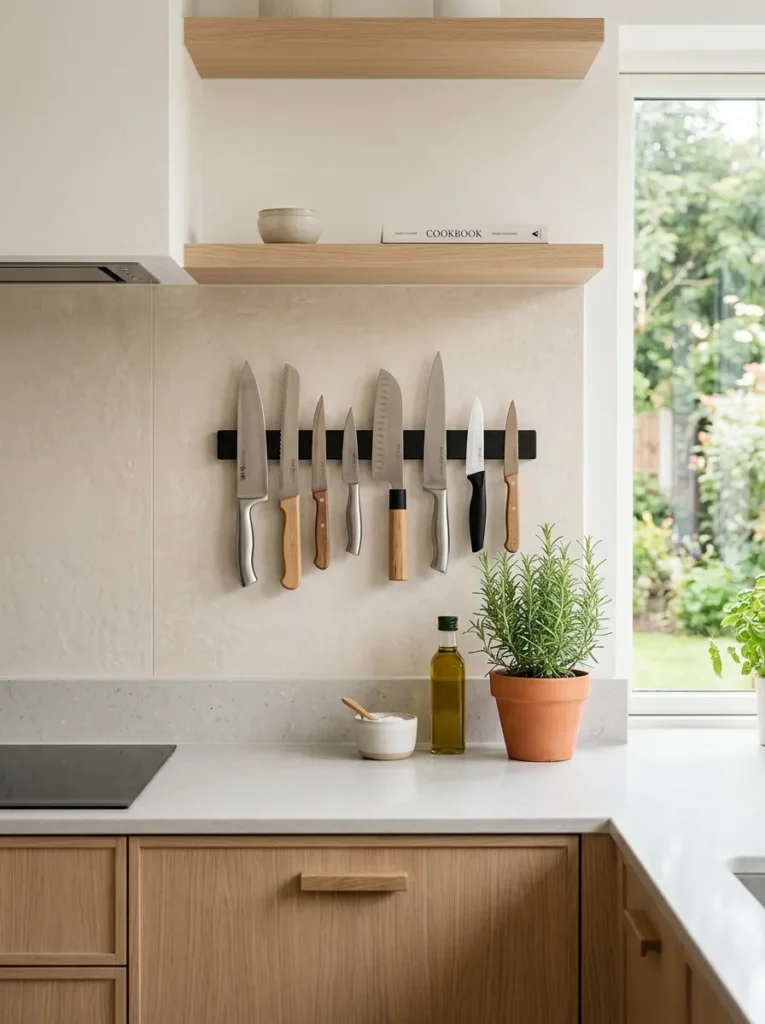
- Clears bulky knife blocks from valuable countertop space.
- Keeps frequently used knives visible and easy to access.
- Uses unused wall space for practical vertical storage.
- Creates a sleek focal point above the preparation area.
A knife block can quickly consume more counter space than you expect, especially in a compact kitchen. A magnetic strip moves that storage upward, leaving the work surface open for preparing meals. Mount it securely on the wall near your main chopping area, keeping the knives visible but positioned safely away from busy walkways. Stainless steel blades can create a clean modern look, while wooden handles add warmth against a light backsplash. The arrangement also makes each knife easy to identify at a glance, so you spend less time searching through drawers or moving bulky storage containers.
Beyond saving space, a magnetic knife strip can make the whole counter feel visually lighter. I’ve noticed that removing one large countertop item often creates more impact than adding several small organizers. Choose a strip with a simple finish that complements your cabinet hardware, then keep the knives evenly spaced for a deliberate appearance. Avoid overcrowding it with every knife you own; reserve the strip for tools you use regularly. If young children can access the area, choose a safer location or another storage method. Done thoughtfully, this setup combines accessibility, vertical storage, and clean visual lines.
5. Pull-Out Appliance Garage
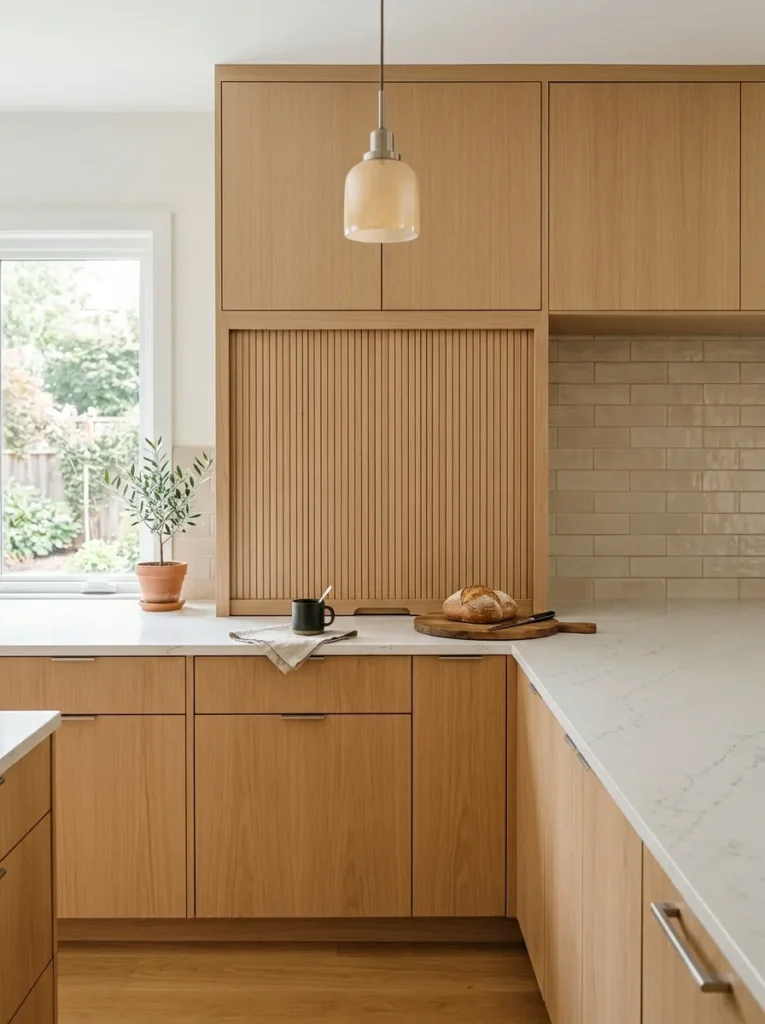
- Hides frequently used appliances while keeping them convenient.
- Reduces the visual clutter created by cords and bulky machines.
- Creates a cleaner uninterrupted stretch of countertop.
- Works especially well beside wall cabinets or dedicated prep zones.
Bulky appliances can make even a spacious kitchen look crowded, but they do not always need to disappear completely. An appliance garage creates a dedicated spot where a toaster, coffee maker, blender, or similar machine can remain ready for daily use while staying visually concealed. A lift-up, sliding, or tambour-style door can close across the opening when the appliances are not needed. This is particularly helpful on long counters where several machines compete for attention. Keeping cords inside the designated area also reduces the loose lines that often make an otherwise tidy surface look messy.
The key is planning the garage around the appliances you actually use. Measure each machine before choosing the cabinet depth and allow enough ventilation and clearance for safe operation. That small planning step prevents the storage area from becoming frustrating or impractical. For a polished appearance, match the garage door to your existing cabinetry so it blends into the kitchen rather than becoming another visual feature. If a built-in version is outside your budget, a dedicated cabinet or strategically placed appliance station can create a similar effect. The goal is simple: convenience without constant countertop clutter.
6. Clear Canister Station
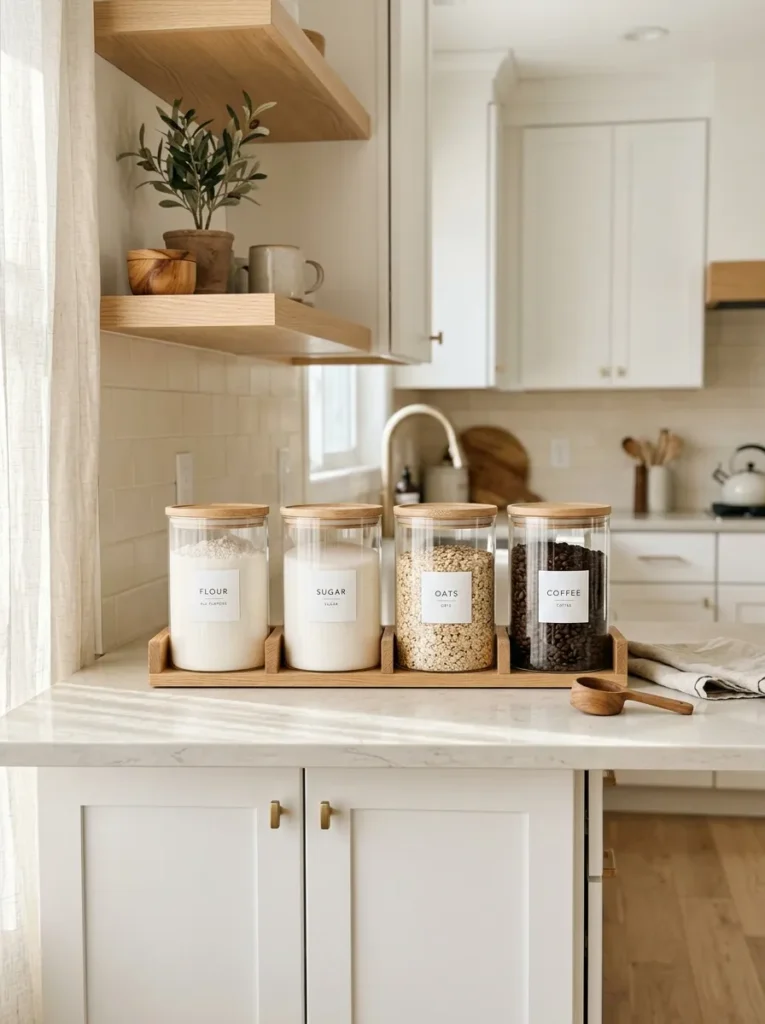
- Groups everyday dry ingredients into one organized zone.
- Makes frequently used staples easy to identify at a glance.
- Matching containers create a calmer and more cohesive appearance.
- Keeps open bags and messy packaging off the counter.
Open food packages are one of the fastest ways to make a kitchen counter look untidy. A small canister station gives frequently used dry ingredients a consistent home while replacing mismatched bags with clean, reusable containers. Choose clear glass or acrylic canisters so contents remain visible, then use simple labels for flour, sugar, coffee, oats, or other staples you reach for often. Grouping the containers together prevents them from spreading across the counter and creates a visually consistent arrangement. This works particularly well near a baking zone, coffee station, or pantry entrance where quick access matters.
A successful canister setup should make daily routines easier, not create another maintenance task. Pick containers that are easy to open, wash, and refill, and avoid displaying more ingredients than you genuinely use. In my experience, a small collection of matching containers looks far more intentional than an entire counter covered with storage jars. Leave a little breathing room around the station and keep the tallest pieces toward the back if you are working with a narrow surface. The finished arrangement feels cleaner, makes ingredients easier to find, and gives your countertop a practical decorative element.
7. Floating Spice Shelf
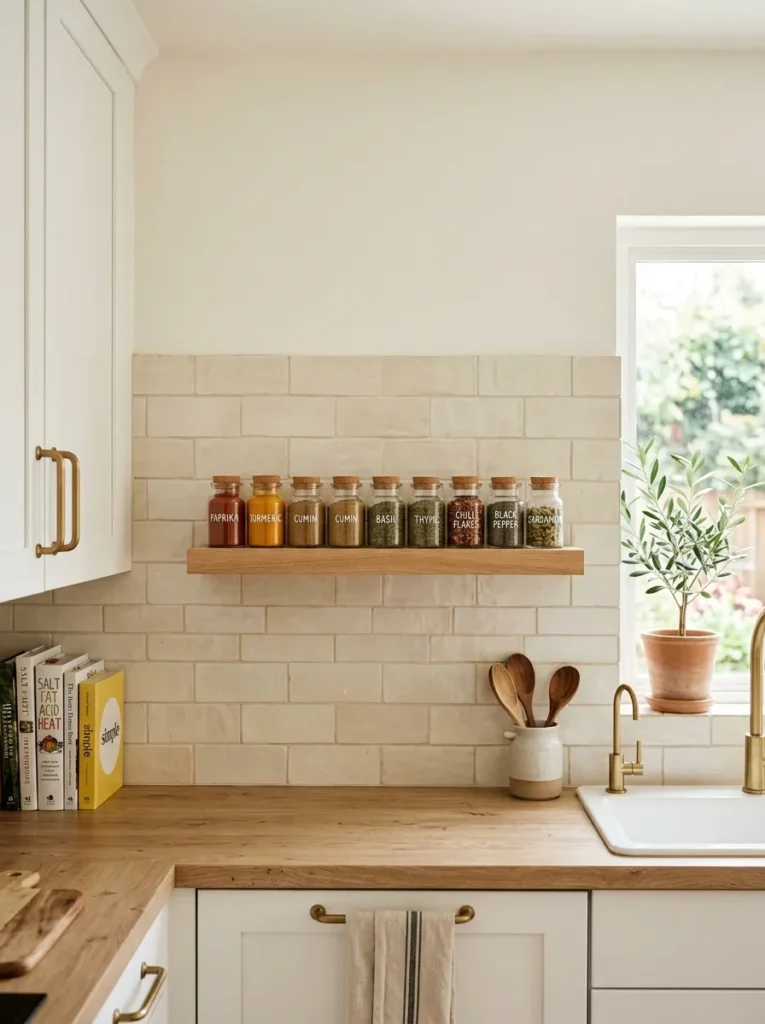
- Uses vertical wall space instead of valuable countertop depth.
- Keeps favorite seasonings visible and within quick reach.
- Small jars create a neat, repetitive visual pattern.
- Works beautifully beside a cooktop or food preparation zone.
A narrow floating shelf can turn an unused backsplash into practical storage without taking over your workspace. Use it for everyday spices, small seasoning jars, or cooking essentials that you reach for repeatedly. Keeping the containers on one shallow level makes everything easy to scan while freeing the counter below for chopping and serving. Choose matching jars when possible, but do not feel pressured to create a perfectly uniform display. A few natural variations can still look polished when the containers share a similar color palette. Position the shelf close enough for convenience while keeping it safely away from heat and splashes.
This arrangement works especially well in kitchens where drawers and cabinets are already packed. Instead of stacking spice bottles behind one another, the shelf gives each container a visible position and makes forgotten seasonings easier to notice. I’ve seen this work well when the shelf is kept intentionally small rather than stretched across an entire wall. A short ledge feels lighter and encourages you to display only useful items. For an attractive finish, pair clear jars with simple labels and a warm wood or metal shelf. The result adds storage, texture, and personality without crowding your preparation surface.
8. Slim Rolling Cart
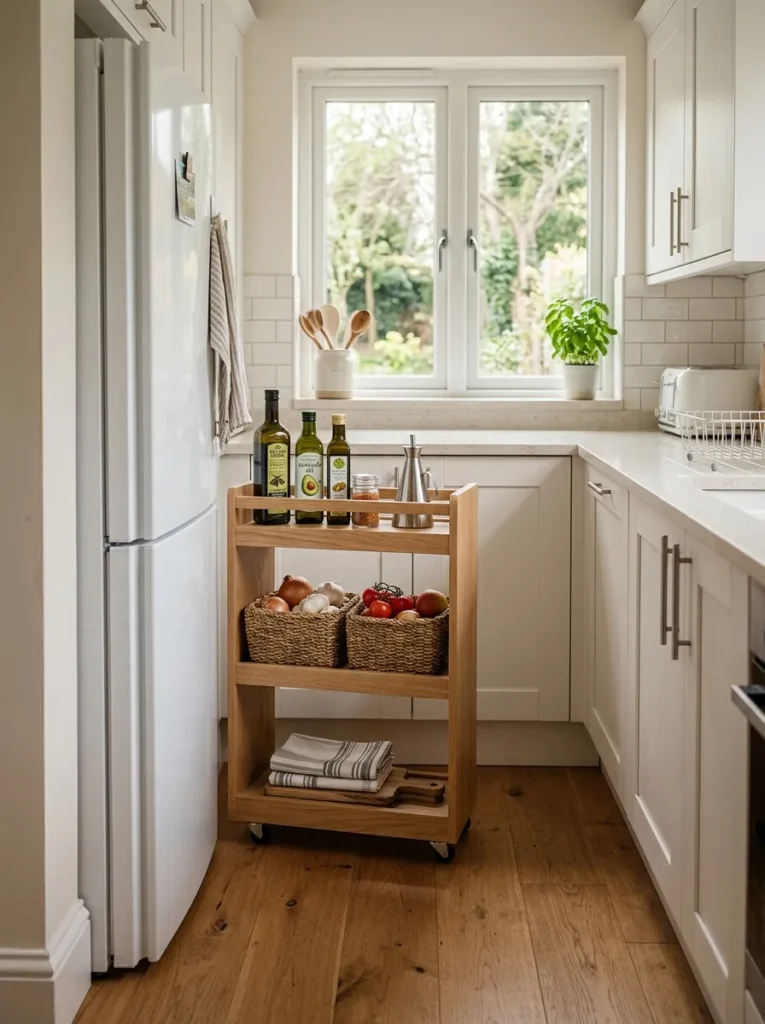
- Adds flexible storage without requiring permanent cabinetry.
- Creates a dedicated home for oils, produce, or cooking supplies.
- Can move aside when more workspace is needed.
- Narrow wheels make unused gaps surprisingly functional.
A narrow gap can become valuable storage when you bring in a slim rolling cart. These compact carts fit beside refrigerators, cabinets, or islands and can hold oils, produce, towels, baking supplies, or small appliances. Because the cart moves, you can pull it closer while cooking and return it to its tucked-away position afterward. Look for a model that is narrow enough to preserve walking space and sturdy enough for the items you plan to store. Wood adds warmth, while metal creates a more streamlined look. Either option can complement your kitchen without requiring construction or permanent changes.
The biggest advantage is flexibility. Unlike fixed storage, a rolling cart can adapt as your routine changes, making it useful in rentals and smaller homes. Keep heavier items on the bottom shelf for stability and reserve the upper level for things you reach for frequently. A small basket can hide loose packets or produce while maintaining a tidy appearance. In my experience, the best carts are not overloaded; leaving some open space makes them easier to use and visually calmer. This simple addition can turn an overlooked gap into an organized storage zone without making the room feel cramped.
9. Vertical Cutting Boards
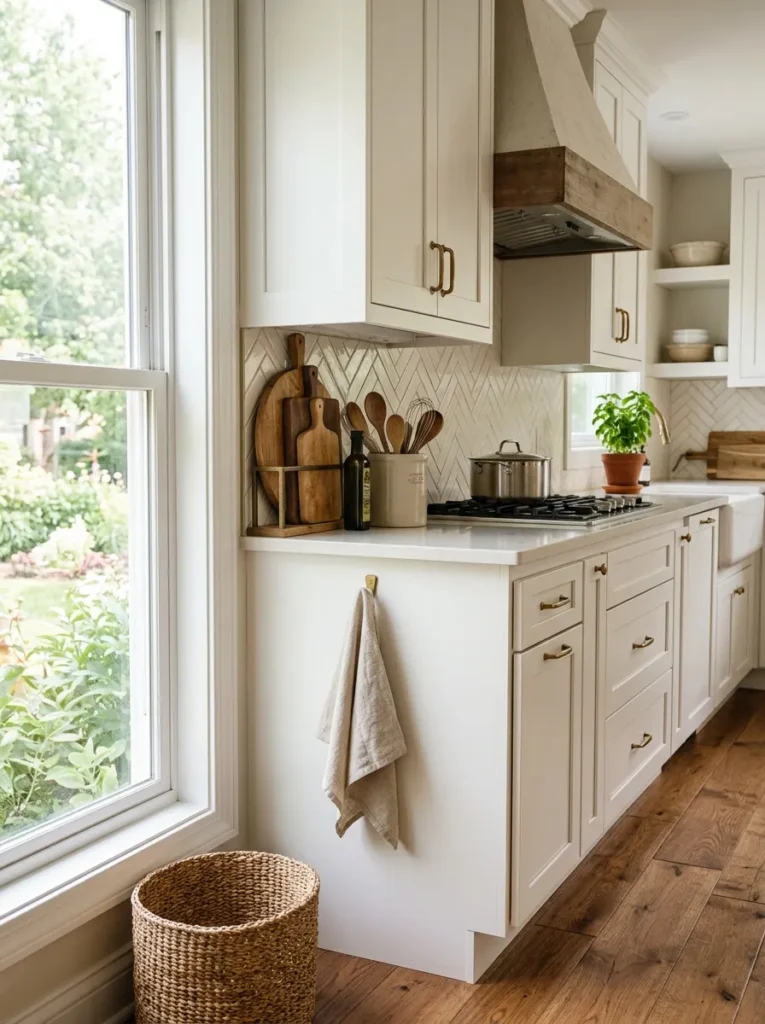
- Keeps cutting boards upright instead of stacked in a pile.
- Makes frequently used boards easier to grab and return.
- Uses a narrow section of counter space efficiently.
- Adds natural wood texture to a clean kitchen arrangement.
Stacked cutting boards can become awkward when you need the one sitting at the bottom. A vertical rack solves that small daily frustration by keeping boards upright and separated, so each one is easy to grab. Place the rack near your main preparation area, but leave enough room around it for comfortable chopping and cleaning. Wooden boards add warmth and natural texture, while darker composite boards can create a sharper contemporary contrast. Choose a rack with a stable base and enough slots for your actual collection. Keeping only your most-used boards there prevents the storage zone from becoming another crowded countertop feature.
This setup is particularly helpful when cabinet storage is limited or when heavy boards are inconvenient to lift from a deep cupboard. Vertical organization also makes the boards easier to dry thoroughly after washing, provided the rack allows enough airflow between them. For a polished look, arrange boards from largest to smallest or group similar finishes together. I’ve noticed that this simple change can make a busy preparation area feel more intentional because the boards become part of the styling rather than an obstacle. It is a practical upgrade that improves access while adding warm, useful visual texture.
10. Under-Cabinet Mug Rack
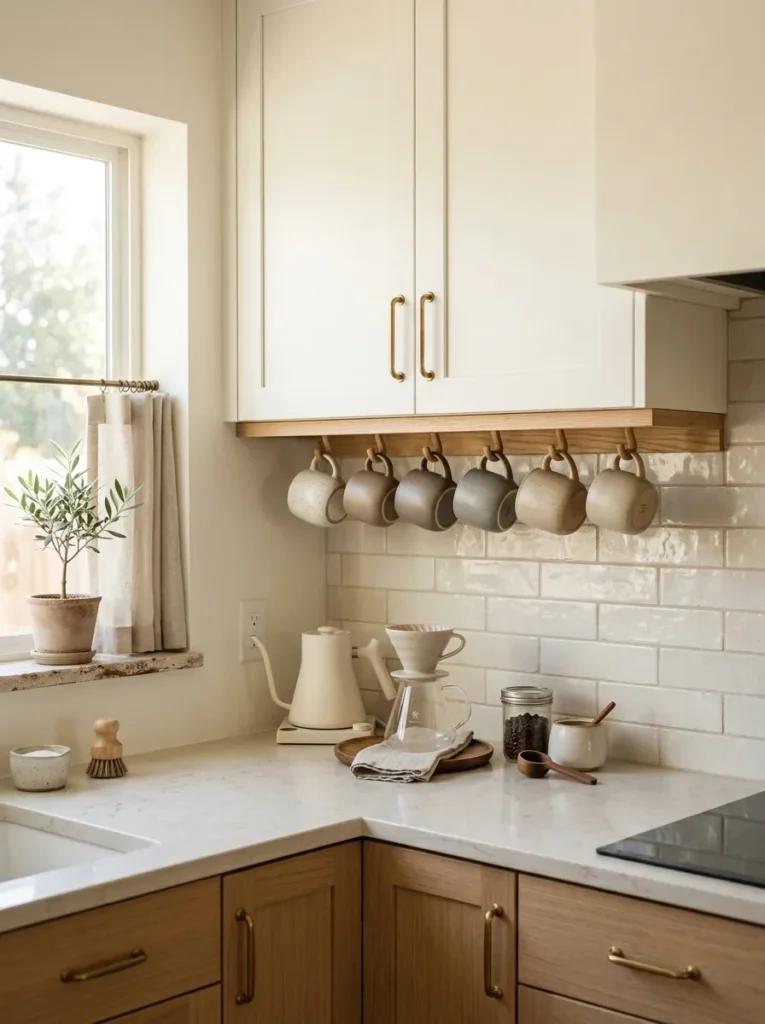
- Moves mugs upward and frees a crowded countertop.
- Keeps favorite cups close to coffee and breakfast supplies.
- Adds useful storage without requiring another cabinet.
- Works especially well beneath open or wall-mounted cabinetry.
A crowded coffee area can feel instantly calmer when mugs move off the counter and into unused space above it. An under-cabinet rack provides a dedicated place for favorite cups while keeping them close to the coffee maker. Choose a simple metal or wood design that fits securely beneath the cabinet, then hang only the mugs you use regularly. This keeps the arrangement visually light instead of turning it into a display wall. The cleared surface can then hold your coffee machine, a small tray, or just enough open space to prepare drinks comfortably during busy mornings.
This storage idea works best when the rack is positioned where mugs can be reached without stretching or bumping nearby appliances. Before installing one, check the cabinet construction and allow enough clearance below for comfortable use. Matching mug colors can create a cohesive look, but a few handmade or textured pieces can add personality. In my experience, limiting the display to everyday favorites makes the setup feel more intentional. It also reduces the temptation to store every cup within sight. A small vertical adjustment can therefore improve both accessibility and the overall visual balance of your counter.
11. Sink-Side Organizer
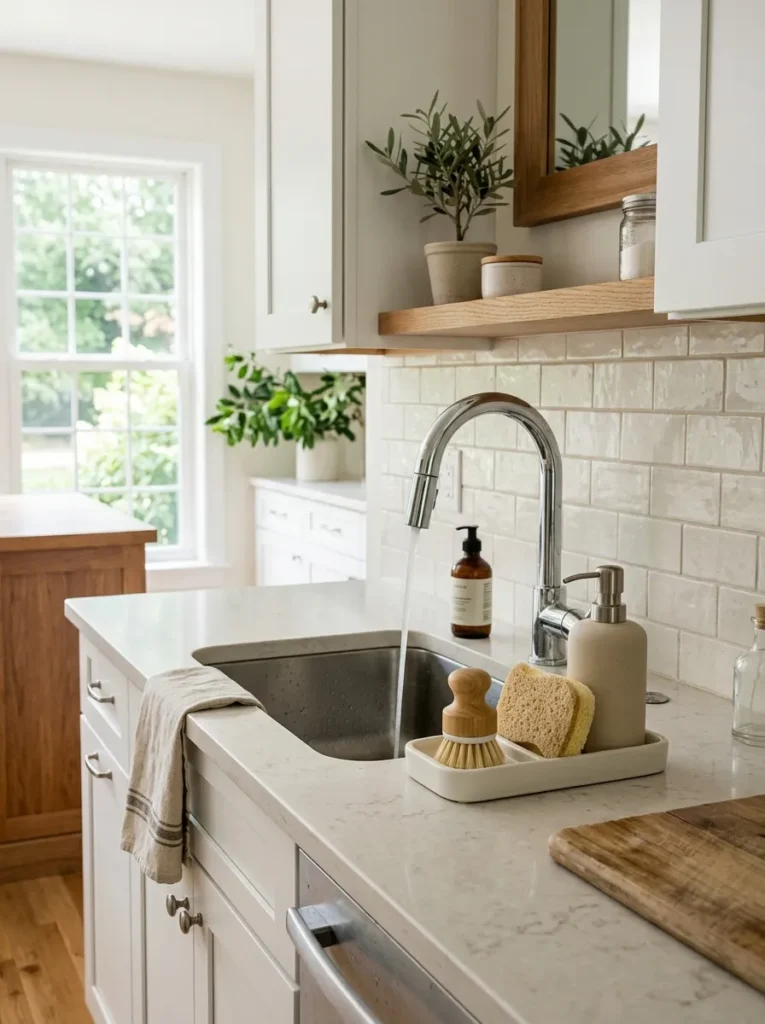
- Keeps dish soap and cleaning tools grouped beside the sink.
- Prevents sponges and brushes from spreading across wet surfaces.
- Creates a cleaner transition between the sink and countertop.
- Drainage-friendly materials help the area stay fresher.
The sink area often becomes the busiest part of the countertop, but a compact organizer can bring quick order to the clutter. Use one small caddy or tray to group dish soap, a sponge, and a brush instead of leaving each item scattered around the basin. Choose a design with drainage or ventilation so water does not collect underneath the tools. Neutral finishes such as stainless steel, stone, ceramic, or matte black can blend naturally with the surrounding fixtures. Keeping everything within one defined zone makes the sink look cleaner and gives the rest of the counter more visual breathing room.
A good sink organizer should simplify cleaning rather than make it harder. Choose a size that fits comfortably beside the basin and does not interfere with faucet movement or food preparation. Clean and dry the container regularly, especially when it holds damp sponges. For an attractive finish, coordinate the soap dispenser with your cabinet hardware or faucet. That small detail can make practical items feel like part of the kitchen design. This is one of those Kitchen Counter Organization Ideas that delivers an immediate difference because it addresses a high-traffic area where clutter naturally accumulates throughout the day.
12. Wall-Mounted Rail
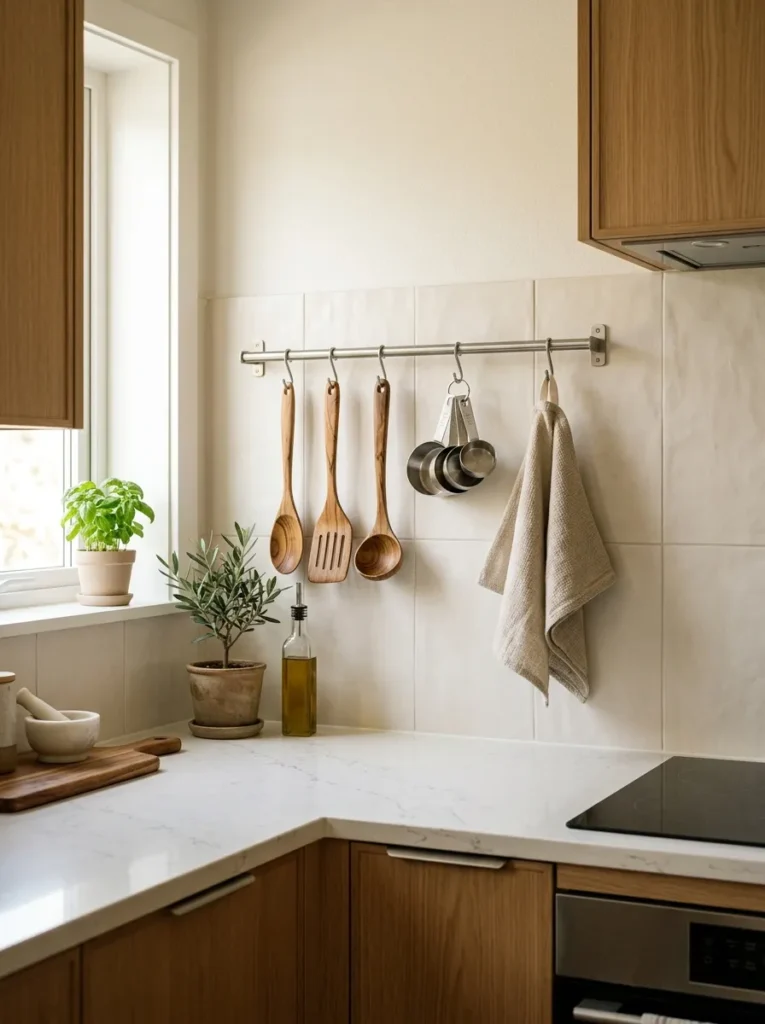
- Uses backsplash space to store small everyday kitchen tools.
- Keeps towels, utensils, or measuring tools easy to reach.
- Clears narrow sections of counter that often become cluttered.
- Creates a flexible storage system with removable hooks.
When countertop space is limited, the backsplash can become your most useful storage surface. A wall-mounted rail with hooks gives small tools a dedicated place while keeping them visible and easy to reach. Use it for measuring cups, wooden spoons, towels, or lightweight utensils that otherwise tend to collect beside the cooktop. Install the rail where it will not interfere with cabinets, outlets, or food preparation. A simple metal finish works beautifully in contemporary kitchens, while brass or dark finishes can add contrast. Keep the number of hanging items controlled so the rail looks organized rather than overloaded.
The flexibility of a rail makes it especially useful when your storage needs change. Hooks can be moved, added, or removed without rearranging the entire system, allowing the setup to adapt to different routines. I’ve noticed that grouping similar objects together makes this style of storage feel much more deliberate. For example, keep cooking tools on one section and towels or measuring accessories on another. Leave enough open wall space between groups to maintain a clean appearance. By moving useful items upward, you protect valuable countertop workspace while giving an ordinary backsplash a functional design feature.
13. Corner Coffee Station
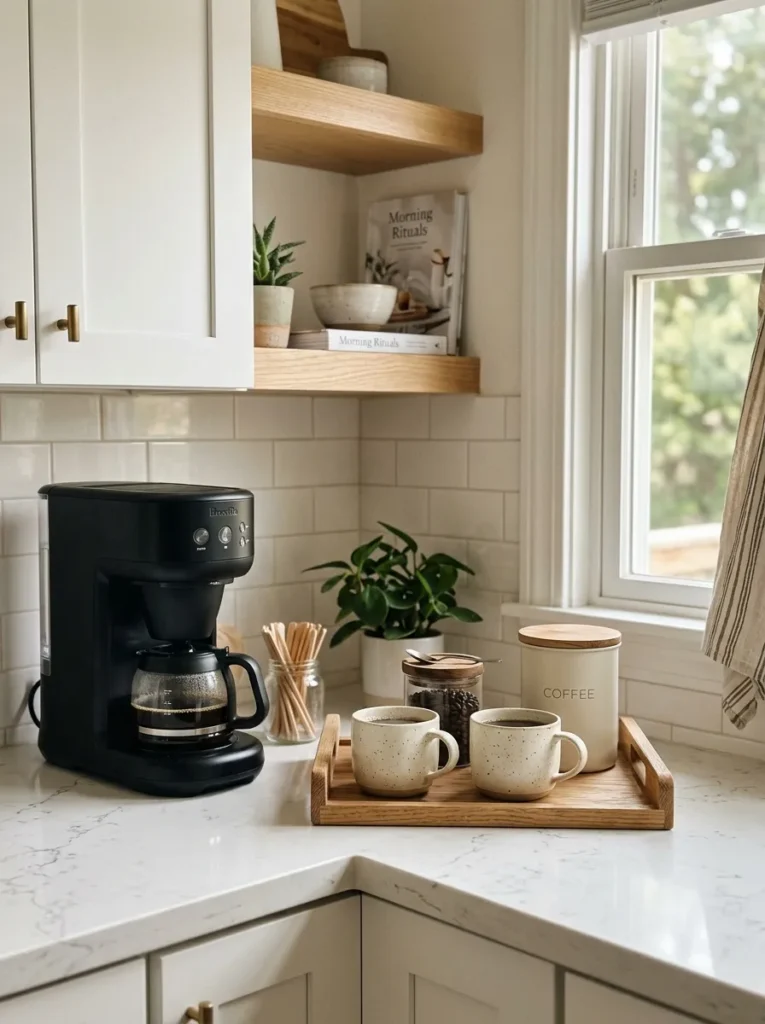
- Gives coffee essentials one dedicated and easy-to-maintain zone.
- Prevents mugs, pods, and accessories from spreading across the counter.
- Makes busy morning routines quicker and more organized.
- Uses an overlooked corner without requiring major remodeling.
A quiet corner can become the most useful part of your morning routine when you turn it into a dedicated coffee station. Keep the coffee maker, favorite mugs, beans or pods, and one or two accessories together so they no longer drift across the kitchen. A small tray can define the zone, while a narrow shelf above provides additional room for cups or canisters. Choose pieces that share a simple palette, such as cream, wood, black, or glass. The goal is not to display everything you own, but to create one convenient area that feels calm and complete.
A dedicated coffee zone also helps protect the rest of the countertop from small daily clutter. When everything has a predictable home, putting things away becomes much easier after the morning rush. Keep frequently used items at the front and reserve higher shelves or cabinets for occasional supplies. I’ve noticed that even a tiny coffee station feels more polished when there is a little empty counter space around the machine. Add one understated decorative element, such as a small plant or framed print, if room allows. The finished corner feels intentional without sacrificing practical workspace.
14. Decorative Fruit Bowl
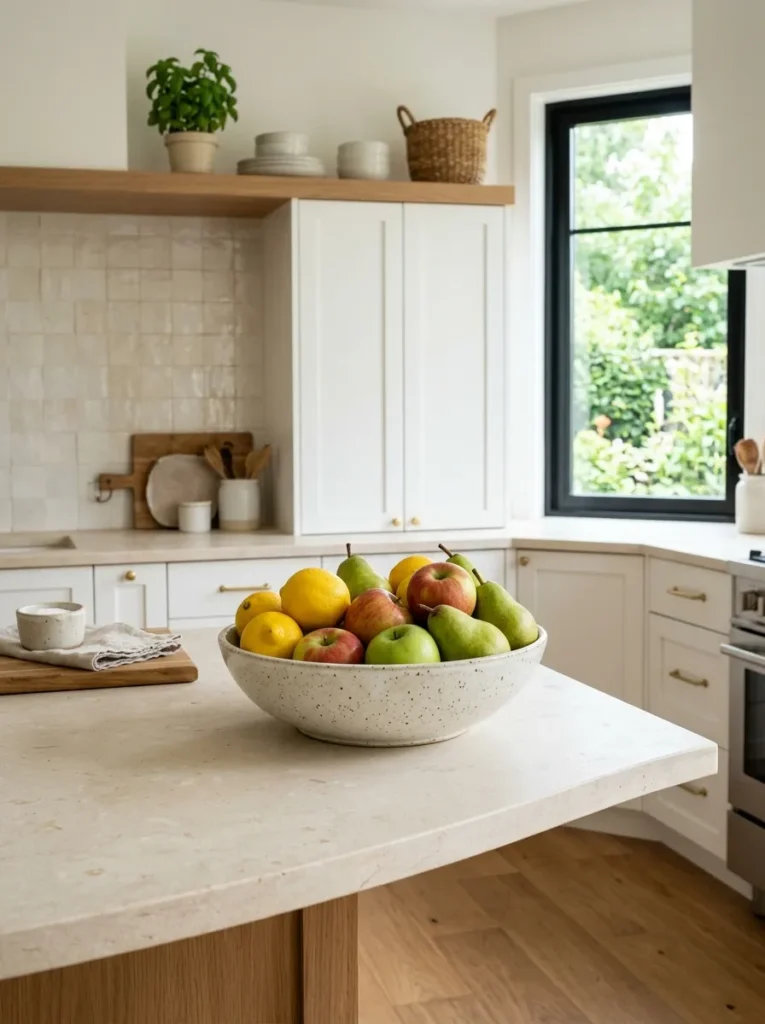
- Keeps fresh produce visible without letting it spread across the counter.
- Adds color and natural texture to an otherwise neutral kitchen.
- Makes healthy everyday foods easier to notice and reach.
- A wide shallow bowl prevents produce from becoming overcrowded.
A fruit bowl can organize everyday produce while adding an effortless decorative layer to the kitchen. Choose one wide enough to hold the amount of fruit your household actually eats, then place it in an area where everyone can reach it easily. A shallow bowl prevents fruit from becoming buried and keeps the display looking fresh. Ceramic, woven, wooden, or stone bowls can each bring a different texture to the room. For a calm appearance, combine a few natural colors rather than filling the bowl with every type of produce available. The result feels useful, colorful, and naturally inviting.
The trick is keeping the bowl edited instead of treating it like permanent storage for every grocery item. Remove overripe fruit promptly and refill it with a manageable amount after shopping. This keeps the arrangement attractive and prevents the counter from becoming a collection point for unopened food packages. In my experience, a simple bowl works best when it has enough surrounding space to breathe. Place it away from the main chopping zone so it does not interrupt food preparation. With thoughtful placement, this small accessory can make an everyday countertop feel warmer while keeping produce visible and contained.
15. Floating Cutting Ledge
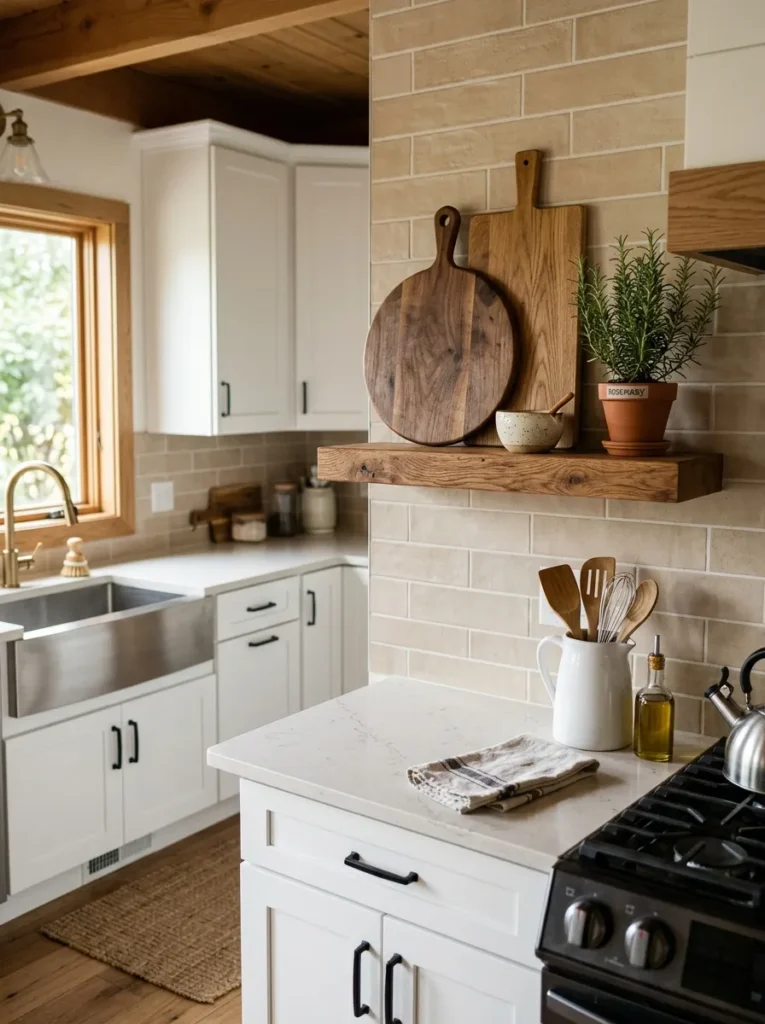
- Adds a compact landing spot for boards and kitchen essentials.
- Keeps frequently used items organized near the preparation area.
- Uses wall space without extending deeply into the room.
- Creates a warm architectural detail with practical value.
A slim floating ledge can create useful storage without taking up much room, making it a smart choice for kitchens with narrow counters. Mount it above the main preparation area and use it for lightweight cutting boards, a small bowl, cooking books, or a potted herb. Keep the depth modest so the ledge does not visually overwhelm the wall or interfere with nearby work areas. Natural wood works especially well against white or cream surfaces because it introduces warmth and texture. The key is to display only a few useful pieces, leaving enough open space to keep the arrangement visually relaxed.
This setup is most effective when the ledge supports your daily routine rather than becoming another place for random objects to collect. Choose items that are frequently used or genuinely enhance the kitchen, then rotate decorative pieces occasionally to keep the display fresh. A secure installation is essential, particularly if you plan to store heavier boards or containers. That’s why many designers recommend checking wall construction and using appropriate hardware before installation. When thoughtfully styled, a floating ledge adds vertical storage, creates a subtle focal point, and keeps valuable countertop space available for everyday tasks.
16. Appliance Tray Zone
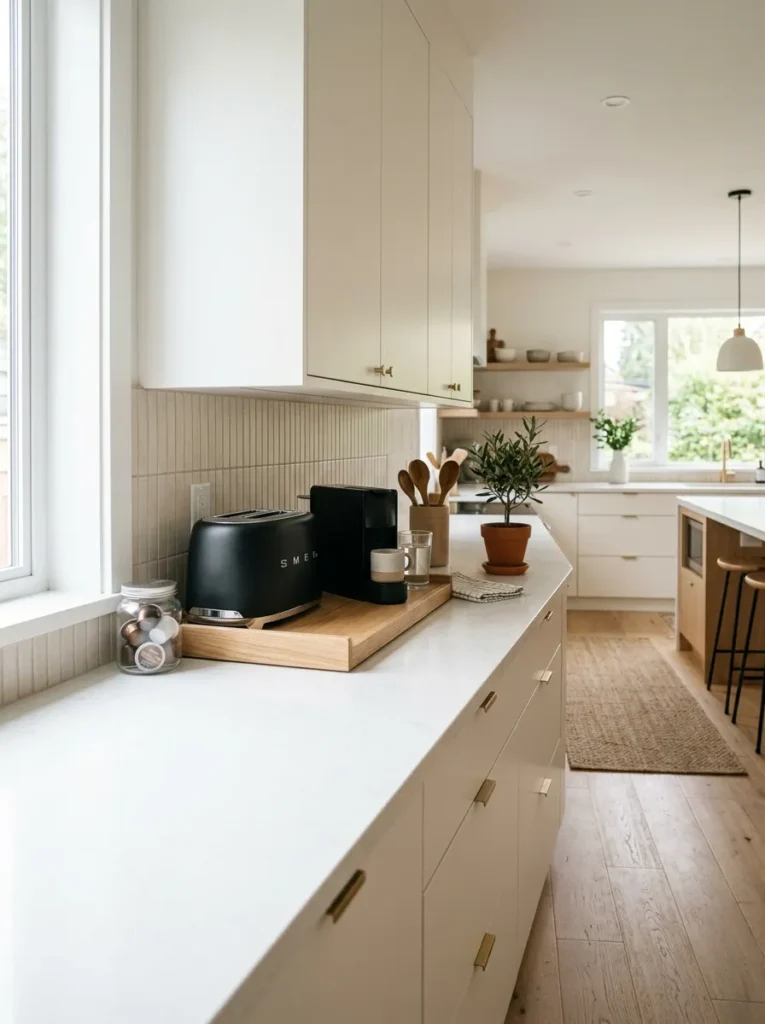
- Gives small countertop appliances one defined landing area.
- Makes cleaning underneath coffee makers and toasters easier.
- Keeps cords and accessories visually contained.
- Helps prevent appliances from slowly spreading across the counter.
Small appliances tend to migrate across the countertop, especially when several people use them throughout the day. A dedicated appliance tray creates a visual boundary that keeps the coffee maker, toaster, or blender in one controlled zone. Choose a sturdy tray with low edges and enough surface area for the appliances you use most. Wood adds warmth, while stone or metal creates a cleaner contemporary feel. Keeping the appliances together also makes wiping the surrounding counter easier because you can lift or shift the tray instead of moving several separate machines one at a time.
This arrangement is particularly useful for creating a compact breakfast or beverage station. Keep the appliances that belong together on the tray and store occasional-use machines elsewhere. If cords are visible, route them neatly toward an outlet without creating tight bends or tangled loops. I’ve noticed that the tray works best when it is slightly larger than the appliances but not oversized. Too much empty space can encourage additional clutter. A carefully sized base gives the area structure while keeping essential machines accessible, making the countertop feel more intentional without sacrificing convenience.
17. Glass Jar Display
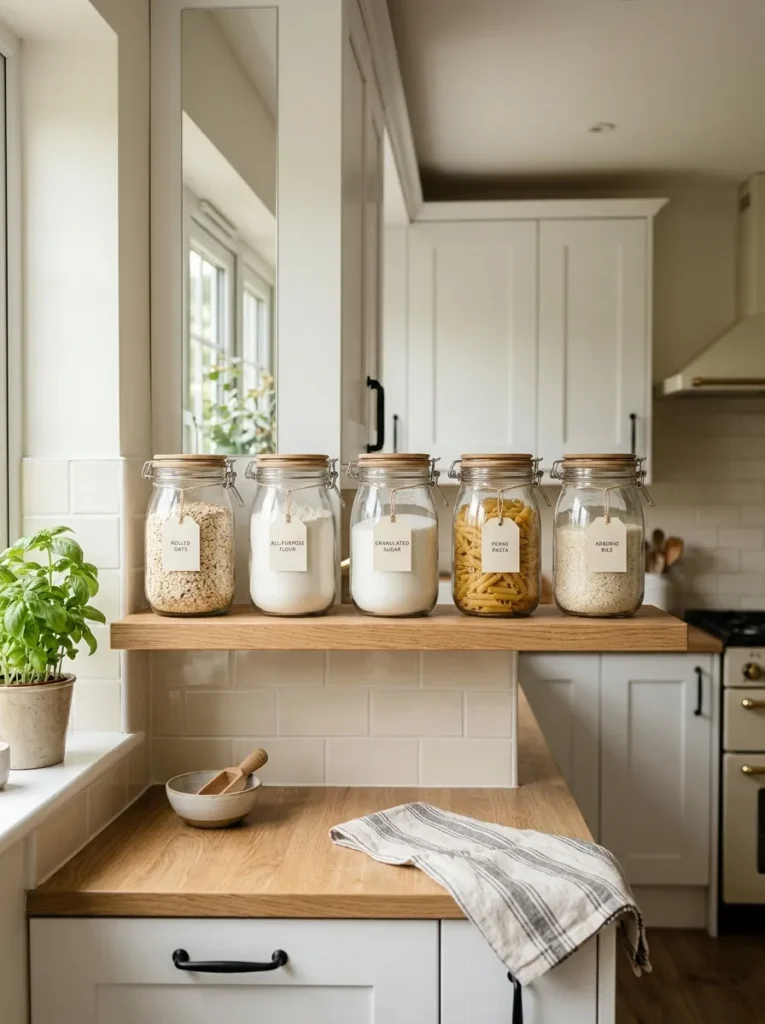
- Replaces mismatched packaging with a cohesive storage arrangement.
- Keeps frequently used ingredients visible and easy to identify.
- Adds texture and brightness without overwhelming the counter.
- Makes a small baking or pantry zone feel more intentional.
Clear glass jars can make everyday pantry staples look surprisingly decorative while keeping them easy to access. Use matching or coordinating containers for ingredients such as flour, sugar, oats, rice, pasta, or coffee, then place them together in a small countertop zone. Transparent sides let you see when supplies are running low, reducing the chance of forgetting what needs replacing. Simple labels can make the setup even easier to navigate. Choose a few essential ingredients rather than displaying everything from the pantry. A restrained collection creates the organized appearance Pinterest kitchens are known for without demanding excessive counter space.
The practical benefit goes beyond appearance. Uniform containers can reduce torn bags, loose packaging, and half-open boxes that often create visual clutter. Select jars with secure lids and openings wide enough for easy scooping or pouring. Keep them away from direct heat and moisture, particularly near the sink or cooktop. In my experience, grouping containers by purpose makes the station easier to maintain than arranging them only by size. A small baking cluster, for example, can sit near the mixer while coffee supplies stay together elsewhere. This creates natural zones that support everyday routines and make the counter easier to reset.
18. Hidden Charging Drawer
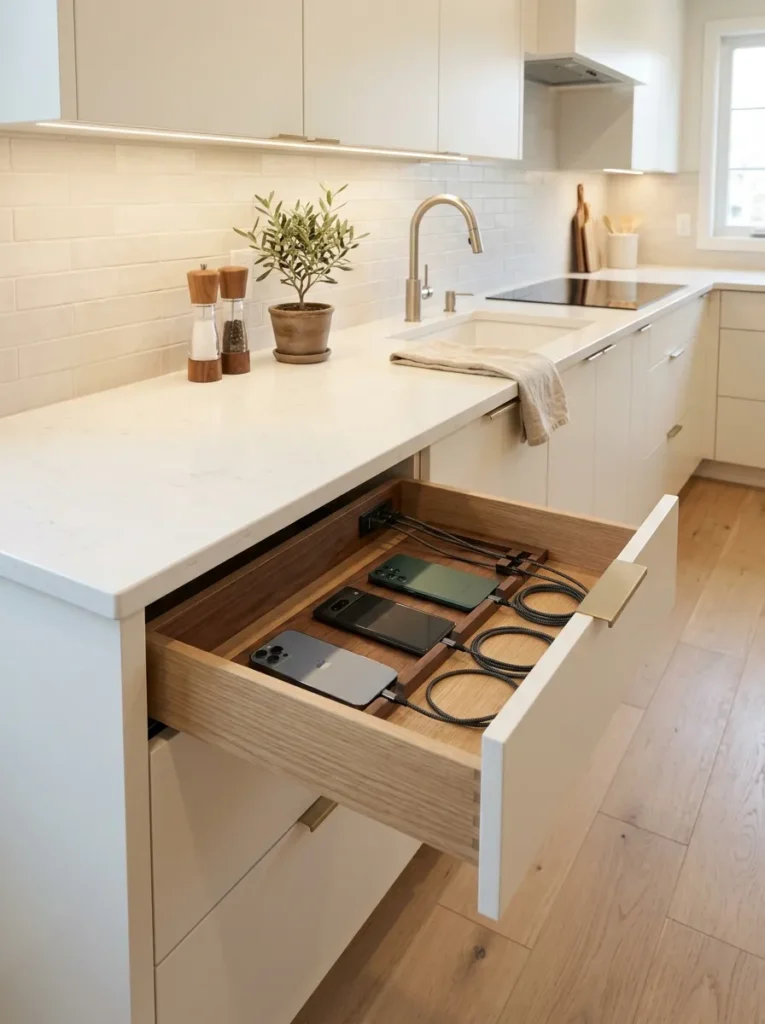
- Keeps phones and small devices off the kitchen counter.
- Creates a dedicated place for charging during busy routines.
- Reduces visible cables that quickly make surfaces look messy.
- Keeps technology contained while preserving easy access.
Charging cables can quietly become one of the biggest sources of countertop clutter, especially in kitchens where phones are used for recipes, timers, music, or family communication. A hidden charging drawer gives devices a dedicated location without leaving cords stretched across the work surface. Choose a drawer near an existing power source and use cable clips or dividers to keep individual chargers separated. The drawer should remain easy to open and ventilated enough for safe charging. Keeping technology contained creates a cleaner visual field while still allowing everyone to access their devices when needed.
This solution works particularly well for households where the kitchen naturally becomes a gathering and charging point. Instead of placing phones beside appliances or against the backsplash, give them a predictable home that can be reset quickly after meals. If a built-in charging drawer is not practical, a small cable-management box tucked inside an existing drawer can provide a similar benefit. That simple adjustment can support better Kitchen Counter Organization Ideas because it removes visual clutter without taking away useful technology. The result is a calmer surface that remains functional for cooking, entertaining, and everyday family life.
19. Woven Basket Storage
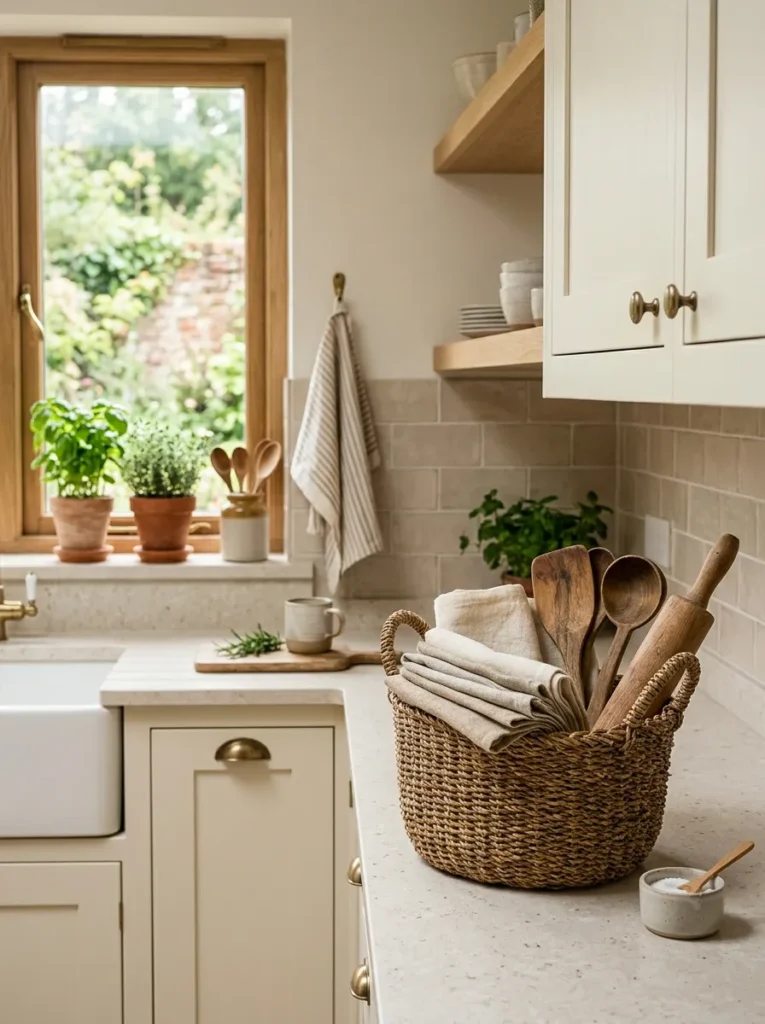
- Hides loose kitchen linens and small everyday supplies.
- Adds natural texture to an otherwise smooth countertop.
- Creates a softer alternative to plastic organizers.
- Keeps frequently used items grouped and easy to retrieve.
Loose towels, napkins, and small kitchen accessories can quickly make a countertop look unfinished. A compact woven basket gives these everyday items one attractive home while adding warmth and texture to the space. Choose a basket that fits comfortably into an unused corner or beside a coffee station, then use it for only a few practical supplies. Natural seagrass, rattan, or woven cotton works beautifully with wood cabinets and neutral surfaces. Keeping the basket moderately filled prevents it from looking bulky. The result is functional storage that feels softer and more decorative than a collection of scattered objects.
A basket is especially useful when you need flexible storage but do not want another hard-sided organizer competing with your kitchen finishes. Use it for folded dish towels, reusable napkins, small produce bags, or other lightweight items that need to stay accessible. I’ve noticed that baskets look best when their contents remain contained rather than overflowing over the edges. Choose one with a sturdy base so it stays stable when items are removed. Placing it beside a frequently used work zone makes daily routines easier while giving the countertop a warm, layered appearance that feels relaxed rather than overly styled.
20. Narrow Herb Planter
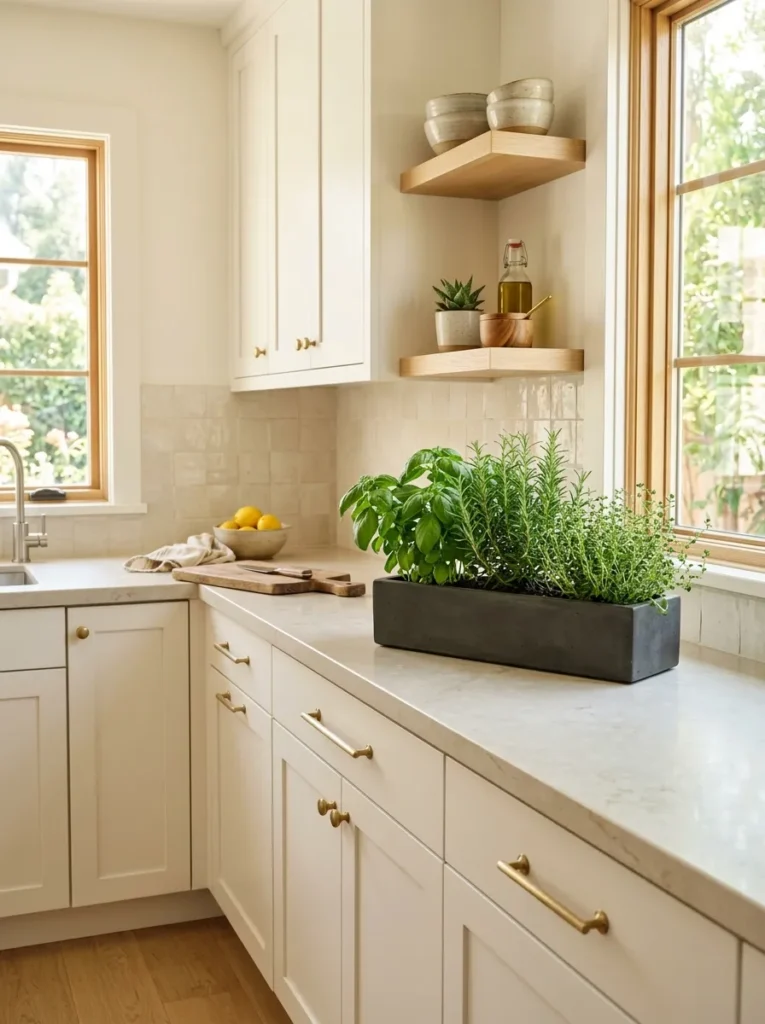
- Keeps frequently used fresh herbs within easy cooking reach.
- Adds natural greenery without consuming much counter space.
- Introduces color and organic texture to neutral kitchens.
- Creates a fresh focal point near the preparation area
Fresh herbs can bring both function and personality to a kitchen when they are given a compact, intentional home. A narrow planter allows basil, rosemary, thyme, or mint to stay close to the cooking area without taking over valuable workspace. Choose a container that fits the available counter depth and includes proper drainage, then place it near natural light when possible. A simple ceramic or terracotta planter can complement neutral cabinetry while adding a fresh green accent. Keeping several herbs together creates one defined botanical feature instead of scattering individual pots around the room.
The most important consideration is maintenance. Herbs need appropriate light, drainage, and watering, so position the planter where those needs can be managed easily. Avoid placing it directly beside a hot cooktop or in a spot where water regularly splashes onto the counter. In my experience, a small collection of healthy plants looks much better than a crowded assortment that is difficult to maintain. Trim herbs regularly and remove damaged leaves to keep the display fresh. This simple arrangement adds practical ingredients, natural color, and a welcoming touch while preserving plenty of clear preparation space.
21. Countertop Paper Holder
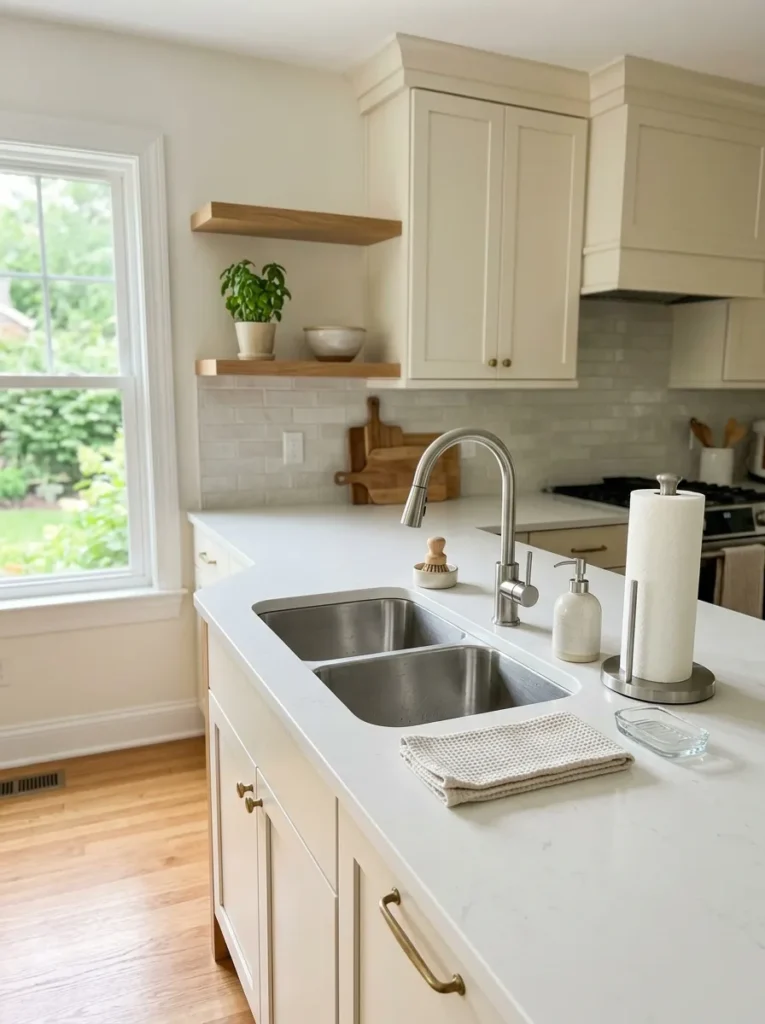
- Gives paper towels a designated place beside the sink.
- Prevents loose rolls from taking over valuable work surfaces.
- Makes cleanup supplies easy to grab during cooking.
- A weighted base keeps the holder stable during everyday use.
Paper towels are useful throughout the day, but a loose roll can become an unnecessary visual distraction on an otherwise organized counter. A dedicated holder gives the roll one stable location, ideally near the sink or main cleanup area. Choose a weighted base that prevents tipping and a finish that coordinates with your faucet or cabinet hardware. Stainless steel creates a sleek appearance, while wood or ceramic can make the setup feel warmer. Keep the holder close enough for quick spills and meal cleanup, but far enough from the main preparation area that it does not interfere with chopping or serving.
A simple holder can also make daily resetting easier because everyone knows exactly where the roll belongs. Select a model that can be wiped clean and does not have complicated grooves where crumbs or moisture can collect. If the countertop is narrow, choose a vertical design with a small footprint. I’ve noticed that matching small functional pieces, such as the paper holder, soap dispenser, and utensil container, can make a kitchen feel more cohesive without requiring expensive changes. This small upgrade keeps an everyday necessity accessible while giving the surrounding surface a cleaner, more deliberate appearance.
22. Under-Shelf Basket
- Adds hidden storage beneath existing shelves or cabinets.
- Creates a home for small kitchen linens and accessories.
- Uses vertical space without expanding the countertop footprint.
- Helps keep frequently forgotten items neatly contained.
Unused space beneath a shelf can become surprisingly valuable when you add a slim hanging basket. This simple organizer creates a compact storage pocket for kitchen towels, cloth napkins, reusable bags, or lightweight accessories without taking additional room on the counter. Choose a basket that slides or hooks securely beneath an existing shelf, leaving enough clearance for comfortable access. Wire designs feel light and modern, while woven versions add warmth. Keep the basket close to the area where its contents are used so the storage solution supports your routine instead of creating another place to search.
This idea works particularly well in kitchens with open shelving or limited cabinet capacity. Before installing the basket, check the shelf thickness and weight capacity so it remains secure when filled. Keep heavier items elsewhere and use this space for lightweight essentials. I’ve noticed that small hidden storage additions are most effective when they solve one specific problem rather than trying to hold everything. Fold towels uniformly and avoid overfilling the basket so its contents stay easy to remove. By using overlooked vertical space, you can keep the countertop clearer while making everyday supplies easier to organize.
23. Wall-Mounted Cookbook Stand
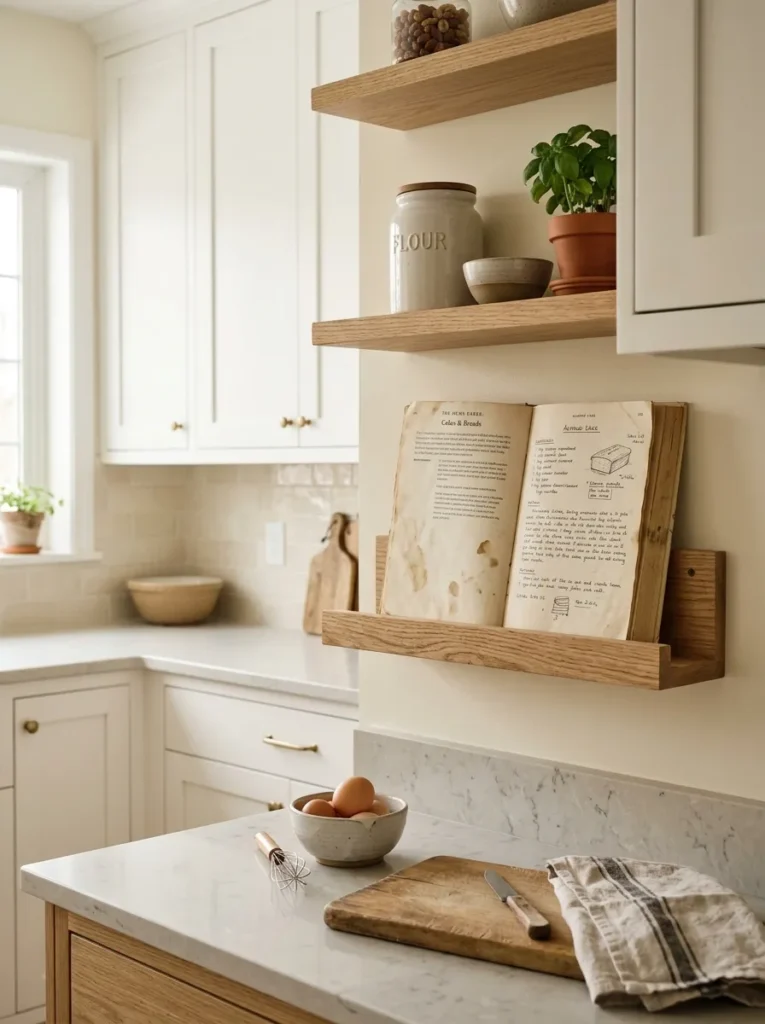
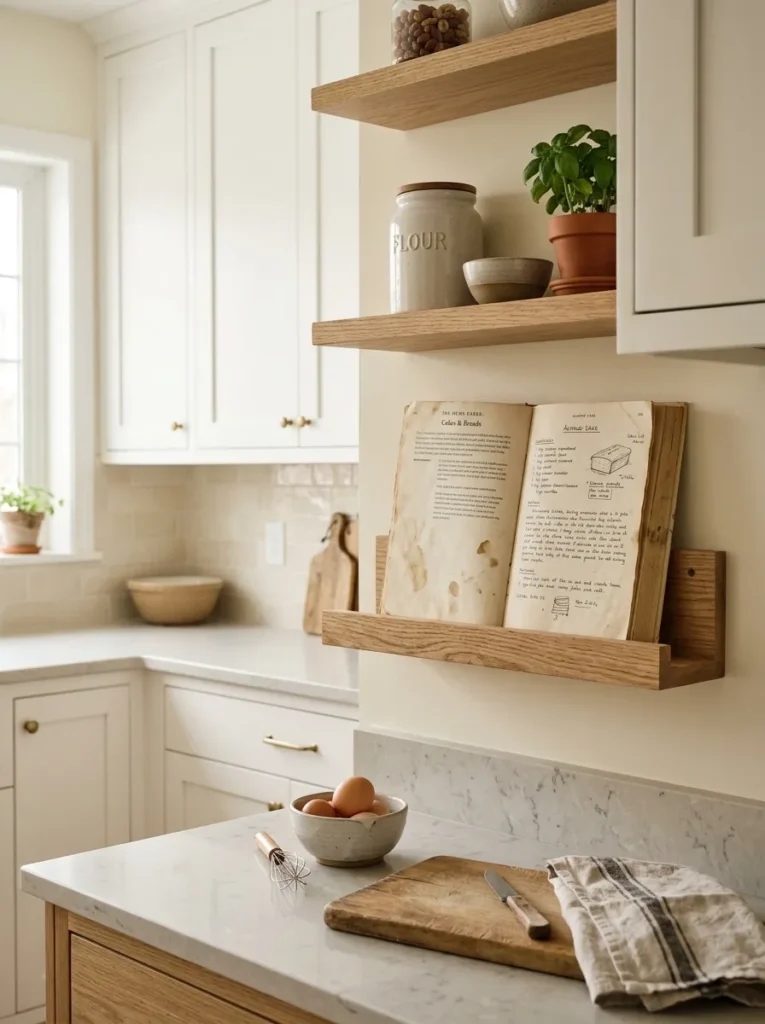
- Moves bulky cookbooks away from the main preparation surface.
- Keeps favorite recipes visible while freeing valuable workspace.
- Adds a decorative vertical element to an empty wall.
- Works especially well beside a baking or cooking zone.
A cookbook can be both useful and decorative when it has a dedicated place instead of occupying the middle of your work surface. A slim wall-mounted stand or ledge keeps a favorite recipe visible while moving the book upward and out of the way. Position it near the main cooking zone where you can read instructions comfortably without reaching across hot appliances. Choose a sturdy ledge with a shallow profile, then keep only one or two frequently used books on display. Warm wood adds character, while a simple painted finish can blend seamlessly with existing cabinetry and backsplash materials.
Beyond freeing workspace, this setup can give an empty wall a practical purpose. If you regularly cook from digital recipes, the same concept can hold a tablet stand instead, provided the device is positioned safely away from splashes and heat. That flexibility makes the idea useful for different routines and kitchen layouts. In my experience, the best countertop arrangements are those that remove obstacles rather than simply adding storage. Moving reading materials vertically creates a cleaner preparation zone, keeps recipes close at hand, and adds a subtle lived-in detail without making the kitchen feel overly decorated.
24. Corner Lazy Susan
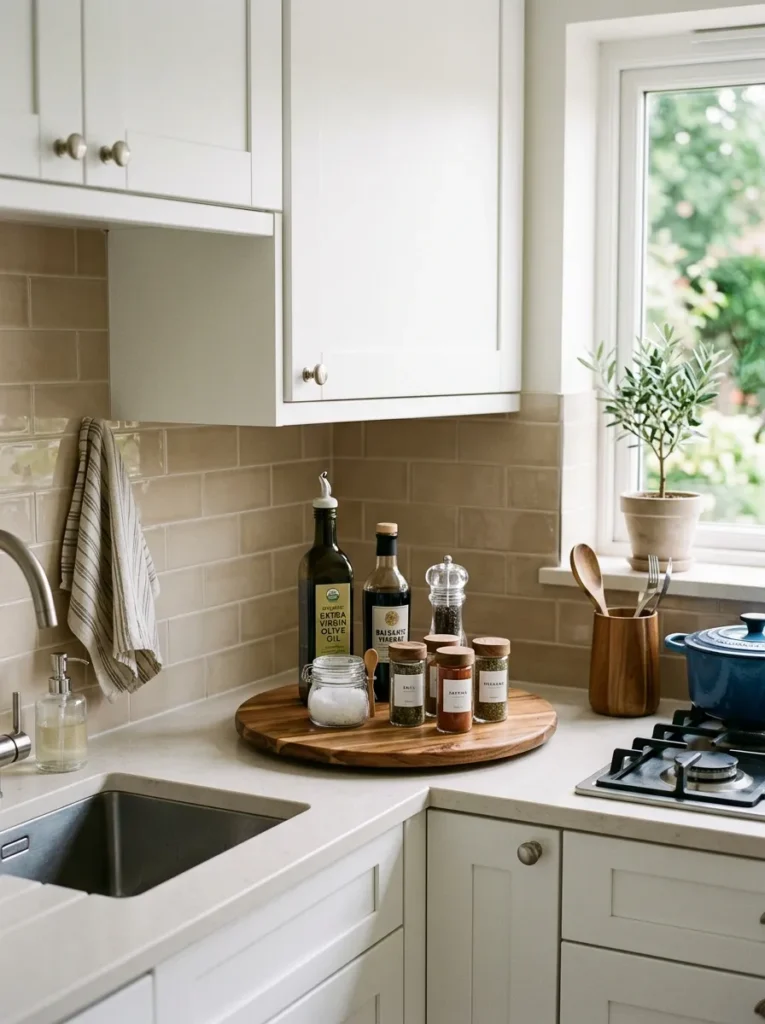
- Makes hard-to-reach countertop corners easier to use.
- Keeps oils, condiments, or small jars accessible.
- Prevents items from disappearing behind larger containers.
- Rotating storage makes the entire collection easier to scan.
Deep corners can become clutter magnets because items placed there are easy to forget and awkward to reach. A compact lazy Susan solves that problem by making the entire group accessible with one simple rotation. Use it for oils, vinegars, condiments, spice jars, or small cooking essentials that need to stay within reach. Choose a diameter that fits comfortably without crowding nearby work areas. Wood creates a warm organic look, while acrylic or stone can suit a more contemporary kitchen. Arrange taller bottles toward the center or back and smaller containers around the outer edge for easy visibility.
The rotating base is most useful when the items on it belong to the same daily routine. Avoid turning it into a general storage pile, because too many objects can make rotation difficult and defeat the purpose. Leave enough space between containers so labels remain visible and everything can be removed without knocking over neighboring pieces. I’ve seen this work especially well in kitchens where a fixed corner would otherwise become dead space. By giving that awkward area a clear purpose, the setup improves accessibility while making the surrounding counter feel more organized and thoughtfully planned.
25. Minimalist Counter Tray
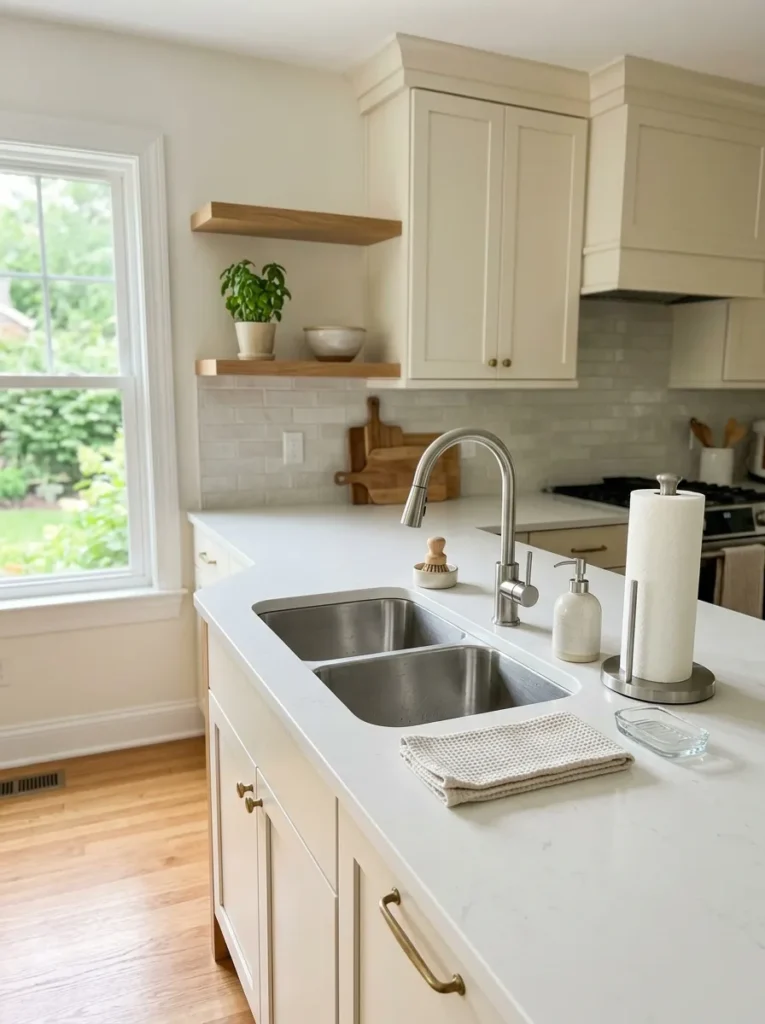
- Creates one intentional home for the last few essentials.
- Prevents small objects from spreading across the surface.
- Makes daily countertop resets faster and easier.
- Adds structure without making the kitchen feel over-organized.
Sometimes the final step toward a tidy kitchen is simply giving the remaining essentials a clear boundary. A minimalist counter tray can gather a few useful pieces, such as hand soap, a small plant, a candle, or a salt cellar, into one intentional arrangement. Choose a shallow tray with enough room to group items without filling every inch. Stone, wood, ceramic, or metal can work beautifully depending on your kitchen style. The surrounding surface should remain mostly open, allowing the tray to define the arrangement without becoming another source of visual clutter.
The most effective tray styling is restrained and easy to maintain. Keep only the items you genuinely use or enjoy seeing, and remove anything that has slowly accumulated without purpose. A tray also makes everyday cleaning simpler because you can move several small objects together before wiping the counter. For a polished finish, vary the heights and textures of the pieces while keeping the color palette coordinated. In my experience, leaving generous empty space around a small grouped arrangement creates the biggest visual improvement. The result feels calm, functional, and intentionally organized without looking overly staged.
Conclusion
A tidy kitchen counter does not require a complete makeover. The right storage zones, vertical solutions, trays, and carefully chosen organizers can make everyday tasks feel easier while giving your kitchen a more polished appearance. These Kitchen Counter Organization Ideas offer simple ways to reclaim workspace, reduce visual clutter, and create a room that feels comfortable and functional. I’ve seen how small changes can completely transform a space when they are designed around real daily habits. Save this post on Pinterest for your next organizing project, try one idea today, and share it with someone who could use a calmer kitchen.