20 Amazing Under Kitchen Sink Organization Ideas For Less Clutter
Is the cabinet beneath your kitchen sink a cluttered maze of bottles, sponges, and forgotten supplies?
A few smart changes can turn that frustrating space into one of the most useful storage spots in your kitchen.
These Under Kitchen Sink Organization Ideas are designed to help you make better use of awkward corners, vertical space, cabinet doors, and deep storage areas.
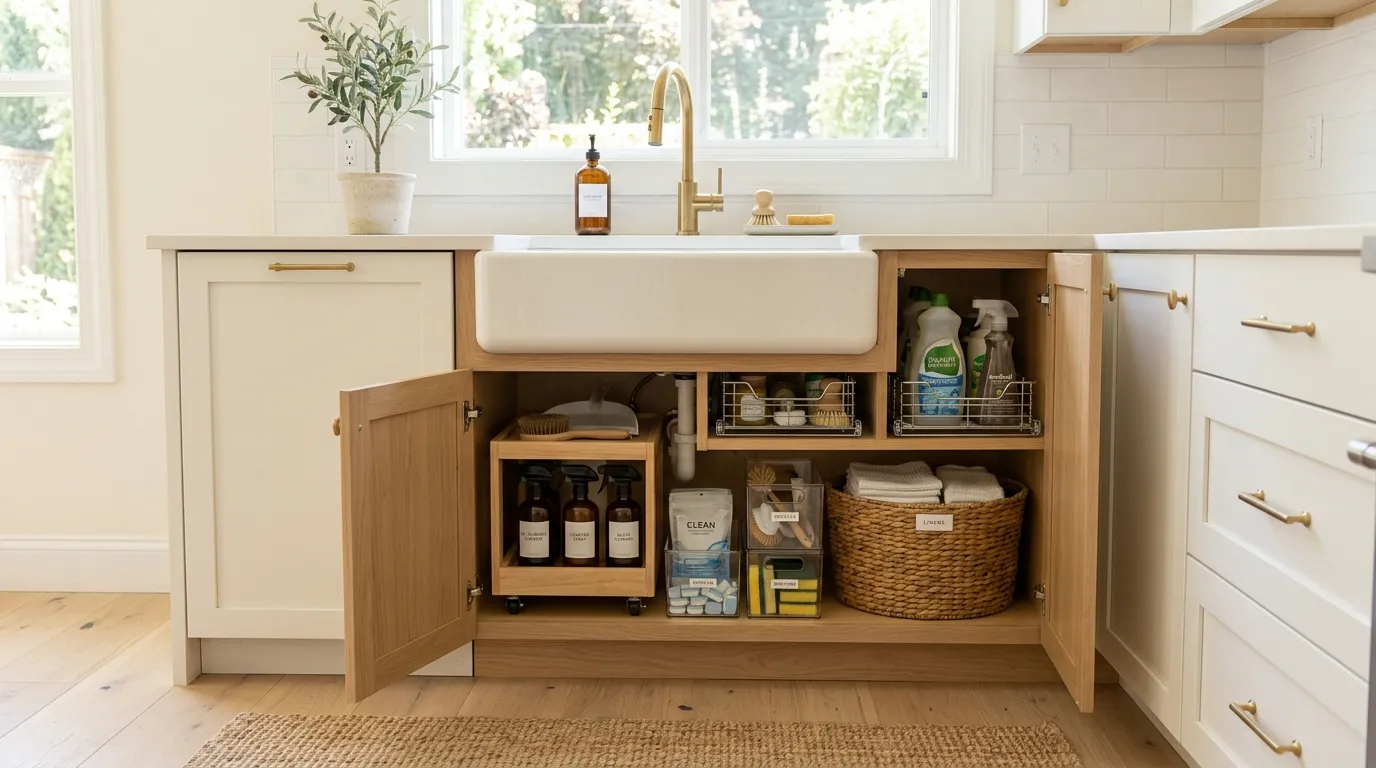
From pull-out shelves and clear bins to rolling carts and clever hanging solutions, each idea offers a practical way to keep everyday essentials visible and accessible.
In my experience, even a small organizing change can make a busy kitchen feel noticeably calmer.
You’ll find simple setups for different cabinet sizes, storage needs, and routines, so you can choose what works best for your home. Get ready to create a cleaner cabinet that feels easier to use every day.
Here is the first batch of 3 ideas, following your exact structure and paragraph word counts.
Also view: 25 Best Small Kitchen Cabinet Organization Ideas for Less Clutter
1. Pull-Out Cleaning Shelf
- Makes deep cabinet space easier to reach.
- Keeps everyday cleaning supplies visible and accessible.
- Reduces bottle stacking and hidden clutter.
- A slim sliding shelf works especially well in narrow cabinets.
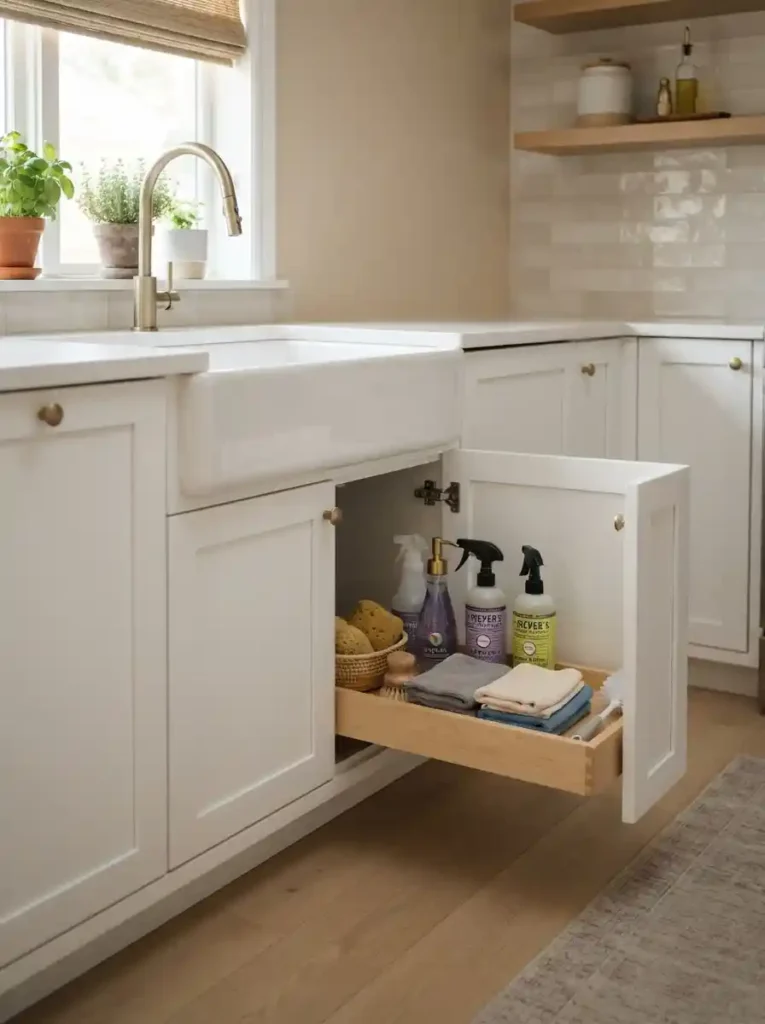
A slim pull-out organizer can turn the awkward space beneath a sink into an easy-to-reach storage zone. Instead of stacking bottles behind one another, place everyday cleaners, sponges, and refill supplies on a narrow sliding shelf. The front handle lets you bring everything forward without kneeling or digging through clutter. In my experience, this setup works especially well in cabinets with limited width because it uses vertical space while keeping the floor area open. Choose a moisture-resistant shelf, and leave enough clearance around plumbing so drawers slide smoothly without catching pipes or valves.
Small cabinets often feel chaotic because the items you use most disappear behind everything else. A pull-out shelf solves that problem by creating clear zones that move toward you. Keep frequently used sprays and cloths on the lower shelf, while backup products sit farther back or higher up. A low tray can contain leaks and make cleanup easier. The finished cabinet looks calmer because every bottle has a visible place. For renters or busy households, this is one of the most practical under-sink upgrades because it improves access without requiring a major cabinet renovation.
2. Clear Storage Bins
- Makes small supplies visible without opening every container.
- Groups similar products into simple, manageable categories.
- Helps prevent duplicate purchases and forgotten items.
- Matching bins create a cleaner, more intentional appearance.
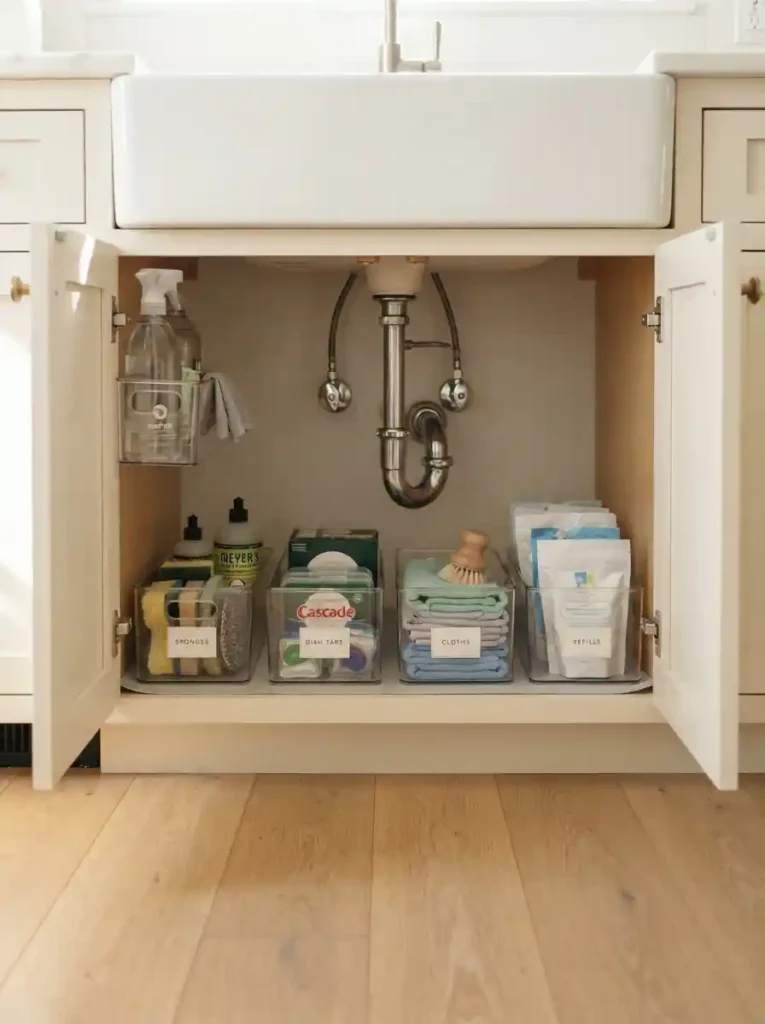
Clear bins make a messy sink cabinet feel instantly more organized because every category becomes visible at a glance. Use matching containers for dishwasher supplies, cleaning cloths, sponges, and small refill packets, then group similar items together. The transparent sides help you spot what is running low before buying duplicates. I’ve noticed this approach is particularly helpful in busy kitchens where several people grab supplies throughout the day. Choose low-profile bins that fit around plumbing, and add simple labels if several containers hold similar products. The result is tidy storage that stays easy to maintain.
The biggest advantage of clear storage is that it removes the mystery from a crowded cabinet. Instead of pulling out five bottles to find one sponge, you can lift a single bin and return it just as quickly. Keep the most frequently used category near the cabinet opening and reserve deeper areas for backups. This simple arrangement supports everyday routines while making cleaning day faster. For a polished Pinterest-worthy look, choose bins in consistent shapes and leave a little breathing room between containers. That small visual gap keeps the cabinet from feeling packed, even when it holds plenty of supplies.
3. Two-Tier Cabinet Riser
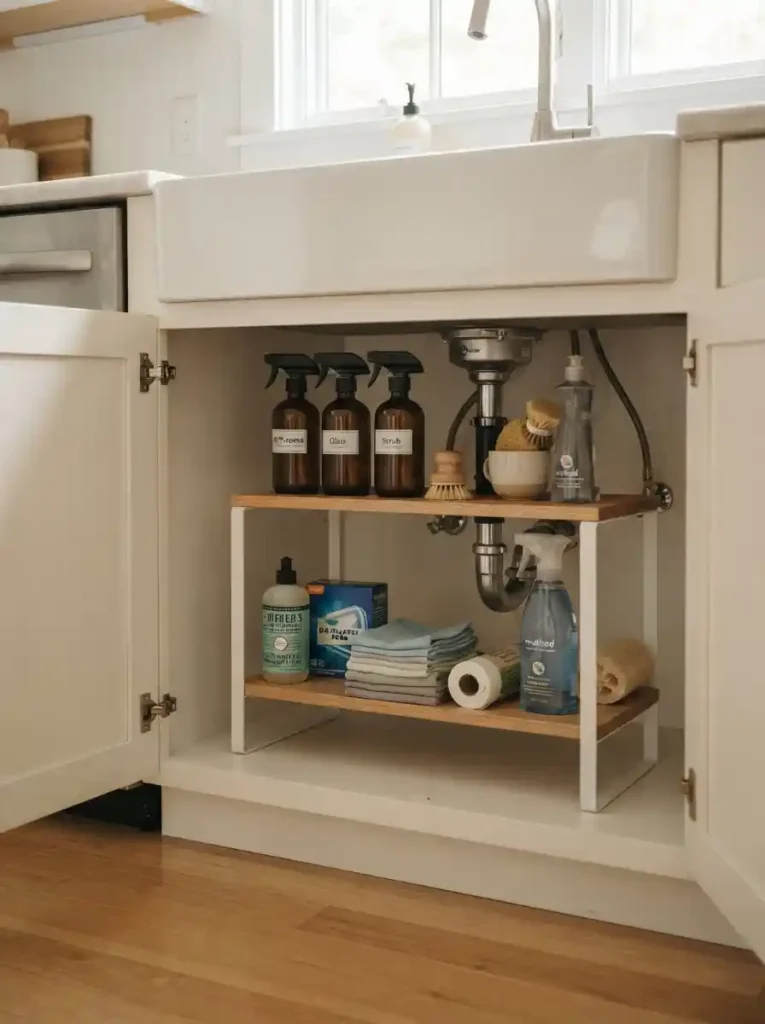
- Adds a second storage level without remodeling the cabinet.
- Keeps smaller products visible instead of hiding behind bottles.
- Makes deep cabinets easier to organize and use.
- Open-sided designs allow better access around plumbing.
A two-tier shelf creates an instant second level inside the cabinet, making better use of the vertical space around the sink plumbing. Place shorter bottles, sponges, and brushes on the lower tier, then keep taller cleaning products on the upper level where they remain easy to see. This arrangement prevents supplies from forming a single crowded row. I’ve seen this work well in older kitchens with deep cabinets because it creates order without permanent changes. Select a sturdy shelf with adjustable or open sides so plumbing remains accessible and bottles can stand securely without tipping.
When cabinet space is deep, a two-tier riser can make every inch work harder without making the area feel crowded. The raised upper level keeps smaller supplies visible, while the lower section handles taller bottles or backup items. Look for a water-resistant material with a stable base, especially near pipes that may occasionally drip. Leave enough room behind the shelf for plumbing connections and avoid blocking the cabinet hinges. This simple layout makes daily grab-and-go storage easier, reduces forgotten products, and gives the cabinet a cleaner appearance whenever you open the doors.
4. Tension Rod Hangers
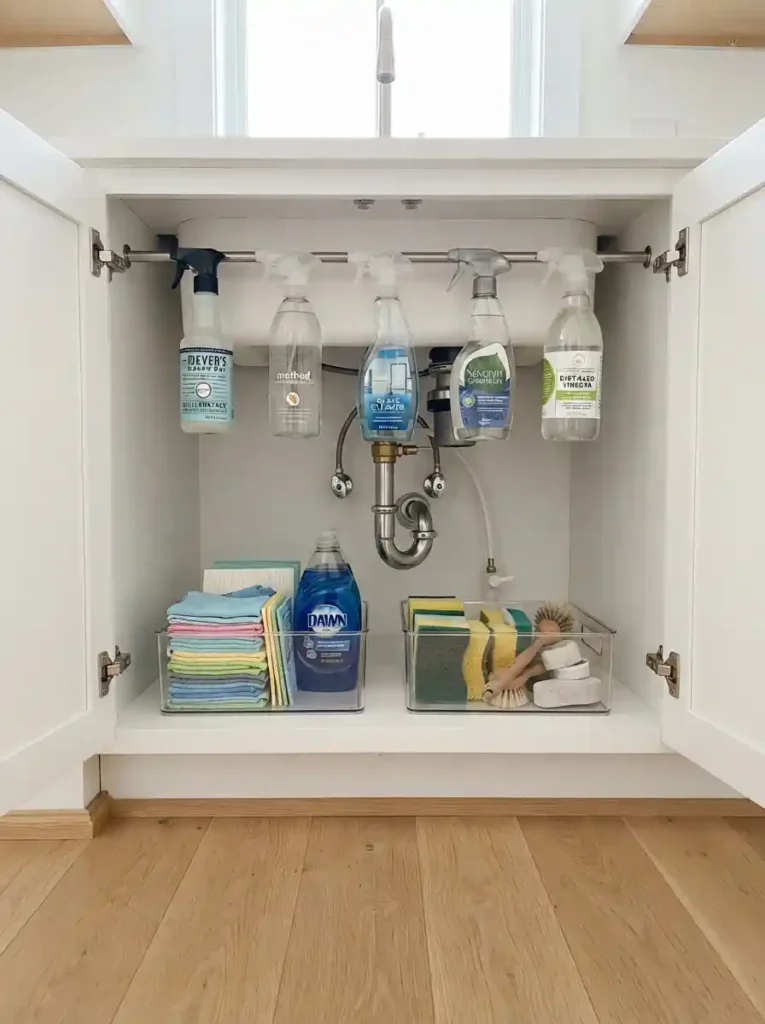
- Uses unused vertical space above the cabinet floor.
- Keeps spray bottles easy to see and grab.
- Leaves room underneath for bins and trays.
- A rust-resistant rod works well in damp areas.
A simple tension rod can completely change how an under-sink cabinet uses vertical space. Install it across the cabinet sides and hang spray bottles by their trigger handles, leaving the floor clear for bins and trays. This creates a useful upper storage zone without drilling holes or adding bulky hardware. In my experience, the rod works best for lightweight bottles that are used regularly, while heavier containers should stay on the cabinet floor or a sturdy shelf. Choose a rust-resistant rod and position it where bottles hang freely without touching plumbing, cabinet doors, or nearby organizers.
Hanging spray bottles keeps the cabinet floor open and makes cleaning products much easier to grab. Use the lower area for a shallow bin containing sponges, gloves, brushes, or extra cloths, creating separate zones for hanging and loose supplies. The visual difference is surprisingly noticeable because the cabinet no longer looks like a pile of bottles. Keep only active products on the rod and store unopened refills elsewhere. This arrangement also makes sweeping or wiping the cabinet base simpler, since fewer items need to be moved before cleaning around the sink area.
5. Slim Rolling Cart
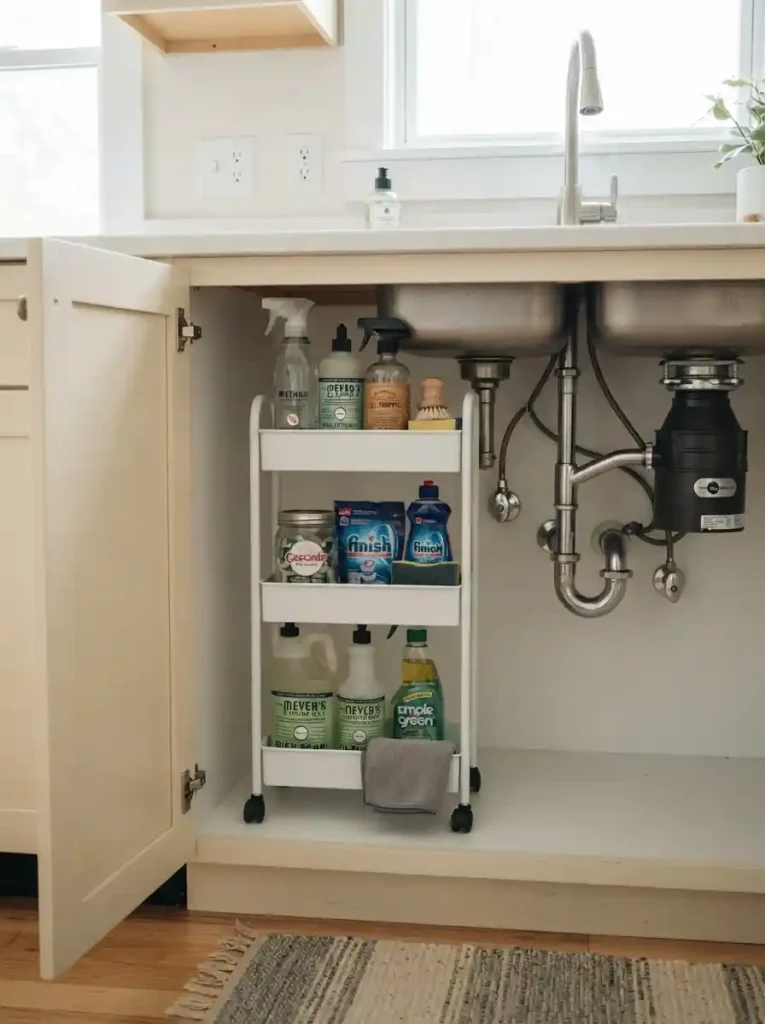
- Turns an awkward cabinet corner into useful storage.
- Brings hidden supplies forward with one easy movement.
- Creates separate levels for different product categories.
- A narrow frame preserves access around plumbing.
A narrow rolling cart can turn an awkward cabinet corner into surprisingly useful storage. Choose a compact cart with two or three shallow levels, then reserve each tier for a specific category such as cleaning sprays, dishwasher supplies, cloths, or trash bags. Because the cart rolls forward, items stored at the back are no longer difficult to reach. This is especially useful in deep cabinets where fixed shelves can create hidden spaces. Look for a slim frame that leaves clearance around plumbing and cabinet hinges, and measure the opening carefully before choosing the cart.
Rolling storage works because it brings the entire collection toward you instead of forcing you to reach into a dark cabinet. Keep frequently used items on the top level and less-used refills lower down, where they remain contained but accessible. A small tray can catch drips from bottles and protect the cabinet surface. I’ve noticed that mobile organizers are especially helpful for people who dislike constantly rearranging supplies just to reach one item. When everything rolls out together, cleaning underneath becomes easier too, making the cabinet both more functional and simpler to maintain.
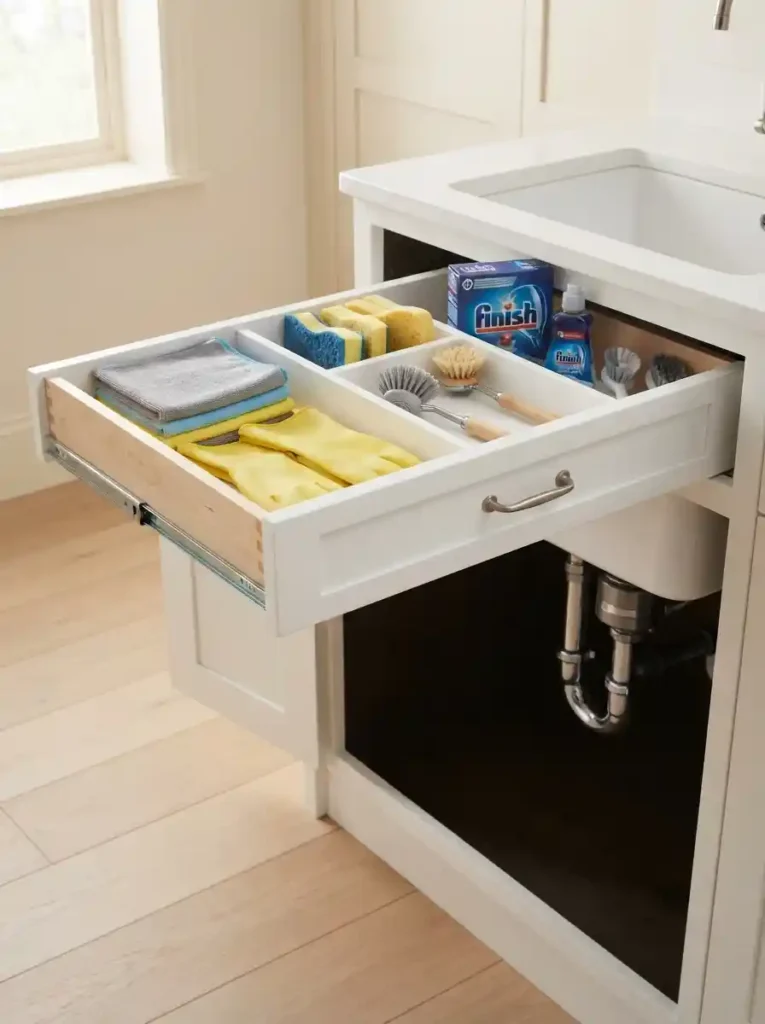
6. Divided Utility Drawer
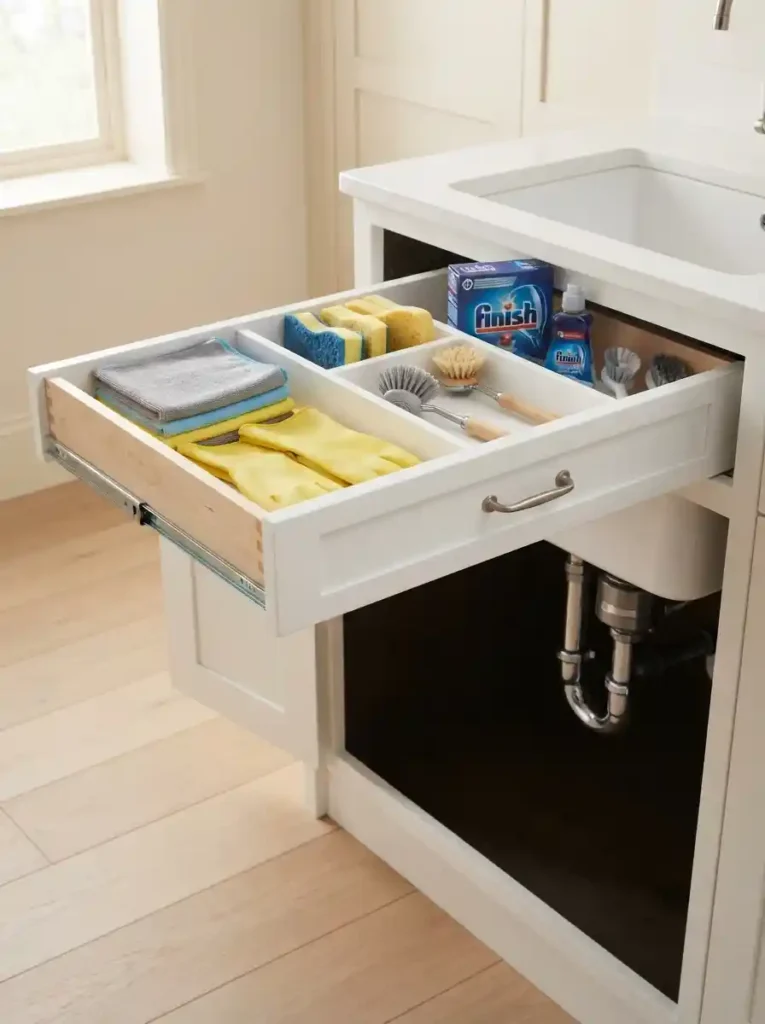
- Gives small cleaning tools their own dedicated spaces.
- Prevents sponges and brushes from spreading across shelves.
- Makes frequently used supplies easier to find.
- Adjustable dividers allow flexible storage as needs change.
A divided drawer insert can bring small under-sink supplies under control without wasting valuable cabinet space. Use separate compartments for sponges, scrub brushes, gloves, microfiber cloths, and dishwasher accessories, keeping each category contained and easy to spot. Shallow drawers are ideal because they provide quick access without creating a heavy, bulky storage unit. Choose a washable organizer with adjustable dividers if possible, especially when several household members use the same supplies. The goal is simple: every small item gets a defined home, so loose pieces stop spreading across the cabinet floor.
Small cleaning tools often create the biggest visual mess because they are flexible, irregularly shaped, and easy to toss anywhere. A divided drawer keeps those pieces contained while preserving a calm, organized appearance. Place frequently used items toward the front and occasional tools toward the back, then leave a little empty space for new supplies. This setup is particularly helpful when your cabinet already contains larger bottles or bins because it gives tiny essentials their own dedicated zone. A quick reset after cleaning becomes easier when every brush, cloth, and sponge has a specific compartment.
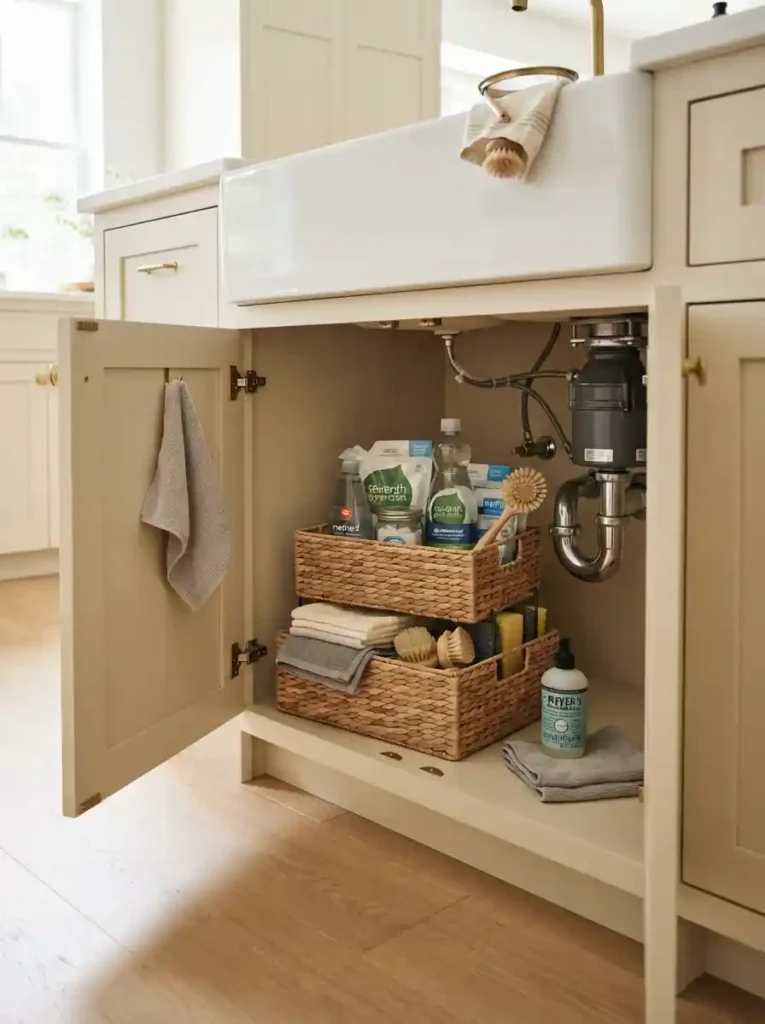
7. Stackable Storage Baskets
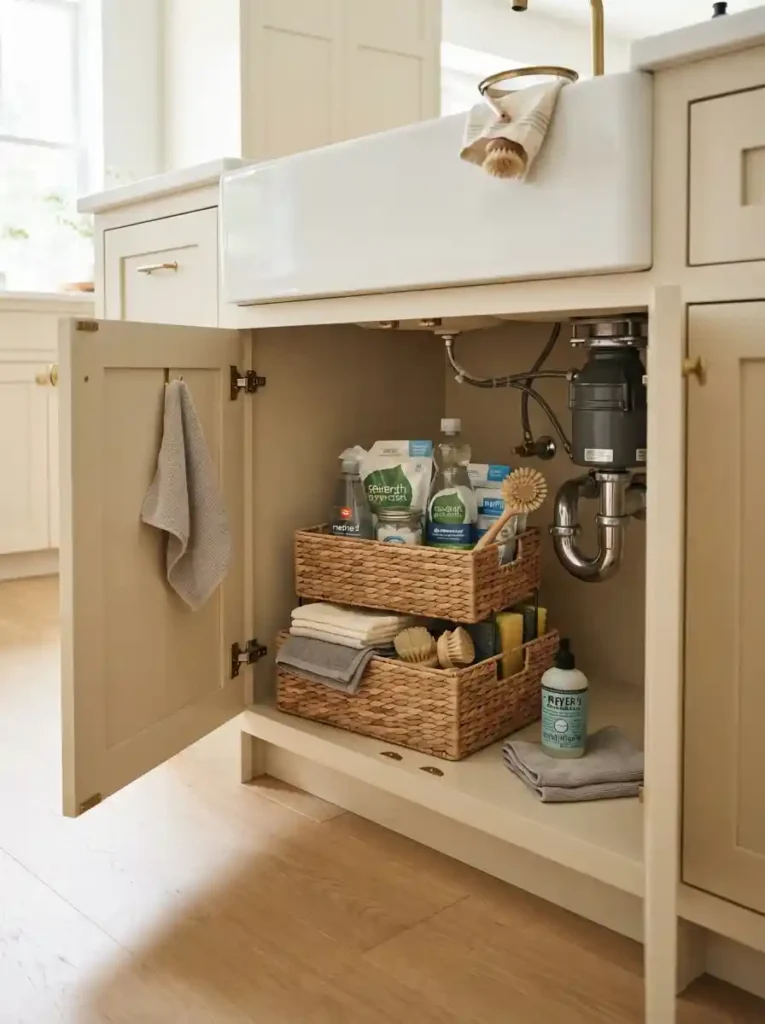
- Creates flexible vertical storage inside deep cabinets.
- Keeps loose supplies grouped by purpose.
- Prevents small items from spreading across the cabinet floor.
- Open fronts make everyday products easier to reach.
Stackable baskets make it easier to build vertical storage when the cabinet floor feels crowded. Place one basket above another to separate cleaning cloths, dishwasher supplies, refill packets, or less-used household items. Open-front baskets are especially convenient because you can pull out the contents without completely removing the container. Choose sturdy plastic, coated wire, or washable woven materials that can handle occasional moisture. Before stacking, check the cabinet height and plumbing position so the baskets remain stable and do not interfere with pipes, hinges, or the sink basin above.
Vertical baskets work particularly well when you have more supplies than floor space. Keep the most frequently used items in the lower basket if it is easier to reach, while seasonal or backup products can occupy the upper level. Avoid overfilling each container because tightly packed baskets quickly become difficult to use. A little breathing room makes categories easier to identify and keeps the cabinet visually lighter. This approach also gives you flexibility because baskets can be moved, separated, or repurposed as your storage needs change, making them a practical long-term solution for busy kitchens.
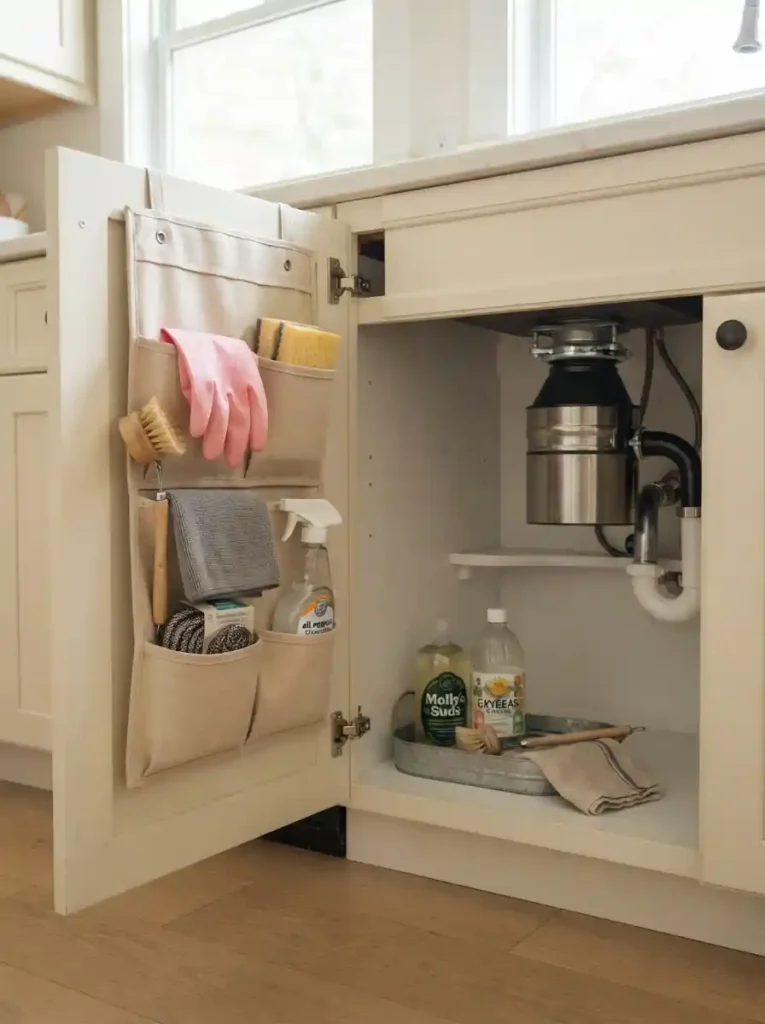
8. Door-Mounted Pocket Organizer
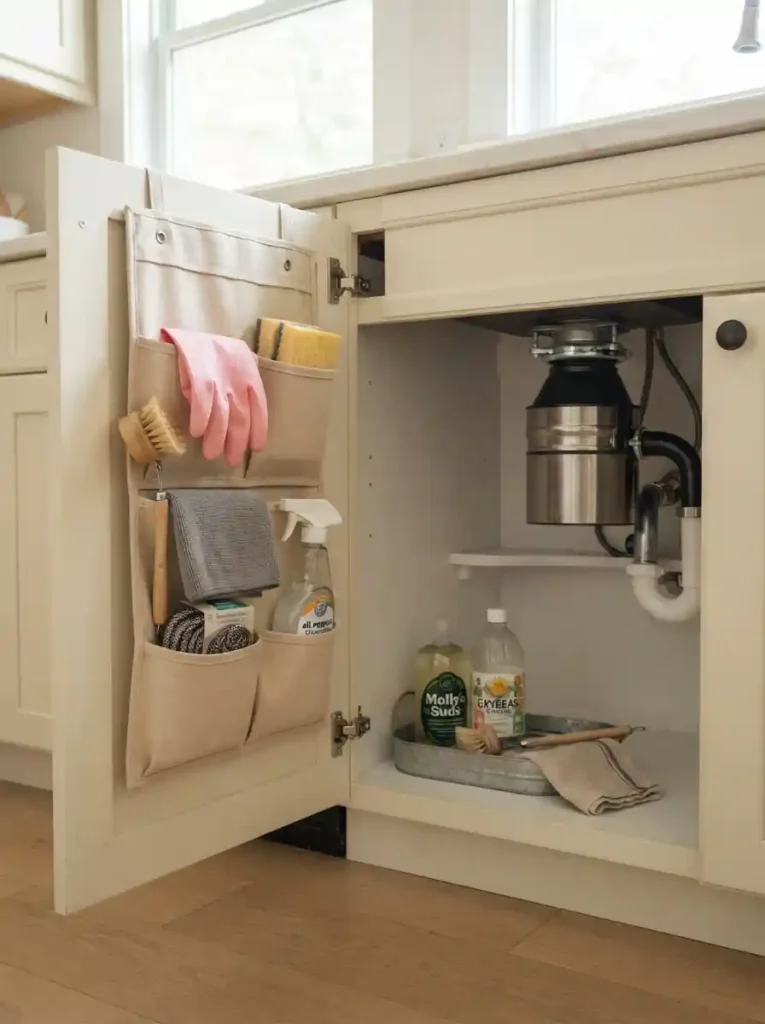
- Turns unused cabinet-door space into accessible storage.
- Keeps lightweight cleaning tools off the cabinet floor.
- Makes small essentials visible immediately when doors open.
- Multiple pockets create simple categories without taking shelf space.
The inside of a cabinet door is often forgotten storage space, but a slim pocket organizer can make it surprisingly useful. Use its compartments for gloves, sponges, scrub brushes, microfiber cloths, or small cleaning accessories that otherwise end up scattered around the cabinet. Choose a lightweight organizer designed for cabinet doors and confirm that the mounting method fits your cabinet construction. Keep pockets away from plumbing and hinges, and avoid storing heavy bottles that could strain the door. With the right setup, this hidden surface becomes a convenient vertical zone without reducing shelf space.
Door-mounted pockets are especially useful for small supplies that need to be reached quickly. When you open the cabinet, everything is displayed at eye level rather than buried beneath larger containers. Group similar items together, such as gloves and cloths in one area and brushes or scrubbers in another. I’ve noticed that this simple change can make daily cleanup feel much less frustrating because the little tools are always visible. Keep heavier products elsewhere and periodically wipe the organizer to prevent moisture or residue from building up around the cabinet door.
9. Lazy Susan Corner
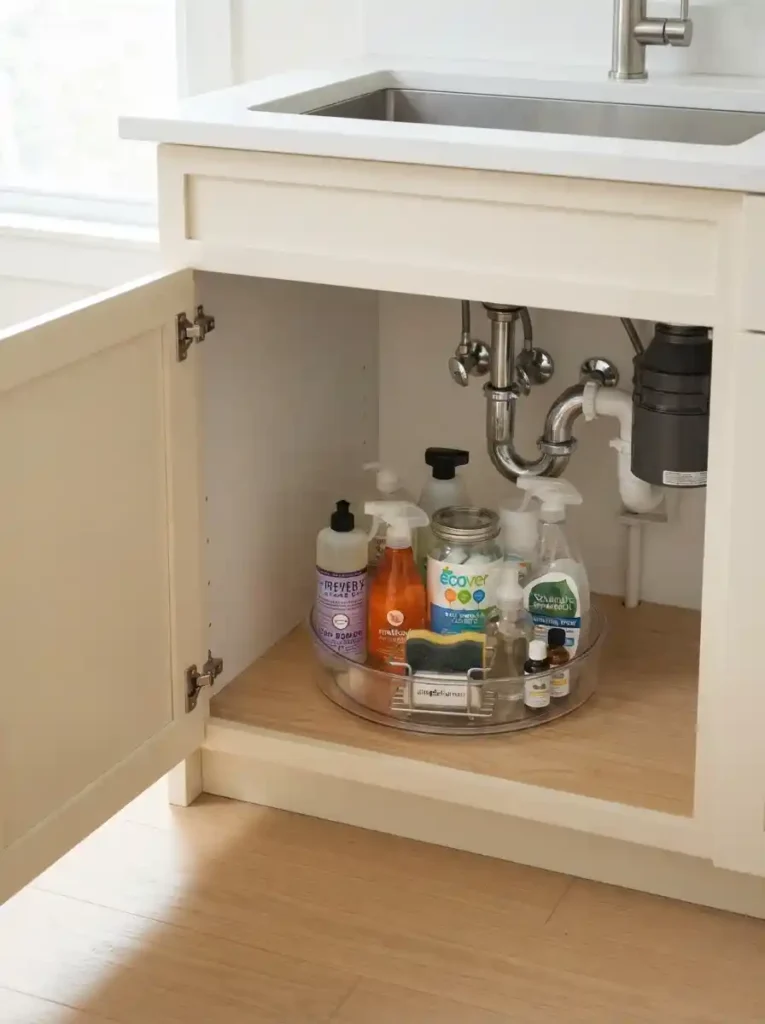
- Makes deep corners easier to reach and use.
- Keeps bottles from disappearing behind larger products.
- Allows quick access with one simple rotation.
- Raised edges help prevent containers from sliding off.
A small lazy Susan can make a deep cabinet corner much easier to use, especially when bottles tend to disappear behind one another. Place frequently used cleaning products on the rotating tray and keep similar items together so one quick spin reveals everything. A model with raised edges helps prevent bottles from sliding while the turntable moves. Measure the cabinet corner carefully before buying one, paying close attention to plumbing pipes and the door opening. The best placement leaves enough clearance for smooth rotation without forcing the organizer against the cabinet walls.
The real benefit of a rotating tray is access. Instead of reaching into the darkest corner or removing several bottles, you simply turn the organizer until the product you need comes forward. This can be particularly helpful in deep cabinets where fixed containers create hidden dead zones. Keep taller bottles toward the center and smaller items around the outer edge, where they are easier to see. Avoid overloading the tray because a crowded turntable becomes harder to rotate. A simple setup like this can make the entire cabinet feel more efficient without adding complicated hardware or permanent changes.
10. Under-Sink Drawer Bins
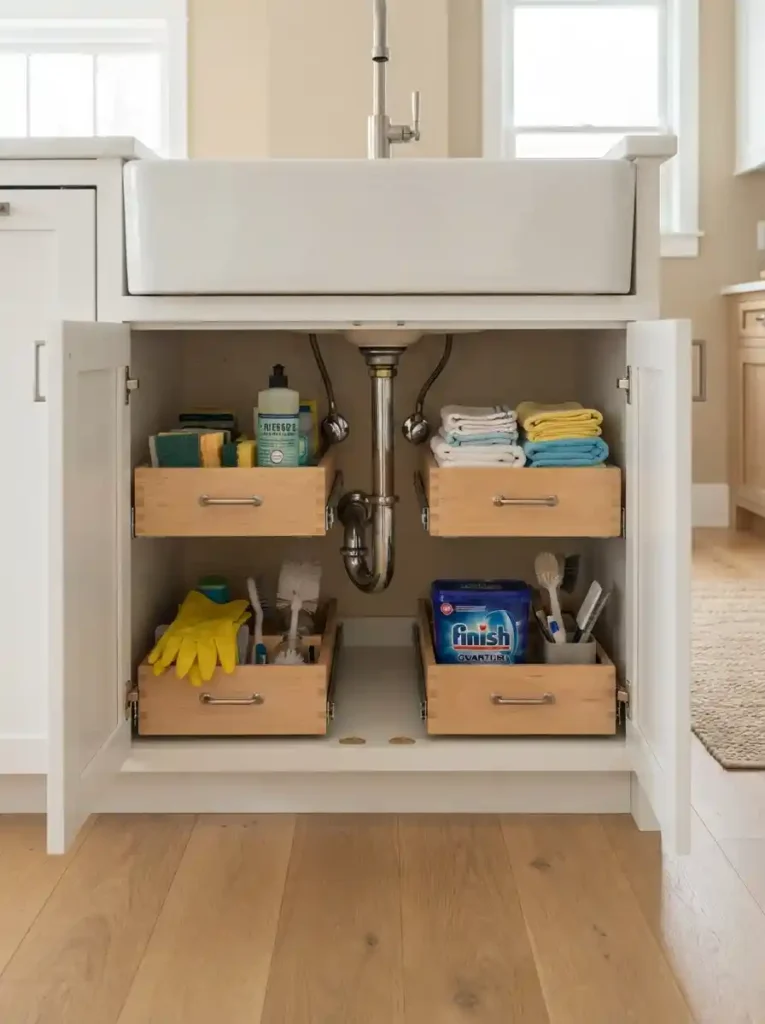
- Creates defined storage zones beneath the plumbing.
- Keeps small supplies contained and easy to reach.
- Prevents items from shifting across the cabinet floor.
- Low-sided bins work well around pipes and valves.
Under-sink drawer bins create neat compartments without requiring a full built-in drawer system. Choose shallow pull-out bins that can slide around the plumbing, then assign each container a simple category such as cloths, brushes, gloves, or dishwasher supplies. The sliding motion makes items stored toward the back easier to reach. Look for durable, washable materials because this area can collect dust, moisture, and occasional drips. Leave enough space between bins and pipes so everything moves freely. This setup works particularly well when you want organized storage but cannot modify the existing cabinet structure.
The biggest improvement comes from giving small supplies boundaries. Instead of loose sponges and cloths spreading across the cabinet floor, each group stays inside its own container. Pull one bin forward when you need something, then slide it back into place when finished. Keep heavier products in sturdier bins and reserve lightweight containers for soft supplies. I’ve noticed that low-profile organizers are often easier to maintain than tall boxes because they keep contents visible and do not waste the vertical space needed around sink plumbing. A simple wipe-down keeps the system fresh and functional.
11. Cleaning Supply Caddy
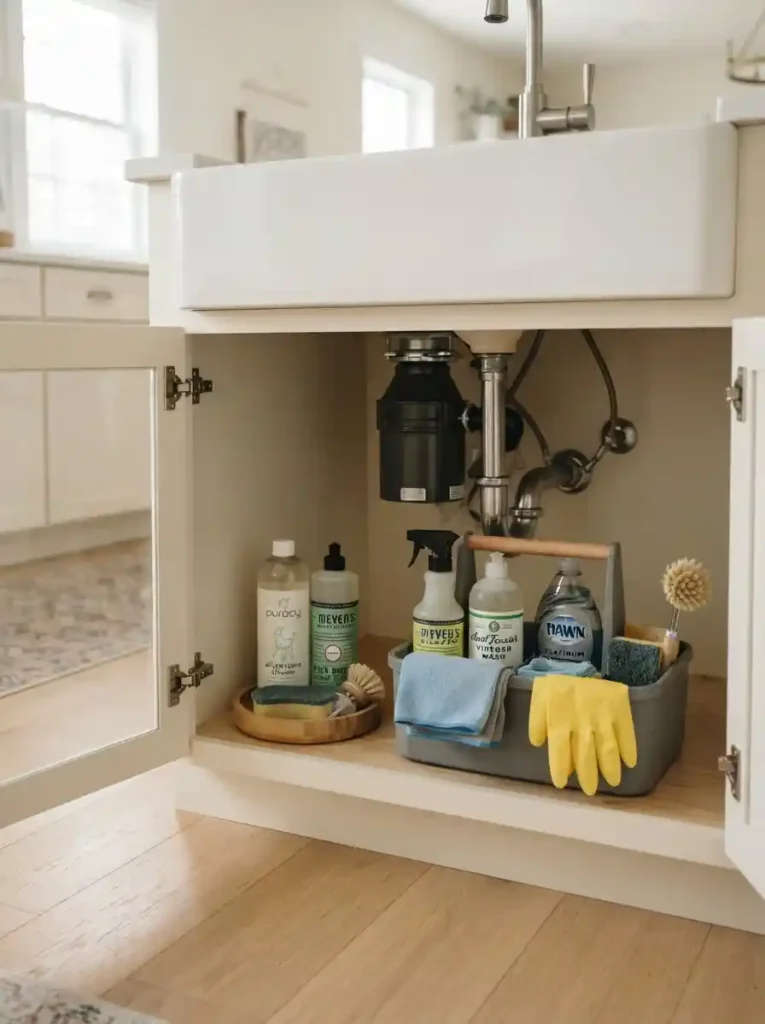
- Keeps frequently used products together in one portable container.
- Makes cleaning routines faster and more convenient.
- Prevents individual bottles from spreading across the cabinet.
- A handled caddy can move easily between rooms.
A handled cleaning caddy gives everyday supplies one portable home while keeping the cabinet floor much less chaotic. Fill it with the products you use most often, such as an all-purpose cleaner, microfiber cloths, gloves, and a scrub brush. When it is time to clean, simply lift the caddy out and carry everything together. Choose a washable plastic or coated metal design with a stable base and enough height for your bottles. Keep heavier containers elsewhere if the caddy becomes difficult to lift, especially when several household members regularly use the supplies.
A portable caddy also helps separate daily essentials from backup products. Store refills and rarely used cleaners in another section, while the caddy holds only the tools needed for routine wiping and cleaning. This makes the cabinet easier to scan because you immediately know where your active supplies are. A compact rectangular shape usually uses the available space efficiently and can sit beside a small bin or rolling organizer. In my experience, the simplest systems are often the easiest to maintain because putting everything away takes only a few seconds after each cleaning session.
12. Labeled Sorting Bins
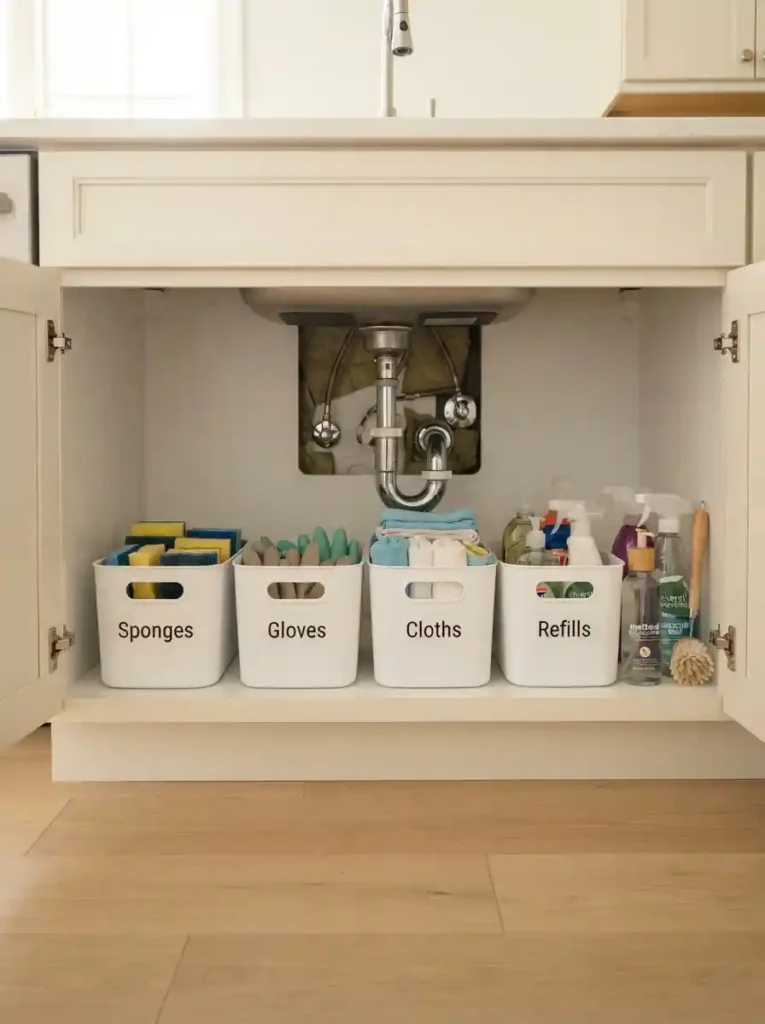
- Makes categories instantly recognizable inside a busy cabinet.
- Prevents different household supplies from becoming mixed together.
- Helps everyone return items to the correct place.
- Simple labels add a polished, intentional finish.
Labeled sorting bins make a crowded cabinet easier to understand at a glance. Use separate containers for sponges, gloves, cleaning cloths, dishwasher supplies, and refill products, then add simple labels to each category. Clear or lightly tinted bins work especially well because the contents remain visible while the labels provide an extra layer of organization. Keep labels short and easy to read, and choose containers that fit around plumbing rather than forcing everything into one large box. This system is especially helpful when several people share the kitchen and need to know exactly where supplies belong.
The labels are not just decorative; they create a repeatable storage routine. When every category has a defined home, putting products away becomes almost automatic. Keep frequently used bins toward the front and less-used refills farther back, leaving enough room to remove each container comfortably. Waterproof labels are a smart choice in a cabinet exposed to occasional moisture. A coordinated set of containers can also make the interior look surprisingly polished. For anyone building practical Under Kitchen Sink Organization Ideas, this approach adds clarity without requiring expensive organizers or complicated installation.
13. Hanging Wire Basket
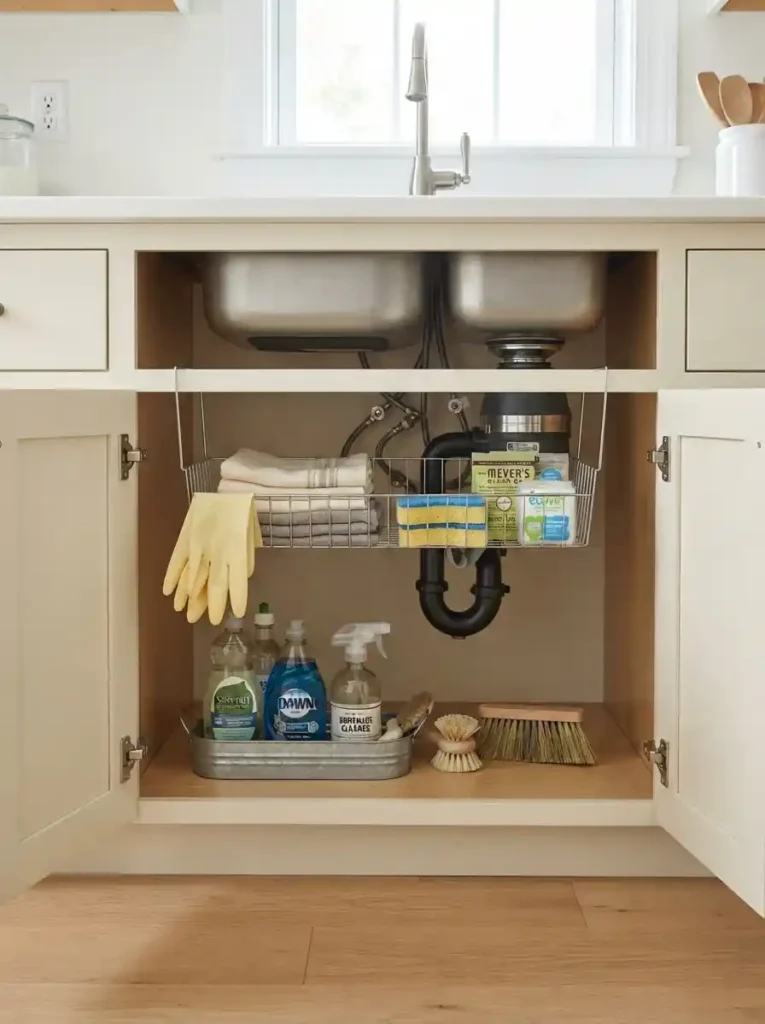
- Adds vertical storage without taking cabinet-floor space.
- Keeps lightweight supplies visible and easy to grab.
- Works well for cloths, gloves, and refill packets.
- Open wire construction allows quick visibility and airflow.
A hanging wire basket makes use of vertical cabinet space that often sits completely empty. Attach a slim basket beneath a fixed shelf or suitable cabinet surface, then use it for lightweight supplies such as microfiber cloths, gloves, sponges, or refill packets. The open wire design keeps everything visible and allows air to circulate around damp cloths. Before installing one, check that the mounting method suits the cabinet material and that the basket does not interfere with plumbing. Keep heavier products on the cabinet floor or a sturdier shelf to avoid unnecessary strain on the mounting points.
This small addition can make a noticeable difference when your cabinet already feels full at floor level. By moving lightweight supplies upward, you create another storage zone without adding a large organizer. Keep everyday items toward the front of the basket and less-used supplies farther back. If you store damp cloths there, allow them to dry before placing them inside to prevent lingering odors. The result is a lighter-looking cabinet where supplies are easier to identify. It is a particularly useful solution for kitchens with limited cabinet width but enough unused space above existing storage.
14. Refillable Bottle Station
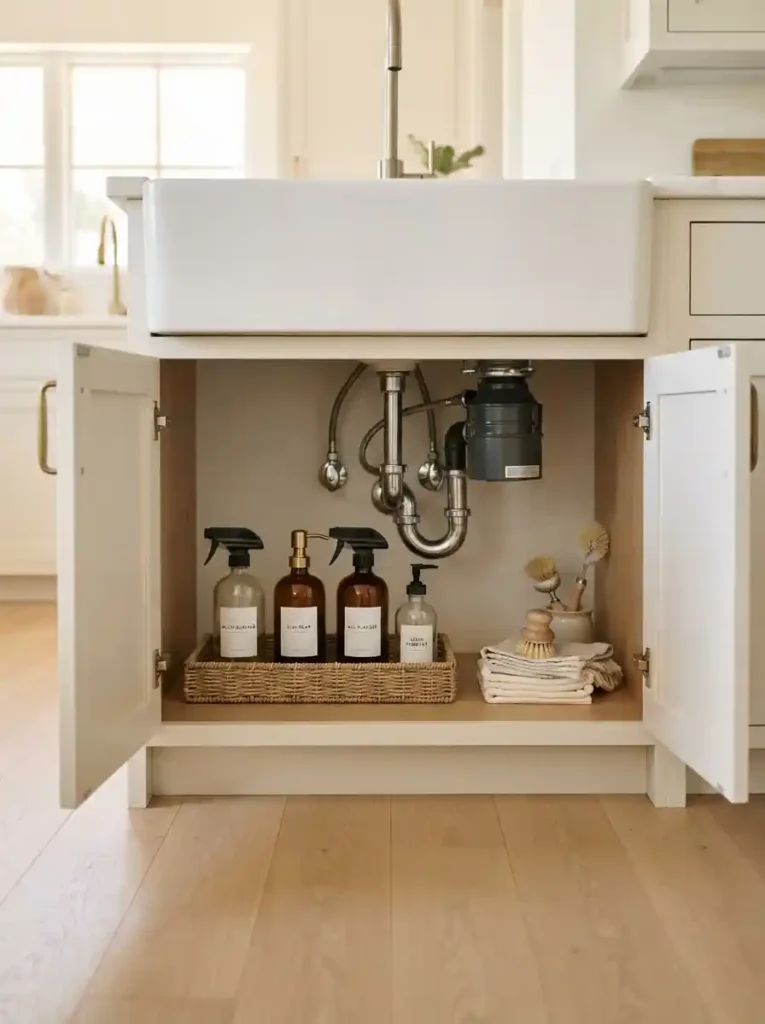
- Creates a cleaner, more consistent look for cleaning products.
- Reduces the visual clutter of mismatched packaging.
- Keeps frequently used liquids grouped together.
- Refill labels make each bottle easy to identify.
A refillable bottle station can make an under-sink cabinet look calmer while keeping everyday cleaners together. Transfer frequently used products into durable, clearly labeled bottles, then place them on a shallow waterproof tray. Matching containers reduce the visual noise created by different package shapes, colors, and labels. Use bottles designed for the specific cleaning products you store, and keep original product information available when necessary. A tray underneath provides an extra layer of protection against small drips. Position the bottles away from plumbing connections and leave enough space to remove each one comfortably.
The beauty of a refill station comes from consistency. When similar bottles stand together on one tray, the cabinet immediately feels more intentional and easier to maintain. Use simple labels such as “Glass,” “All-Purpose,” or “Dish Soap” so everyone can identify the contents quickly. Keep only active products in the station and store larger refills separately to prevent overcrowding. I’ve noticed that reducing packaging variety can make even a small cabinet feel visually cleaner. This setup also encourages a simple reset routine because every bottle has a defined place after use.
15. Vertical Tray Divider
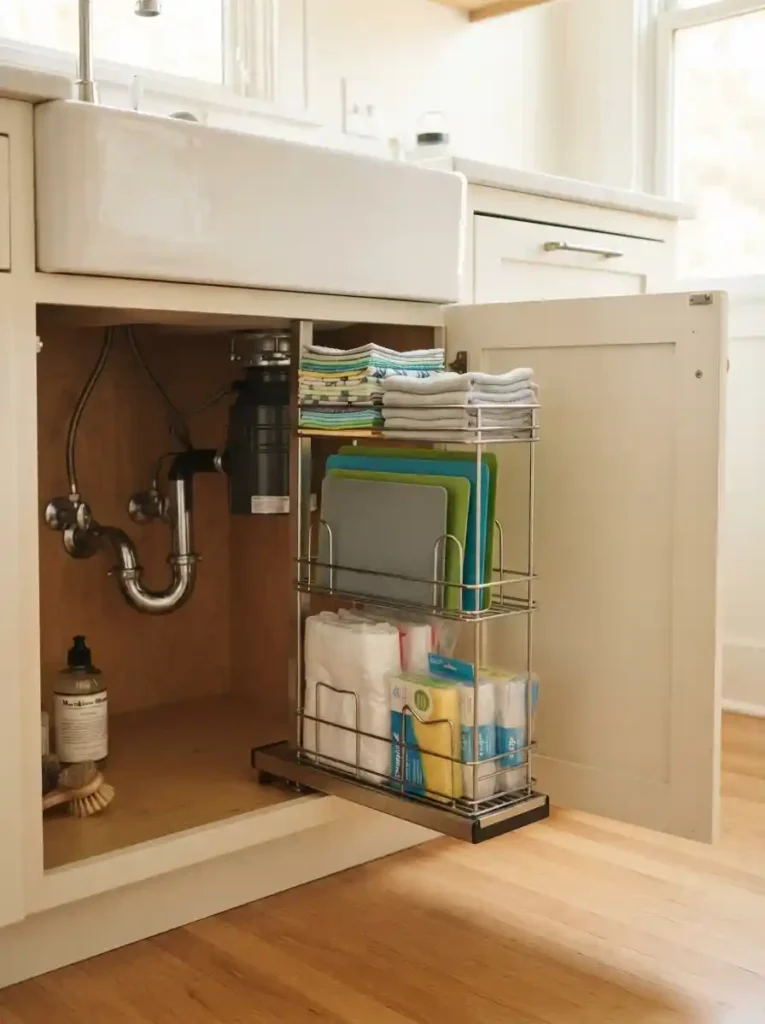
- Turns narrow cabinet space into organized vertical storage.
- Keeps flat items from becoming buried or bent.
- Makes reusable bags and cleaning cloths easier to access.
- Adjustable dividers allow categories to stay separated.
A vertical tray divider can turn a narrow section of the cabinet into useful upright storage. Instead of laying reusable bags, folded cloths, cleaning mats, or flat supplies in a messy pile, stand them vertically inside separate compartments. This makes each item easier to identify and pull out without disturbing everything nearby. Choose a water-resistant organizer with stable dividers and measure the available width carefully. Keep the organizer away from pipes and leave enough clearance for the cabinet door. This approach is especially effective when horizontal shelves are already crowded with bottles and bins.
Vertical storage works because it changes how narrow items occupy space. Rather than stacking flat supplies where the bottom pieces disappear, each category stands separately and remains visible. Use one compartment for reusable bags, another for cloths, and another for other flat cleaning accessories. Avoid packing the sections too tightly because loose access is what makes this system convenient. For households with limited cabinet space, a slim divider can create order without sacrificing much room. The finished arrangement looks cleaner, feels easier to navigate, and makes small everyday supplies much simpler to retrieve.
16. Adjustable Shelf Riser
- Creates a second level without permanent cabinet changes.
- Makes shorter products easier to see and reach.
- Uses vertical space that often goes unused.
- Adjustable heights accommodate changing storage needs.
An adjustable shelf insert can create a second level without permanently changing the cabinet. Place taller cleaning bottles underneath and shorter containers, sponges, or refill packets above, using the available height more efficiently. Choose a sturdy, moisture-resistant insert with enough width to sit securely between the cabinet walls. Adjustable feet are helpful when the cabinet floor is uneven. Keep the shelf clear of plumbing and make sure bottles can be removed without hitting the sink pipes. This simple addition works especially well in cabinets where valuable vertical space is currently going unused.
The beauty of an adjustable riser is its flexibility. You can change the height as your storage needs evolve, making room for taller bottles or wider containers later. Keep everyday products on the easiest-to-reach level and backups higher or farther back. Avoid filling every inch because a little open space makes the cabinet easier to clean and prevents items from becoming difficult to grab. I’ve noticed that adjustable organizers are particularly useful in rental kitchens because they improve storage without drilling or remodeling. The result is a more balanced cabinet with clearer zones and less wasted height.
17. Magnetic Tool Strip
- Gives small metal tools a dedicated vertical home.
- Frees valuable shelf and floor space.
- Keeps easy-to-lose accessories visible and accessible.
- Works best for lightweight compatible items.
A narrow magnetic strip can give tiny metal cleaning tools their own convenient home without taking up shelf space. Mount it on a suitable cabinet interior surface and use it for lightweight scissors, small brushes with metal components, clips, or other compatible accessories. Keep the strip positioned away from plumbing connections and choose a secure mounting method for the cabinet material. This idea works best when the items are genuinely magnetic and lightweight. The goal is to move small tools off crowded shelves, leaving the main storage area available for bottles, bins, and larger everyday supplies.
Small tools are often the first things to disappear inside a crowded cabinet, so giving them a dedicated vertical spot can make daily routines smoother. Arrange compatible items along the strip with enough space between them to remove each piece easily. Keep frequently used tools near the front of the cabinet and less-used accessories farther to the side. In my experience, this type of micro-storage is most effective when limited to a few essentials rather than every tiny object. A tidy row keeps the cabinet floor clearer and makes those easy-to-lose tools visible whenever you open the door.
18. Dual Waste Bins
- Separates everyday waste from recycling or reusable supplies.
- Makes trash-bag replacement quicker and easier.
- Uses cabinet floor space in a purposeful way.
- Compact containers can fit around existing plumbing.
A two-compartment trash and recycling setup can keep waste supplies organized while making the cabinet easier to use. Choose compact containers that fit beneath the sink without blocking pipes, then position them side by side or front to back according to the cabinet shape. Reserve one section for everyday trash and the other for recyclable materials or extra liners. Measure carefully around the plumbing before purchasing containers, and select washable surfaces that can handle occasional spills. A simple lidless design often works best because bags can be replaced quickly and the bins remain easy to access.
When waste storage is clearly separated, the rest of the cabinet can stay focused on cleaning and household supplies. Keep spare trash liners in a slim holder beside or above the bins so replacing a full bag takes only a few seconds. If recycling is handled elsewhere, use the second container for compost liners, reusable bags, or cleaning refills instead. I’ve noticed that matching bins create a more finished appearance while making the available floor space feel intentional. Keep a small amount of clearance around each container so you can remove bags, wipe surfaces, and clean the cabinet comfortably.
19. Hanging Utility Rail
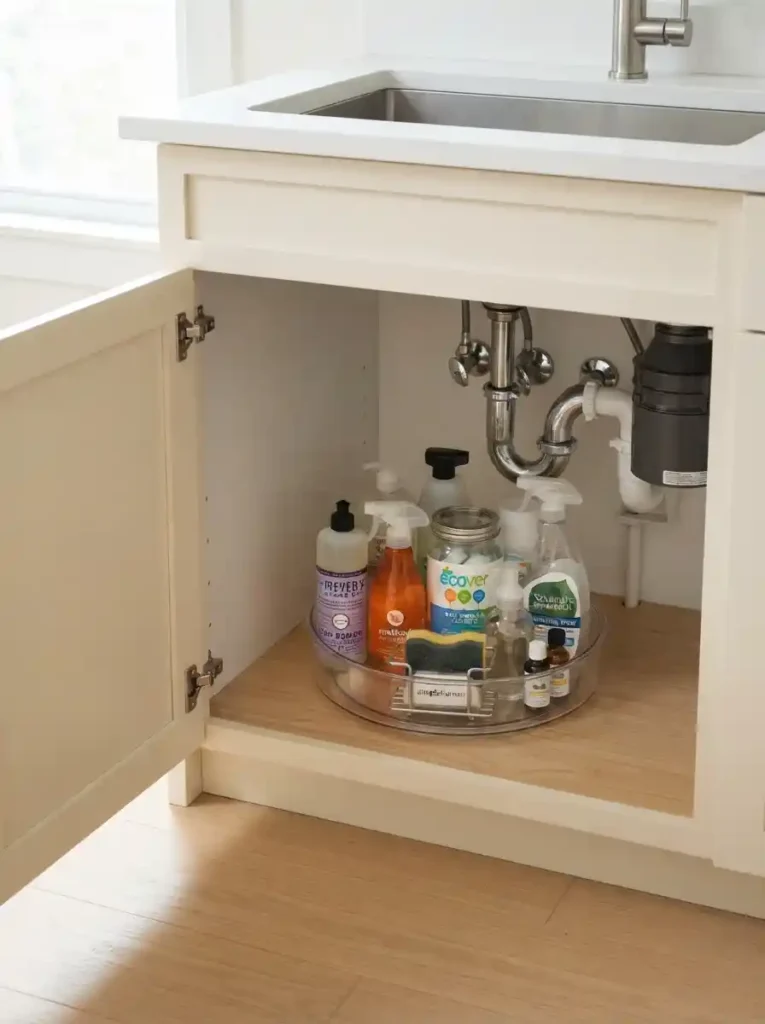
- Adds a useful vertical zone for lightweight cleaning tools.
- Keeps brushes and gloves off the cabinet floor.
- Helps damp accessories dry with better airflow.
- Leaves more room for bottles and storage bins.
A slim under-sink rail can create a useful hanging zone for lightweight cleaning tools without filling the cabinet floor. Mount a sturdy rail along the cabinet side or back, then use small hooks to hold scrub brushes, gloves, dusters, or reusable cloth bags. Keep the rail clear of plumbing and choose moisture-resistant hardware for this damp area. The setup works best when tools are grouped by frequency, with everyday items near the opening. By moving narrow accessories upward, you preserve valuable floor space for bottles, bins, or a compact waste container.
Hanging tools also dry more easily when they are not trapped inside a crowded pile. Leave enough space between each item so damp brushes can air out, and avoid hanging anything heavy enough to pull against the mounting hardware. A simple rail can make the cabinet feel taller because supplies occupy different levels instead of spreading across one surface. I’ve seen this work especially well in busy kitchens where brushes and gloves are used daily. The visual result is tidy but practical, and putting each tool back becomes an easy habit after cleaning.
20. Leak-Proof Storage Tray
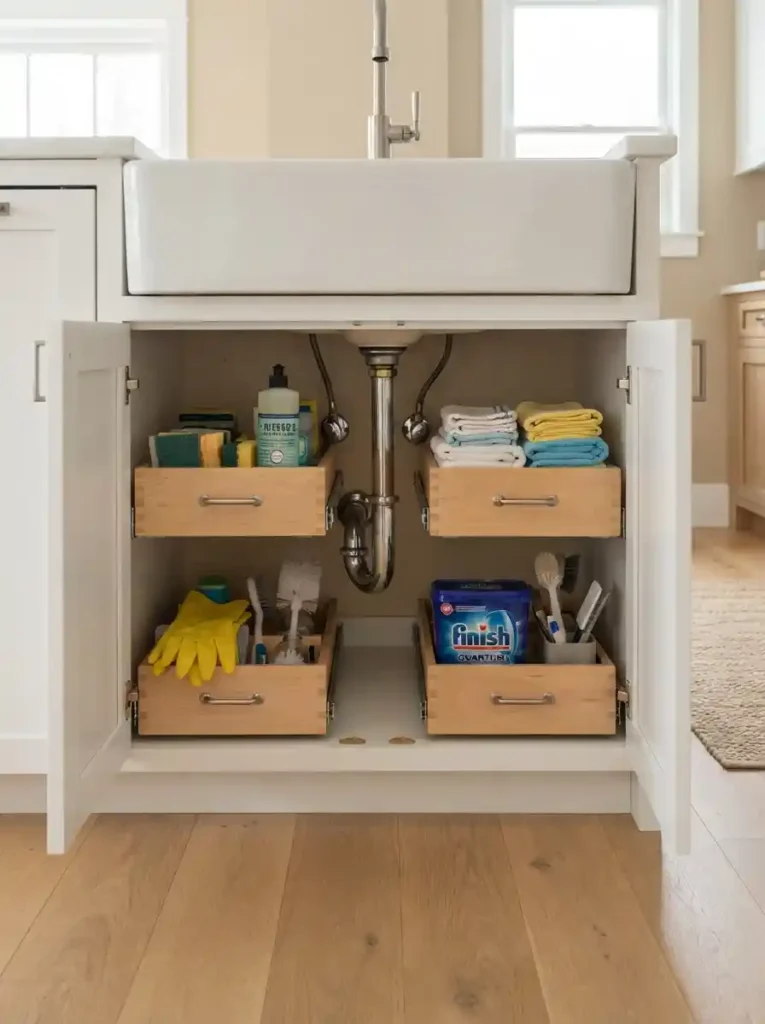
- Protects the cabinet base from small spills and drips.
- Creates a defined zone for liquid cleaning products.
- Makes cleanup faster when bottles leak.
- Raised edges provide extra protection around stored supplies.
A shallow leak-proof tray creates a protective base for bottles and cleaning products while giving the cabinet a more finished appearance. Place the tray beneath frequently used liquids, keeping it large enough to catch small drips but compact enough to leave room around plumbing. Raised edges help contain spills, while washable plastic or coated materials make cleanup simple. Choose a tray that can be lifted out easily so you can inspect the cabinet underneath. This small layer of protection is especially useful beneath bottles that are opened often or stored upside down.
A tray does more than protect the cabinet surface; it also creates a visual boundary for products. Keep similar bottles together inside it and leave unrelated supplies in separate bins or areas. If a container leaks, you can remove the entire tray instead of cleaning around several loose bottles. In my experience, this makes routine maintenance much less frustrating, especially in homes where the sink cabinet gets opened constantly. Choose a neutral tray that blends with your cabinetry, and avoid overfilling it. A little empty space keeps products visible and prevents accidental tipping.
Conclusion
A cluttered sink cabinet doesn’t need a complete makeover to become more functional. With the right containers, shelves, baskets, and vertical storage solutions, even an awkward cabinet can feel spacious and easy to manage. These Under Kitchen Sink Organization Ideas give you practical ways to group supplies, improve accessibility, and make cleaning routines simpler. Start with one small change that solves your biggest storage problem, then build from there. I’ve seen how small adjustments can completely transform an everyday space. Save this post on Pinterest for your next organizing project, try your favorite ideas, and share it with someone who needs a tidier kitchen.